

When the body loses power, the easy answer is to look for a stimulant. The professional answer starts with another question: was the system prepared to sustain that demand?
Energy is not just something we ingest. It is a capacity that the organism needs to regenerate, distribute and use at high speed. In this process, mitochondria occupy a central position.
But they are not simple cell batteries. They form a dynamic network, sensitive to training, inactivity, sleep, energy availability and metabolic state.
Understanding this network changes the decision. Instead of looking for “the best supplement for mitochondria”, we started to organize the stimuli that make the body build a more robust energy capacity.

Mitochondria do not store energy: they support its regeneration
ATP — adenosine triphosphate — is the molecule directly used to perform cellular work. Muscle contraction, transmission of nerve impulses and maintenance of membranes depend on it.
Muscle stores little ATP. During exercise, it needs to be continually regenerated.
During explosive efforts, the phosphocreatine system and glycolysis provide energy quickly. As the duration increases — and also during recovery between intense actions — the participation of oxidative metabolism increases, in which mitochondria use oxygen and energy substrates to resynthesize ATP.
In many sports, therefore, mitochondrial capacity does not just decide how long an athlete can run. It influences recovery between sprints and sets, preservation of intensity and tolerance to higher training volumes.
Aerobic capacity also depends on the heart, oxygen transport, capillarization, fuel, neuromuscular recruitment and economy of movement. Mitochondria are central—not universal.
More mitochondria does not automatically mean better performance
When talking about improving mitochondria, the first idea is usually to produce a greater number of them. This process exists and is called mitochondrial biogenesis. However, quantity is only one part of adaptation.
Also important are the respiratory capacity, the organization of the ridges, the integration with the capillaries, the efficiency in the use of substrates and the removal of damaged structures.
Mitochondria continually undergo fusion, division, repair, and removal. The selective elimination of dysfunctional structures is called mitophagy. The organism needs to manufacture new units and, at the same time, maintain a functional network.
A review on mitochondrial maintenance in muscle describes exercise as a stimulus capable of increasing the biogenesis and turnover of organelles. The result is a network remodeled to better meet metabolic demands. Hood et al., 2019.
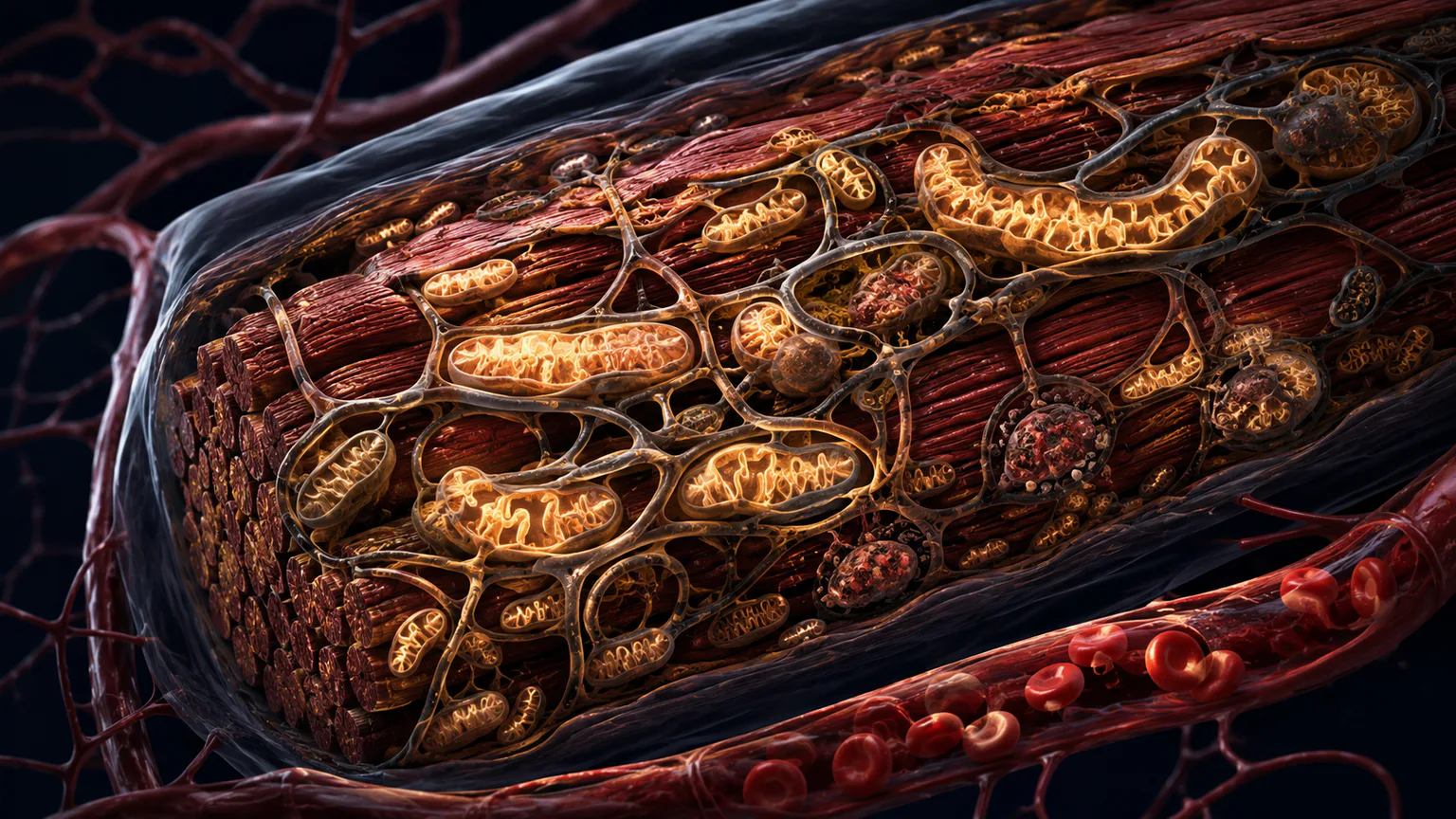
Mitochondrial adaptation is not a switch. It's a continuous remodeling guided by the work carried out.
Training remains the most consistent stimulus
A meta-regression published in Sports Medicine brought together hundreds of interventions and thousands of participants. After statistical adjustments, the estimated increases in mitochondrial content were similar between different training models.
Low or moderate intensity training.
Intervals or continuous intense work.
Maximum effort interval protocols.
These estimates are not an individual promise. The studies used different populations, durations and methods. Still, the set shows that there is not just one intensity capable of stimulating mitochondrial adaptations.
The initial level of conditioning and training frequency also influenced the response. Less trained people generally showed greater relative progress, while advanced athletes needed more specific stimuli. Mølmen, Almquist & Skattebo, 2025.
Continuous training: build the infrastructure
Continuous sessions at low or moderate intensity allow you to accumulate volume with less neuromuscular cost. They favor an aerobic base, capillarization, use of fats and tolerance to prolonged periods of work.
For intermittent sports athletes, this doesn't mean replacing game specificity with long sessions. It means recognizing that an adequate foundation improves recovery between actions and increases the ability to tolerate the program.
High-intensity intervals: concentrate the stimulus
HIIT and intervals close to or above maximum oxygen consumption produce great metabolic demand in a short time. Intensity seems especially relevant for respiratory function, while total volume has a strong influence on mitochondrial content. Granata, Jamnick & Bishop, 2018.
This explains why breaks can be efficient, but not necessarily sufficient. When every session becomes high intensity, the cost of recovery increases and the athlete loses space to build sustainable volume.
Strength training: preserve the structure that uses energy
Strength training is less studied as a mitochondrial stimulus. In some cases, hypertrophy grows faster than mitochondrial volume, reducing its relative density within the fiber. This “dilution effect” does not necessarily represent a net loss of mitochondria.
The literature indicates that strength can preserve or improve aspects of mitochondrial function while developing power, muscle mass and functional capacity. It must be part of the architecture — especially in older athletes and contact sports. Parry, Roberts & Kavazis, 2020.

The best program combines stimuli, does not look for a winner
Build oxidative base
Prioritize progressive aerobic volume without turning every session into a competition.
Gain time efficiency
Use high-intensity intervals without turning HIIT into a daily routine.
Sustain strength and mass
Integrate resistance training and avoid evaluating the program solely by VO₂ maximum.
Prepare the advanced athlete
Periodize stimuli according to modality, calendar and recovery capacity.
The criteria is not to find out which method “produces more mitochondria”. It involves identifying which adaptation limits the athlete and which stimulus can be inserted without compromising the rest of the microcycle.
Carbohydrate is not the enemy of mitochondrial adaptation
Training with low glycogen availability can amplify some molecular signals related to biogenesis. This popularized strategies such as fasted training, carbohydrate restriction after a session and the sleep low.
The mechanism is plausible. When muscle begins exercise with less glycogen, metabolic stress increases. However, a greater molecular response does not guarantee superior sports adaptation.
A meta-analysis of endurance athletes found no overall performance improvement when carbohydrate periodization was compared to training with normal availability. Gejl & Nybo, 2021.
Furthermore, low availability can reduce absolute intensity, increase the perception of effort and compromise technical or subsequent sessions.
The most coherent application is to supply according to the work required. Decisive sessions, games, extensive technical training and high-intensity efforts need compatible fuel. Strategies with less availability, when used, should be reserved for selected sessions with a clear metabolic objective. Impey et al., 2018.
How the ideas connect
Recovery is also part of adaptation
Exercise starts the signal. For it to transform into functional tissue, it needs to find energy and recovery.
Insufficient sleep, low energy availability and excess load can alter metabolism, protein synthesis, immune function and response to training.
In an experiment with young men, five nights of sleep restriction modified glucose tolerance, aspects of mitochondrial function and muscle molecular rhythms. Exercise attenuated some of these changes, but did not replace sleep. Saner et al., 2021.
When recovery is already compromised, adding fasting, more breaks and new restrictions tends to increase stress without guaranteeing adaptation.
Mitochondria: the invisible capacity that turns training into performance
- Mitochondria do not store energy: they support its regeneration
- Training remains the most consistent stimulus
- Recovery is also part of adaptation
Not all oxidative stress needs to be eliminated
During exercise, the body increases the production of reactive oxygen species. In physiological quantities, they also function as signals for adaptation.
In a randomized study with 54 participants, high daily doses of vitamins C and E attenuated some cellular markers related to mitochondrial biogenesis. There was, however, no clear difference in the evolution of maximum VO₂ or running tests. Paulsen et al., 2014.
The proportional reading is not that vitamins are harmful. The thing is that mega-doses of antioxidants close to every training session should not be used automatically in an attempt to speed up recovery.
Mitochondrial supplements: mechanism is not result
Coenzyme Q10
CoQ10 participates in the electron transport chain. However, increasing its blood concentration does not guarantee improved performance.
A meta-analysis of 24 studies concluded that supplementation consistently increases circulating CoQ10, but the effects on performance are small, unstable and context-dependent. Overall certainty was low or very low. Deng et al., 2025.
Creatine
Creatine is well supported for repeated high-intensity efforts and for supporting adaptations to training. Its main application is related to the phosphocreatine system, which quickly regenerates ATP.
It can improve training capacity without needing to be presented as a “mitochondrial repairer”. Kreider et al., 2017.
Carnitine, magnesium and B vitamins
These nutrients exert real metabolic functions. But an essential biochemical function does not prove that additional doses improve performance when there is no deficiency, inadequate intake or specific indication.

How to build a mitochondrial strategy in practice
- Identify the real limitation.Decreased performance may involve aerobic capacity, glycogen, anemia, sleep, excess load, low energy intake or illness. “Weak mitochondria” is not a clinical diagnosis.
- Organize the stimulus.Combine aerobic volume, intensity and strength according to the sport, phase of the season and the athlete's history.
- Provide compatible fuel.Carbohydrates must match the demands of work. There is no merit in reducing fuel when this prevents reaching the necessary intensity.
- Protect energy recovery and availability.Producing adaptation requires energy, sleep, and space between stimuli — not just more stress.
- Use add-ins to solve defined problems.The decision must consider necessity, effectiveness in the population, safety, traceability and cost-benefit.
Energy is a built capacity
Mitochondria respond to what the body needs to do repeatedly.
They remodel themselves when training presents a clear demand. They adapt better when there is fuel to do the job. They maintain their quality when effort is followed by compatible recovery.
There is no food, fasting, exposure or capsule capable of replacing this architecture.
Producing energy is not just a cellular function. It's a trainable skill.
Verified references
Usage noteThe references support the main mechanisms, estimates and practical criteria presented. Molecular outcomes were differentiated from performance outcomes.