

In February 2026, German bobsled racer Johannes Lochner won two golds at the Milano Cortina Winter Games. Among his preparation resources, he cited Naia, an artificial intelligence tool used to organize thoughts, monitor stress and structure responses in moments of pressure.
The story brings together everything that makes AI attractive in sports: customization, permanent availability, close language and a champion at the center of the narrative. It also brings together the main mistake we need to avoid.
A medal confirms the sporting result. It does not isolate the contribution of an application.
Lochner arrived at the Games after years of training, international experience, technical work, physical preparation, support team and a season in which he was already leading the circuit. Your statement shows that the tool had perceived value within that system. It does not demonstrate that the AI produced the performance, nor that it can replace a sports psychologist or mental health professional.
This distinction seems small. In practice, it decides whether we are building a useful resource or outsourcing a responsibility that the algorithm cannot assume.
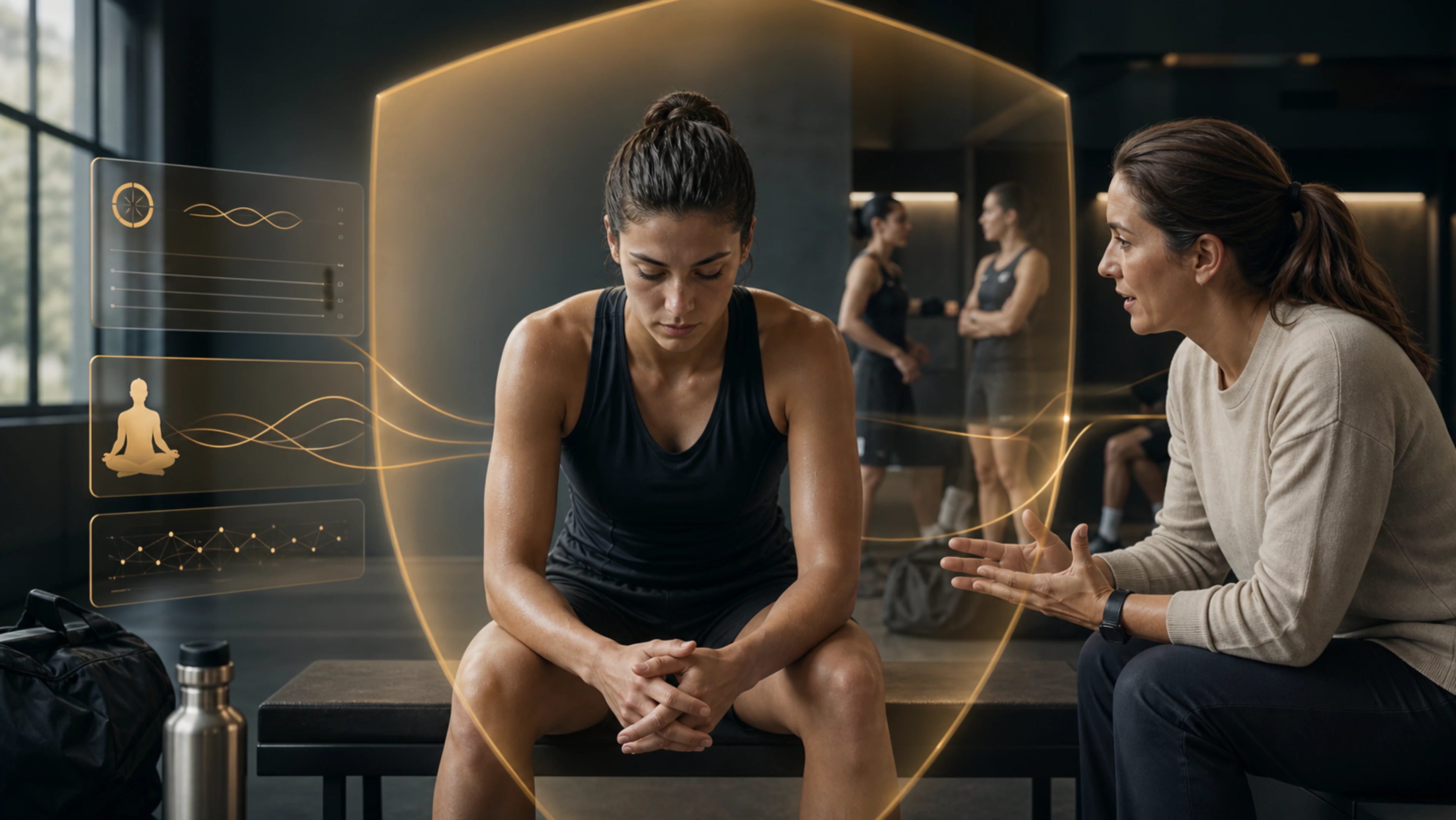
Before discussing replacement, three distinct roles need to be separated
In the public debate, “mental training”, “coaching”, “sports psychology” and “mental health care” appear as if they were the same thing. They are not.
An athlete may want to improve their pre-competition routine, review thoughts after a mistake, practice breathing, or record how they responded to pressure. It can also go through grief, depression, eating disorders, harassment, panic attacks, suicidal ideation or problematic substance use. Between these extremes there are gray areas that require context, qualification, and judgment.
AI can help perform tasks. A qualified professional needs to define when the task is appropriate, interpret what emerges and recognize when the problem has changed in nature.
The International Olympic Committee consensus, updated in 2026, places mental health in the context of physical health and the sporting environment. It introduces SMHAT2, a revision of the previous instrument: screening steps identify symptoms and support needs, but do not make diagnoses. Clinical assessment and management still require qualified professionals. For the discussion of AI, the implication is to preserve this boundary: a convincing response or a score is not equivalent to a clinical assessment.
A system can support recognition, registration and screening. It does not automatically receive clinical authority because it is conversational, quick, or convincing.
What the latest evidence really allows us to say
There are promising signs. They are more specific — and more conditional — than advertising often suggests.
In 2025, a randomized clinical trial published in NEJM AI evaluated Therabot, an expert-tuned generative chatbot, in 210 adults with clinically relevant symptoms of depression, anxiety or elevated risk for eating disorders. At four weeks, the intervention group showed greater reductions in symptoms than a waitlist group, with initial maintenance at eight-week follow-up.
The find matters, but so does the design. People with active suicidality, mania, or psychosis were excluded. All system responses were reviewed after submission by clinicians and researchers; When there was inappropriate content or security concerns, the human team got in touch. The comparator did not receive an active intervention, follow-up was short and the sample was not composed of athletes.
In April 2026, another essay, published in JAMA Network Open, compared a conversational platform, in-person group therapy and a waiting list in 995 university students with psychological distress. The digital intervention was associated with modest improvements in anxiety, depression and well-being, but not in post-traumatic stress symptoms.
Again, participants in crisis or with active suicidal ideation were excluded; there was risk monitoring and the possibility of intervention by licensed professionals. The loss of participants in the three-month follow-up was around 35%, and two authors declared financial or professional ties with the company responsible for the platform.
The whole points to the potential usefulness of systems designed for a purpose, supported by protocols and surrounded by supervision. It does not support universal equivalence with human care, stand-alone use in crises, or direct transfer to high-performance athletes.
It also does not authorize using the results of one product to validate all others. “AI chatbot” describes a broad technology, not a cookie-cutter intervention. Model, training, knowledge base, safeguards, population, software version, and escalation flow change risk and benefit.
How the ideas connect
The Naia case is interesting — and it is not yet performance validation
Lochner's report makes it possible to ask whether AI tools could replace mental coaches and sports psychologists. Individual experience can signal usefulness; it does not demonstrate a causal contribution to performance or equivalence with professional care.
Naia's own public documentation describes the tool as preventive, stress and resilience-oriented, with clinical limits and human referral. Its document “The Science Behind naia”, from June 2026, presents theories used, curated by psychologists and a continuous evaluation process. However, it does not inform the sample, controlled design, results, magnitude of effect or specific peer-reviewed publication of the tool in athletes.
Another detail helps to scale the statement. The company's commercial history places the prototype in 2025. The “decade” mentioned in the materials refers to the experience and data of the program that served as the basis for the product, not to ten years of AI trials with athletes.
This does not invalidate Lochner's experience. It just puts each piece of evidence in the right place: the athlete can report usefulness; the company can explain how it built the system; only adequate studies can estimate efficacy, safety and generalizability.
Where AI can add value in high performance
The most realistic opportunity is not to manufacture an “artificial psychologist”. It's about occupying the spaces that are empty today.
After a bad workout, on a trip or before bed, the tool can retrieve an already trained protocol and help choose the next step.
Sleep patterns, stress, triggers and adherence can arrive more organized when talking to the professional.
Reminders, exercises and check-ins can adapt to language, schedule and protocol without turning a signal into a diagnosis.
A private interface can be a gateway to understanding anxiety, error, sleep, and self-regulation — as long as it leads to people when necessary.
The best use is to reinforce previously defined strategies, not to improvise treatment. Breathing, mindfulness, reflective writing, goal review, and structured post-session review can gain frequency without requiring the professional to be online every moment.
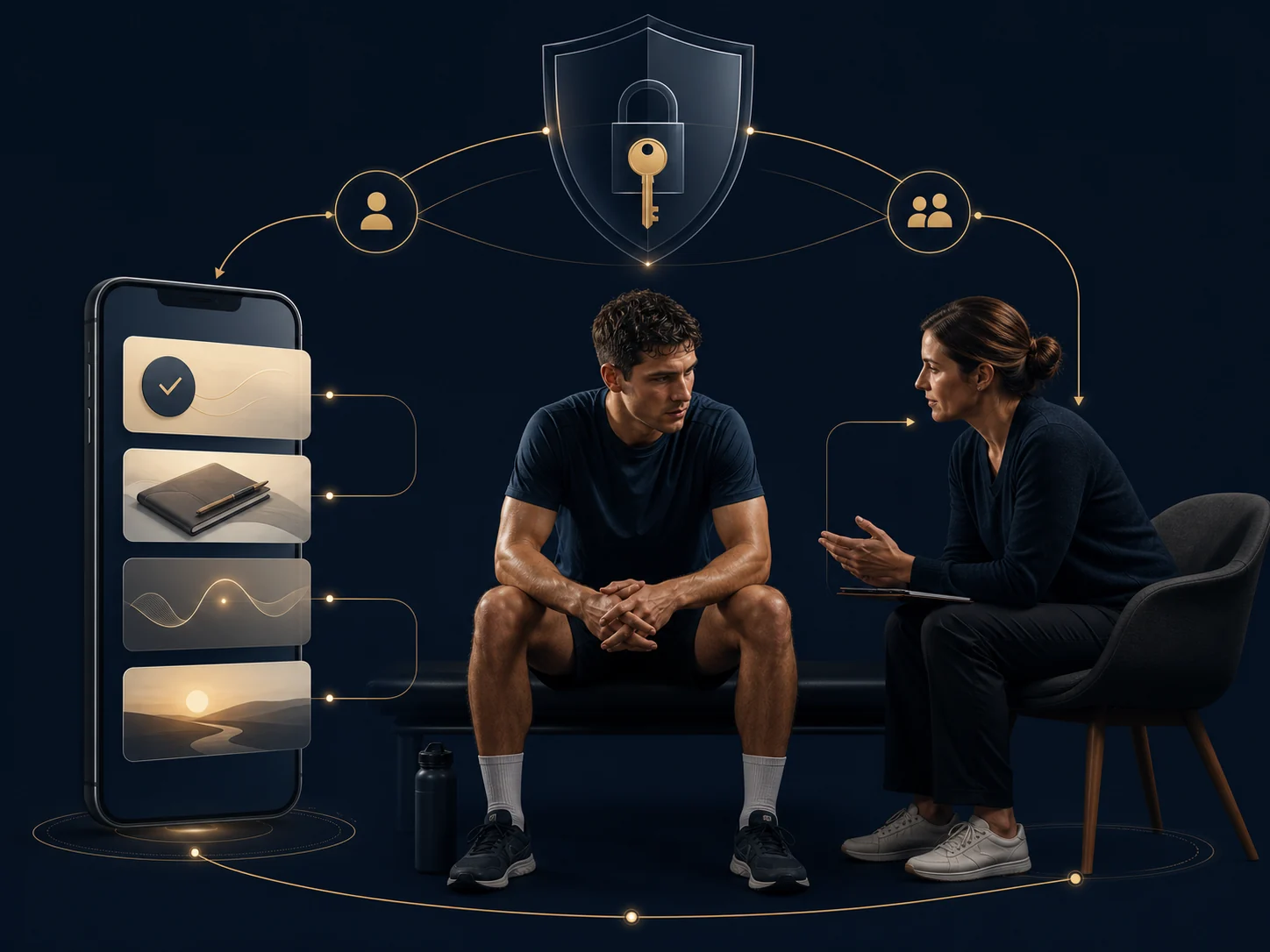
From concept to decision
What continues to require a responsible person
Chatbots are trained to produce plausible responses and keep the conversation going. This skill may sound like empathy. It is not the same as understanding history, context, silence, risk and consequence.
A study presented at ACM FAccT in 2025 tested models and chatbots used in therapeutic contexts. The systems demonstrated different stigma depending on the condition presented and, in critical scenarios, offered inadequate responses to signs of delirium or suicidal intent. Larger, newer models have not eliminated the problem.
There is also the tendency to agree with the user — the so-called algorithmic flattery. In performance, automatically validating the athlete's narrative can reinforce conflicts, distorted interpretations or impulsive decisions. A good psychologist doesn't just welcome. He knows when to explore, confront, silence, protect and forward.
There are also situations that do not fit into an isolated conversation: harassment by someone on the committee, fear of losing space, contractual pressure, eating disorder hidden by body composition goals, persistent pain, use of medication, family conflict or threat to one's life. The data may seem individual, but the problem may be in the environment.
Human responsibility includes realizing this relationship and acting on the system — something that an application controlled by the system itself may never be able to do independently.
The biggest risk may lie outside the answer: the data
A mental diary is about fears, injuries, relationships, insecurities and moments of vulnerability. At a club, this information can influence selection, contract, negotiation and reputation. Therefore, a “useful” tool can become dangerous even when it responds correctly.
In Brazil, health data is sensitive personal data under the LGPD. Adoption needs to define purpose, legal basis, access, retention, transfer, security and disposal. Collecting everything “to personalize” goes against the principle of necessity when part of this information is not essential.
The World Health Organization's guidelines for generative AI in healthcare and the guides published by the Federal Council of Psychology in 2025 converge on the same point: utility does not eliminate the need for transparency, risk assessment, supervision and professional responsibility.
- What is collected and why?The purpose needs to be specific and understandable, without preventive collection of everything that “might be useful”.
- Who can see individual responses?Technical committee, management and colleagues should not receive implicit access to intimate conversations.
- Does the content train models?Secondary use of data requires transparency, adequate basis and real choice.
- Where and for how long is it stored?Location, suppliers, transfer and retention need to be defined.
- What happens when risk arises?The escalation flow must indicate the responsible person, deadline and action.
- How to access, correct or delete?The applicable rights need to leave the contract and become an enforceable path.
Aggregated reports for management do not solve everything. Small groups, position, language, injury, and timing may allow for re-identification. Privacy needs to exist in the design, not just the contract.
The central shift
Sports psychology will fit in your pocket. Responsibility will not.
- Before discussing replacement, three distinct roles need to be separated
- What continues to require a responsible person
- The biggest risk may lie outside the answer: the data
A decision criterion for clubs and professionals
Before adopting an AI for psychological support, I would evaluate six points.
- Is the purpose defined?Define what the tool does and, most importantly, what it does not do. “Well-being”, “resilience” and “mental performance” are too broad without concrete tasks.
- Is there evidence of the product, version and population?Validating a theory does not automatically validate the chatbot. Testimony also does not replace effectiveness testing.
- Who takes over the case when the algorithm finds something important?The flow needs to have names, times, deadlines and an emergency plan. Forwarding is not protocol if no one receives it.
- Can the athlete refuse without sporting costs?adherence must be voluntary, with a real alternative and without undue access by the committee to conversations.
- Does the team measure outcome or just use?Messages and sequence of check-ins measure engagement. Relevant improvement, timely referral, reduction of barriers and absence of harm are important.
- Has the system been tested under the foreseeable worst-case scenario?Simulate crisis, irony, language change, abuse, eating disorder, delirium, self-harm, unavailability and leakage.
Practical application for the athlete
For individual use, AI can work well as a guided journal, thought organizer, and reminder of strategies you already know. It can help prepare questions for a session, review a pre-competition routine, or turn a vague concern into a concrete next step.
It should not be the only reference for diagnosis, crisis, decision about medication, eating disorder, violence, harassment or persistent symptoms that already affect sleep, training, relationships and daily functioning.
If the conversation involves risk of getting hurt, loss of touch with reality, intense despair, or inability to stay safe, the next step is not to improve the prompt. It is to immediately seek a trusted person and professional or emergency support appropriate to your location.
The most sophisticated future is hybrid
AI doesn't need to feel like a human to be useful. It needs to fulfill a well-defined role, within a system that knows how to measure benefits, recognize limits and assume responsibility.
In high performance, the advantage will not come from exchanging a person for an interface. It will come from reducing the time between the athlete's need and the right support; reinforce protocols between sessions; identify changes before they become a crisis; and freeing the professional for work that depends on judgment, connection and context.
Sports psychology can indeed become more available, personalized and continuous. But the more intimate the technology, the higher the quality of governance around it must be.
The future does not belong to the algorithm that talks like people. It belongs to the system that knows exactly when it should speak — and when it needs to call a person.
Deepen the context with articles about what really sustains motivation and circadian rhythm, sleep and recovery.
Verified references
Audit note: the Olympic result was confirmed in an official source, but the value attributed to Naia remains a statement, not a causal relationship. The aforementioned chatbot trials were not conducted with athletes and included human supervision, clinical exclusions, and follow-up limitations. Guidance on LGPD does not replace legal analysis of the specific context.