
You don't fix your biological clock at 11pm. At that point, the body has already registered the light it received, when it ate, what time it trained and whether the last few days followed any recognizable pattern.
Sleep is just the most visible part of a system that works 24 hours a day.
When environmental cues point in different directions—low light during the day, bright lighting at night, unpredictable meals, training at wildly variable times, and insufficient sleep—the problem isn't simply a lack of discipline. It's a lack of contrast.
Your circadian rhythm does not require a rigid life. It needs to recognize clearly when it is day and when it's night.
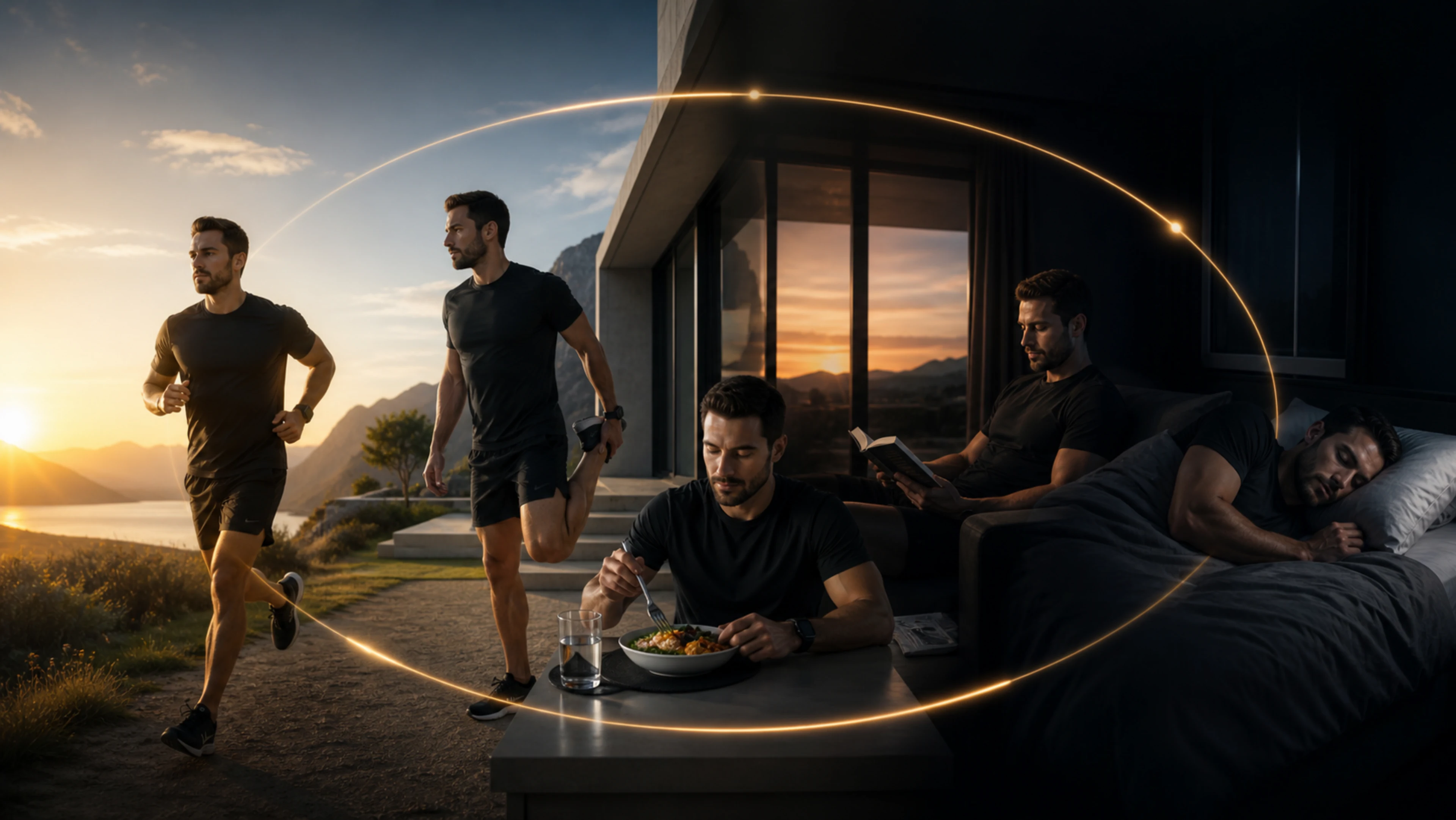
Your body doesn't have a single clock
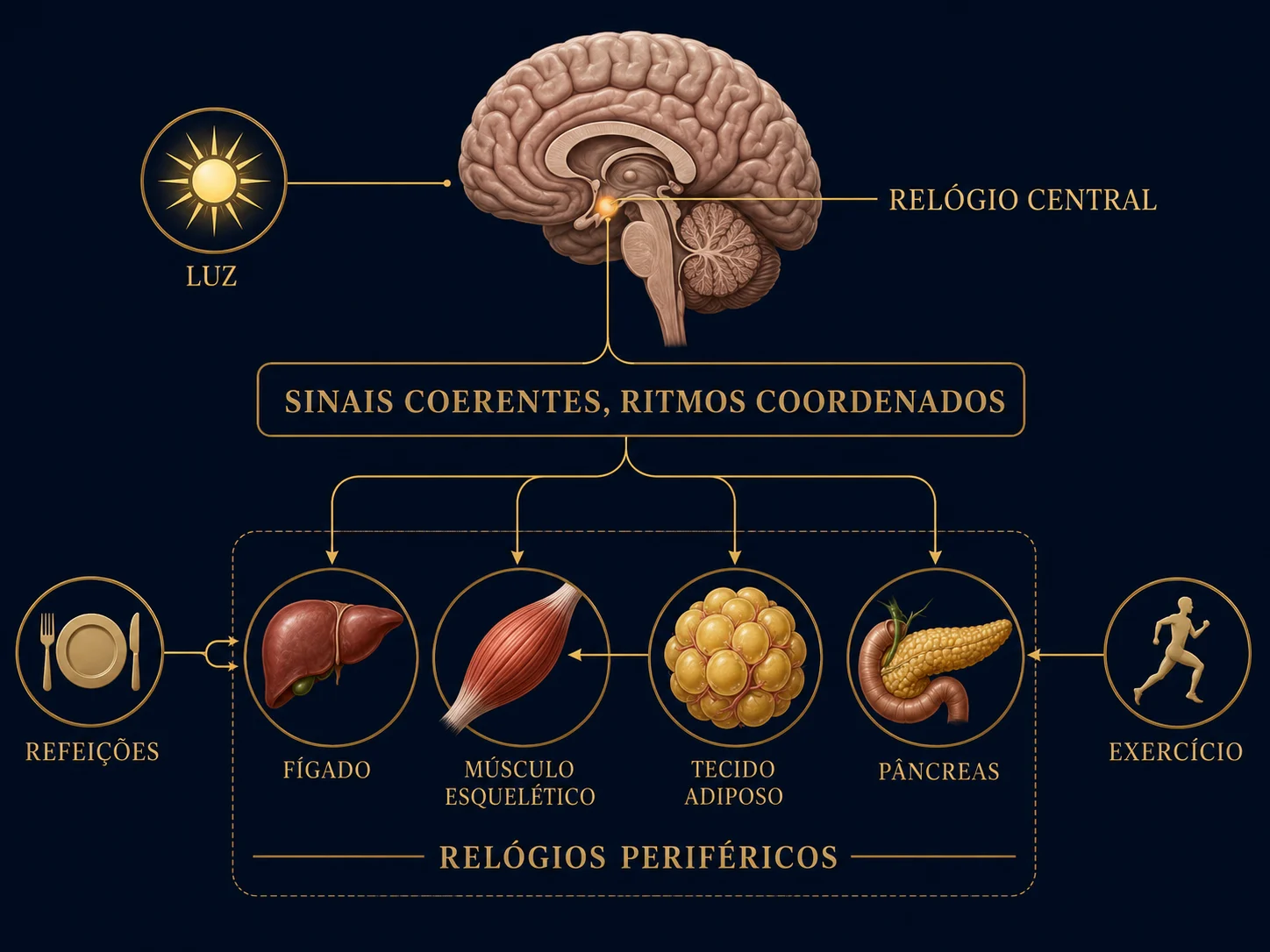
In the brain, a small region of the hypothalamus called the suprachiasmatic nucleus functions as the main circadian synchronizer. It receives light information captured by the eyes and helps organize rhythms such as melatonin, body temperature, alertness and sleep.
But this is not the only clock in the body.
The liver, muscles, adipose tissue, pancreas and other organs also have molecular mechanisms capable of oscillating throughout the day. These peripheral clocks respond to central command, but are also influenced by food, physical activity and metabolic routine.
Circadian architecture works like an orchestra: there is a conductor, but each section needs to receive coherent signals to stay in the same beat. This organization is supported by cycles of gene expression that affect much of human physiology. Takahashi, 2017.
This explains why someone can sleep a seemingly adequate number of hours and still wake up tired, feel hungry at odd times or notice that their physical performance varies greatly throughout the day.
The strongest signal is the contrast between day and night
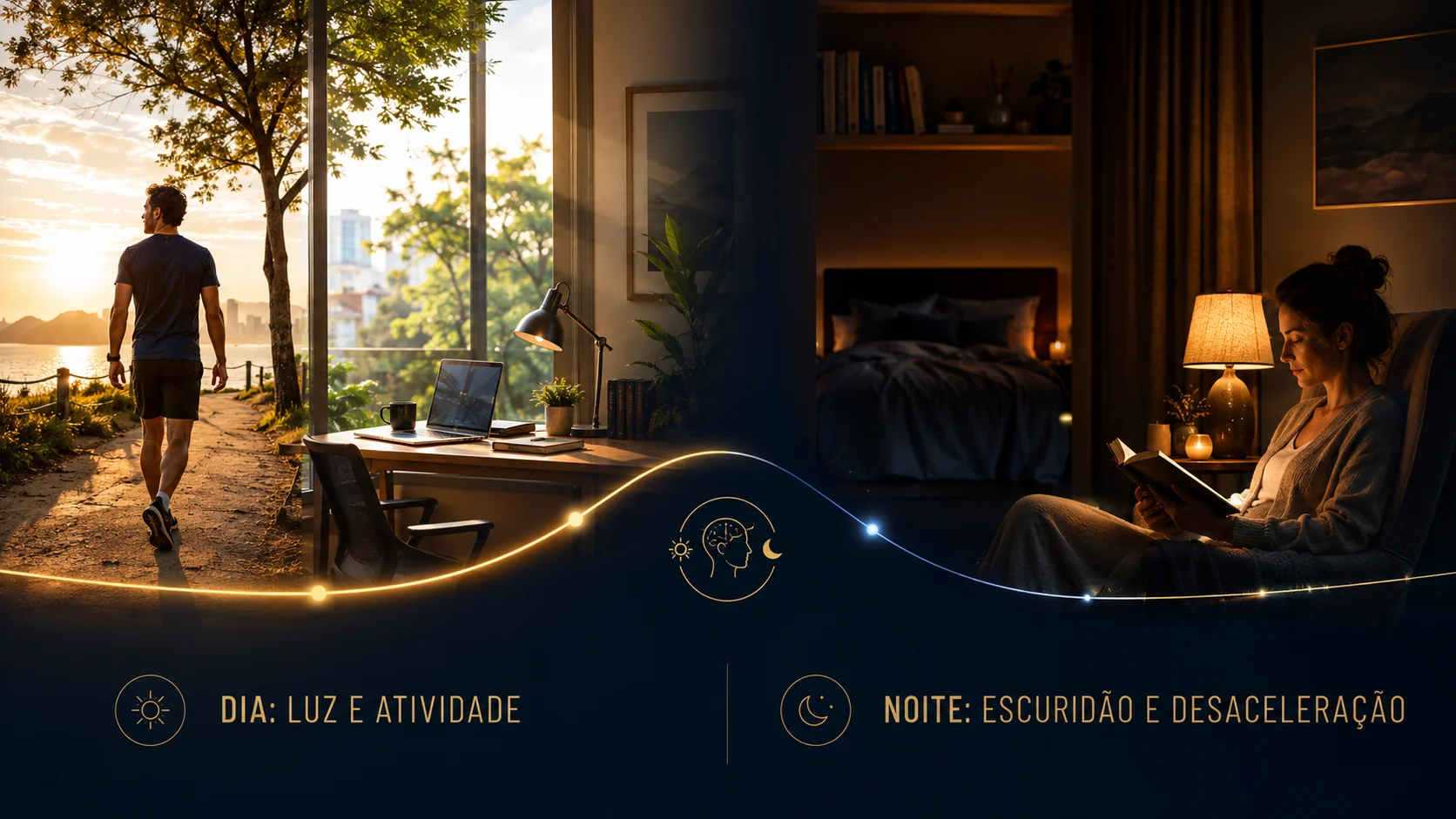
For much of human history, the environment offered a simple message: lots of light during the day and darkness at night. Today, we often do the opposite.
We spent the morning indoors and poorly lit. We receive little natural light throughout the day. At night, we are surrounded by lamps, televisions, computers and cell phones.
The organism does not just interpret the presence of light. It considers intensity, duration, time and exposure history.
In a field experiment, a week of exposure to the natural cycle of light and dark brought participants' circadian clock closer to solar time. The effect was especially relevant among people who had later rhythms in their usual routine. Wright et al., 2013.
The brain needs to find a day that is bright enough so that night can be recognized as night.
Exposure to light at the beginning of the active period is often a powerful tool for consolidating the rhythm of people who work and sleep at conventional times. However, the direction of adjustment depends on the biological moment in which the light is received. Applied at the wrong time, intense light can set the clock forward or backward differently than desired. Khalsa et al., 2003.
The night is not just the cell phone screen
In a controlled study, reading on a light-emitting device before bed delayed the circadian rhythm, reduced melatonin secretion, increased the time to fall asleep and impaired alertness the next morning, compared to reading from printed material. Chang et al., 2015.
But focusing exclusively on cell phones is oversimplifying.
In an evaluation carried out in the residential environment, almost half of the houses had nighttime lighting with sufficient intensity to produce relevant suppression of melatonin in experimental models. The answer, however, varied greatly between individuals. Cain et al., 2020.
The problem may not just be with the blue light or a specific device. It may be a night that remains excessively similar to the day.
Blue-filter glasses may help some people with specific conditions, but the evidence on consistent benefits for sleep remains uncertain. They are a complementary tool, not a license to maintain an intensely lit environment until bedtime. Singh et al., 2023.
Regularity is different from rigidity
The organism learns through repetition. When waking, light exposure, meals, and sleep change dramatically from day to day, the clock receives a less predictable sequence of signals.
In students followed for approximately one month, more irregular patterns of sleep and wakefulness were associated with a later circadian rhythm and a smaller amplitude of the light exposure cycle. Because it is observational, the study does not prove that irregularity was the only cause, but it does show that regularity and circadian organization go hand in hand. Phillips et al., 2017.
This doesn't mean going to sleep and waking up at the same minute your entire life. Regularity is creating sufficiently stable anchors so that the organism can anticipate what comes next.
Meals also tell the time
Meal timing does not replace food quality, adequate energy consumption or good distribution of nutrients. Still, it sends important information to metabolic tissues.
In a controlled experiment with young men, delaying all meals by five hours altered glucose rhythm and shifted circadian gene expression. PER2 in adipose tissue. At the same time, melatonin and cortisol did not show the same shift. Wehrens et al., 2017.
There is evidence that concentrating feeding earlier may favor some metabolic markers in certain populations. A small study of men with prediabetes found improved insulin sensitivity after an early time-restricted eating strategy, even without weight loss. Sutton et al., 2018.
The finding does not authorize a universal prescription for an extremely early dinner. For those who train at night, omitting nutritional recovery can cost more than any chronobiological refinement.
Energy availability, carbohydrate intake, total protein, recovery and sleep quality remain part of the decision. Chrononutrition should enhance proper planning — not compete against it.
Circadian rhythm: your body does not need a perfect routine—it needs consistent signals
- Your body doesn't have a single clock
- The night is not just the cell phone screen
- Meals also tell the time
Training: a useful synchronizer, not a curfew
The exercise also works as a time marker. Laboratory studies indicate that sessions carried out at different times of the day can advance or delay the circadian phase.
In an exercise response curve, some morning and afternoon sessions produced phase advances, while training carried out in the early evening tended to produce delays in certain conditions. Youngstedt et al., 2019.
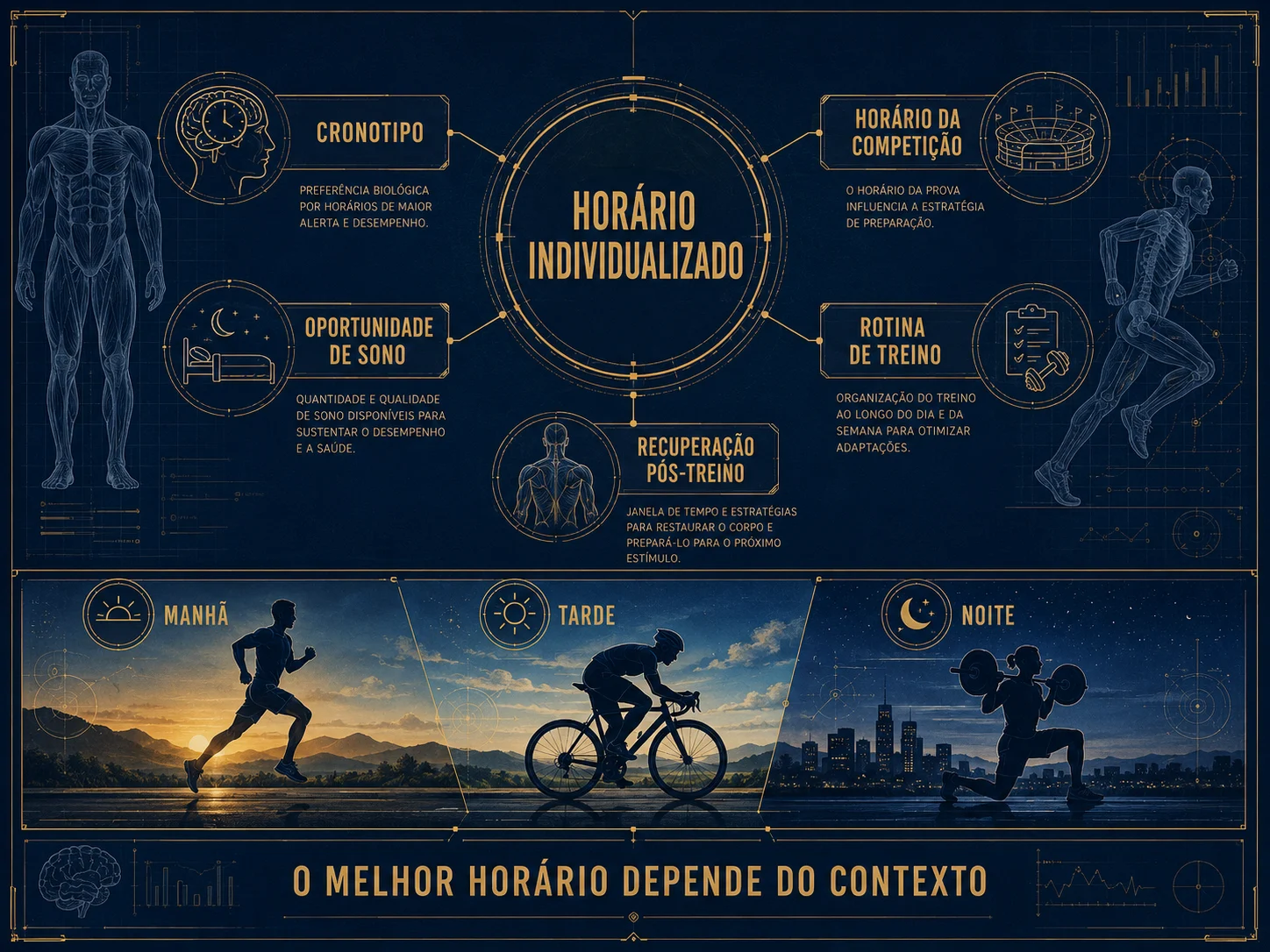
The answer is not the same for everyone. Another experiment showed that the effect of nighttime exercise can vary according to chronotype. Morning and afternoon participants did not respond exactly the same way to the same training time. Thomas et al., 2020.
Therefore, “don’t train at night” is an exceedingly poor rule. For many people, nighttime is the only viable time. Eliminating a consistent exercise routine can cause more harm than adjusting some elements of the session.
In athletes, competition time also matters. Performance throughout the day may vary depending on chronotype and time since awakening. Facer-Childs and Brandstaetter, 2015.
When life happens at night
Night shifts, travel, international competitions, shifts and small children are not discipline failures. These are contexts that profoundly alter the possibility of aligning light, food, exercise and sleep.
In a forced desynchronization experiment, misalignment between behavior and internal clock impaired glycemic control, blood pressure, sleep efficiency and other metabolic markers. The protocol was artificial and involved few participants, but it demonstrated that the body also responds to when we perform each activity. Scheer et al., 2009.
In a laboratory model of night work, maintaining eating during the day prevented some of the internal misalignment and glucose intolerance observed when participants ate at night. Chellappa et al., 2021.
Actual application requires caution. A night shift worker can't just pretend to be asleep when they need to remain alert and productive. In these cases, the objective becomes to reduce the conflict between signals and protect as much as possible: opportunity for sleep, dark environment during rest, planned lighting, tolerable food and regularity within the shift as possible.
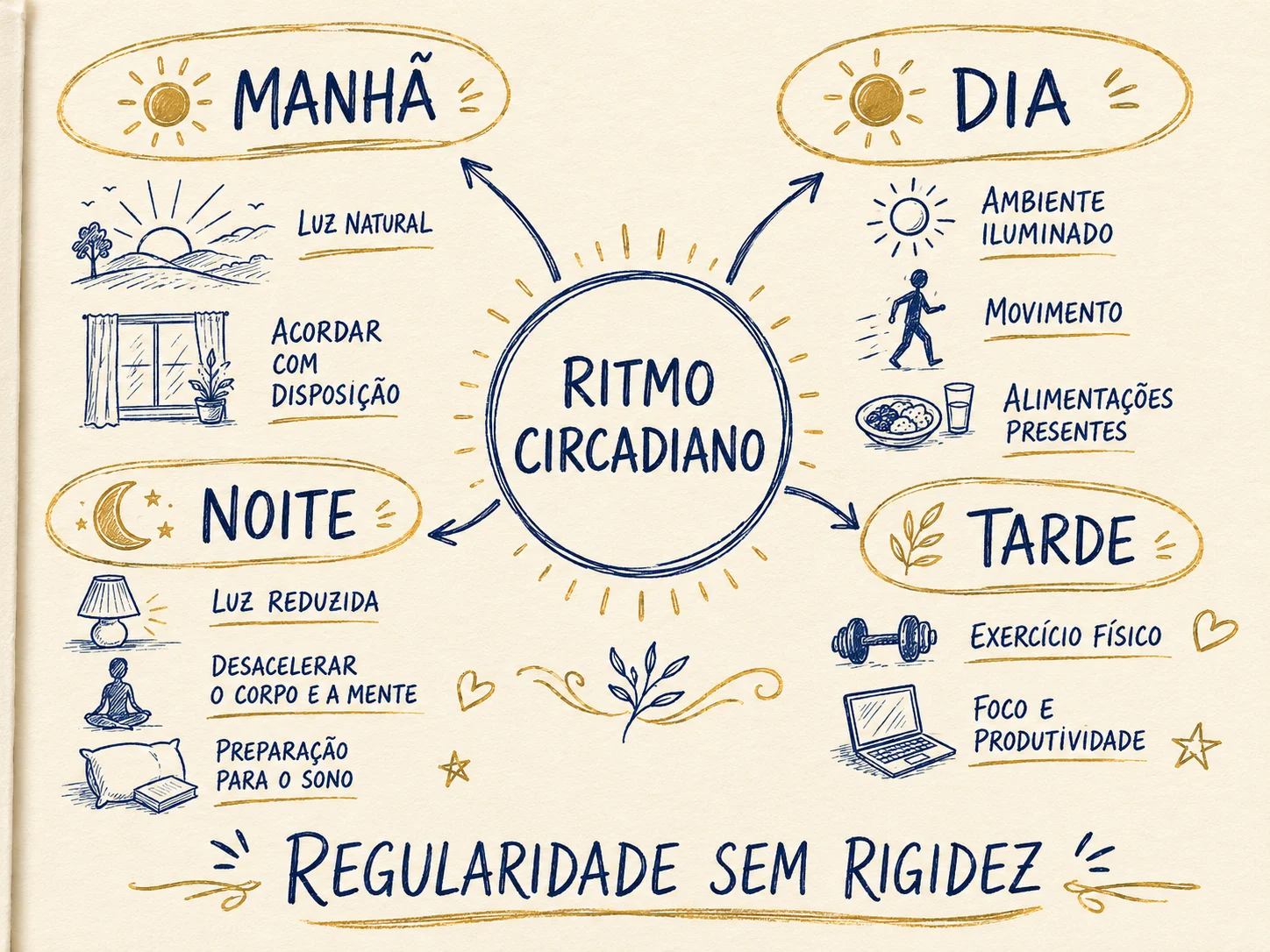
A practical hierarchy to organize rhythm
When many strategies appear at the same time, start with the one that has the greatest impact.
Only after this base is it worth discussing light filters, supplements, millimetric schedules or highly specific protocols. Refinement must come after structure.
Your biological clock does not need perfection. It needs consistency.
A healthy circadian rhythm is not born from an isolated nighttime ritual. It emerges from a day that begins brightly enough, remains active and bright, distributes food and exercise in a recognizable way, and ends with a progressive reduction of stimuli.
The goal is not to live on time. It means the body doesn't have to guess, every night, whether the day is really over.
When light, sleep, food and training tell the same story, the body works with less conflict. And this coherence can appear where it matters most: sleep quality, alertness, recovery, metabolism and ability to sustain performance.
Before trying to improve your night, look at the message sent by your whole day.
Verified references
Reading noteStudies vary in design, population and context. Laboratory protocols of light, exercise, dietary restrictions, and night work do not support universal schedules; serve to guide decision criteria.