
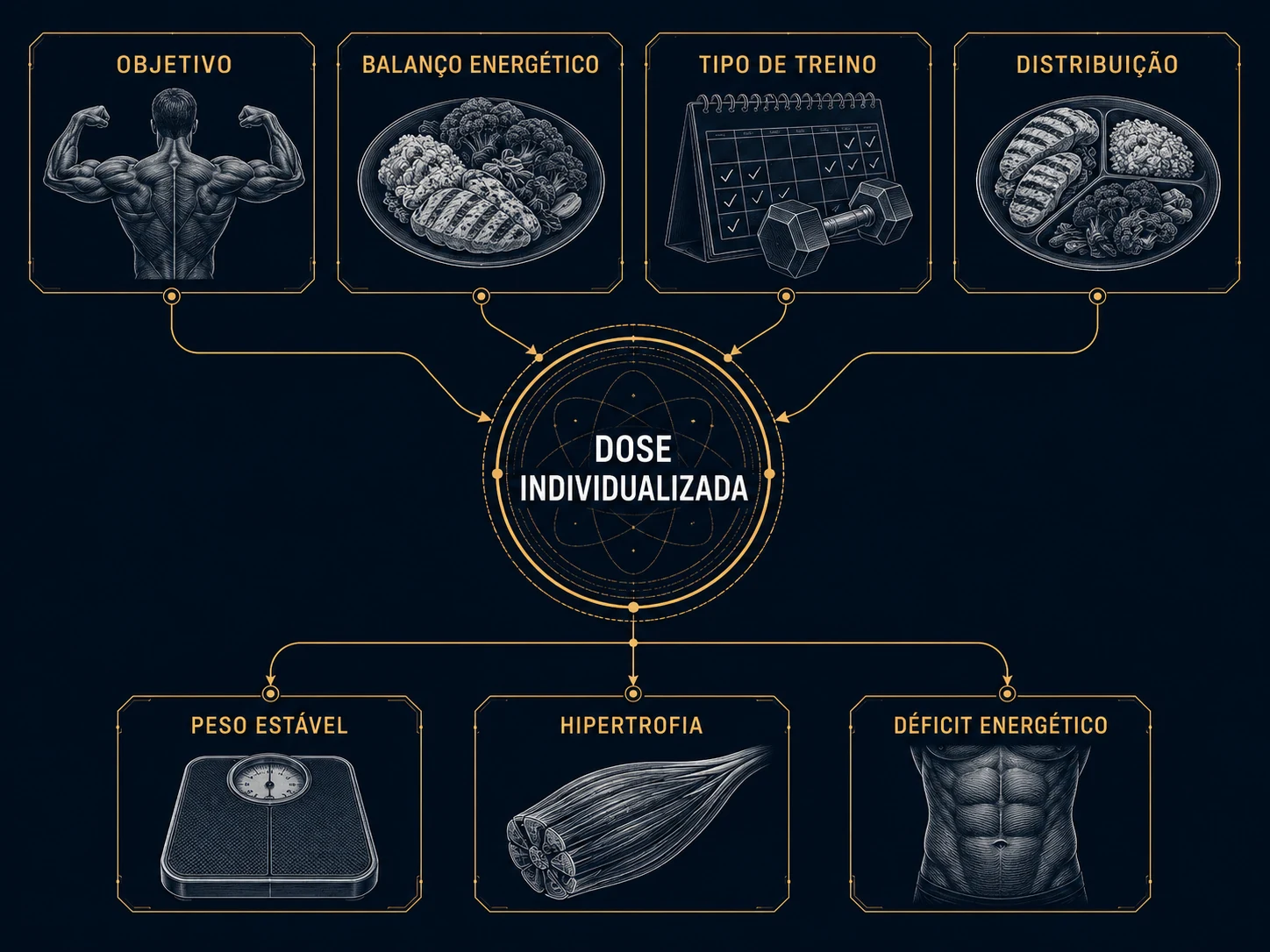
The question “how much protein does an athlete need?” seems to ask for a number. In practice, it hides different decisions.
Are we trying to avoid insufficient intake? Maximize training adaptations? Preserve muscle mass during weight loss? Improve recovery between sessions? Or just find a food distribution that the athlete can maintain?
The same intake may be sufficient in a week of lower load, inadequate during an aggressive energy deficit and unnecessarily high when it begins to replace important carbohydrates for training.
Protein should not be treated as a competition to see who can consume the most. It should be treated as strategy.
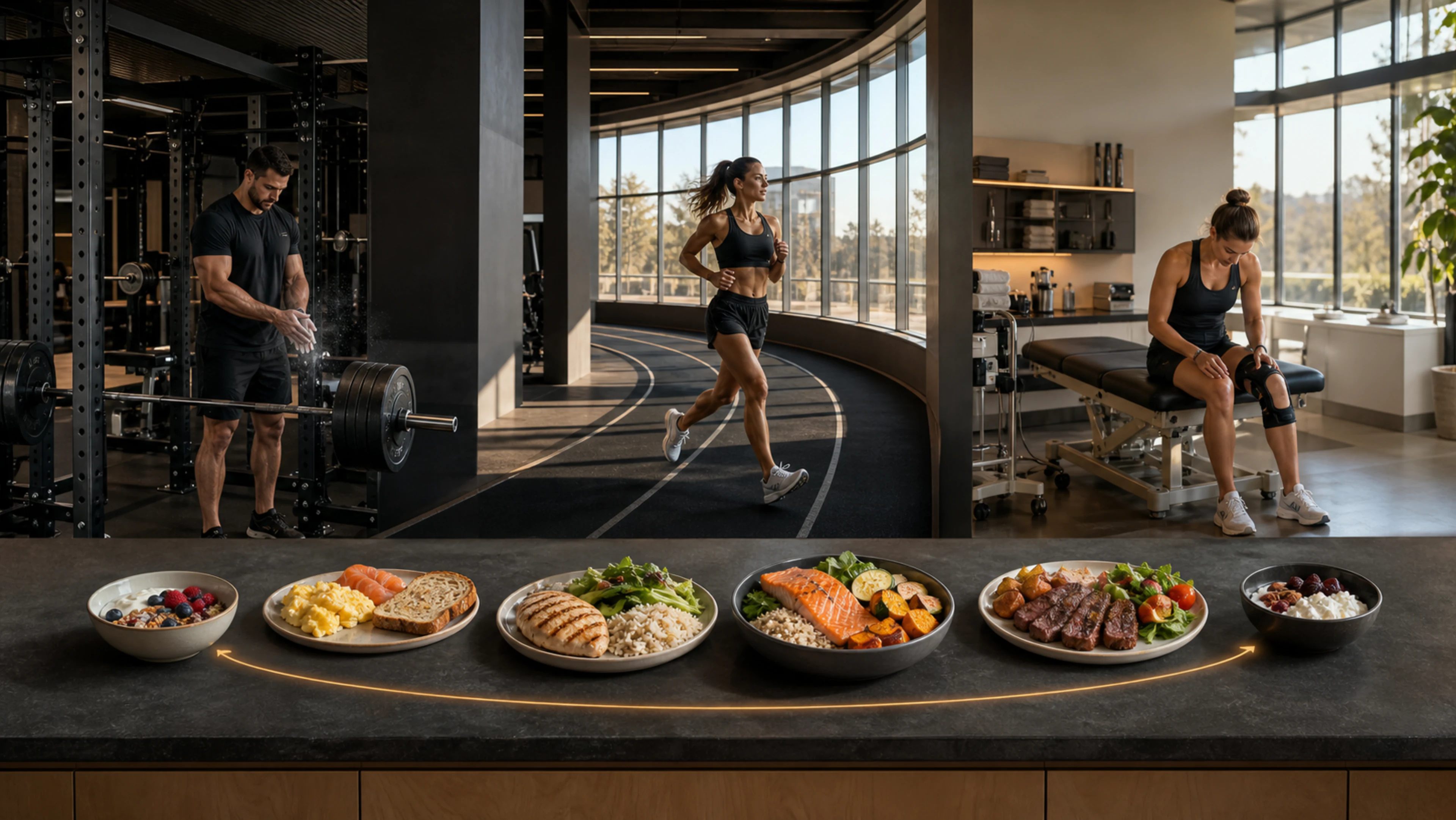
The nutritional minimum is not the same as the athletic optimum
The recommendation of approximately 0.8 g/kg/day is an adequacy reference for healthy adults in the general population. It was not built to optimize recovery, muscle remodeling or adaptation to training.
Athletes subject muscle tissues, tendons, contractile structures, enzymes and mitochondrial proteins to greater renewal. This does not mean that they need to ingest unlimited amounts. It just means that the sports question is different from the question used to avoid disability.
Scientific positions usually place the intake of physically active people between 1.4 and 2.0 g/kg/day, depending on the type of exercise, volume, objective and energy balance. Jäger et al., 2017.
This range should be understood as a starting point. The final decision depends on the work that the protein needs to do within the strategy.
Why 1.6 g/kg/day became a useful practical anchor
A meta-analysis with 49 studies and 1,863 participants identified that the additional benefit of protein supplementation on fat-free mass gains during resistance training tended to stabilize around 1.62 g/kg/day. Morton et al., 2018.
This result helped transform 1.6 g/kg/day into a practical reference. But there are three important details.
First: this number represents an average response, not an individual biological ceiling. Second: the range of uncertainty was wide. Some athletes can achieve adequate intake with less; others may benefit from a higher margin. Third: the additional effect of the protein was real, but modest. Training continued to be the main stimulus.
A later meta-analysis of 74 clinical trials also found small benefits of increasing protein for lean mass in people who performed resistance training. The effects on strength were less consistent and depended on the exercise evaluated. Nunes et al., 2022.
Therefore, 1.6 g/kg/day is an excellent operational center for many athletes in energy balance. It is not a boundary after which the protein “stops working”.
The daily amount is only half the strategy
An athlete can reach 140 g of protein per day and still distribute it in a barely functional way: almost nothing at breakfast, a moderate amount at lunch and a huge concentration at dinner.
Muscle responds to repeated exposure to amino acids throughout the day. Therefore, in addition to the daily total, it makes sense to organize meals capable of stimulating protein synthesis consistently.
Dose-response studies in young adults have placed the mean maximum response at approximately 0.24 g/kg per meal, with relevant individual variation. In older adults, the estimate was higher, close to 0.40 g/kg. Moore et al., 2015.
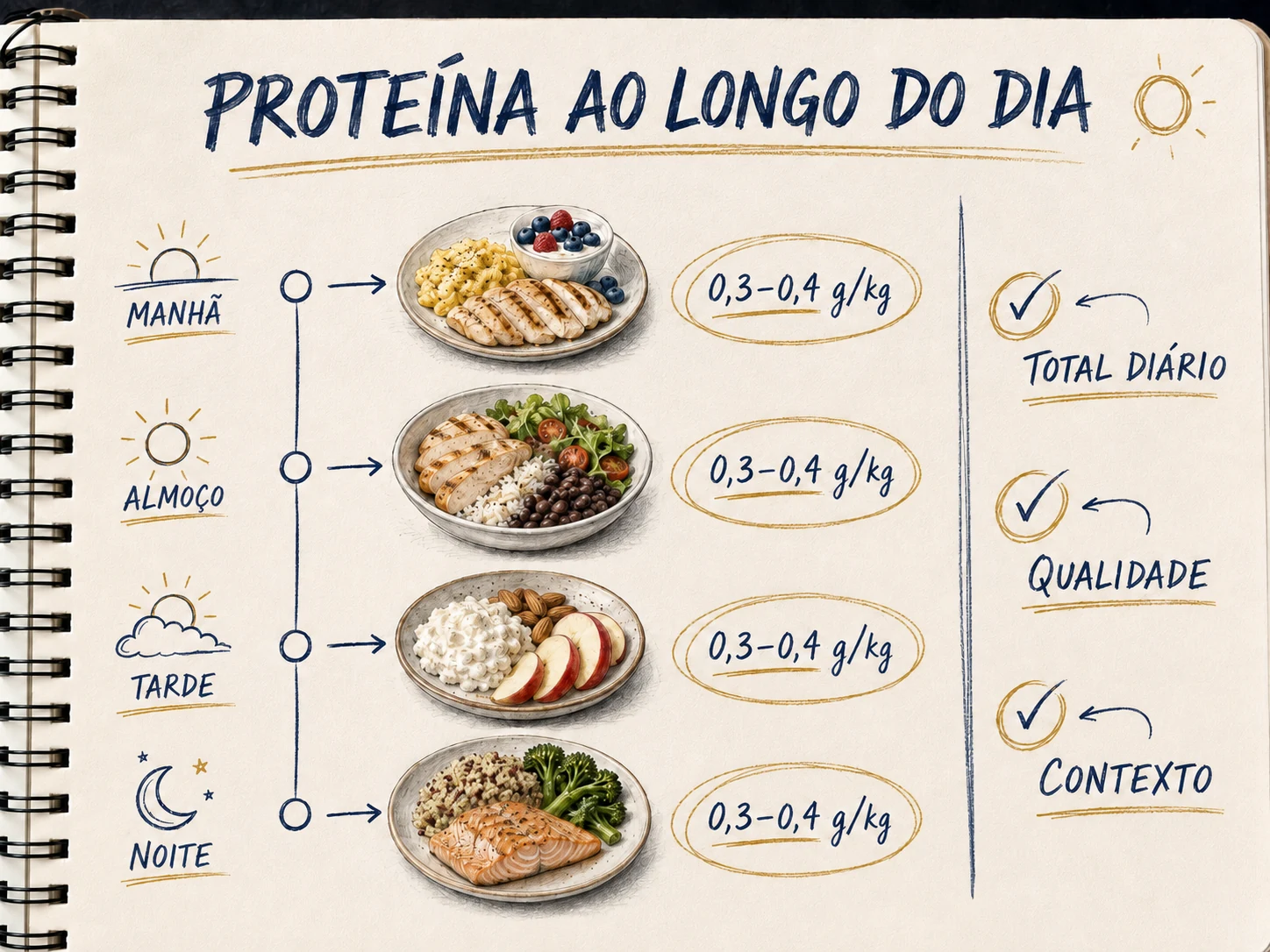
In sports practice, a range of 0.3 to 0.4 g/kg per meal offers a more useful margin, especially when considering protein quality, mixed meals and different ages.
For an 80 kg athlete, this represents approximately 24 to 32 g per meal. Spreading out four meals weighing about 32 g would provide approximately 128 g over the course of the day — exactly 1.6 g/kg.
One study compared three ways of distributing 80 g of whey during 12 hours of recovery: 8 doses of 10 g every 1.5 hours; 4 doses of 20 g every 3 hours; or 2 doses of 40 g every 6 hours. The intermediate distribution produced greater myofibrillar protein synthesis during that period. Areta et al., 2013.
This was a small, acute study in trained men. It does not show that everyone needs to eat at mathematically precise intervals. One distribution pattern performed better in that protocol. In daily life, spreading protein sources across meals may help achieve adequate intake; this trial alone does not demonstrate greater long-term hypertrophy with every distributed eating pattern.
The body does not have an “absorption limit” of 20 grams
For a long time, 20 g was presented as the maximum amount that the body could use. This interpretation mixes intestinal absorption with muscular response.
The body can digest and absorb much larger quantities. What changes is the fate of the amino acids: synthesis of different body proteins, production of enzymes and molecules, energy oxidation, formation of urea and other metabolic processes.
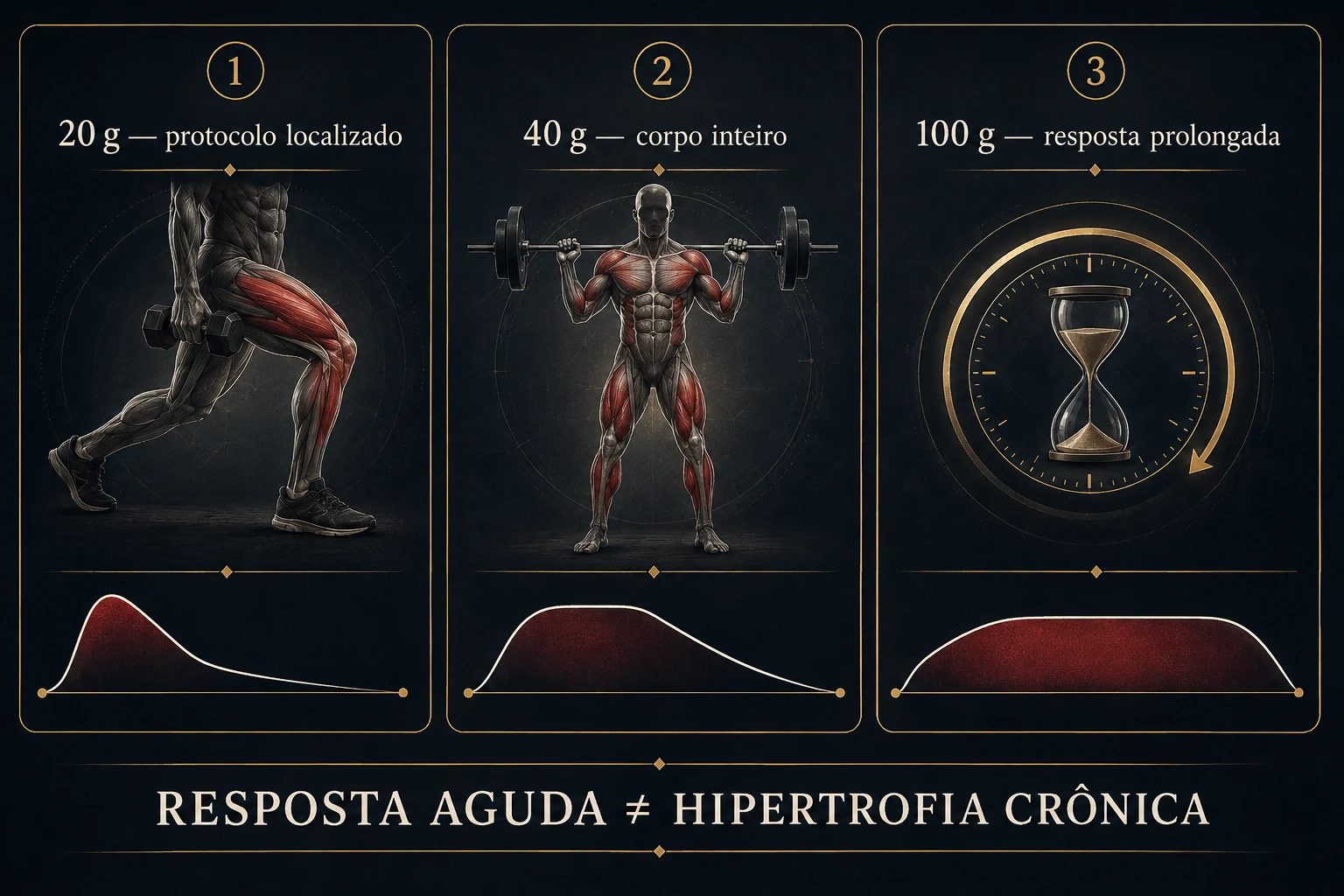
The first studies that popularized 20 g used trained young people and exercises involving a limited amount of muscle mass. In this context, 20 g of whey was sufficient to maximize the assessed myofibrillar response. Witard et al., 2014.
When the protocol involved full-body resistance training, 40 g of whey produced a greater acute response than 20 g. Macnaughton et al., 2016.
More recently, ingestion of 100 g produced a greater and more prolonged anabolic response than 25 g during the 12 hours of recovery observed in the study. Trommelen et al., 2023.
These studies measured metabolism and protein synthesis in acute periods. They have not demonstrated that a 100 g dose will produce more hypertrophy after months of training.
The correct conclusion is more sober: 20 g does not represent a universal ceiling. The functional dose depends on the amount of muscle recruited, the size of the meal, the time until the next meal, the quality of the protein and the rest of the day.
Protein also matters for endurance athletes
Associating protein only with hypertrophy ignores an important part of adaptation to exercise. Endurance athletes also need to repair muscle structures, renew contractile proteins and sustain processes related to mitochondrial adaptation.
In young endurance-trained men, 30 g of protein after exercise was sufficient to maximize myofibrillar protein synthesis. Body protein balance and incorporation of dietary-derived amino acids responded to increasing dose, although the mitochondrial response was more complex. Churchward-Venne et al., 2020.
This does not make protein the main fuel for endurance. Carbohydrates remain decisive for sustaining intensity, restoring glycogen and preserving training quality.
An excessive protein intake that reduces space for carbohydrates can produce an apparently disciplined but sportingly poorly organized diet.
How the ideas connect
Female athletes should not receive an automatic copy of male data
Much of the classical literature on protein synthesis was conducted in young men.
A study of 24 trained women compared 15, 30 and 60 g of whey after two sessions of full-body resistance training. Doses of 30 and 60 g increased protein synthesis, with no significant difference between them; 15 g did not produce the same response. Mallinson et al., 2023.
The result suggests that 30 g was sufficient in that protocol. It does not demonstrate that all women need exactly this amount nor that women always need less protein.
Modality, body mass, training phase, energy availability, age and diet quality continue to modify the decision.
When increasing protein actually makes sense
The argument for increasing intake becomes stronger during energy restriction, especially when the athlete wants to reduce fat while preserving muscle mass.
In a four-week trial, young men were subjected to an energy deficit of approximately 40% and six days a week of intense training. The group that received 2.4 g/kg/day preserved — and in that protocol increased — more lean mass than the group that received 1.2 g/kg/day. Longland et al., 2016.
It is a relevant result, but the context was extreme: marked energy deficit, short intervention, large training volume, young participants, controlled feeding and comparison with 1.2 g/kg/day.
Therefore, 2.4 g/kg/day may be a justifiable strategy in certain periods of weight loss. It should not become the standard recommendation for every athlete throughout the year.
The greater the deficit, the lower the fat percentage and the greater the need to preserve lean mass, the more reasonable it is to work in the upper part of the range. Still, increasing protein does not correct chronic low energy availability, insufficient sleep, or a training program incompatible with recovery.
Protein for athletes: the right dose depends on the job it needs to do
- Why 1.6 g/kg/day became a useful practical anchor
- The daily amount is only half the strategy
- When increasing protein actually makes sense
And the kidneys?
In healthy adults without kidney disease, all available trials do not demonstrate that higher protein diets alone cause loss of kidney function.
A systematic review and meta-analysis with 28 studies and 1,358 participants found no relevant differences in changes in kidney function between higher and lower protein diets. Devries et al., 2018.
This does not authorize two extrapolations. The first is to assume that any amount of protein will be safe indefinitely. Many studies are limited in duration and use indirect markers. The second is to apply the same data to people with kidney disease, important metabolic changes or clinical conditions that change protein management.
For healthy athletes, the argument against overeating is primarily lack of added benefit, cost, digestive tolerance, and space taken away from other nutrients—not an automatic narrative of kidney damage.
A practical range to start with
The ranges below are operational references for healthy adults. They do not replace individual assessment.
- Spread out three to five protein exposures.For many athletes, four meals work well.
- Prioritize sources with a good profile of essential amino acids.Food occupies the base; Supplements come in for convenience.
- Don't sacrifice carbohydrates needed for training.Protein does not compensate for a session performed without fuel.
- Observe tolerance and compliance.A theoretically perfect dose that causes discomfort or makes routine unfeasible is not a good strategy.
- Reevaluate when the context changes.Load, body composition, energy availability, injury and calendar modify the decision.
The best dose is the one that solves the right problem
Protein science evolved when it stopped looking for a universal number.
Twenty grams may be sufficient in one situation and insufficient in another. One hundred grams can sustain a prolonged metabolic response without being the best choice for routine. An intake of 2.4 g/kg may make sense in an aggressive deficit and only take up space when the athlete is in energy balance.
For many athletes, 1.6 g/kg/day, distributed in meals of 0.3 to 0.4 g/kg, represents a solid starting point.
High performance nutrition is not about finding the biggest number. It is about finding the dose that improves adaptation without compromising the rest of the strategy.
Verified references
Reading noteAcute results of protein synthesis were differentiated from chronic adaptations. The ranges shown are operational references for healthy adults, not universal prescriptions.