

There are goals that pull us forward and, at the same time, make the present insufficient. When each achievement becomes just the platform for the next, evolving and feeling evolution are no longer the same thing.
Dopamina, by Daniel Z. Lieberman and Michael E. Long, uses this conflict to make a powerful distinction: wanting is not liking. The authors describe systems focused on the future, possibility and “not yet” in contrast to circuits linked to the experience of what is available now.
The metaphor is useful. As a total brain explanation, it is too simple. It was precisely this tension that made reading productive for me.
The next goal can guide the way. It should not erase the ground that is already underfoot.
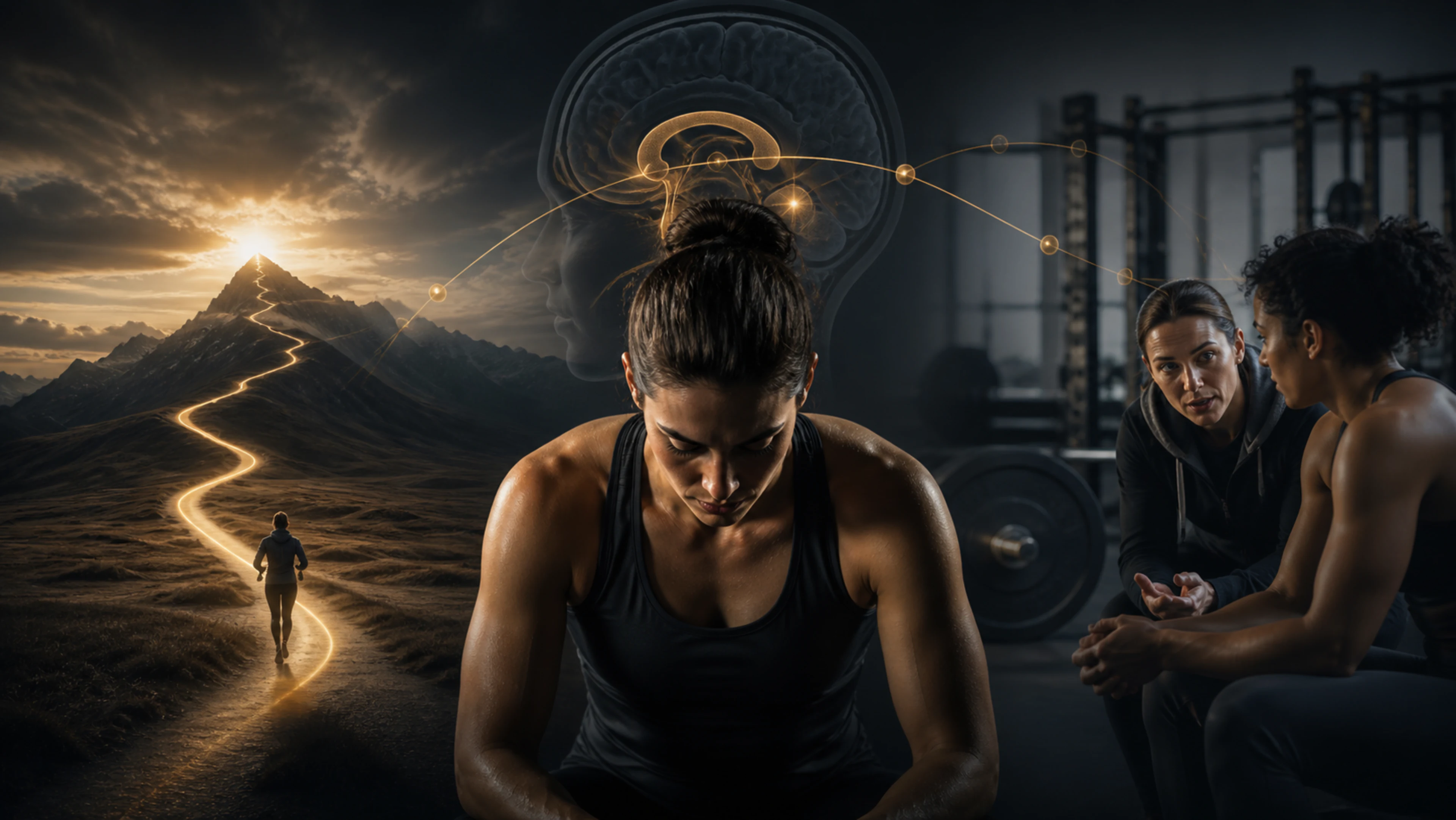
Dopamine is not synonymous with pleasure
The expression “pleasure hormone” is popular because it fits into a caption. Neuroscience doesn't fit. Dopamine is a neurotransmitter with different functions depending on circuit, receptor, time and context. In reward systems, it especially participates in learning, attribution of motivational value, expectation, vigor and decision to invest effort.
Research by Kent Berridge and Terry Robinson helped separate liking — the pleasurable impact — of wanting — the power of a stimulus to make us want it. The two processes can go together, but they don't have to. It is possible to intensely desire something that already delivers little pleasure.
This explains an important part of sporting ambition. An imagined medal can organize years of training before it exists. Anticipation moves behavior. But when this mechanism becomes the only explanation, we begin calling every burst of enthusiasm “dopamine” and every difficulty a “lack of dopamine.” We lose precision and, almost always, humanity.
How the ideas connect
The brain learns from difference
One of the most robust dopamine models involves reward prediction error: the difference between the expected and obtained outcome. When something is better than predicted, certain dopaminergic neurons increase their response; when what is expected does not happen, the response drops. With learning, the signal migrates from the reward to the cue that announces it.
In practice, it is not a simple measure of happiness. It is part of a system that updates expectations. The feedback from the environment says: continue, review, pay attention, this was worth more or less than you calculated.
Training without feedback weakens this cycle. If an athlete only hears “more” and never knows what the session developed, which change matters, or how execution improved, effort becomes detached from learning. A distant goal may start the movement; timely feedback helps sustain it.
Motivation also calculates effort
Dopamine participates in the willingness to work for a reward. Experimental studies show that dopaminergic changes can change the choice between low-cost and low-value or high-cost and higher-value options. This does not mean that motivation is a substance. It means that the brain evaluates cost, probability, value and internal state when organizing action.
This reading changes the conversation with those who seem “unmotivated”. Before looking for a moral defect, it is worth reviewing the system: is the objective clear? Is progress visible? Is the cost compatible with the moment? Is there energy and recovery? Does the person participate in the decision? Does the reward still make sense?
The book itself assigns dopamine roles in planning and persistence as well as novelty seeking. Treating the molecule as an enemy of discipline would therefore reverse part of its argument. The useful application is to organize behavior: anticipate obstacles, adjust the environment, and define the next step, without promising to control a neurotransmitter through willpower.
Discipline does not eliminate this math. It helps to act when the immediate value has dropped, but it depends on environment, identity, routine and capacity. Even the most committed athlete loses quality when every cost is interpreted as a test of character.
From concept to decision
The future can colonize the present
The book powerfully describes the restlessness of those who live oriented towards the next achievement. In high performance, this stance is celebrated. There is always a bigger load, a better percentage, another competition, a new contract.
Ambition is not the problem. The problem appears when it makes it impossible to register sufficiency, bonding and pleasure in the process. The brain learns that arriving is never arrival. The achievement produces brief relief and soon becomes a new gap.
Presence, in this context, does not mean abandoning goals or lowering standards. It means giving feedback a resolution: recognizing what worked, noticing the body, enjoying relationships, and allowing the lived result to update experience—not just the spreadsheet.
The final chapter adds an important point: developing a skill can bring pursuit and satisfaction closer together. Learning a movement, receiving feedback, and noticing improvement offer something different from simply waiting for the next prize. In training, my application is to acknowledge a specific improvement from the session without immediately turning it into another demand. This describes a coaching practice, not a dopamine measurement.
A motivation cycle with feedback
Set a direction that has value and an understandable next step.
Adjust the cost to the available capacity, without confusing sacrifice with quality.
Show what has changed, what has not yet changed and which action deserves repetition.
Record the experience, the bond and the achievement before opening another gap.
Four applications to high performance
- Swap abstract goals for proximate signalsConnect the end goal to observable behaviors and feedback that arrives in time to guide the next attempt.
- Don't medicalize normal oscillationFatigue, frustration or boredom do not prove a “dopamine problem”. First investigate sleep, energy, charge, context and meaning.
- Build pleasure into the processAutonomy, competence, belonging, and variety can make the path livable without relying on constant euphoria.
- Close cyclesAfter a competition or block, recognize what you learned before formulating the next demand.
The central shift
Desire is not the same as enjoyment
- Dopamine is not synonymous with pleasure
- The brain learns from difference
- Four applications to high performance
The molecule is not the person
The book's central contrast clarifies, but its division between a “dopamine of the future” and substances of the “here and now” compresses much more interdependent biological networks.
Neurotransmitters have no intention, morals or personality. Dopamine is not bottled ambition, and oxytocin, serotonin, endorphins or endocannabinoids do not form a single block of present satisfaction. Behavior emerges from circuits, learning, body, relationships and environment.
This limitation matters especially in the chapters on creativity, politics, and migration. The authors move from specific studies to broad interpretations of people and societies; those passages do not carry the same weight as research on learning and reward. A political preference, an artistic achievement, or a relationship difficulty cannot reveal someone’s dopamine level. The authors themselves warn at the outset that the final chapters contain speculation.
This caveat does not invalidate the book as an instrument for reflection. It prevents an elegant metaphor from becoming an improvised diagnosis or a miracle product. There is no “dopamine detox” capable of rebooting a brain like a device. Yes, there are environmental choices that reduce cues, friction and repetition of behaviors that are no longer useful.
What remained after the final page
I learned to distrust systems that only know how to create mistakes. They can produce movement for a while, but they come at the price of turning every present into a delay.
In sustainable performance, the future points the way; effort builds; feedback teaches; presence gives meaning. Motivation does not need to be constant. It needs a system that remains coherent when novelty fades.
Wanting sets us in motion. Enjoyment reminds us why it's worth continuing.
References
- The Molecule of More: How a Single Chemical in Your Brain Drives Love, Sex, and Creativity—and Will Determine the Fate of the Human Race.
Educational content. Persistent symptoms, psychological distress, or clinical concerns require professional assessment; they cannot be explained by a single neurotransmitter.