

The juice is red, the protocol seems simple and the promise fits in one sentence: drink it before training to bring more oxygen to the muscle and perform better.
Physiology is more interesting — and less automatic.
The main ergogenic ingredient is not the color, the volume of the cup or a generic idea of “antioxidants”. It's the inorganic nitrate. When the dose is sufficient and the body is able to convert it properly, the availability of nitric oxide increases, a molecule involved in vascular regulation, contractile efficiency and the energy cost of exercise.
This creates a real possibility of earning. Not a guarantee.
In 2026, new syntheses strengthened the favorable signal for beetroot juice, but also made it clearer where the communication tends to exaggerate. The average effect tends to be small, changes depending on the outcome and may be smaller precisely in those who are already close to the physiological ceiling.
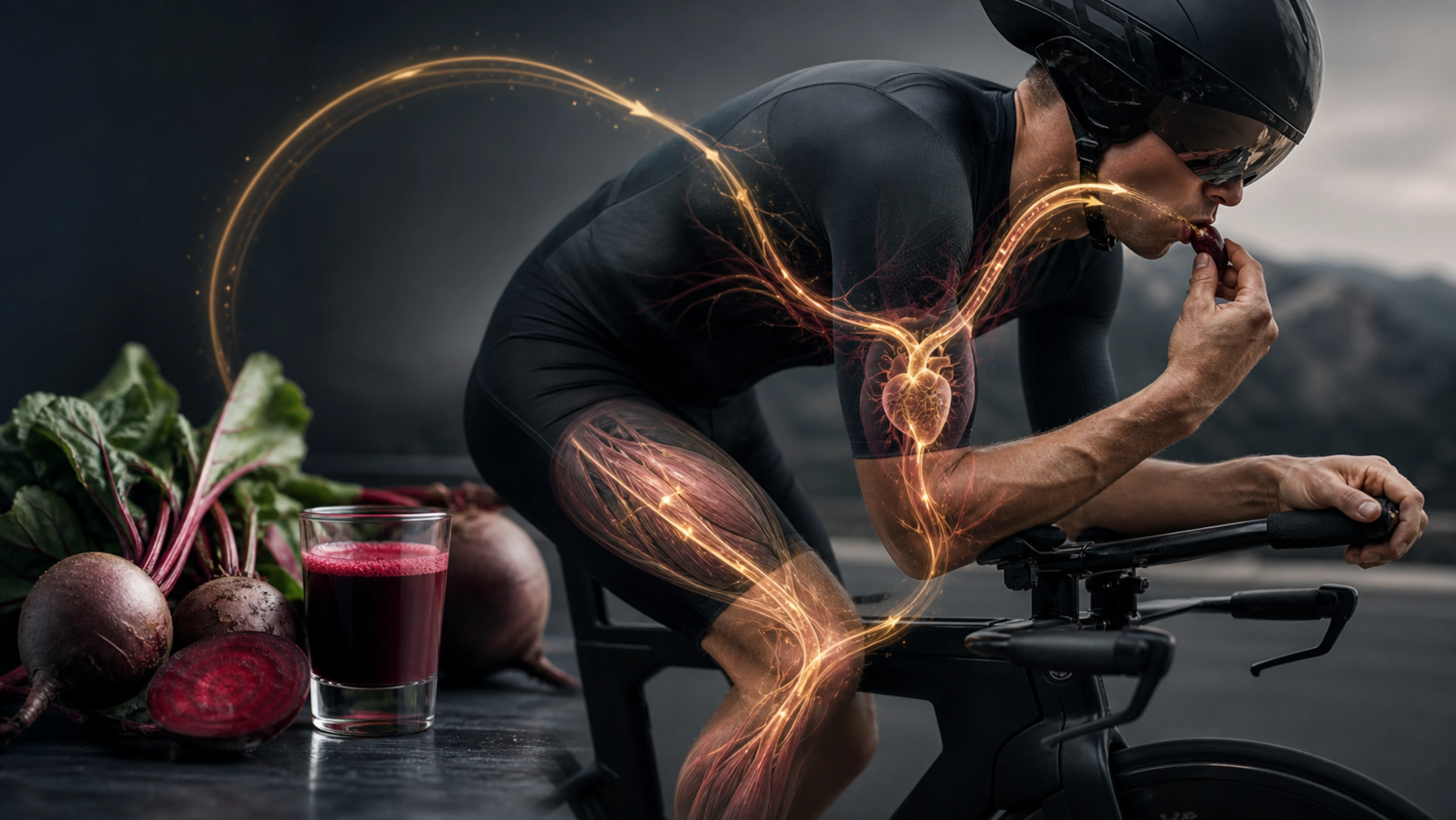
The path starts in the mouth, not in the muscle
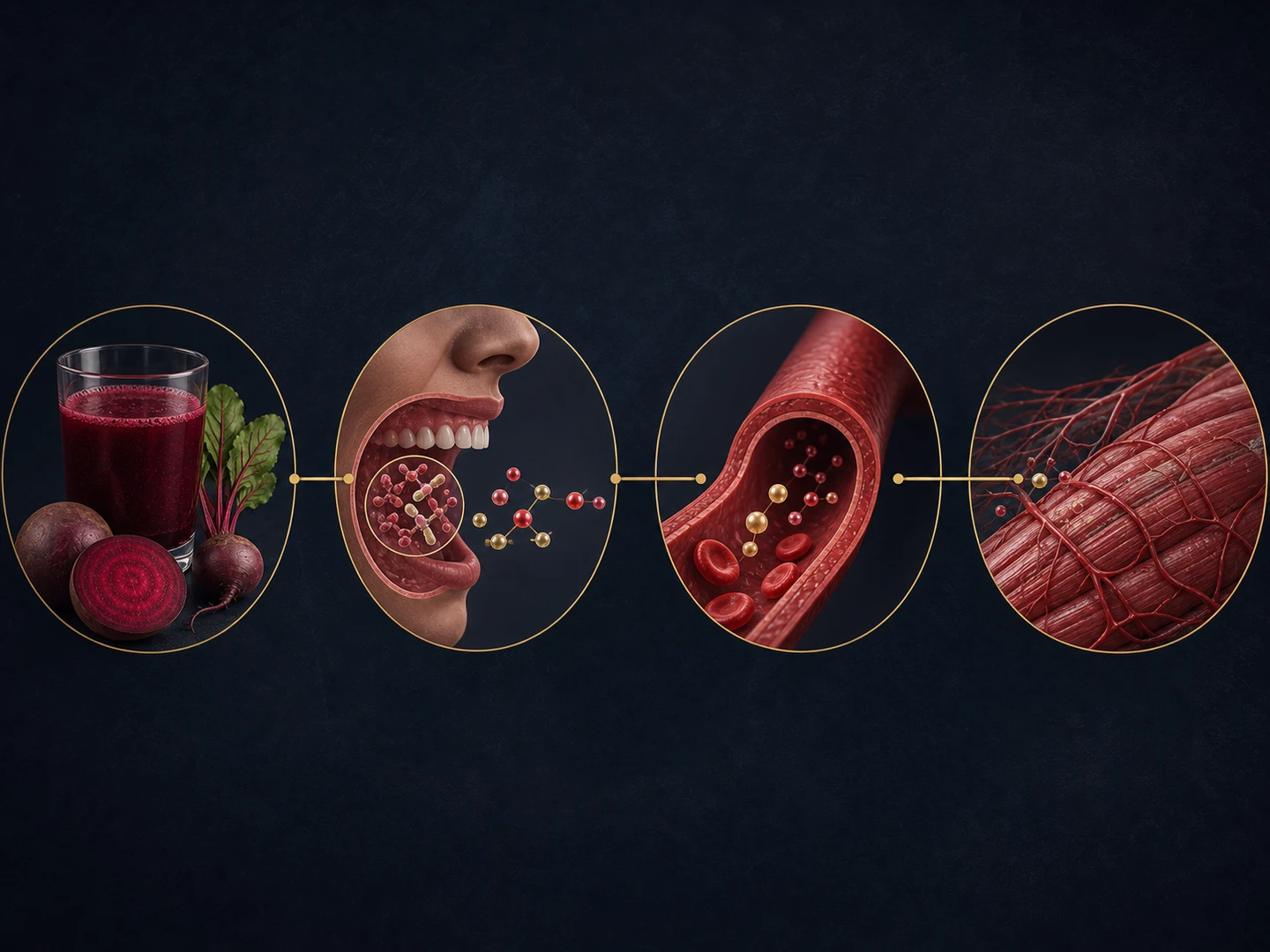
After ingestion, the nitrate is absorbed and part of it returns to the saliva. Bacteria in the oral cavity reduce nitrate to nitrite. When swallowed, this nitrite can contribute to the formation of nitric oxide, especially in environments with less oxygenation and greater acidity — conditions present in intensely working muscles.
Nitric oxide participates in processes that can be useful during exercise: modulation of vascular tone, blood flow distribution, mitochondrial respiration and calcium handling in the muscle. In some contexts, the body is able to produce the same power with a lower oxygen cost or better sustain intense efforts.
Therefore, just saying that beets “take more oxygen” is a simplification. The gain may involve efficiency and contractile function, not just increased blood delivery to the muscle.
The oral microbiota also explains an unusual recommendation: Antibacterial rinses can reduce the conversion of nitrate to nitrite. This effect may interfere with the nitrate protocol. A prescribed rinse should not be interrupted to try to improve performance: the dental indication should be discussed with the responsible professional.
What the latest evidence really shows
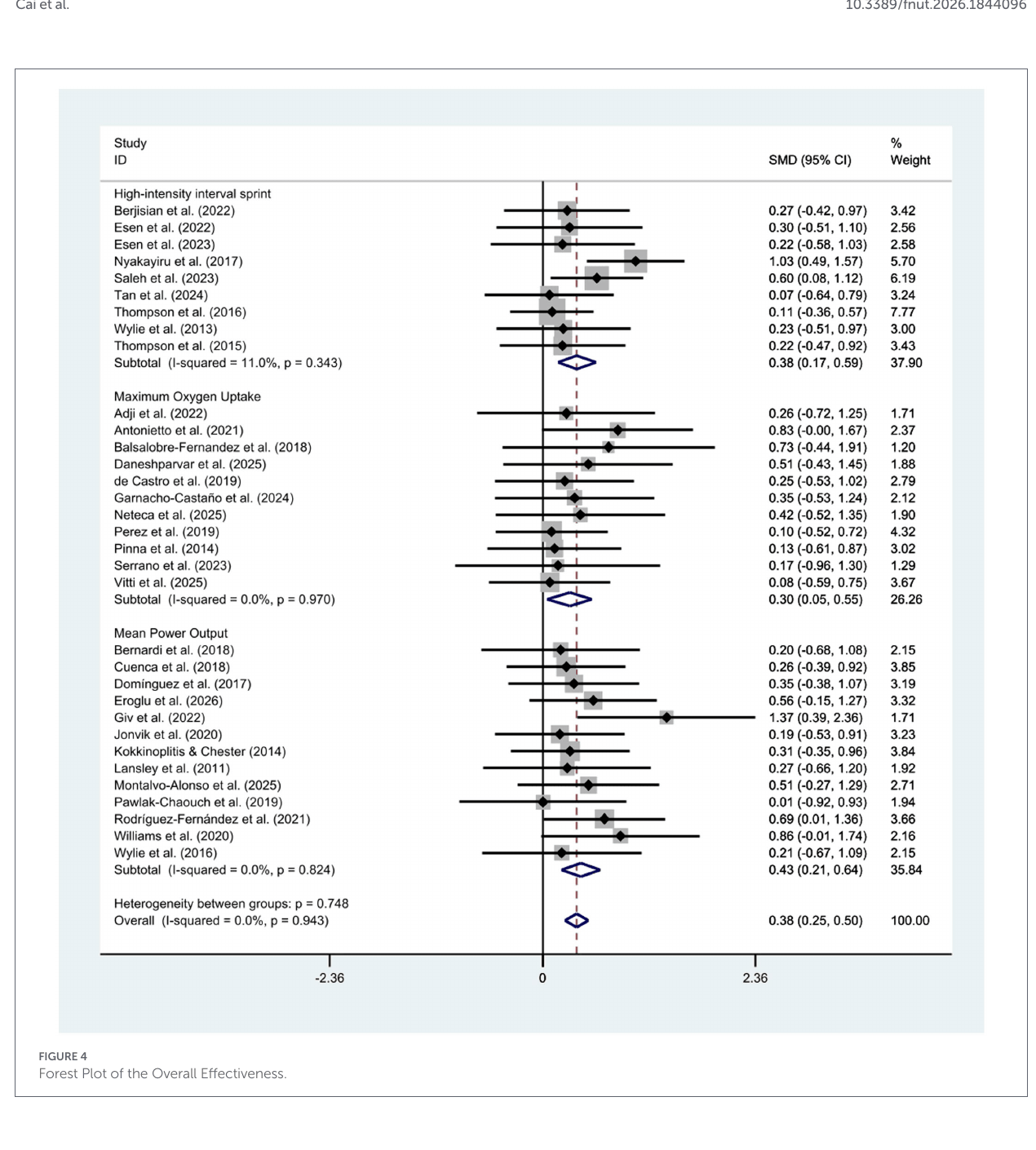
A systematic review with meta-analysis published in June 2026 brought together 33 studies and 519 participants, including professional and amateur athletes. The authors found average improvement in high-intensity interval sprinting, average power and VO₂max.
Small average favorable effect on repeated high-intensity tasks.
Small to moderate pooled effect, with individual studies imprecise.
Small effect, without automatically equivalent to competitive improvement.
The three results received moderate certainty in the GRADE system. The reduction occurred because several trials poorly described randomization and allocation concealment, and there was a practical problem of blinding: color and flavor make it difficult to hide who received nitrate-rich beetroot.
It is also necessary to look at what was not included in the analysis. The work selected only VO₂max, average power and interval sprint. It does not alone resolve effectiveness in time trials, real events, maximum strength, recovery or technical performance.
A meta-analysis published the following month brought more precision to VO₂max/VO₂peak. Across 38 studies and 703 participants, the average gain was small. After correction for the possible effect of small studies, it was even smaller. The signal was clearer in recreationally active people and did not appear convincingly in highly trained athletes.
This does not mean that the resource is useless for the elite. It means that, for this group, the literature average does not replace the individual test.
There is also insufficient evidence for a distinct female prescription. In the July 2026 summary, 68% of participants were men; in the other review, the available information did not allow adequate analysis of differences by sex and age. Women can respond, but the magnitude and possible modulators have not yet been defined with the same precision.
Where the bet seems more reasonable
The body of literature suggests potential utility in endurance efforts in which economy and tolerance matter; repeated intense tasks that resemble part of the demands of team sports; muscular endurance and some power markers; and hypoxic situations.
In trained football players, for example, six days of approximately 800 mg of nitrate increased distance on the Yo-Yo IR1 by 3.4% in one trial. In contrast, studies of trained rugby players, elite endurance athletes, and trained sprinters have also yielded null results.
These studies do not cancel each other out. They remind you that “high intensity” can mean a block of repeated sprints, a Wingate, an intermittent test or a single 100-meter run. The relative participation of fatigue, phosphocreatine resynthesis, economy, and technique changes between these tasks.
Confidence is moderate for a small average benefit on specific outcomes, low for predicting an individual athlete's response, and low for promising competitive improvement in elite athletes.
The dose must be on the label
The most common mistake is to prescribe “one glass”, “one shot” or “70 mL”. Volume is not a dose of nitrate.
Content varies with cultivar, soil, harvest, storage and processing. In commercial products, variation can also occur between brands and even between batches. A laboratory analysis found an approximately 50-fold difference between the product with the lowest and highest content; only five out of 24 options consistently delivered at least 5 mmol per serving.
The first criterion, therefore, is simple: the product needs to declare how many millimoles or milligrams of nitrate it provides per dose.
Close to the lower limit found in part of the literature.
Start of conservative practice range used in recommendations.
Top of initial range 6–8 mmol.
Higher dose, which must be tested and individualized.
A homemade juice can be part of an excellent diet. The problem is treating it as a precision ergogenic protocol: without analysis, there is no way of knowing whether the target dose was reached.
How the ideas connect
A field protocol without turning the shot into superstition
The published recommendations are not identical. The Australian Institute of Sport works with 6–8 mmol — about 350–500 mg — two to three hours beforehand. An expert consensus proposed 8–16 mmol acutely two to four hours earlier. Recent reviews have observed more consistent responses starting at approximately 6 mmol and, for some outcomes, after at least three consecutive days.
For most practice tests, a conservative approach is to start with 6–8 mmol (372–496 mg), two to three hours before the target session.
- Define the task that should be improved.Choose an outcome: time, power, distance, ability to repeat sprints, pace at fixed load or quality of a specific session.
- Use a standardized font.Confirm nitrate by serving, ingredients and batch. For athletes subject to anti-doping control, prioritize products tested by a third party and approved in the team flow.
- Preserve the oral route.Avoid antibacterial mouthwash during the protocol period. It is not necessary to abandon oral hygiene; it is necessary not to block the desired conversion.
- Test before competing.Repeat the protocol in two or three comparable sessions. Record time, previous meal, product, dose, gastrointestinal tolerance and performance outcome.
- Consider a few days when there is reason.One option is to use 6–8 mmol daily for at least three days, keeping the last dose two to three hours before the task.
- Stop insisting when the athlete doesn't respond.Lack of benefit from repeated testing, gastrointestinal worsening, or logistical difficulty are useful findings.
Beetroot juice: the effect is not automatic.
- The path starts in the mouth, not in the muscle
- Where the bet seems more reasonable
- A field protocol without turning the shot into superstition
Small effect is not irrelevant effect
In recreational health, a very small difference may not change the experience. In performance sports, tenths, meters and watts can have value. This reasoning only works when the improved outcome connects to competitive demand, the protocol is tolerated and reproducible, and the gain does not hinder larger decisions.
Beetroot juice does not correct low carbohydrate availability, dehydration, poor sleep, poorly distributed load or inadequate heating. It should also not be automatically stacked with caffeine, bicarbonate and other resources just because each has some isolated evidence.
The value is in the marginal gain after the essentials work.
Also read about mitochondria and energy production, circadian rhythm and recovery and protein for athletes.
Safety, urine color and anti-doping
In acute and short-term protocols, beetroot juice is usually well tolerated. Reddish urine or stool may occur and usually reflects beet pigments, not bleeding. Gastrointestinal discomfort and heartburn are possible — yet another reason to test away from the competition.
Nitrate can also reduce blood pressure. People with low blood pressure, symptoms of dizziness, use of antihypertensives or relevant clinical conditions should discuss the strategy with the responsible professional. The safety of chronic supplementation in ergogenic doses is still less established than that of acute protocols.
Dietary nitrate and beetroot juice are not listed as prohibited substances on the 2026 WADA List. This does not make any supplement automatically safe. Undeclared content and contamination remain possible, and strict liability remains with the athlete. Batch-tested product reduces risk; does not offer an absolute guarantee.
The right question is not “does beets work?”
The useful question is: for this athlete, in this task, with this dose, at this time, is there a reproducible gain that justifies maintaining the protocol?
Evidence from 2026 allows us to answer that nitrate-rich beetroot juice can improve some performance outcomes. It also requires completing the sentence: the average effect is small, does not appear in all tests and appears less predictable in more trained athletes.
This does not weaken the strategy. Put it in the correct place.
Beetroot juice is neither a miracle nor an empty fad. It is a marginal gain tool that starts on the label, passes through the mouth and only ends when the athlete tests whether average science applies to their case.