

One of the most expensive decisions in high performance comes from two words treated as if they were synonymous.

Availability opens access; readiness qualifies the task that can be sustained.
The name was marked green
At 4:42 p.m., the session board was already set. Beside the athlete’s name was a green circle: available. He had completed rehabilitation, trained without pain, and responded well to the morning assessments. Everything that could fit in a column said he could take part.
In the first small-sided game, the team lost the ball. Ten players changed direction almost at once. He needed a fraction longer to brake, plant, and recover. He felt no pain. He did not fail either. Without realizing it, he simply chose a safer path and arrived after the play had already moved elsewhere.
The green circle was still accurate: he had access to training. But that half-beat of delay revealed something the board could not record. He still had to sustain the demand when speed, information, and consequence arrived together.
The decision was not to remove him from the process. It was to change the dose: less time in chaos, one more high-quality exposure, and another observation the next day. Availability opened the door. Readiness defined how much of that space he could occupy.
From the moment to the criterionThis rule begins in that almost invisible difference—between being able to enter and being able to respond.
The athlete is available when no restriction prevents participation. He is ready when his physical, technical, tactical, and psychological resources match the task ahead. The first condition opens access. The second qualifies that access.
That distinction seems semantic until a lineup, a load progression, or a return from injury depends on it. A player may be available for partial training yet not ready to tolerate maximal accelerations. He may be cleared to join the group but unable to sustain ninety minutes. He may pass a physical test yet hesitate when facing the contact that caused the injury.
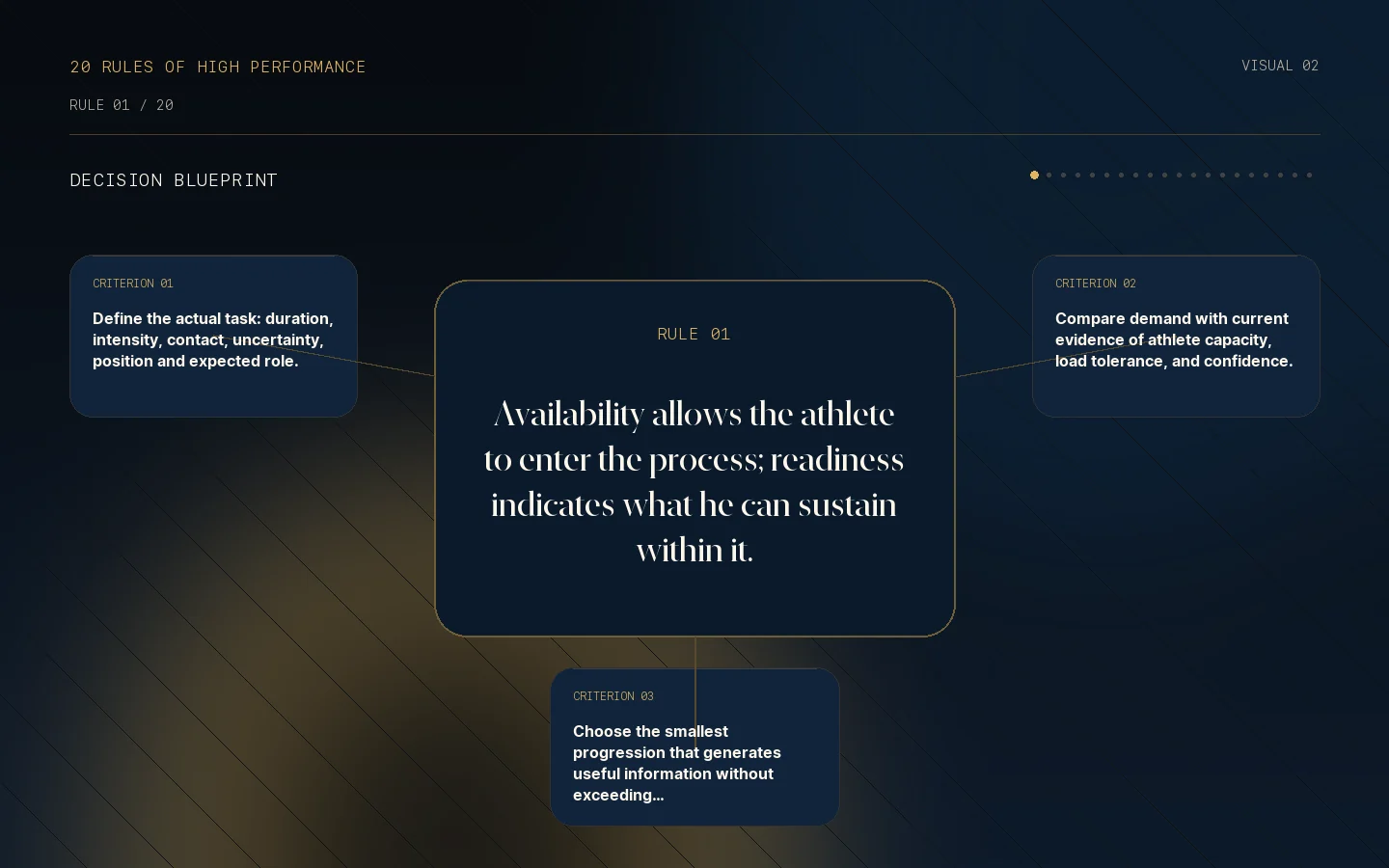
Availability allows the athlete to enter the process; readiness indicates what he can sustain within it.
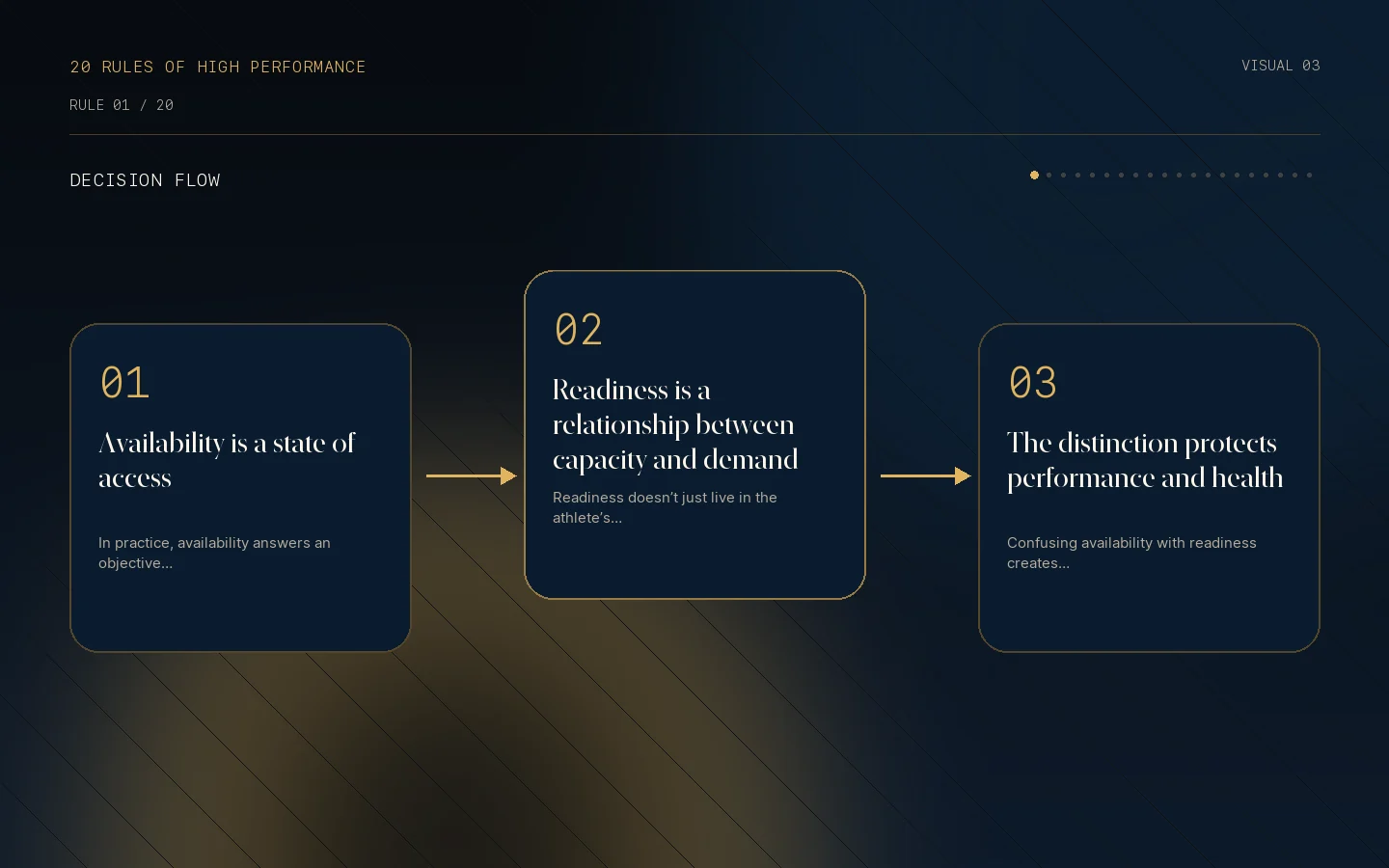
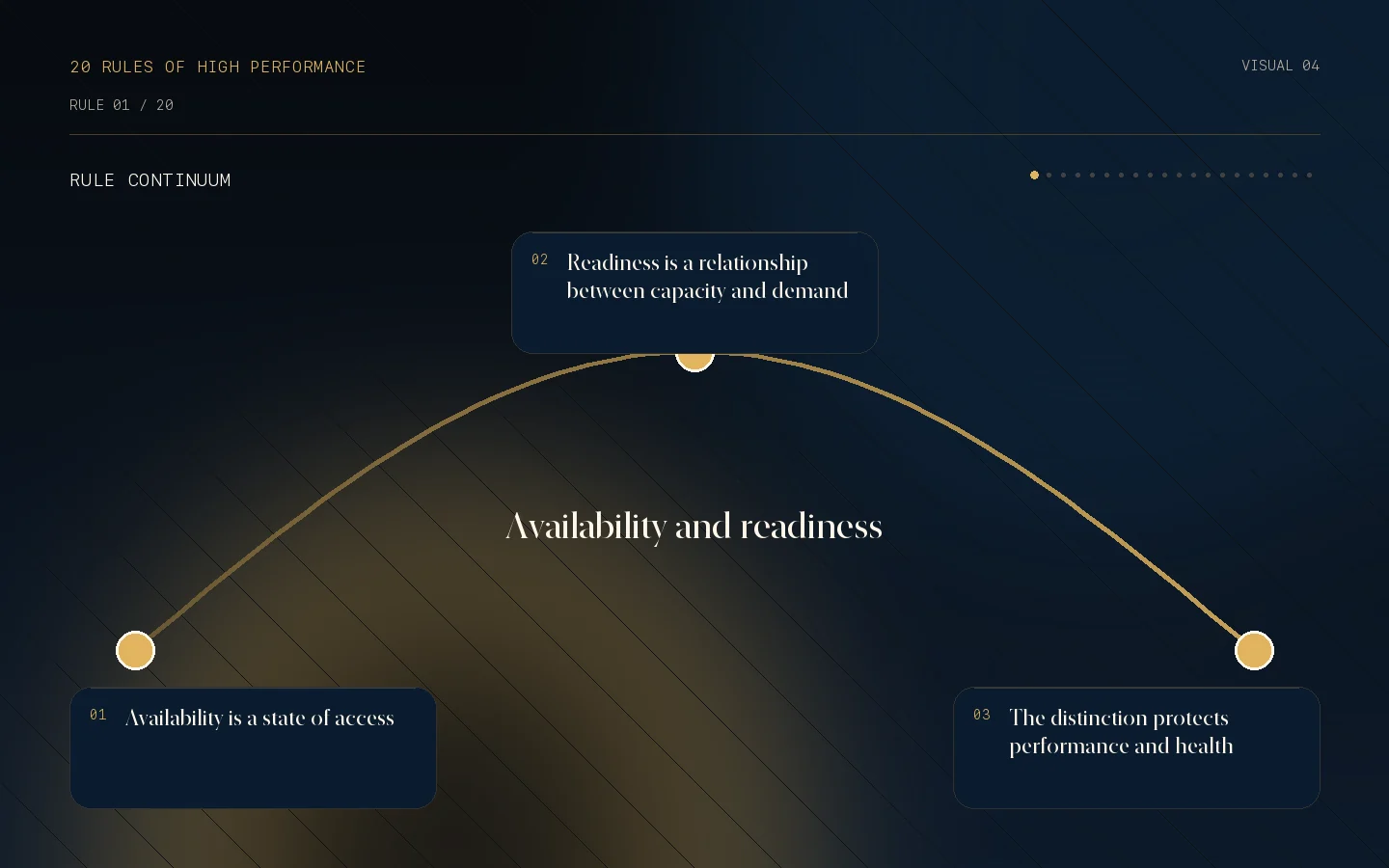
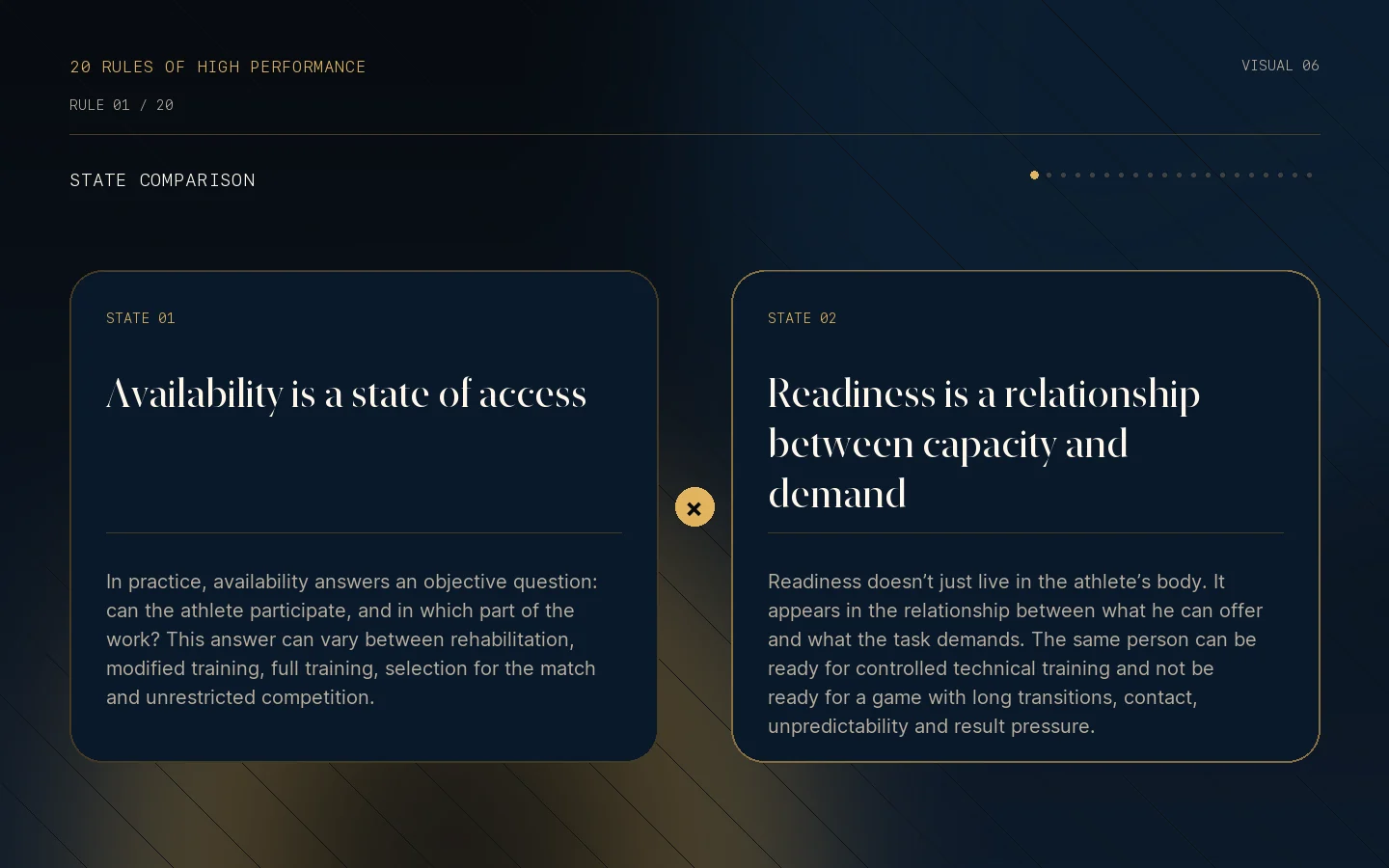
Availability is a state of access
In practice, availability answers an objective question: can the athlete participate, and in which part of the work? This answer can vary between rehabilitation, modified training, full training, selection for the match and unrestricted competition.
The Bern consensus on return to sport organized this progression as a continuum between return to participation, return to sport, and return to performance. The usefulness of the model lies precisely in preventing the first access to training from being confused with the completion of the process.
Availability, therefore, is not a definitive seal. It changes with symptoms, exposure, recovery, and context. It can increase in a week, decrease after a more demanding session and progress again when the athlete assimilates the dose.
One of the most expensive decisions in high performance comes from two words treated as if they were synonymous.
Readiness doesn’t just live in the athlete’s body. It appears in the relationship between what he can offer and what the task demands. The same person can be ready for controlled technical training and not be ready for a game with long transitions, contact, unpredictability and result pressure.
Readiness is a relationship between capacity and demand
Readiness doesn’t just live in the athlete’s body. It appears in the relationship between what he can offer and what the task demands. The same person can be ready for controlled technical training and not be ready for a game with long transitions, contact, unpredictability and result pressure.
Therefore, an isolated number rarely resolves the decision. Strength, power, pain, accumulated load, exposure to speed, confidence and tactical role inform different parts of the problem. Judgment improves when this information is triangulated and compared with anticipated demand.
In high performance, just asking if the athlete is well produces poor answers. Asking what task he is ready for produces an operational decision.
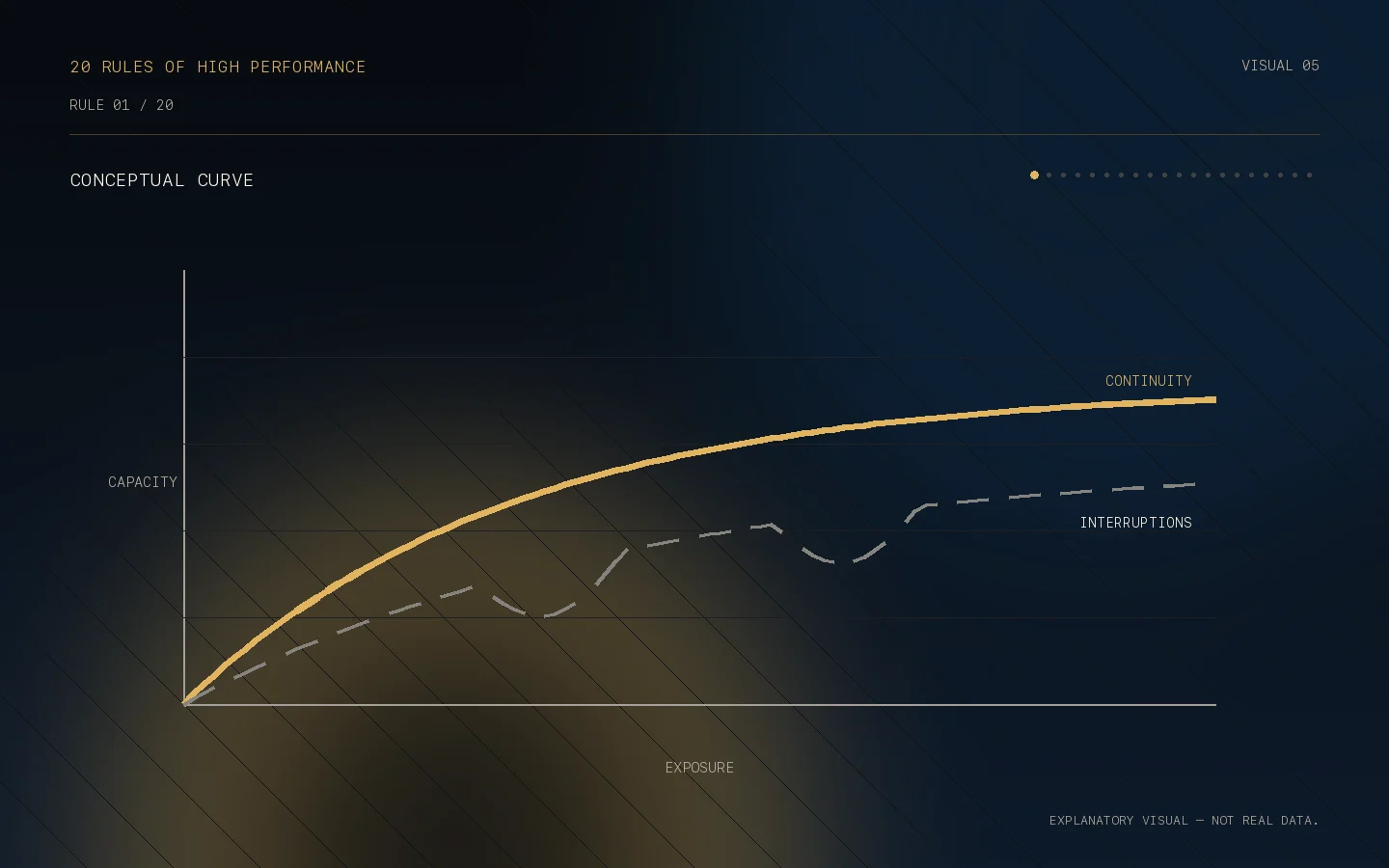
Explanatory visual — not real data.
Readiness is a relationship between capacity and demand
The distinction protects performance and health
Confusing availability with readiness creates two opposing errors. The first is to expose too early those who have not yet rebuilt sufficient capacity. The second is to keep out those who could already participate in a graduated way, losing stimulus, confidence and integration with the team.
The solution is not to wait for complete certainty. It doesn't exist. It's about making the risk visible, defining the next level of exposure and observing the response. Each progression must produce information for the next decision.

Availability allows the athlete to enter the process; readiness indicates what he can sustain within it.
Available for what? Ready for what demand? These two questions prevent an administrative state from replacing a performance evaluation.
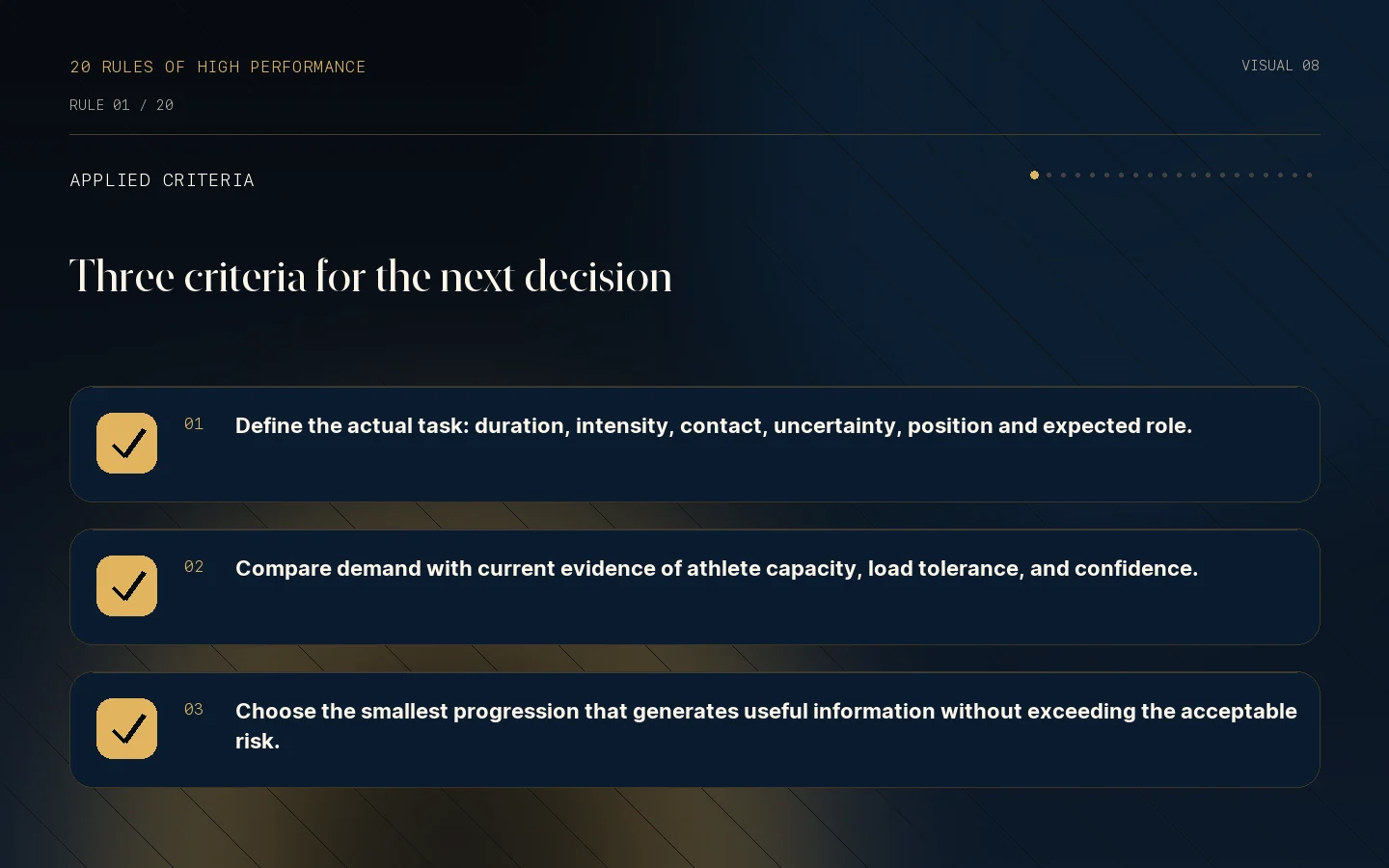
Three criteria for the next decision
- Define the actual task: duration, intensity, contact, uncertainty, position and expected role.
- Compare demand with current evidence of athlete capacity, load tolerance, and confidence.
- Choose the smallest progression that generates useful information without exceeding the acceptable risk.
Three criteria for the next decision
Mature teams don't use a single word to hide a complex decision. They name the state, delimit the task, and record what needs to happen before the next exposure.
The first rule of high performance is simple because it organizes all the others: being present is necessary; being ready is specific.
Availability opens the door. Readiness decides how much of the task the athlete can get through.