

There are athletes who pass the test and fail to use the ability that the test found.
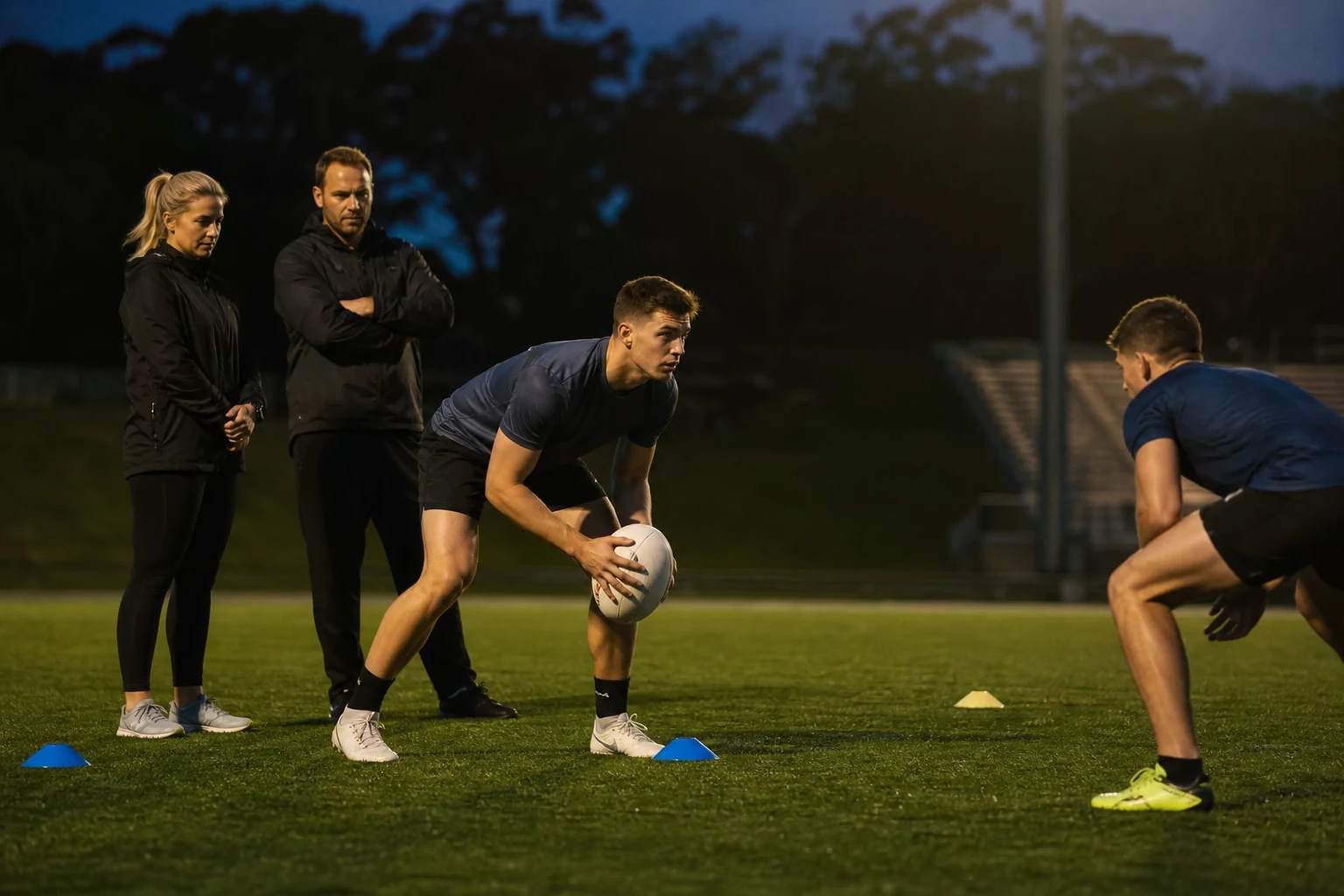
Physical capacity and mental readiness must appear in the face of the real task.
The test ended; the action did not
The numbers were printed on the table: strength restored, jumps within the criterion, running completed, pain controlled. The athlete knew every result. Even so, when the drill asked him to contest a 50–50 ball, his plant foot touched the grass and pulled back before contact.
It was not a lack of courage. For months, that action had meant danger. The body had learned to protect him before reason could form a sentence. Passing the tests demonstrated capacity; using that capacity inside an action that still felt threatening required another kind of construction.
The team reduced the speed, made contact predictable, and repeated the task. Then it removed one layer of protection. The athlete was not ordered to trust. He was given experiences in which he could act, sense the response, and update what he expected from his own body.
On the final repetition, contact happened. There was no theatrical celebration. Just a firm plant, the ball moving on, and the next action beginning. It looked small from the outside. For the return decision, it was information no dynamometer could produce on its own.
From the moment to the criterionMental readiness does not replace physical criteria; it completes the question of what the athlete can actually express.
The asymmetry has decreased, strength has improved, pain is controlled and the session is complete. Even so, the first real dispute produces brakes, hesitation or changes in strategy. The body offers a possibility that the mind does not yet recognize as safe.
Psychological readiness is not positive thinking. It is the willingness to perform the specific task with commensurate confidence, manageable fear, and a clear understanding of the risk. It must be evaluated, trained and discussed like any other dimension of return.
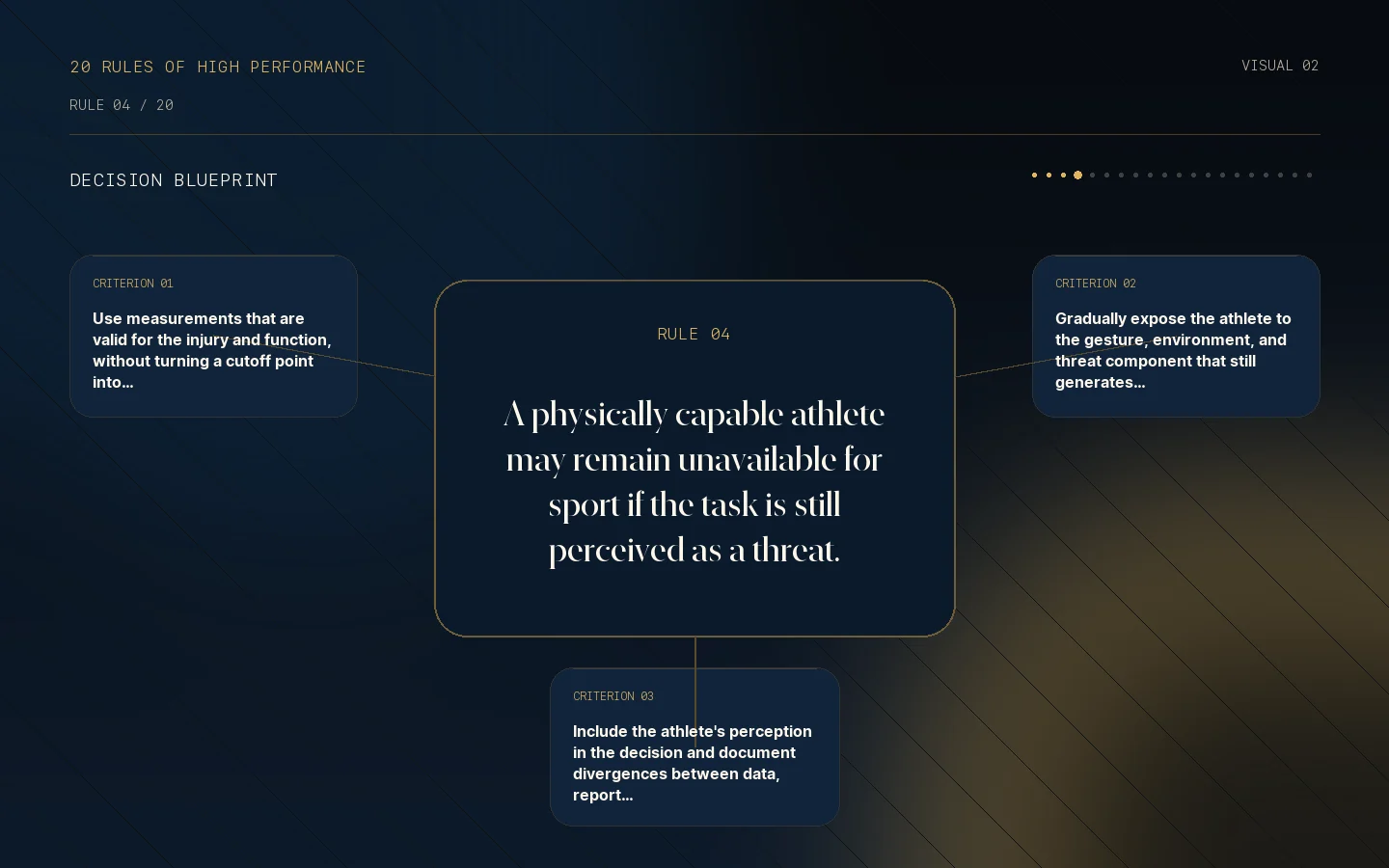
A physically capable athlete may remain unavailable for sport if the task is still perceived as a threat.
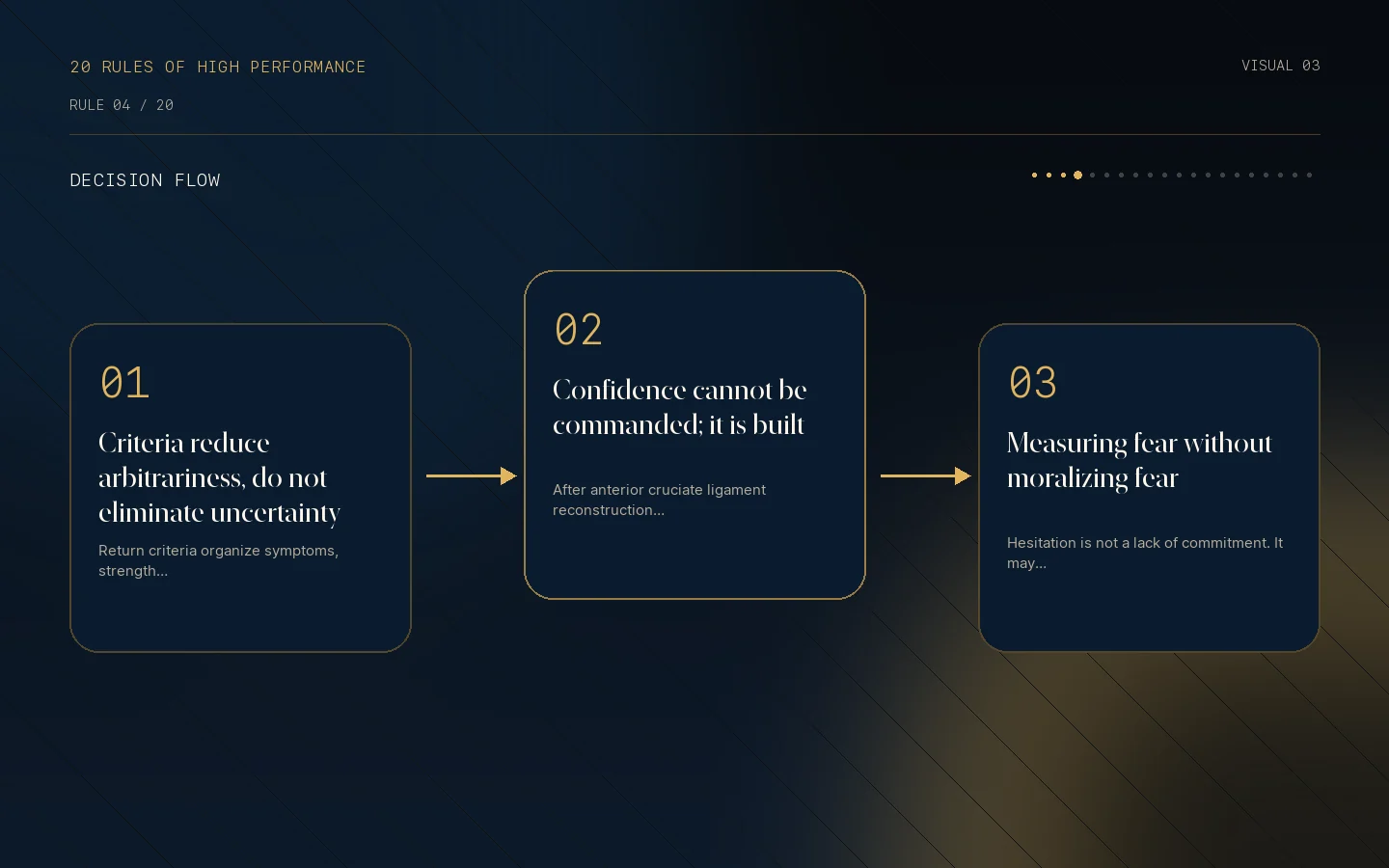
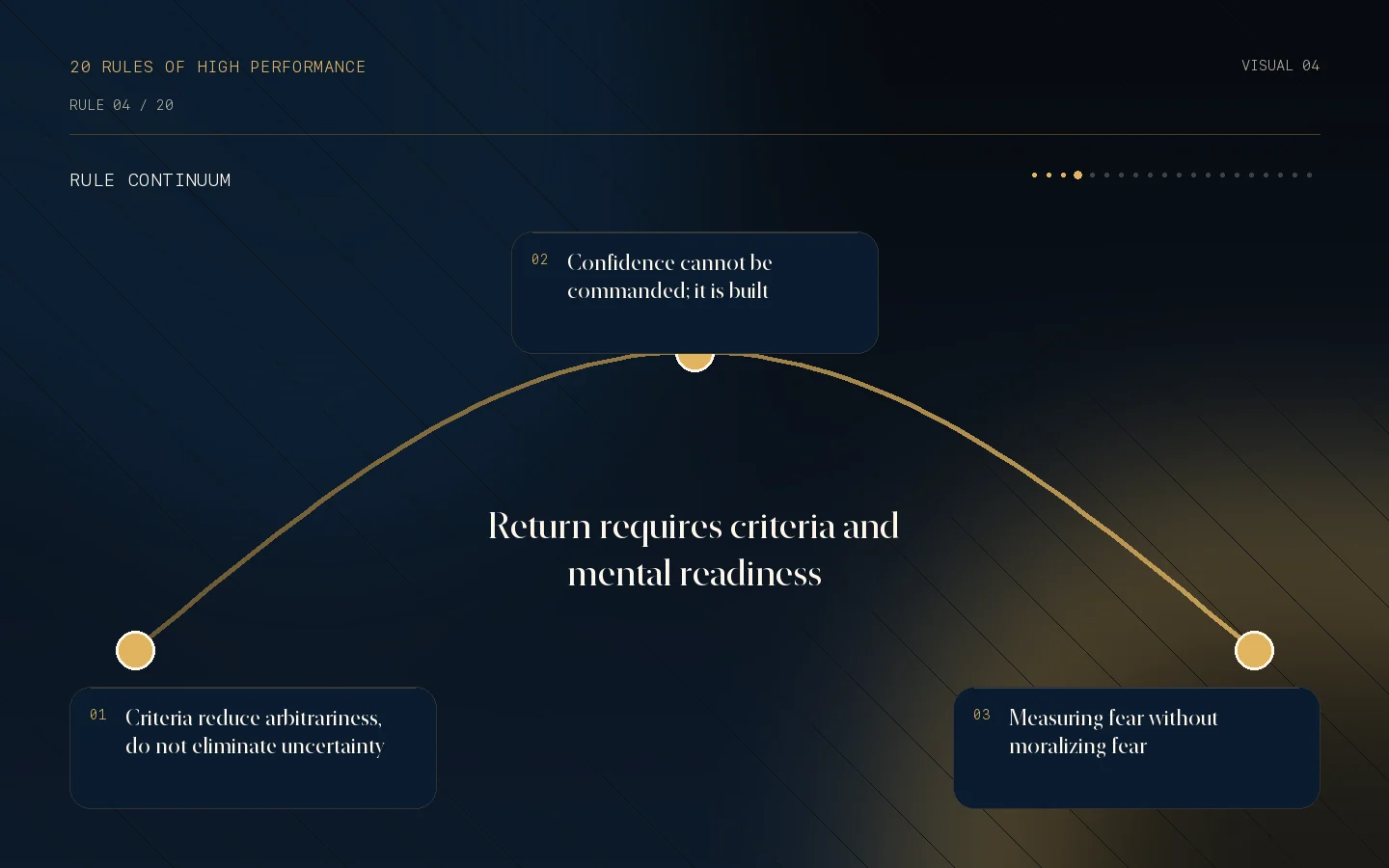
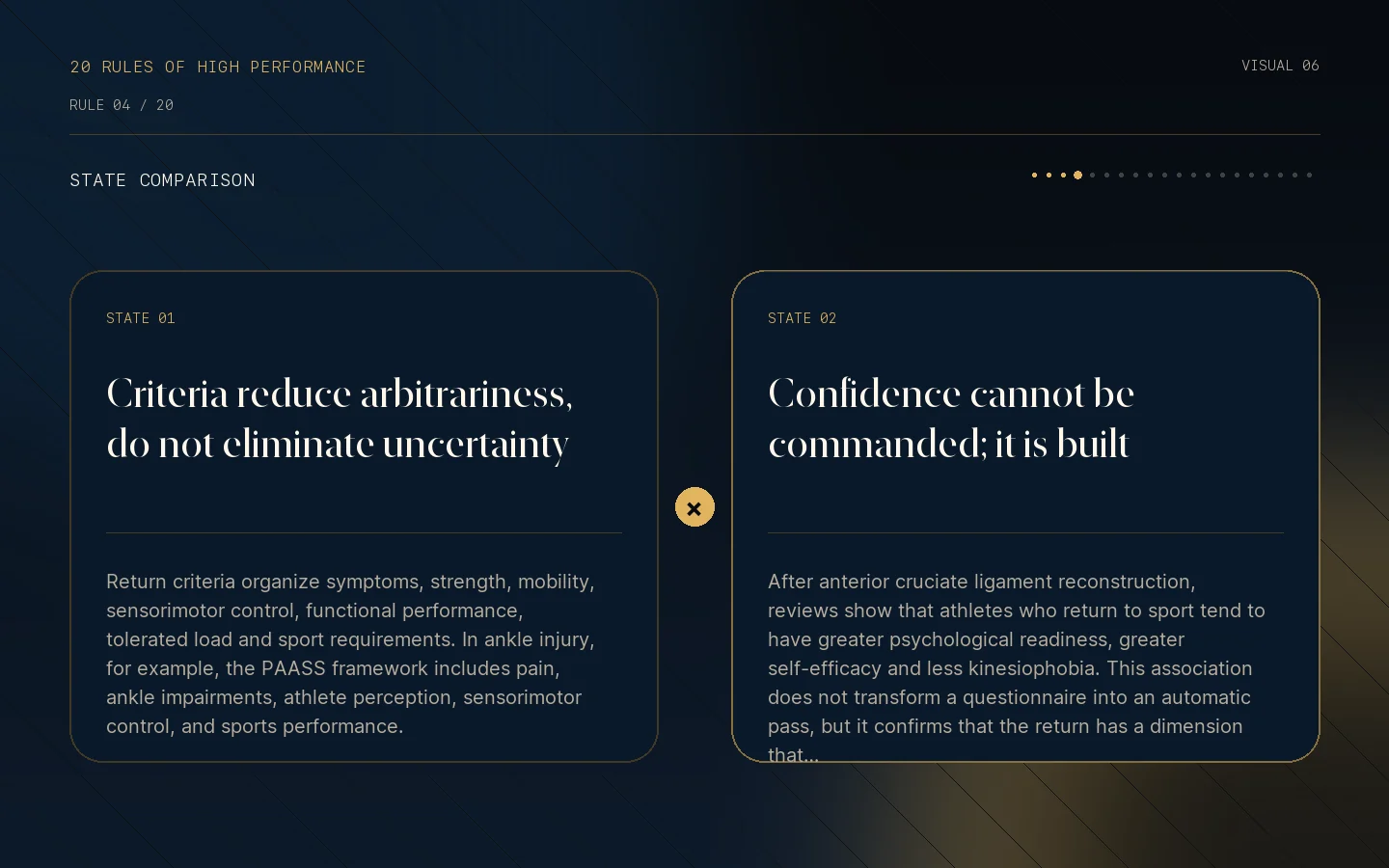
Criteria reduce arbitrariness, do not eliminate uncertainty
Return criteria organize symptoms, strength, mobility, sensorimotor control, functional performance, tolerated load and sport requirements. In ankle injury, for example, the PAASS framework includes pain, ankle impairments, athlete perception, sensorimotor control, and sports performance.
No single test predicts the future with certainty. Many take place in a stable environment, while competition combines speed, opponent, fatigue and pressure. The function of the criteria is to make the decision more transparent and identify relevant gaps — not to promise zero risk.
Time is also a criterion, but it should rarely be the only one. Biology needs a deadline; the ability needs exposure; the decision needs both.
There are athletes who pass the test and fail to use the ability that the test found.
After anterior cruciate ligament reconstruction, reviews show that athletes who return to sport tend to have greater psychological readiness, greater self-efficacy and less kinesiophobia. This association does not transform a questionnaire into an automatic pass, but it confirms that the return has a dimension that the dynamometer does not measure.
Confidence cannot be commanded; it is built
After anterior cruciate ligament reconstruction, reviews show that athletes who return to sport tend to have greater psychological readiness, greater self-efficacy and less kinesiophobia. This association does not transform a questionnaire into an automatic pass, but it confirms that the return has a dimension that the dynamometer does not measure.
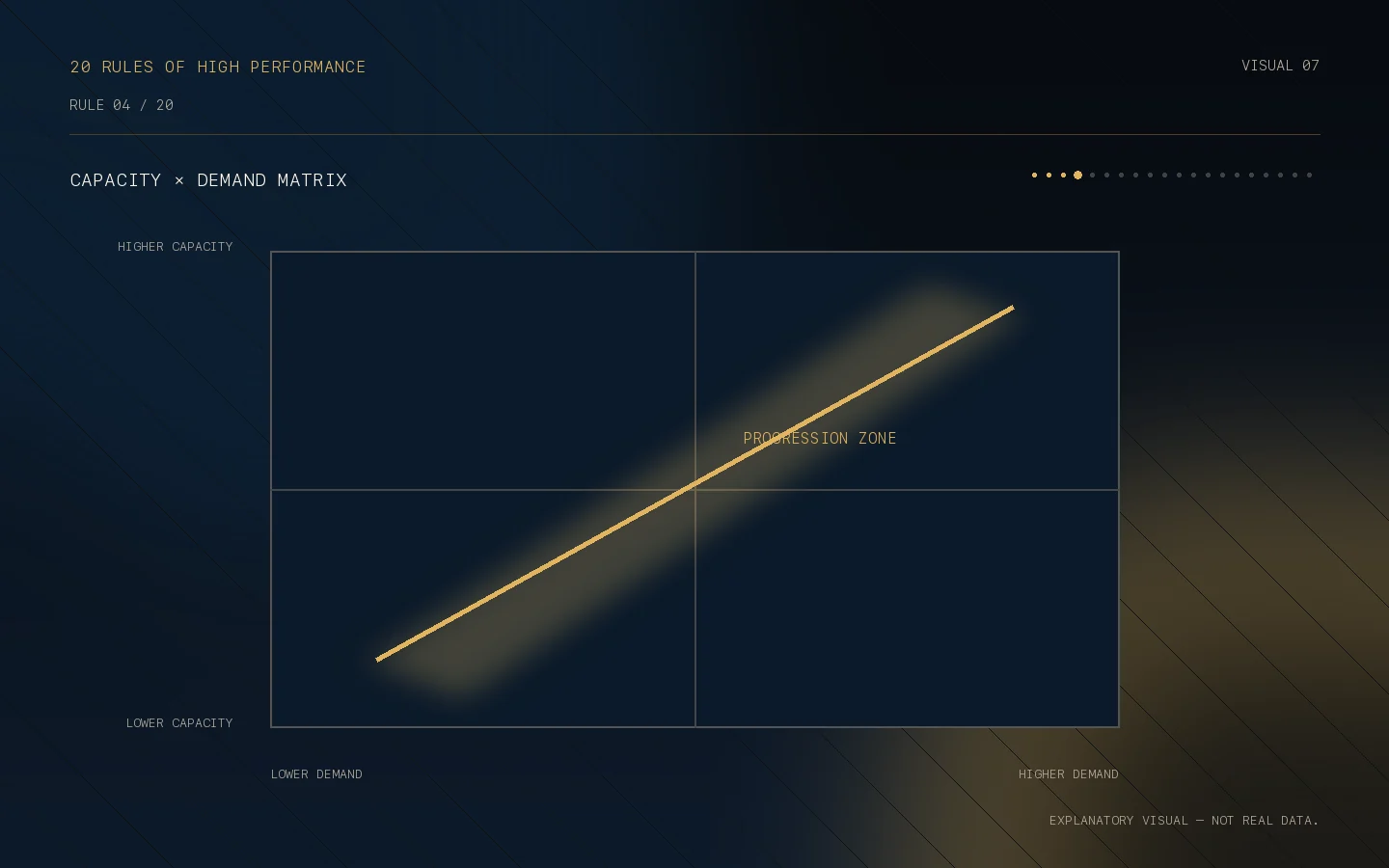
Confidence grows when exposure is progressive, specific, and successful enough to update threat perception. The task must approach the game: first predictable, then variable; first without opposition, then with dispute; first with margin, then under pressure.
The athlete needs to participate in reading the data. Showing what has been recovered, recognizing what is still missing and agreeing on how the risk will be managed reduces the distance between assessment and experience.
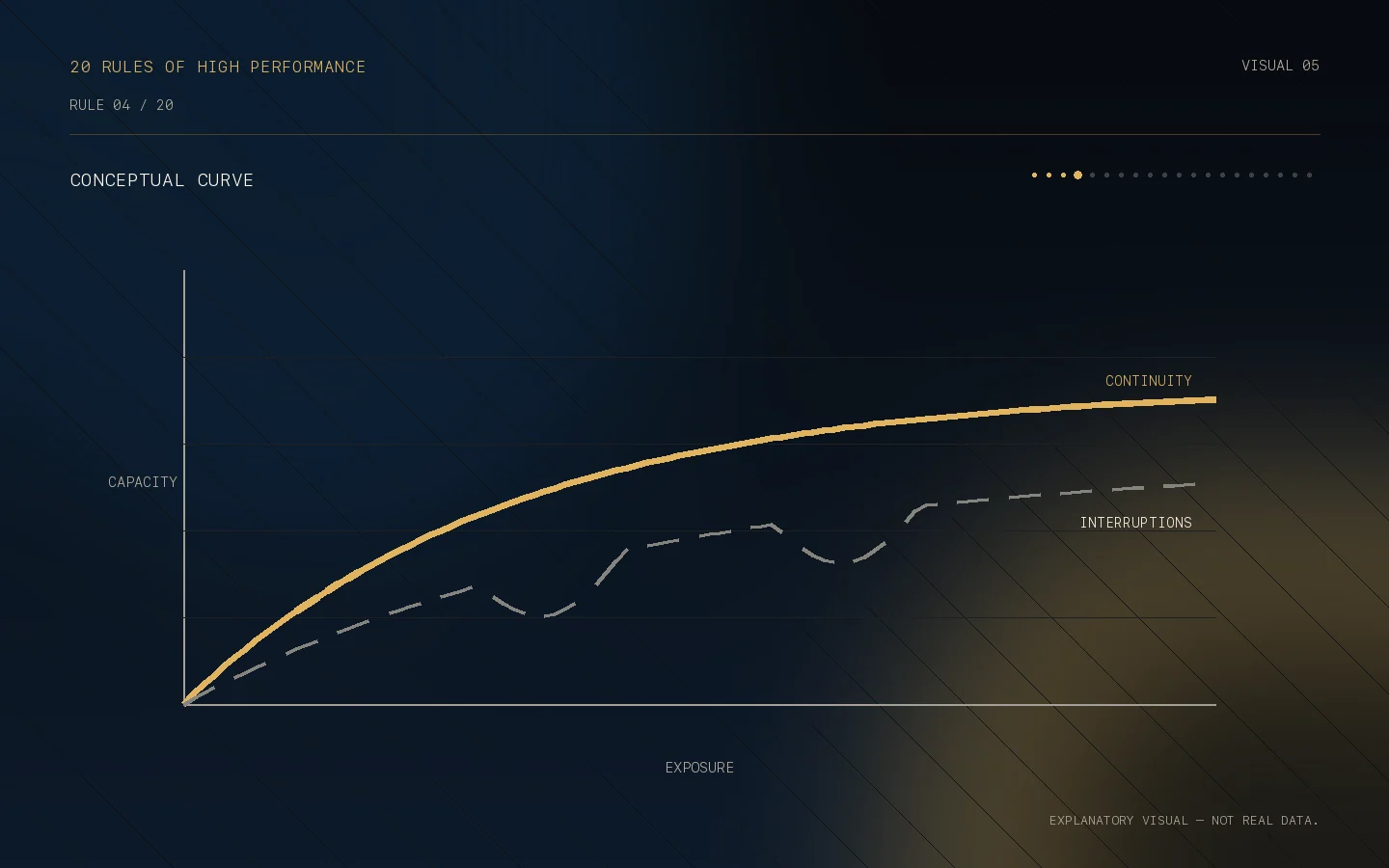
Explanatory visual — not real data.
Confidence cannot be commanded; it is built
Measuring fear without moralizing fear
Hesitation is not a lack of commitment. It may signal memory of the injury, perceived instability, insufficient exposure, or a task that progressed too quickly. Turning that signal into judgment weakens the information and makes the athlete more likely to hide it.
Specific scales can support conversation, but they do not replace observation, listening and behavior in the field. The value is in the integration: what the athlete reports, what they perform and how they respond afterwards.
A physically capable athlete may remain unavailable for sport if the task is still perceived as a threat.
Symptom, physical capacity, load tolerance, sports performance and psychological readiness answer different questions — and they need to converge.
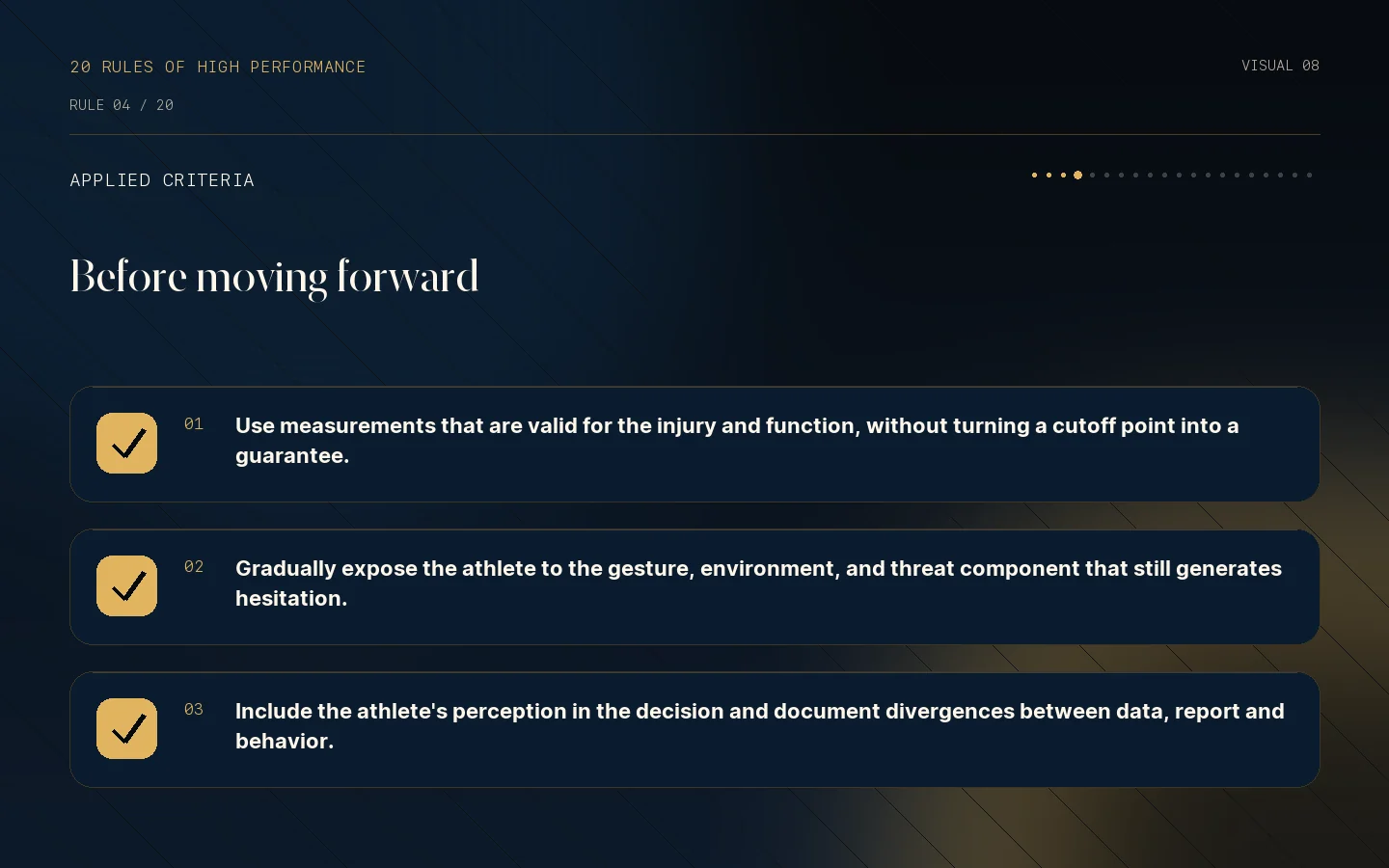
Before moving forward
- Use measurements that are valid for the injury and function, without turning a cutoff point into a guarantee.
- Gradually expose the athlete to the gesture, environment, and threat component that still generates hesitation.
- Include the athlete's perception in the decision and document divergences between data, report and behavior.
Before moving forward
The strongest return doesn't happen when all the numbers turn green. It happens when the key dimensions tell a coherent story and the residual risk is understood.
Criteria without confidence produce authorization without action. Confidence without criteria produces courage without protection. High performance needs both.
Mental readiness does not replace physical ability. It allows available capacity to surface when the task matters.