

A season without any health problems is a legitimate aspiration, but it cannot be the only plan.
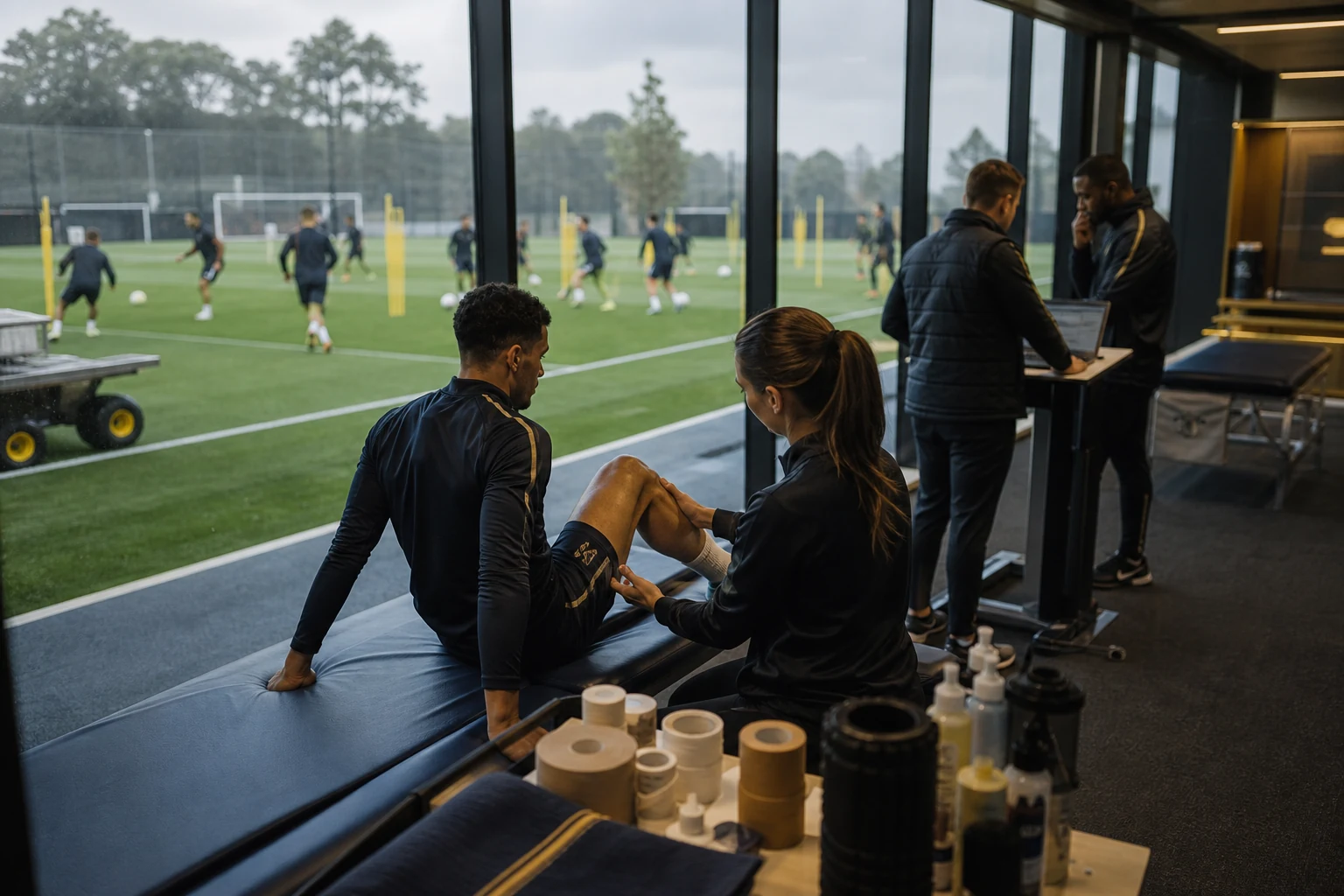
Mature organizations reduce what is avoidable and respond to what is inevitable without seeking shortcuts.
The board never stayed intact
In pre-season, the plan covered an entire wall. Dates, travel, matches, and training blocks formed a clean line. Three weeks later, one athlete was treating a sprain, another had fallen ill, and a third needed a reduced load because a symptom had been recognised early enough to keep it from becoming something larger.
None of those events proved negligence. Nor should they be met with resignation. The real season began exactly when the plan no longer fit on the wall and started demanding daily choices.
The mature question was not how to guarantee twenty names would always be available. It was which problems could be reduced, which signs deserved early action, and how the team would continue to function when residual risk became absence.
The board was redrawn. Exposures, cover, and priorities changed. Every injury continued to be investigated, not to find a quick culprit, but to recover what was modifiable and learn before the next cycle.
From the moment to the criterionAccepting that injuries are part of a season is not normalising them; it is preparing the system to reduce what is avoidable and respond better to what still occurs.
Training and competing expose the athlete to speed, strength, contact, repetition and environments that are not fully controllable. Preventive programs can reduce risk, but no intervention transforms sports participation into an activity without uncertainty.
Recognizing this reality does not mean declaring that every injury was inevitable. It means separating residual risk from modifiable failures and preparing the system to act in both cases.
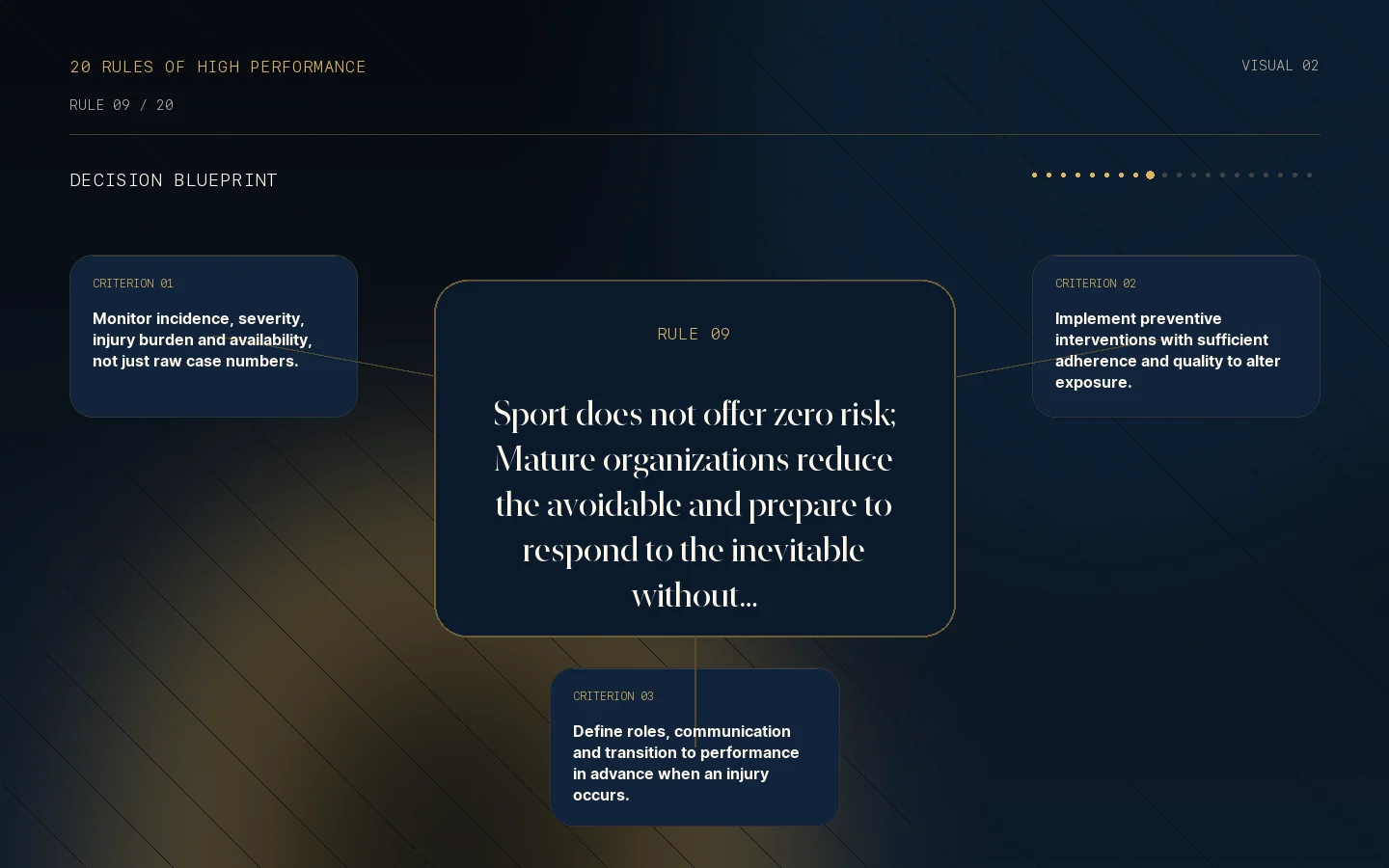
Sport does not offer zero risk; Mature organizations reduce the avoidable and prepare to respond to the inevitable without normalizing failure.
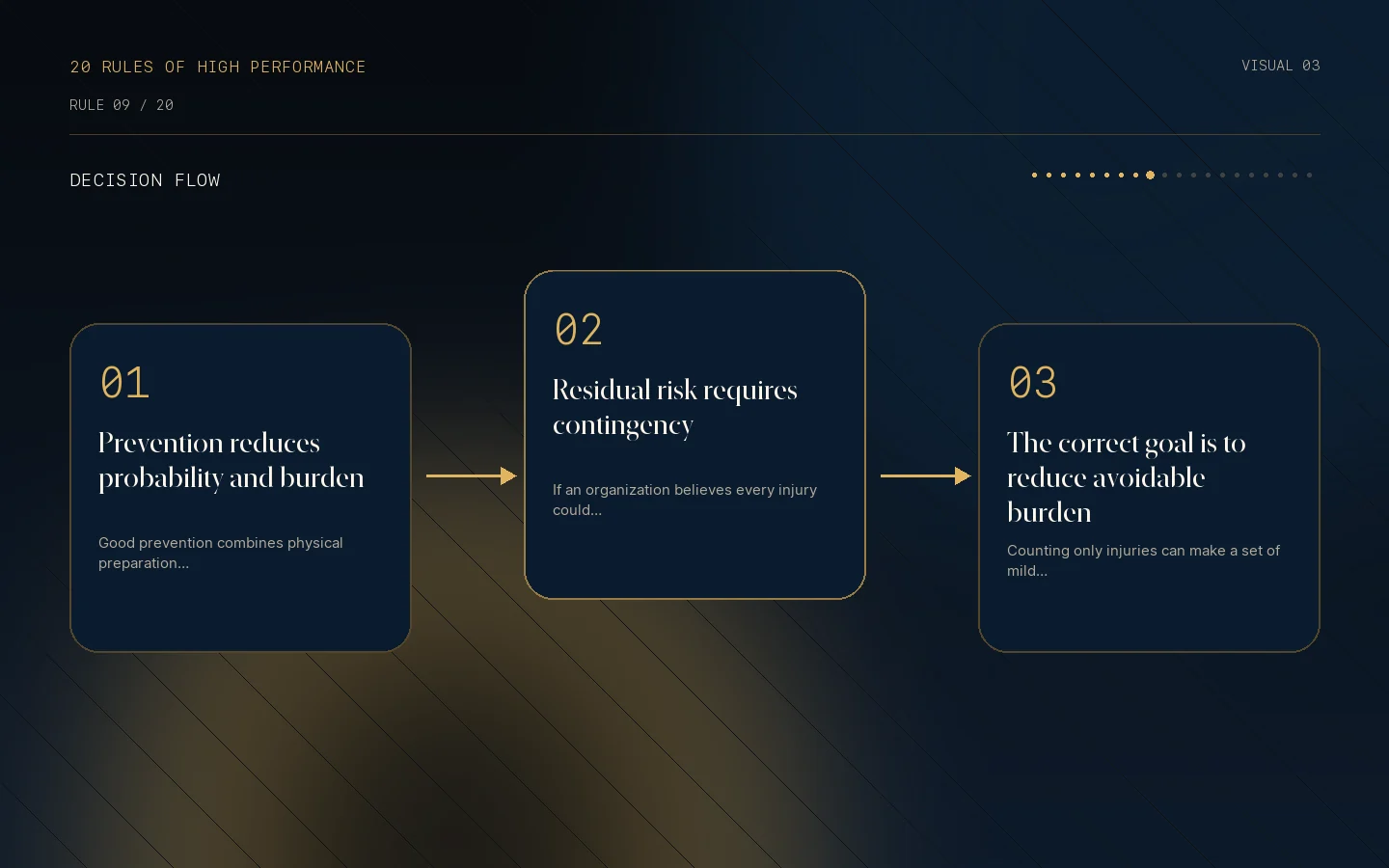
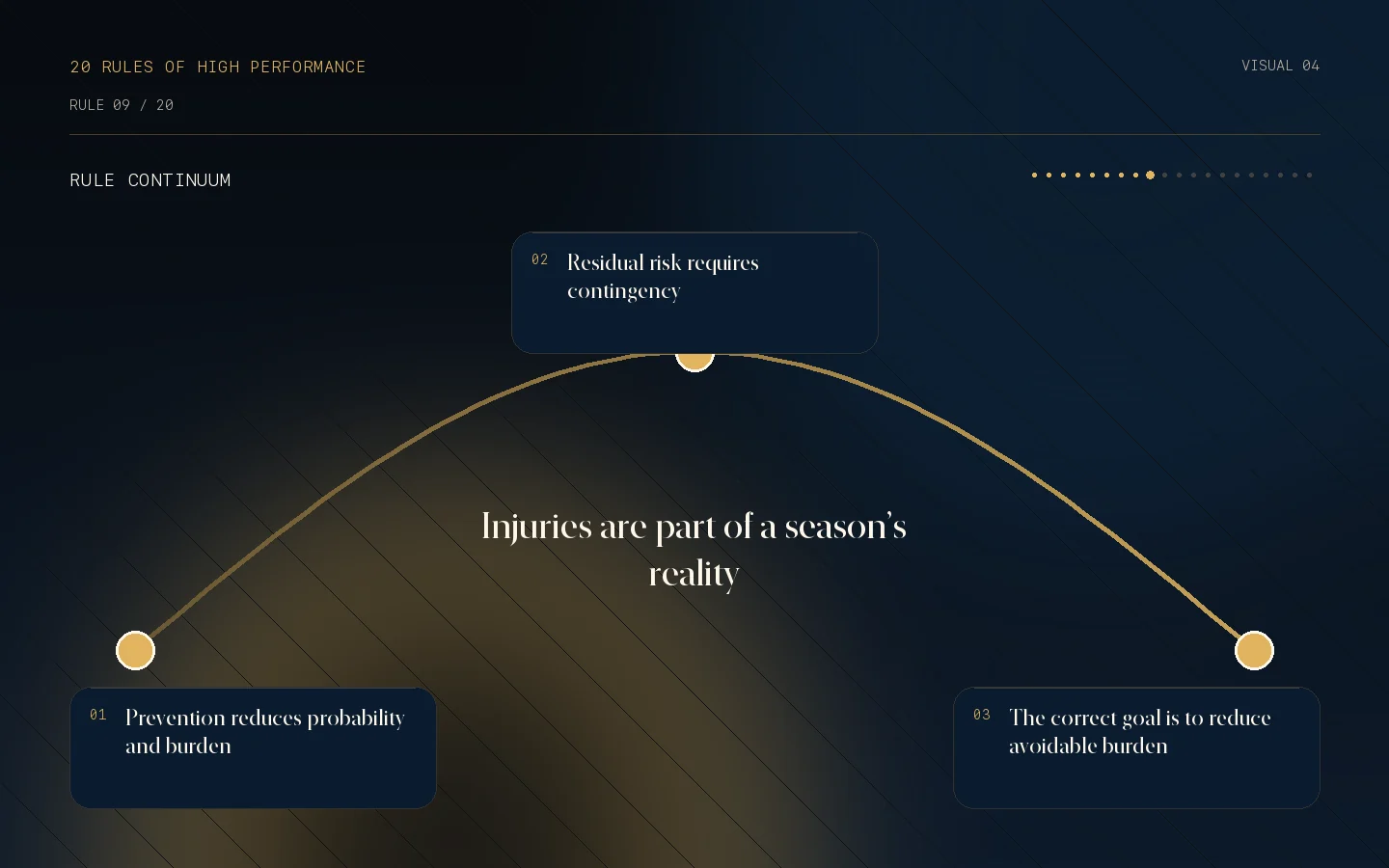
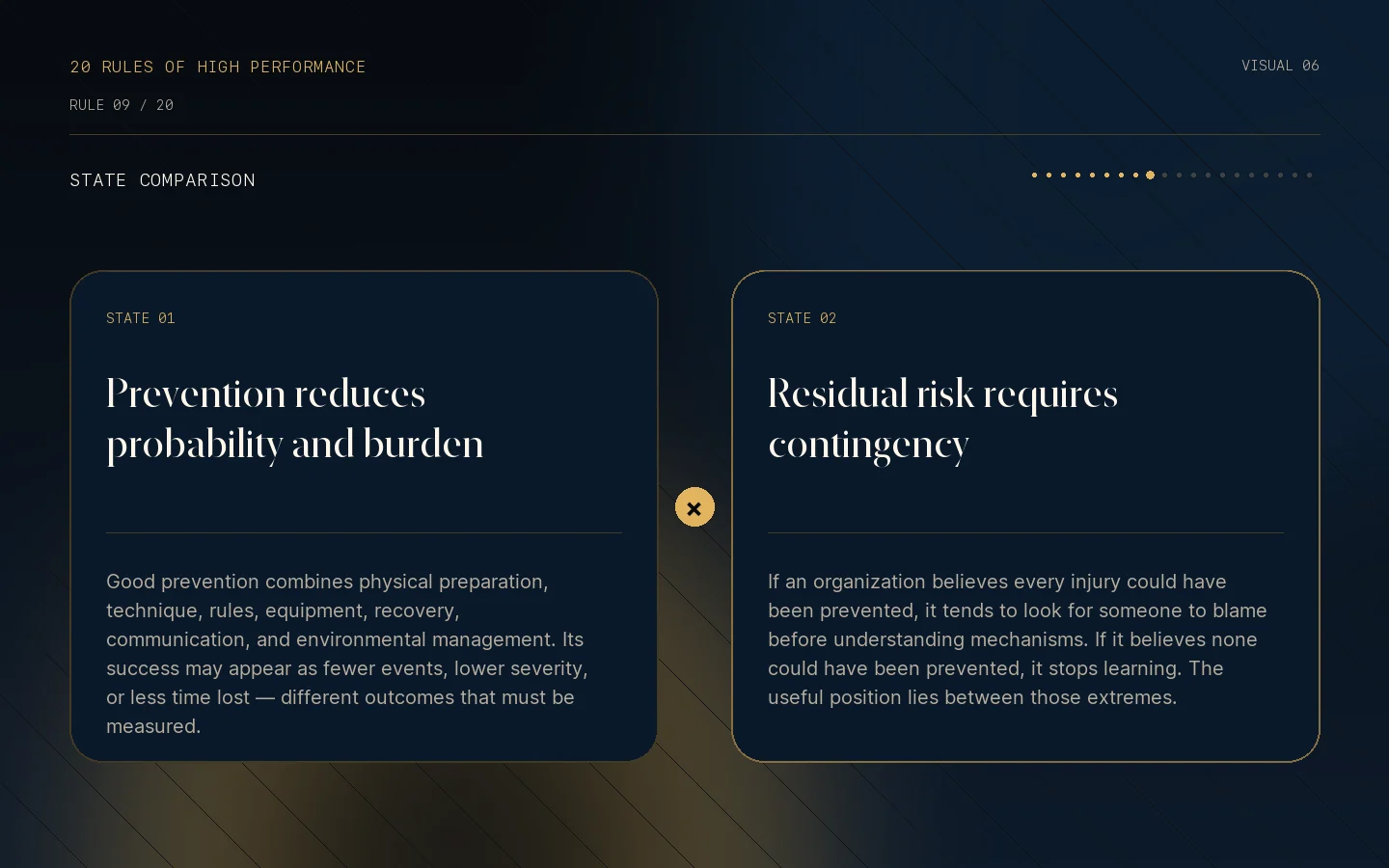
Prevention reduces probability and burden
Good prevention combines physical preparation, technique, rules, equipment, recovery, communication, and environmental management. Its success may appear as fewer events, lower severity, or less time lost — different outcomes that must be measured.
Football epidemiology shows recurring patterns of muscle, joint and lower limb injuries. These standards help prioritize resources, but do not dispense with local surveillance. The season, roster and calendar change the distribution of risk.
Structured programs only have an effect when they reach training with quality and adherence. Perfect intervention on paper does not protect an exposure that never happened.
A season without any health problems is a legitimate aspiration, but it cannot be the only plan.
If an organization believes every injury could have been prevented, it tends to look for someone to blame before understanding mechanisms. If it believes none could have been prevented, it stops learning. The useful position lies between those extremes.
Residual risk requires contingency
If an organization believes every injury could have been prevented, it tends to look for someone to blame before understanding mechanisms. If it believes none could have been prevented, it stops learning. The useful position lies between those extremes.
Contingency means defining assessment, communication, rehabilitation, integration into training and coverage of sports functions before the crisis. It also means preserving reliable data to review patterns without turning each case into a retrospective judgment.
Planning the response is not being pessimistic. It's protecting decision-making time when emotion, calendar and competitive pressure increase.
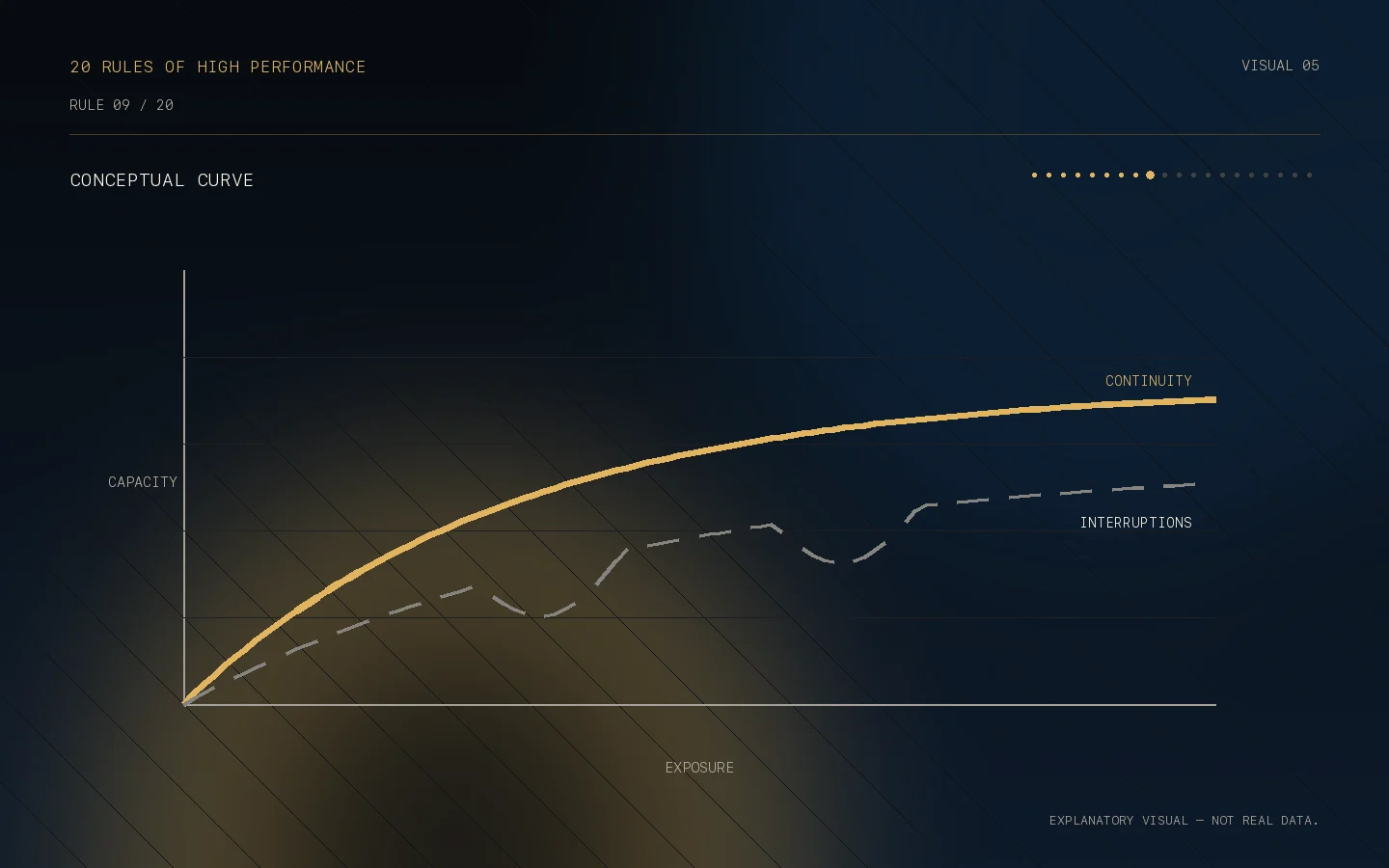
Explanatory visual — not real data.
Residual risk requires contingency
The correct goal is to reduce avoidable burden
Counting only injuries can make a set of mild events equivalent to a few severe events. Injury burden — days lost per unit of exposure — approximates frequency and consequence and helps identify where the cost truly concentrates.
The mature question is not whether the club managed to eliminate injuries. It's which risks were reduced, which remained, how the response worked and what should change at the next exposure.
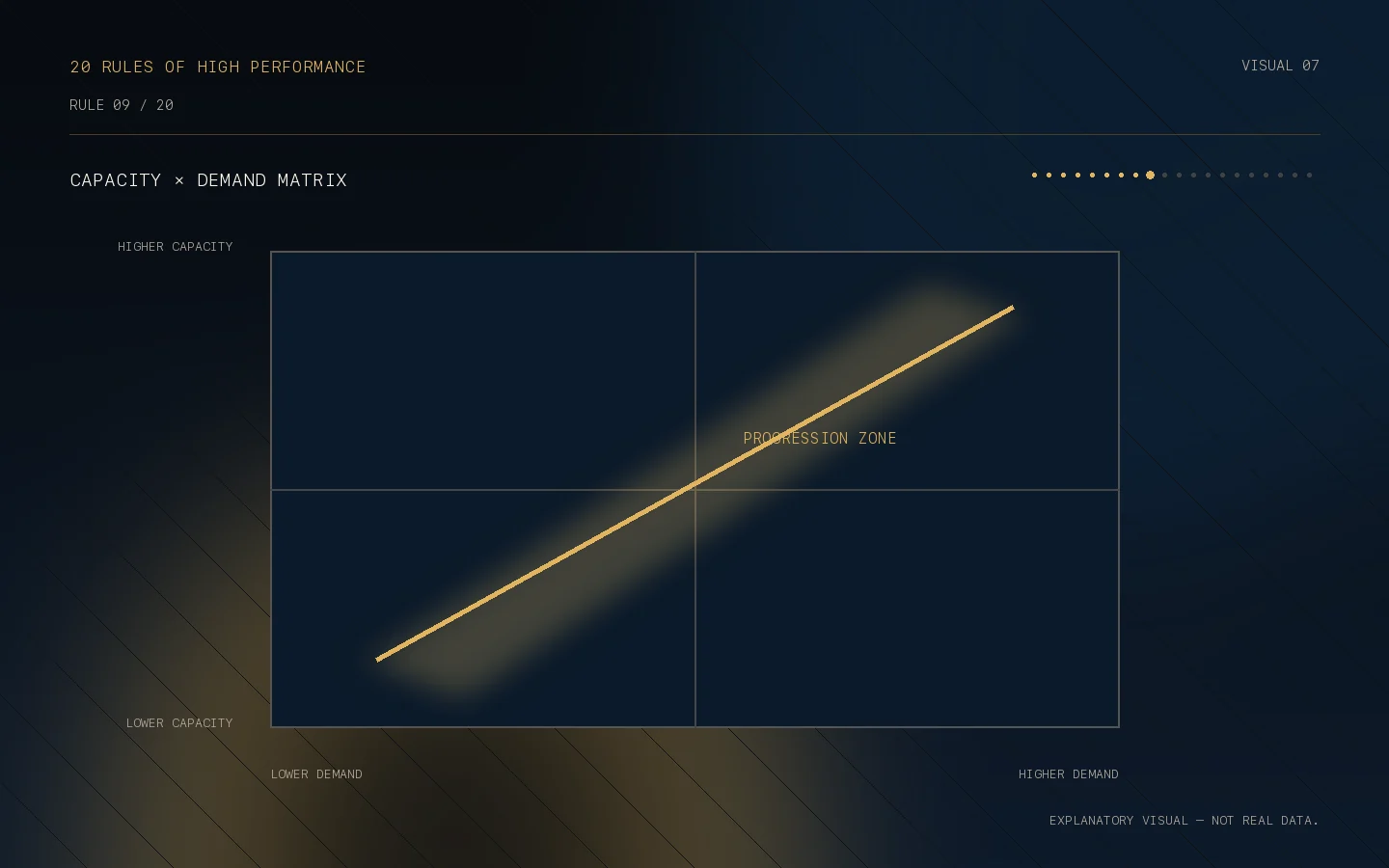
Sport does not offer zero risk; Mature organizations reduce the avoidable and prepare to respond to the inevitable without normalizing failure.
Zero risk is not a realistic sporting outcome. Reducing incidence, severity and days lost remains a concrete and measurable goal.
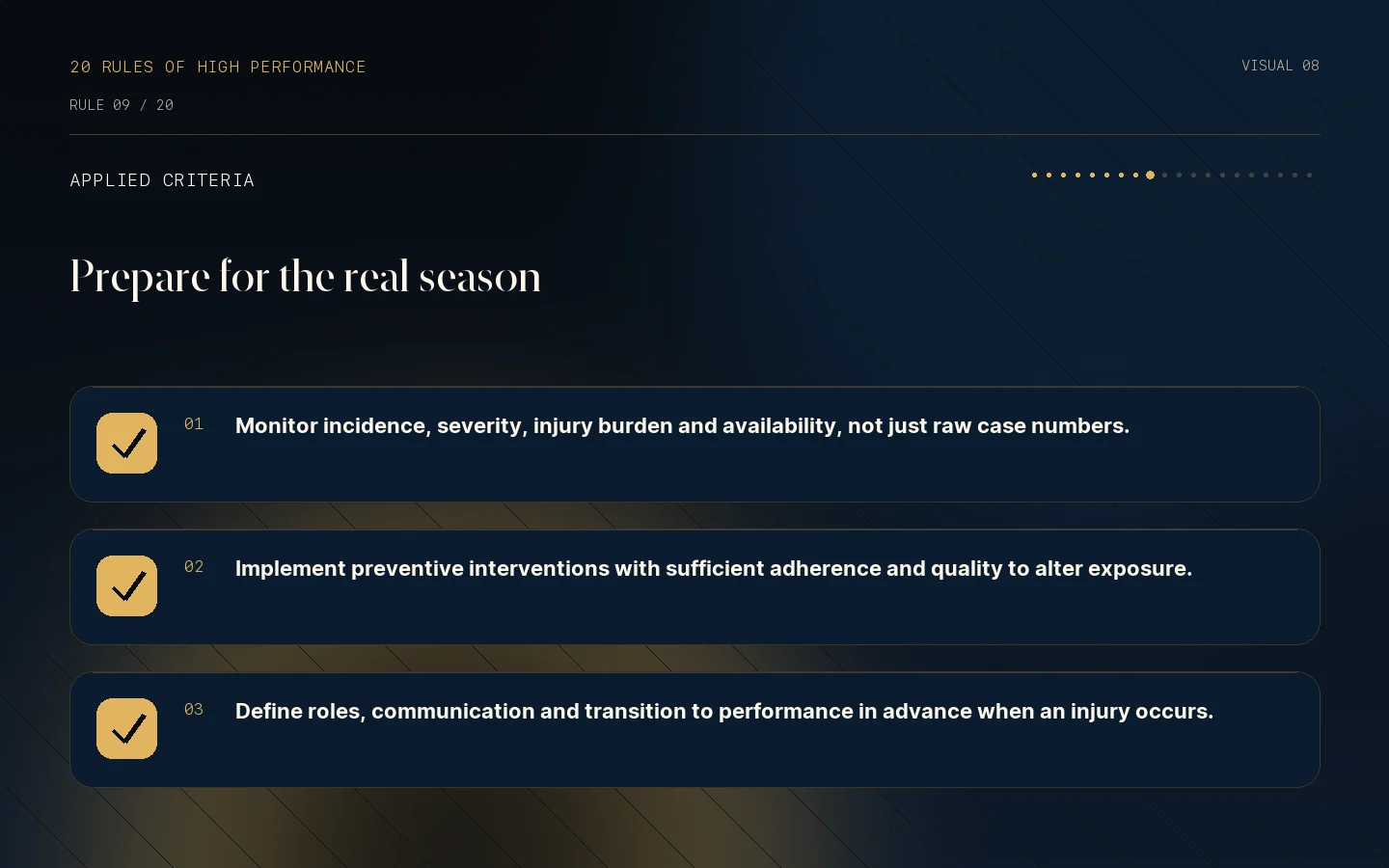
Prepare for the real season
- Monitor incidence, severity, injury burden and availability, not just raw case numbers.
- Implement preventive interventions with sufficient adherence and quality to alter exposure.
- Define roles, communication and transition to performance in advance when an injury occurs.
Prepare for the real season
A real season contains unforeseen events. A high-performance system is judged both by its ability to reduce their frequency and by the quality of its response when they occur.
Mature prevention does not promise invulnerability. It transforms risk into shared responsibility.
Accepting that risk exists does not mean accepting every risk.