

The environment that reveals the most performance is also the one that charges the highest price for any insufficient capacity.
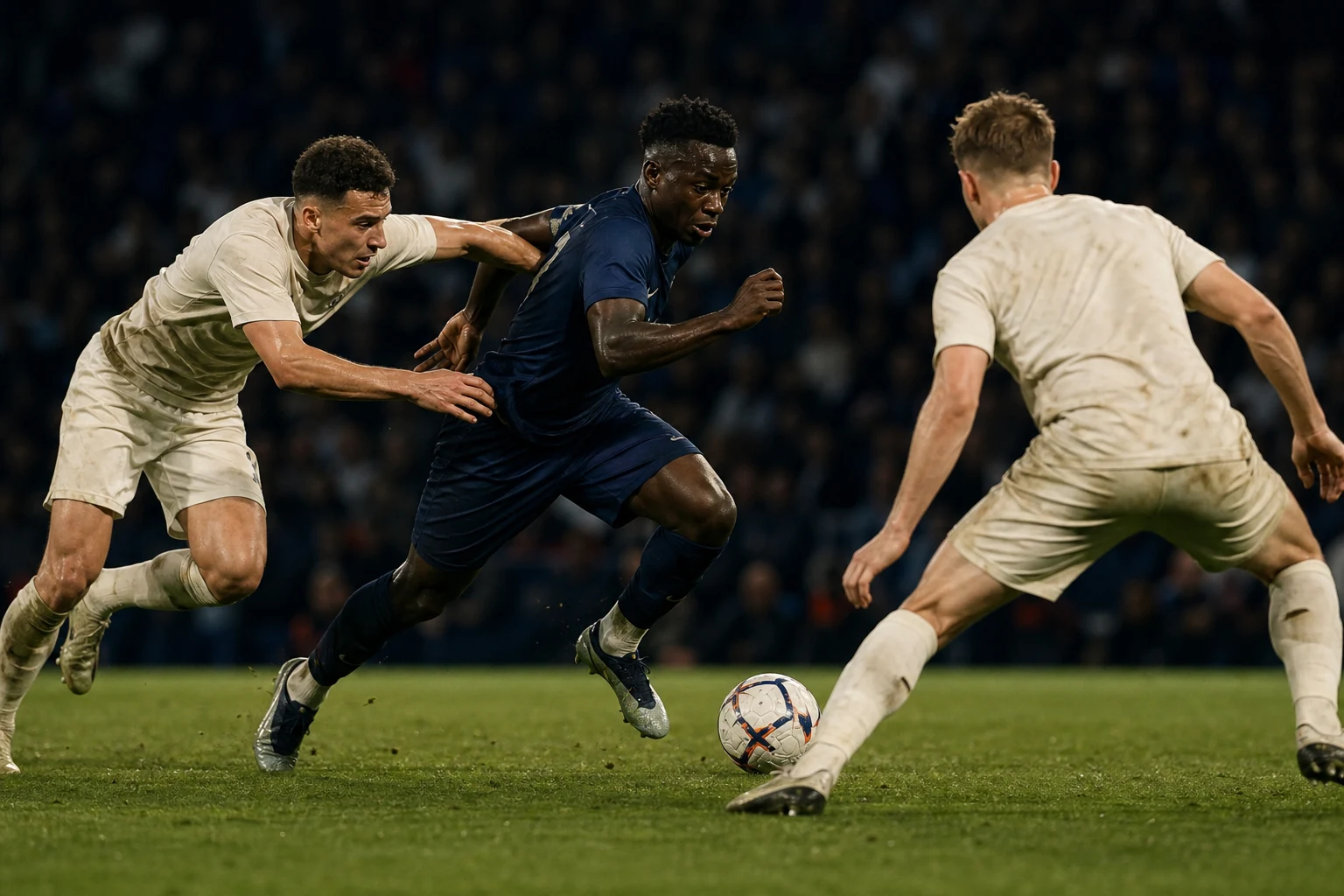
Competition concentrates exposures that training can organize separately.
The same body, a different environment
On Thursday, the athlete completed the session under controlled conditions. There were scheduled breaks, instructed opponents, and a known volume. On Sunday, in the 89th minute, he chased a long ball while another player ran through the same space and the pitch offered imperfect footing.
It was the same knee, the same measured strength, and the same person. But the environment had changed the exposure. Speed was higher, contact asked no permission, fatigue was already altering execution, and abandoning the action carried an immediate competitive cost.
Saying that the game carries greater risk does not mean treating it as a forbidden threat. It means recognising that progression must gradually bring the athlete closer to the combination he will find there. Overprotecting him until his return only moves the first true exposure to the worst possible moment.
The team did not try to eliminate all uncertainty. It organised tolerable uncertainty: first increasing speed, then density, then opposition; observing the response while preserving room to adjust.
From the moment to the criterionCompetition risk does not disappear. Preparation determines how much of it will feel new when the athlete faces it again.
A meta-analysis of professional men's football estimated the incidence of injuries in matches almost ten times higher than in training. The grouped values — 36 versus 3.7 injuries per thousand hours of exposure — do not describe every club or every season, but they measure the difference between environments.
The data does not mean that competing is a mistake. It means that the transition to competition needs to respect the change in risk.
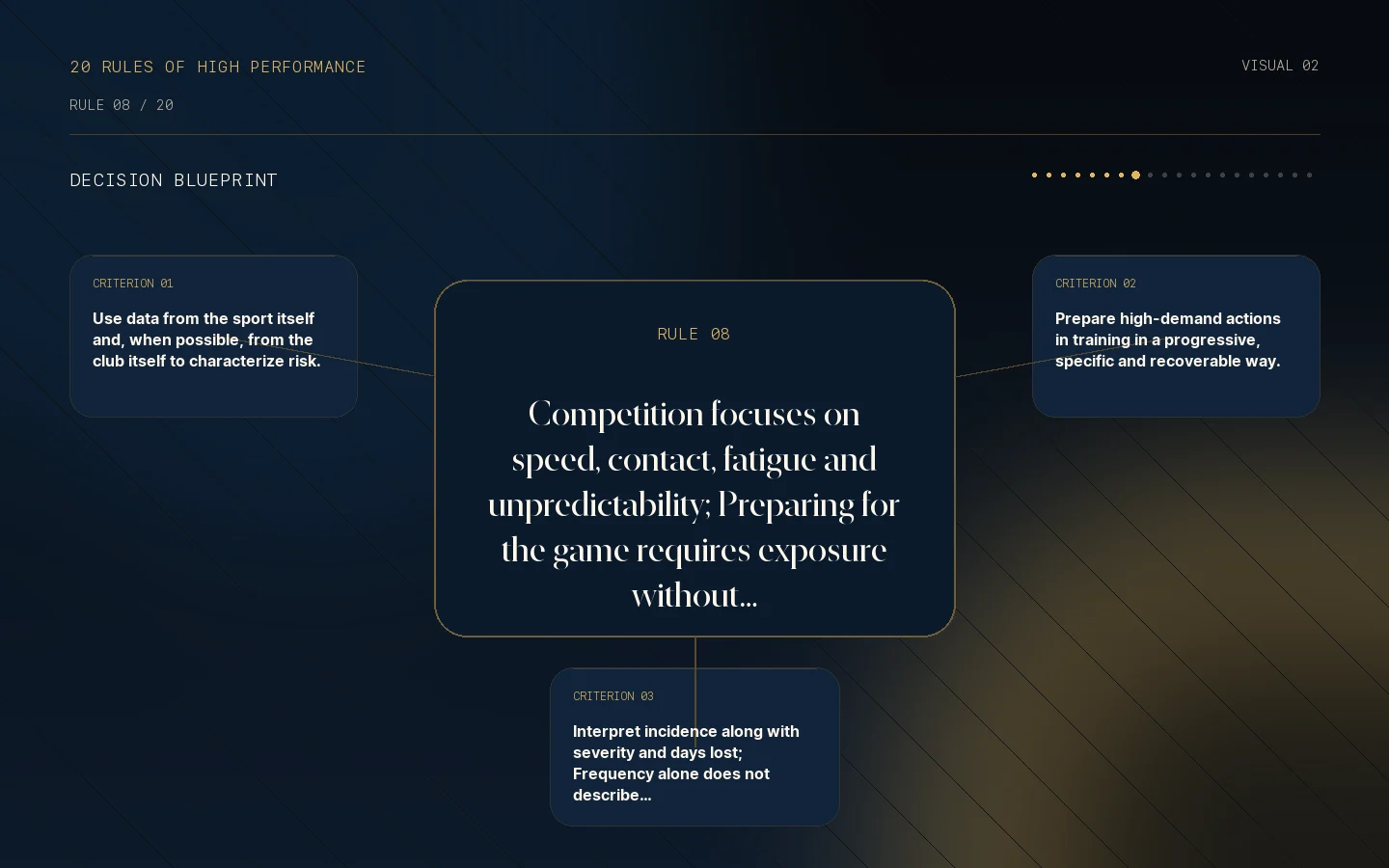
Competition focuses on speed, contact, fatigue and unpredictability; Preparing for the game requires exposure without normalizing avoidable risk.
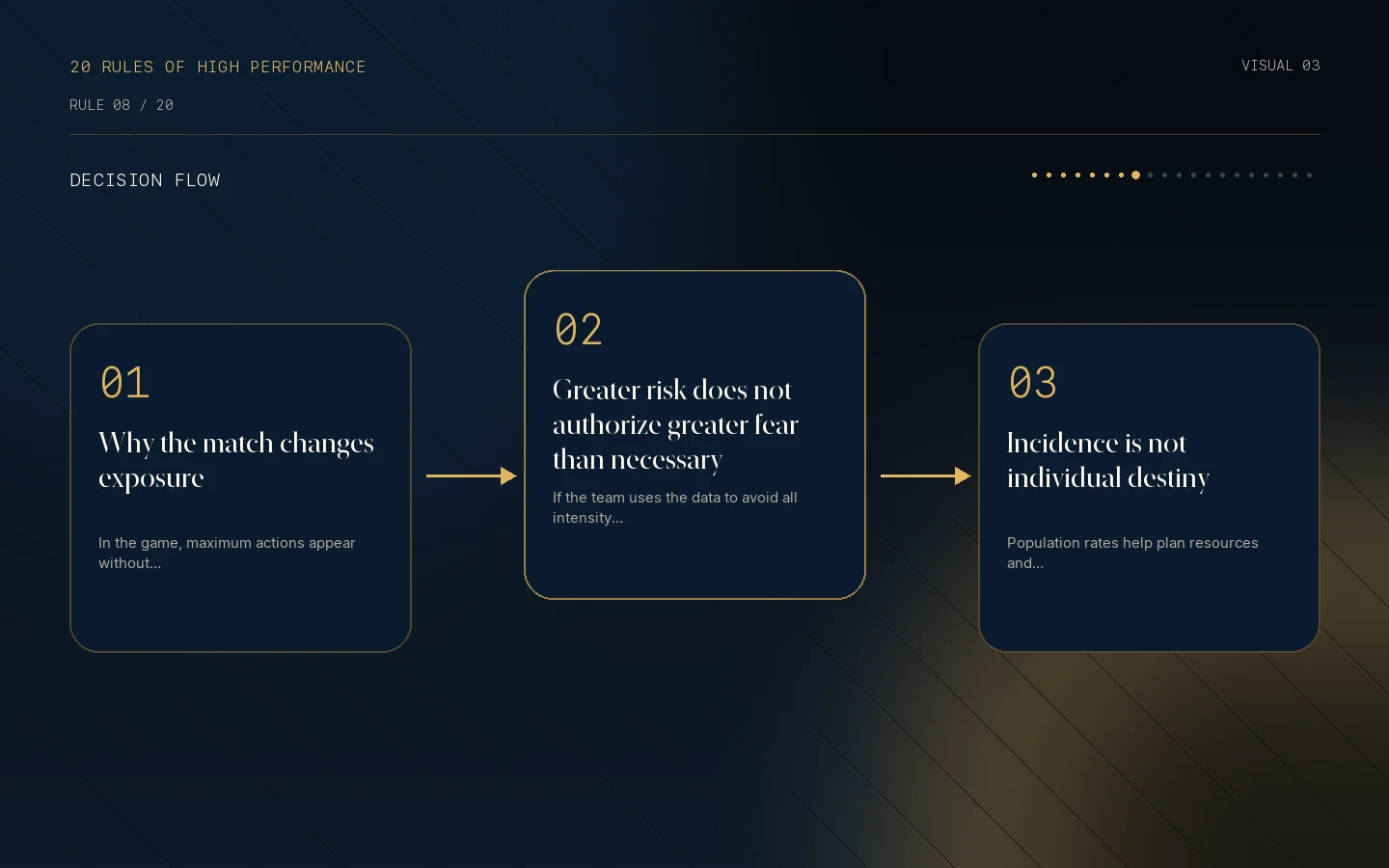
Why the match changes exposure
In the game, maximum actions appear without warning, contact is not measured and the decision needs to happen under opposition. The athlete does not choose the best interval to recover. The tactical consequence encourages behaviors that rarely appear with the same intensity in training.
The incidence also depends on the modality, sex, level, position, calendar and definition of injury. Therefore, the ratio between game and training should not be taken as a universal constant.
Still, studies in men's and women's international football have also found a higher incidence and burden of injuries in matches. The direction of the finding is consistent: competition concentrates higher risk exposure.
The environment that reveals the most performance is also the one that charges the highest price for any insufficient capacity.
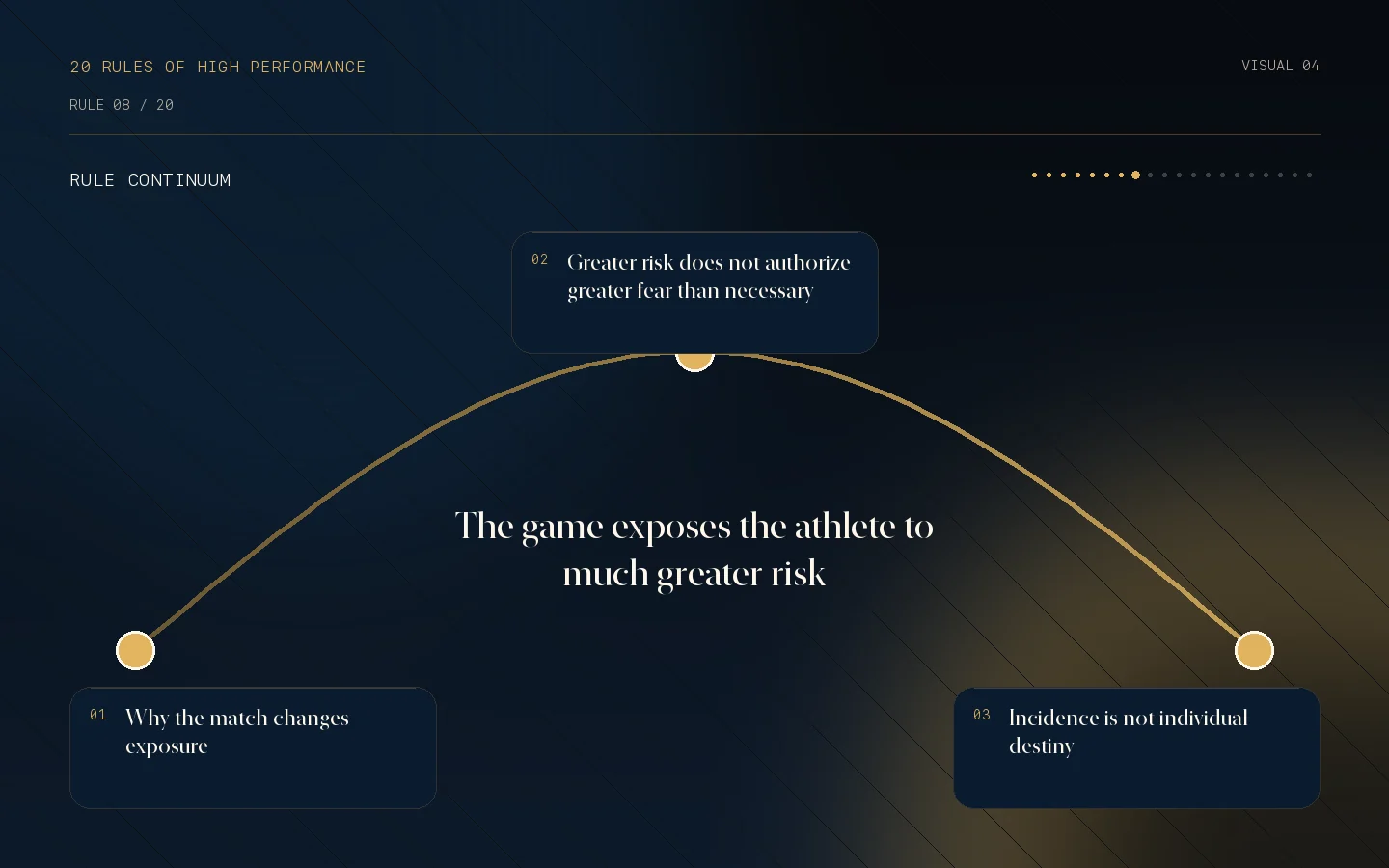
If the team uses the data to avoid all intensity in training, it produces the paradox of preparing less for the most demanding environment. Some capabilities only develop when the athlete is progressively exposed to speed, strength, contact and decision.
Greater risk does not authorize greater fear than necessary
If the team uses the data to avoid all intensity in training, it produces the paradox of preparing less for the most demanding environment. Some capabilities only develop when the athlete is progressively exposed to speed, strength, contact and decision.
The solution is to organize the dose. Training can control frequency, volume, trajectory, opposition and recovery. This control allows you to build tolerance before the game imposes the full combo.
Prevention is not about removing the athlete from sporting risk. It’s about reducing modifiable risks, increasing capacity and making better decisions about when and how to expose.
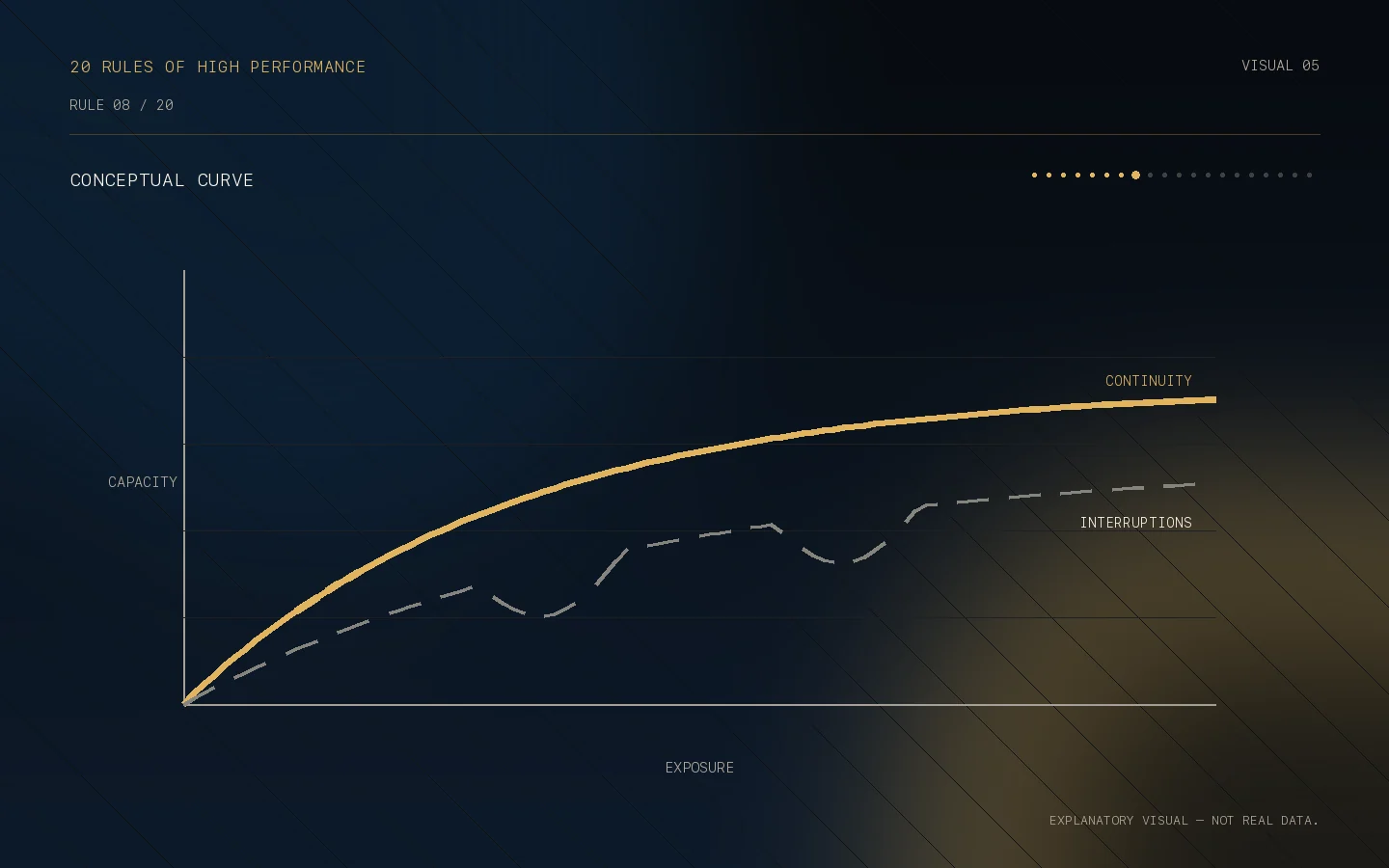
Explanatory visual — not real data.
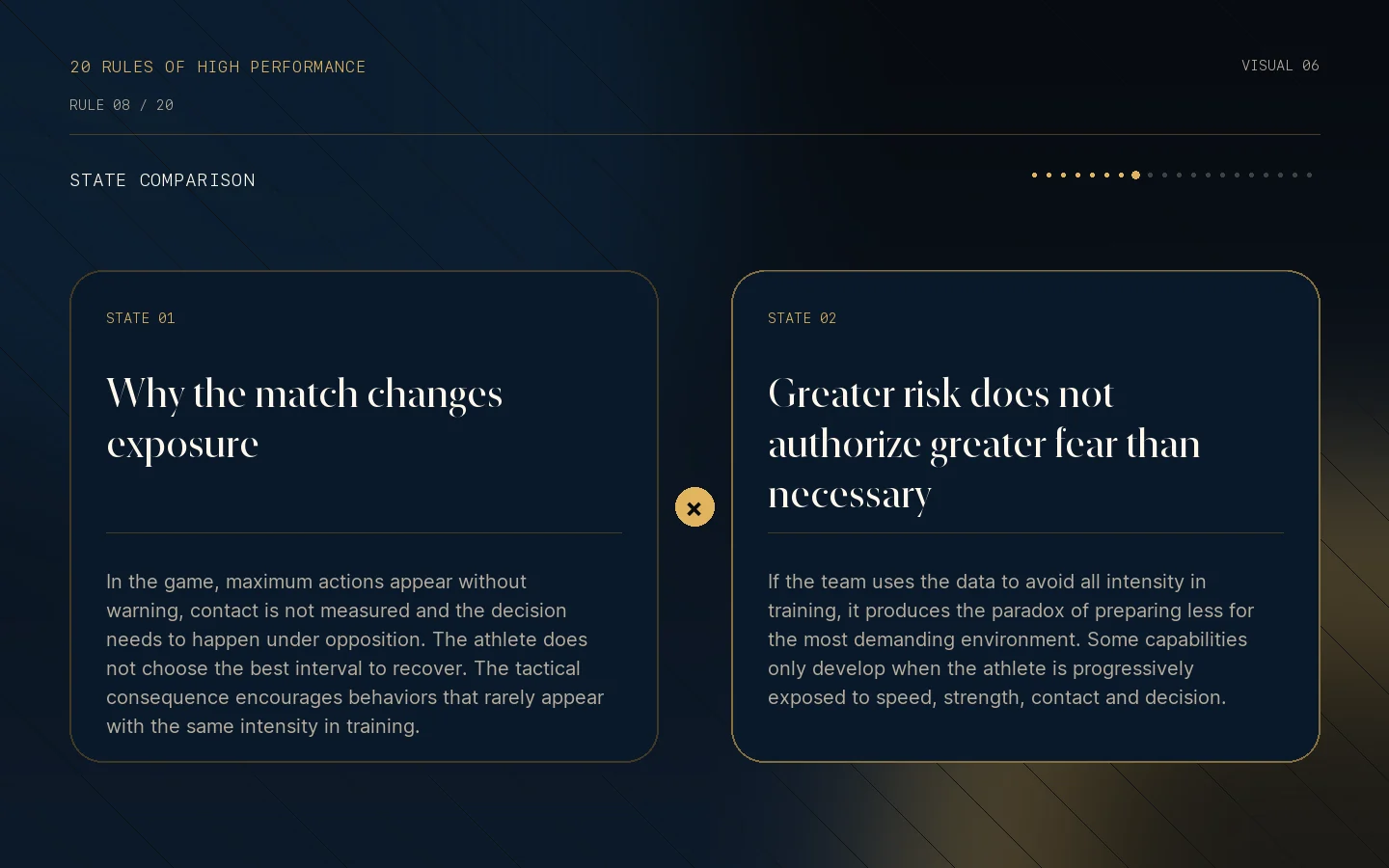
Greater risk does not authorize greater fear than necessary
Incidence is not individual destiny
Population rates help plan resources and compare contexts. They do not predict with certainty what will happen to a person in a match. Injuries emerge from dynamic interactions between athlete, load, environment and event.
The best use of data is strategic: recognizing where exposure grows, monitoring local patterns and preparing the capabilities that the competition requests most frequently.
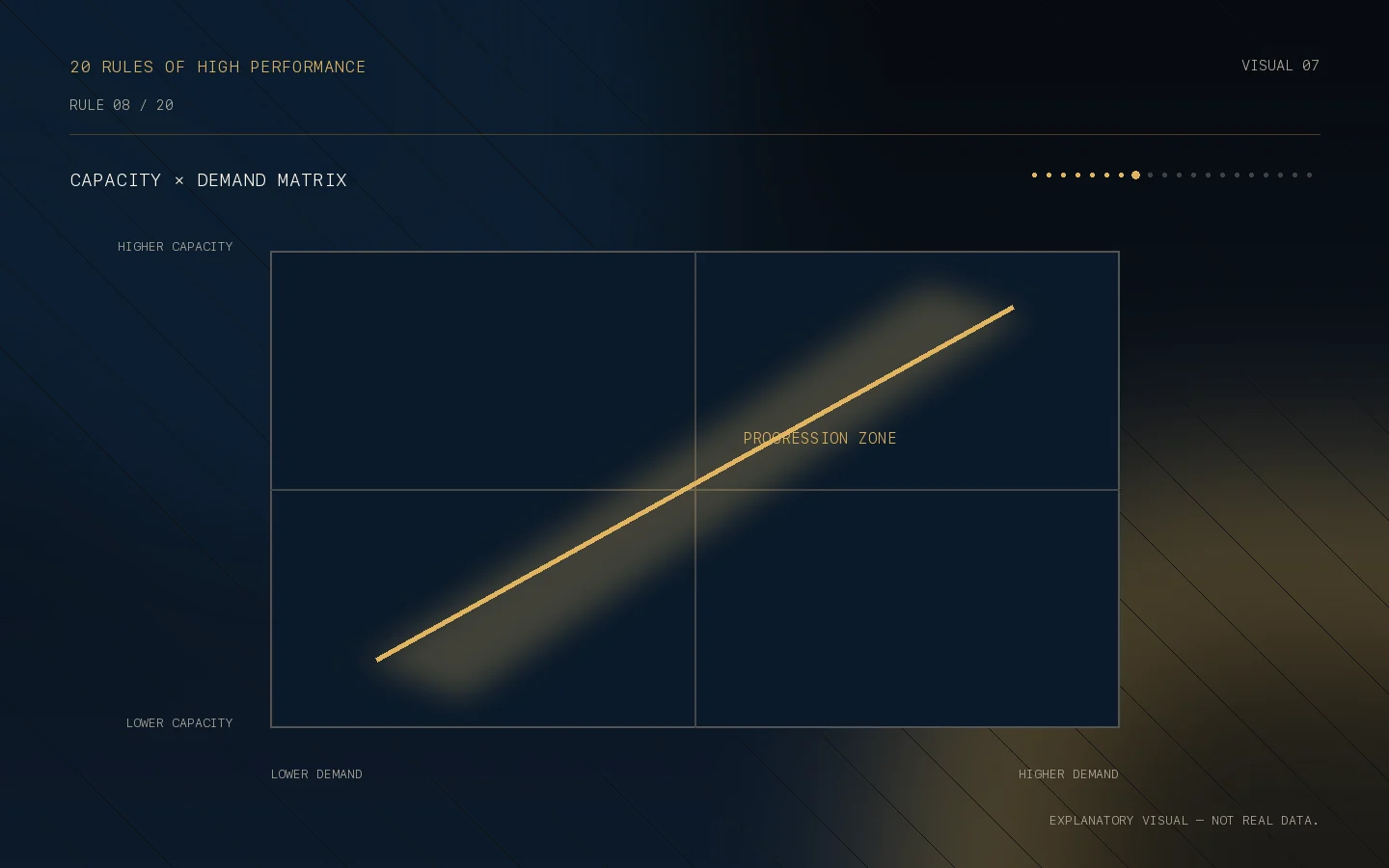
Competition focuses on speed, contact, fatigue and unpredictability; Preparing for the game requires exposure without normalizing avoidable risk.
In men's professional football, a meta-analysis found 36 injuries per thousand hours of play and 3.7 per thousand hours of training. These are grouped averages, not an individual forecast.
Manage competitive exposure
- Use data from the sport itself and, when possible, from the club itself to characterize risk.
- Prepare high-demand actions in training in a progressive, specific and recoverable way.
- Interpret incidence along with severity and days lost; Frequency alone does not describe injury burden.
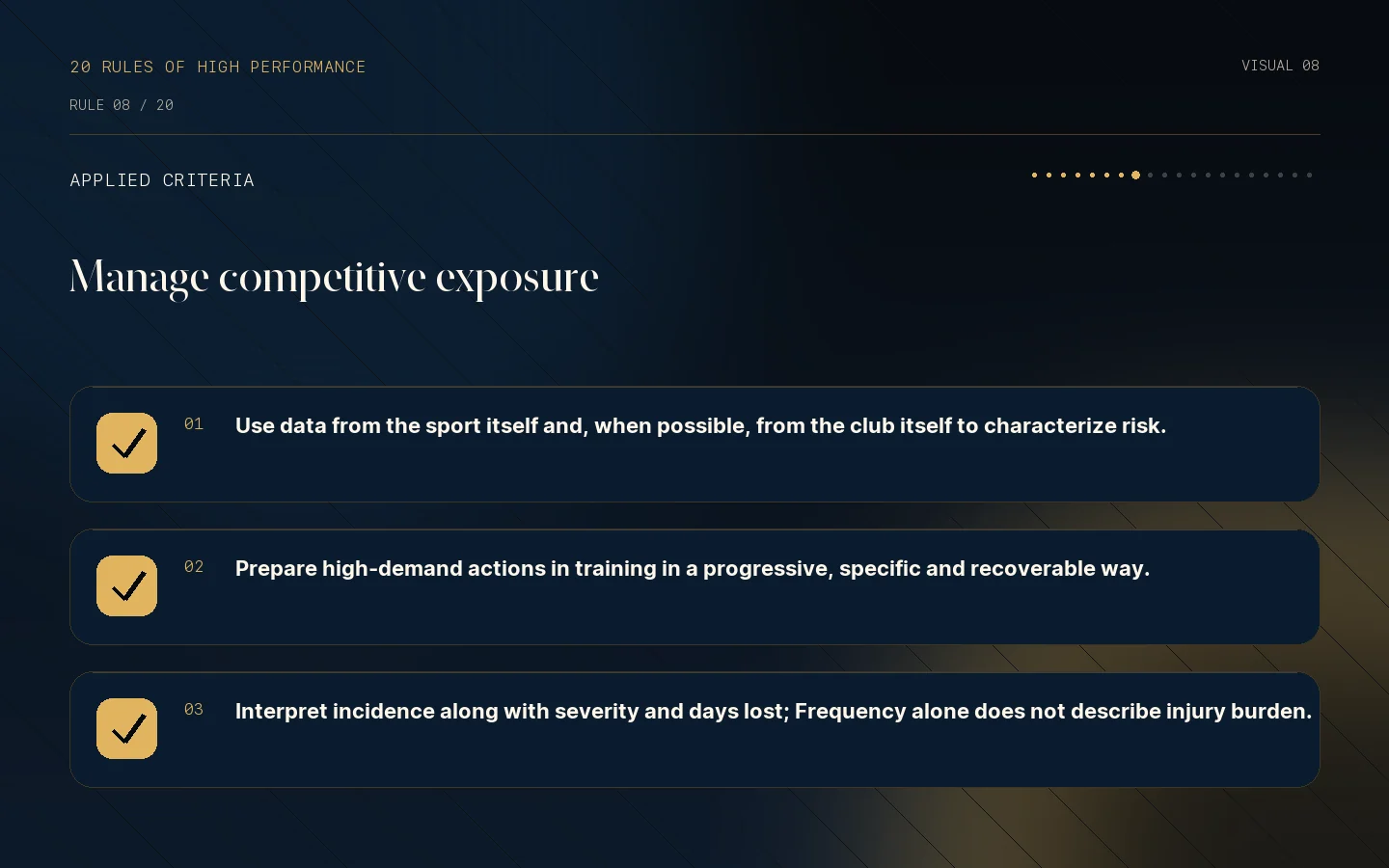
Manage competitive exposure
Competing will always involve uncertainty. High performance does not promise shielding; builds margin.
The greater the difference between training and game, the more important it becomes to design the transition between them.
The risk of the game cannot be eliminated. It is faced with capacity, information, and dose.