

The phrase “cleared to play” often sounds like a full stop. In high performance, it should function as a comma.
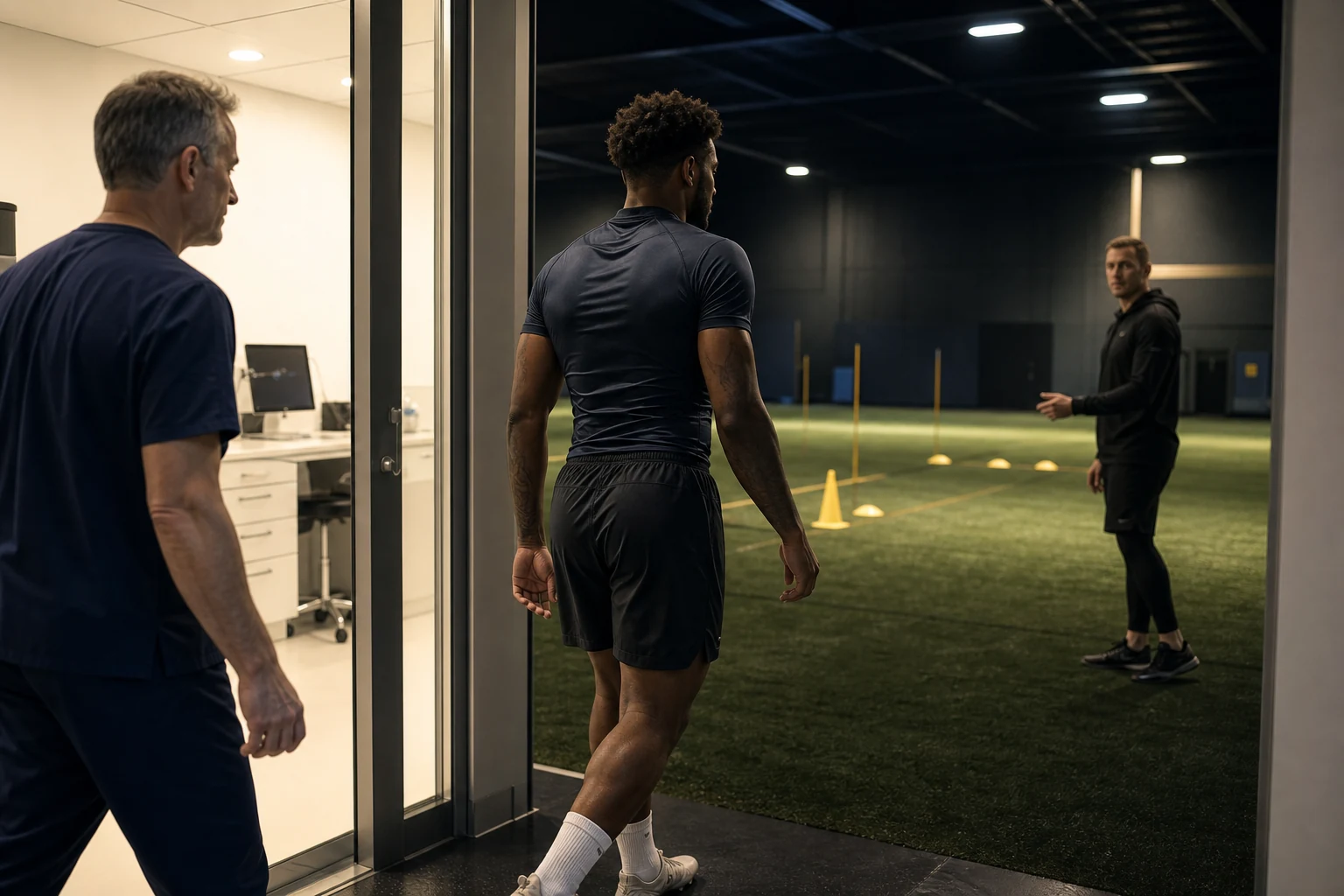
Medical clearance ends a restriction; the bridge to the game still has to be built.
The signature and the forty metres
The document left the medical room folded in half inside the backpack. Four words changed the athlete’s status: cleared to progress in sport. There was relief in the corridor. To someone who had been waiting for weeks, it felt like the finish.
The next morning, the task was simple: accelerate, decelerate, and attack a second ball. The first twenty metres were clean. At the change of direction, however, his trunk stayed high, the plant was delayed, and the second effort lost speed. No clinical sign stopped the execution. Even so, the full distance between cleared and ready appeared in less than six seconds.
The signature answered an important question: there was enough safety to move forward. It did not promise tolerance to volume, repeated maximal actions, contact, fatigue, or reading the game under pressure. Those answers had to be built outside the room where the document was issued.
The document was not wrong. It would be wrong to ask it to say more than it could. From that point on, the return needed a bridge, not a leap.
From the moment to the criterionClearance closes a clinical stage; sporting readiness begins to be demonstrated in the demands that follow.
Medical clearance indicates that the clinical condition allows progression or that a given restriction is no longer required. It does not automatically restore speed, power, contact tolerance, game reading, or confidence under pressure.
When this transition is not named, the athlete leaves a predictable environment and enters directly into a chaotic task. The gap between the two worlds starts to be treated as individual courage, when it should be planned work.
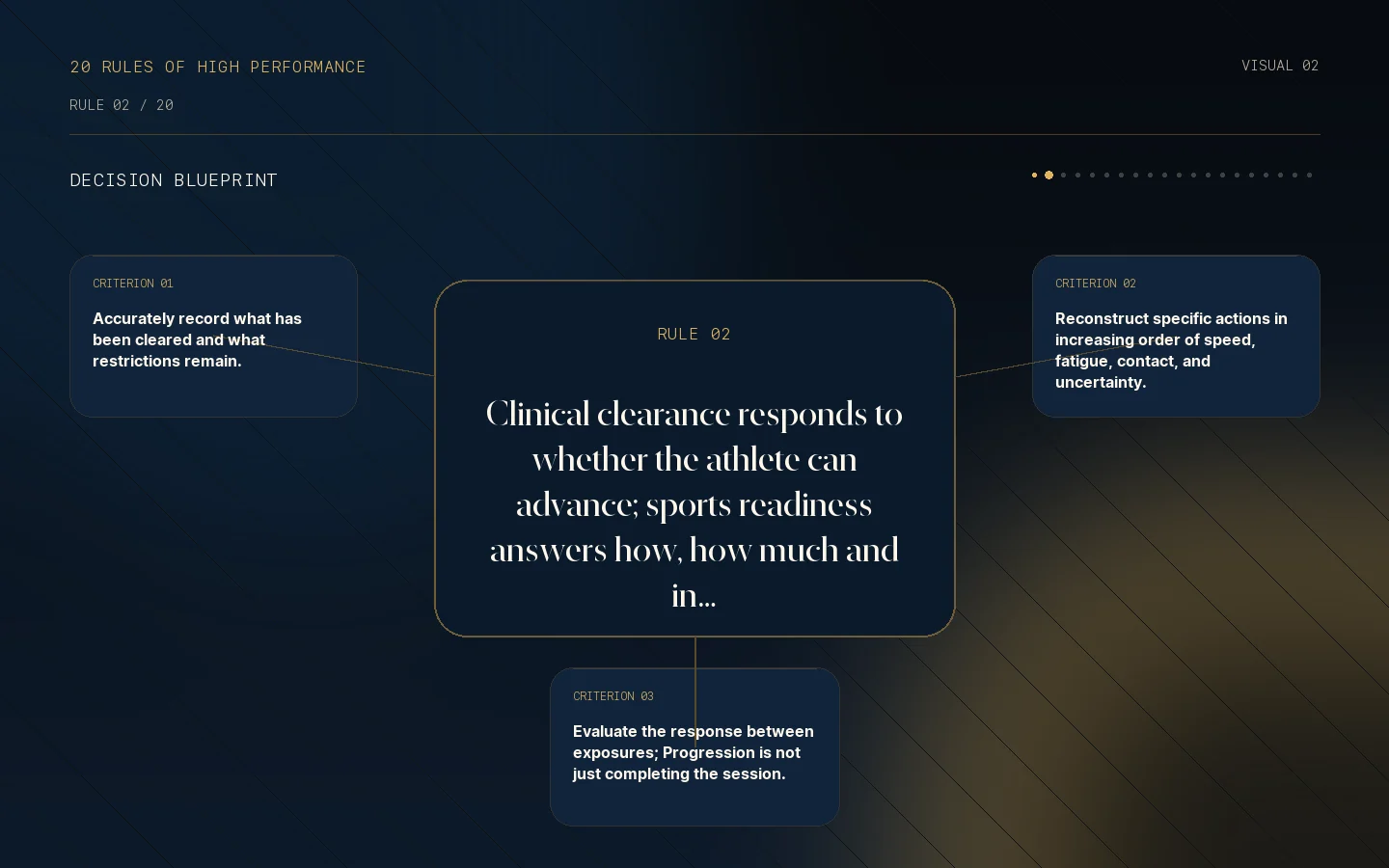
Clinical clearance responds to whether the athlete can advance; sports readiness answers how, how much and in what context.
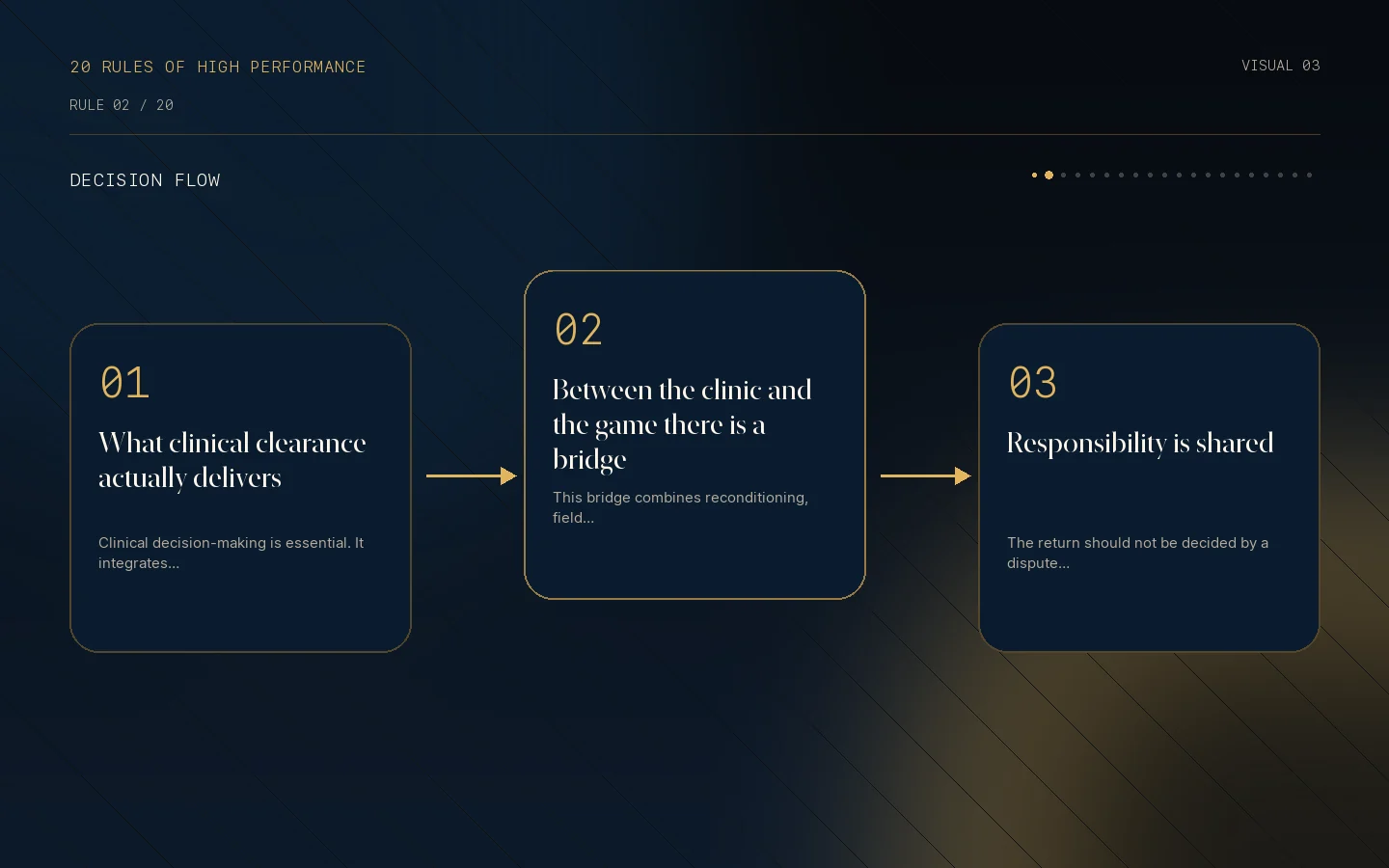
What clinical clearance actually delivers
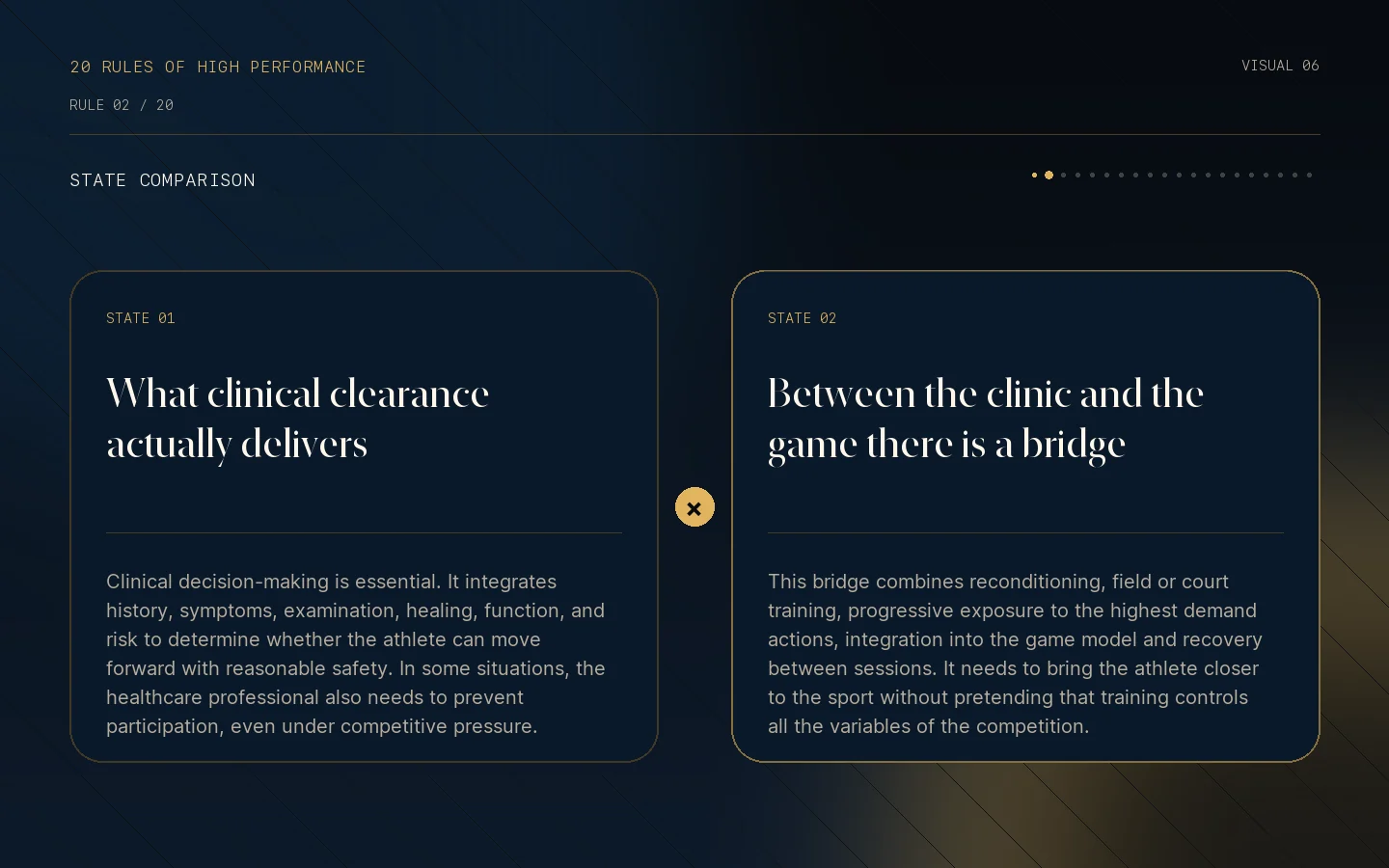
Clinical decision-making is essential. It integrates history, symptoms, examination, healing, function, and risk to determine whether the athlete can move forward with reasonable safety. In some situations, the healthcare professional also needs to prevent participation, even under competitive pressure.
But the clinical question has limits. A knee may show acceptable signs and still not have regained strength or ability to decelerate. A muscle injury may be pain-free in basic tasks and not yet exposed to maximum speed. A concussion requires its own progression before unrestricted return.
Medical clearance does not fail because it cannot answer every question. It fails when the organization demands an answer that belongs to sports preparation.
The phrase “cleared to play” often sounds like a full stop. In high performance, it should function as a comma.
This bridge combines reconditioning, field or court training, progressive exposure to the highest demand actions, integration into the game model and recovery between sessions. It needs to bring the athlete closer to the sport without pretending that training controls all the variables of the competition.
Between the clinic and the game there is a bridge
This bridge combines reconditioning, field or court training, progressive exposure to the highest demand actions, integration into the game model and recovery between sessions. It needs to bring the athlete closer to the sport without pretending that training controls all the variables of the competition.
Progression gains quality when each stage has an entry, objective and exit criteria. Running is not the same as speeding up. Accelerating without opposition is not equivalent to fighting for space. Completing part of the training is not equivalent to tolerating the density of actions in a match.
What connects these steps is the athlete's response: symptoms in the following twenty-four hours, quality of movement, force production, internal load, confidence and ability to repeat.
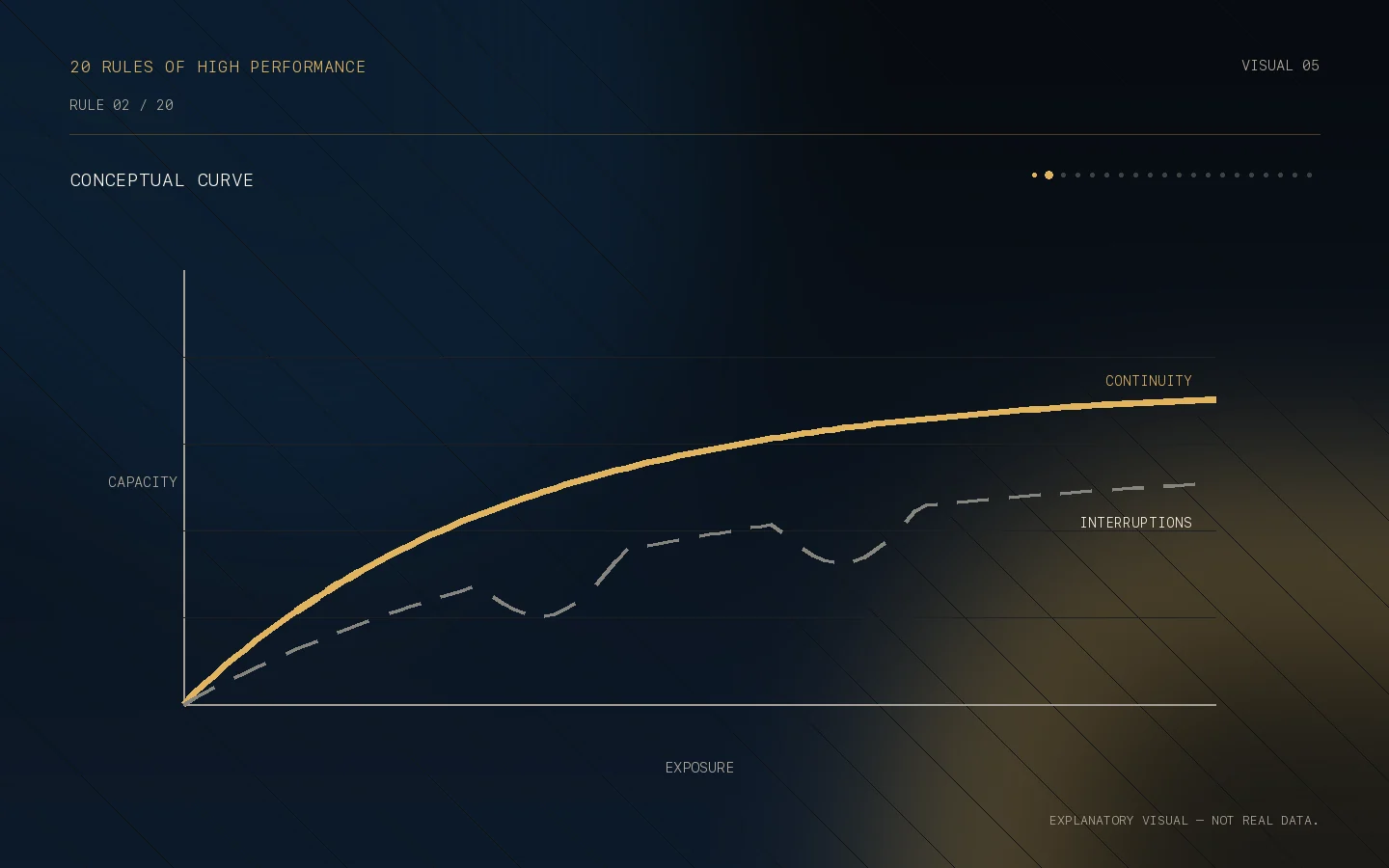
Explanatory visual — not real data.
Between the clinic and the game there is a bridge
Responsibility is shared
The return should not be decided by a dispute between the medical department, preparation, coach and athlete. Each party sees different risks and opportunities. The problem improves when roles are defined and information circulates without coercion.
The doctor can lift the clinical restriction. The performance team can qualify the exposure. The coach defines the possible sporting function. The athlete provides insights that no device captures. The final decision needs to integrate these perspectives.
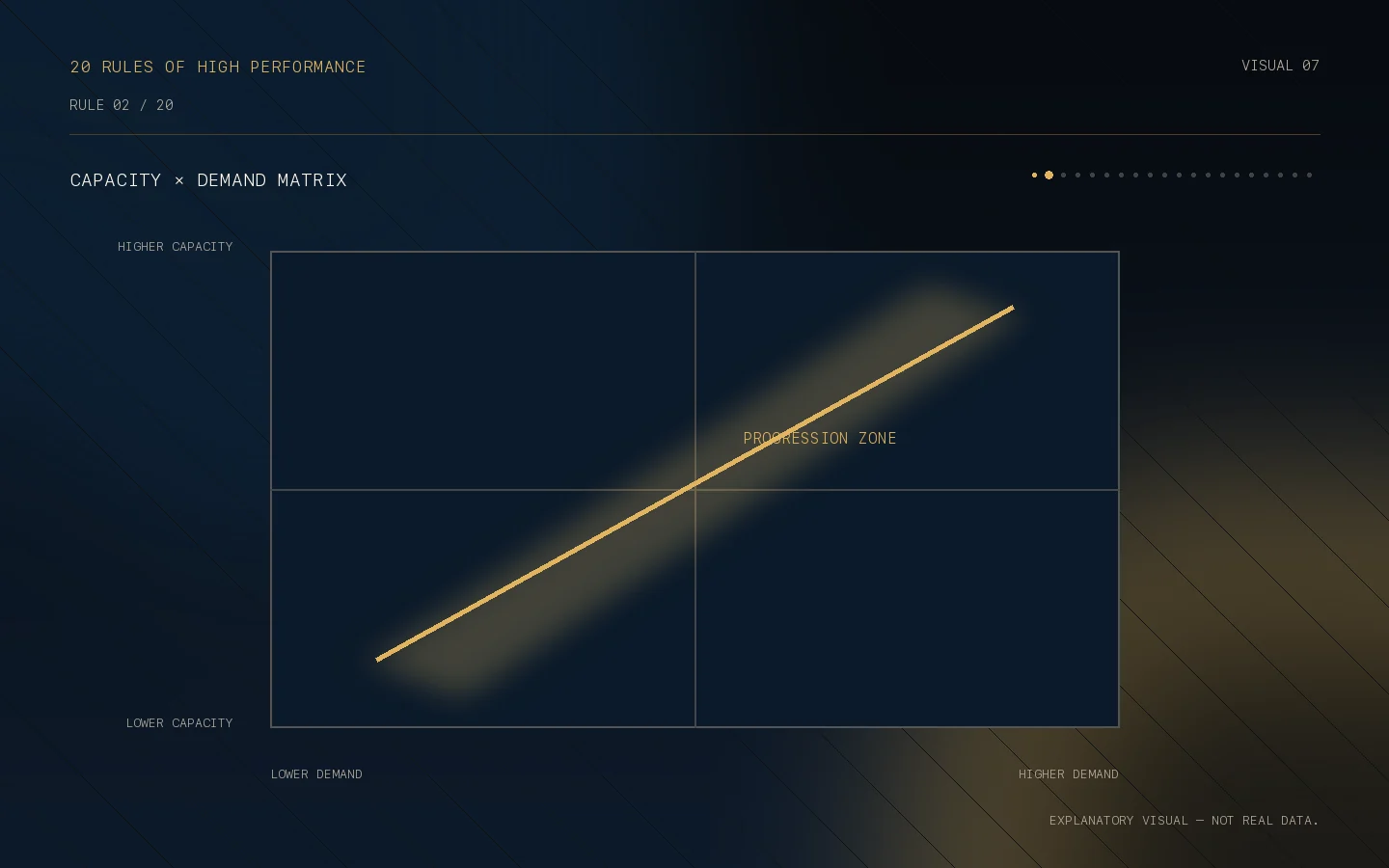
Clinical clearance responds to whether the athlete can advance; sports readiness answers how, how much and in what context.
The question after medical clearance is not “can the athlete play now?”. It is “which sporting exposure should happen now to narrow the distance to the game?”.
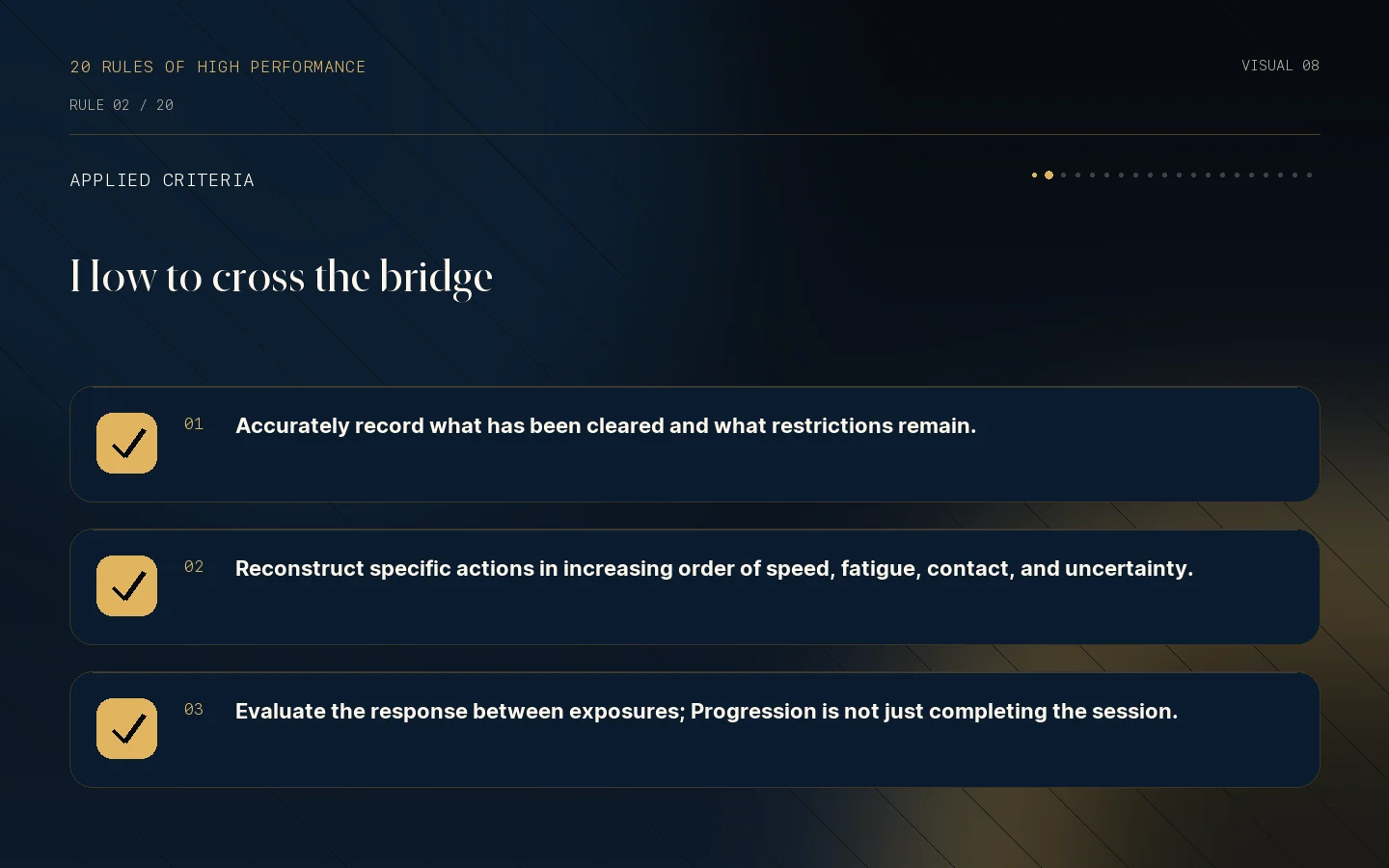
How to cross the bridge
- Accurately record what has been cleared and what restrictions remain.
- Reconstruct specific actions in increasing order of speed, fatigue, contact, and uncertainty.
- Evaluate the response between exposures; Progression is not just completing the session.
How to cross the bridge
A safe organization does not transform the doctor into a trainer nor the trainer into a doctor. It creates a clear passage between the two domains.
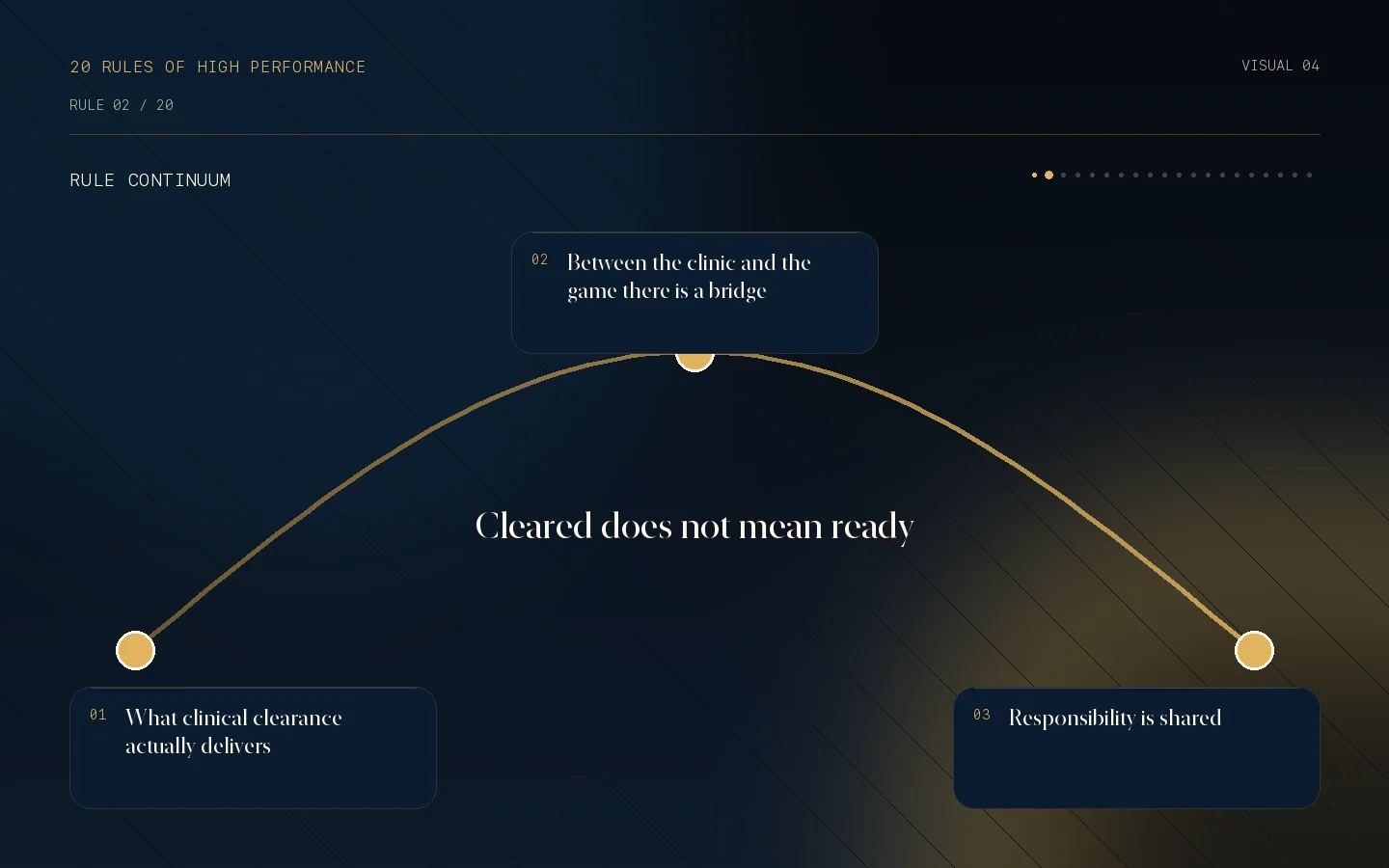
Cleared is a clinical status. Ready is a specific, provisional conclusion built against real demand.
Medical clearance restores possibility. The performance process restores capacity.