

The training that impresses today may produce less than the training that can return tomorrow.

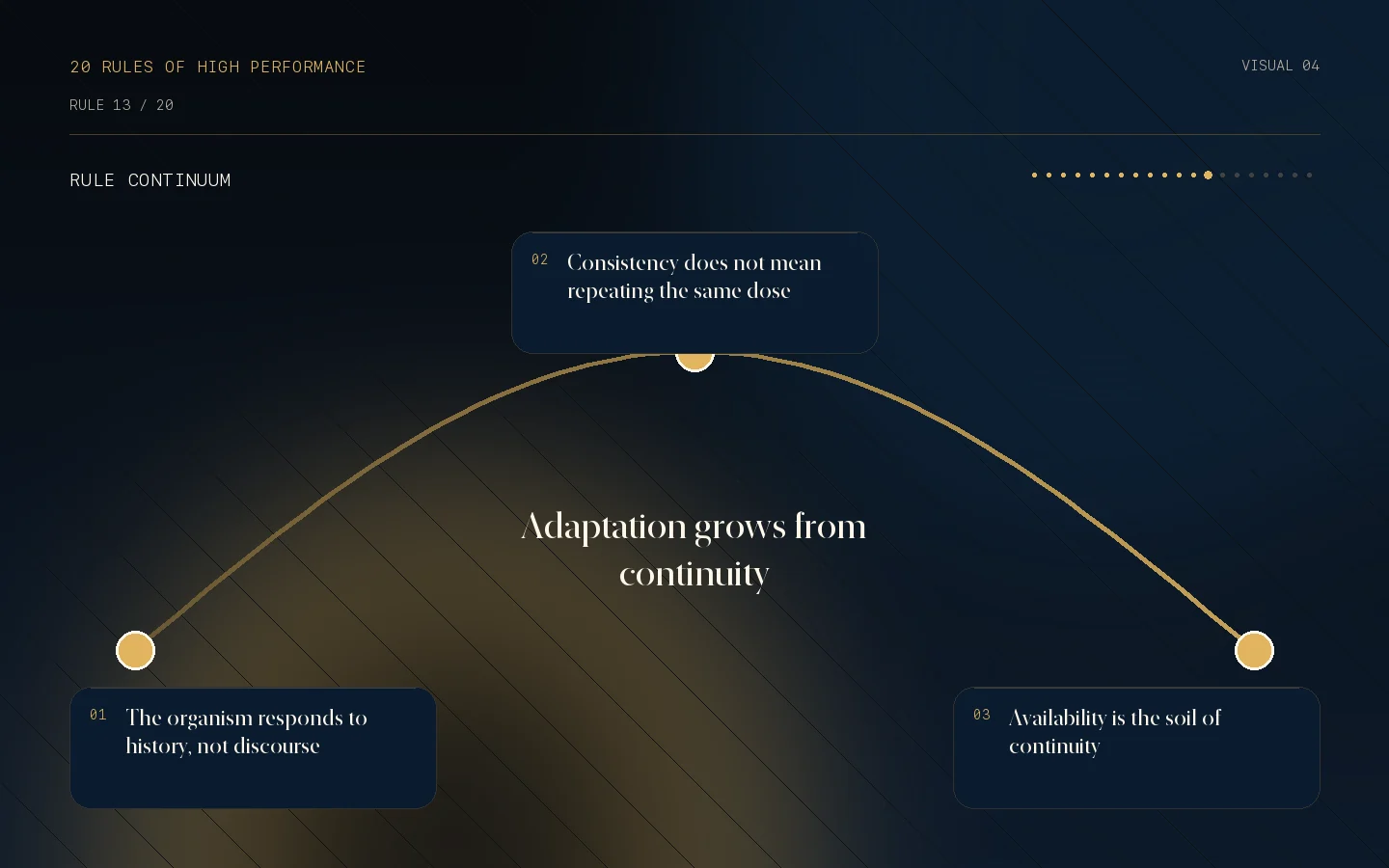
Adaptation emerges from a sequence that the body can recognize and assimilate.
The session that returned the following week
On the first exposure, the drill looked disorganised. The athlete arrived late to the plant, took too many steps to brake, and had to think through every detail. The session produced no spectacular image. It ended before quality fell apart.
Four days later, he met the same family of demands with one small variation. The plant came earlier. The following week, speed increased without the action losing control. What had occupied all his attention began to free space for perceiving teammates and opponents.
No single day explained the change. Adaptation lived between them: in the tolerated dose, sufficient recovery, and the chance to meet the task again before learning was interrupted.
A brutal session might have produced more fatigue and less continuity. The sequence produced something less visible and more useful: capacity that reappeared with increasing quality.
From the moment to the criterionThe body turns stimulus into performance when it receives a history, not intensity alone.
Adaptation is not visible fatigue at the end of the session. It is a change built when stimulus, recovery and new exposure are organized over time. Isolated training can reveal capacity or generate fatigue; he does not alone represent the process.
Continuity does not require monotony. It requires that the sequence preserve the objective and allow sufficient progression for the organism to recognize, repair, and expand relevant resources.
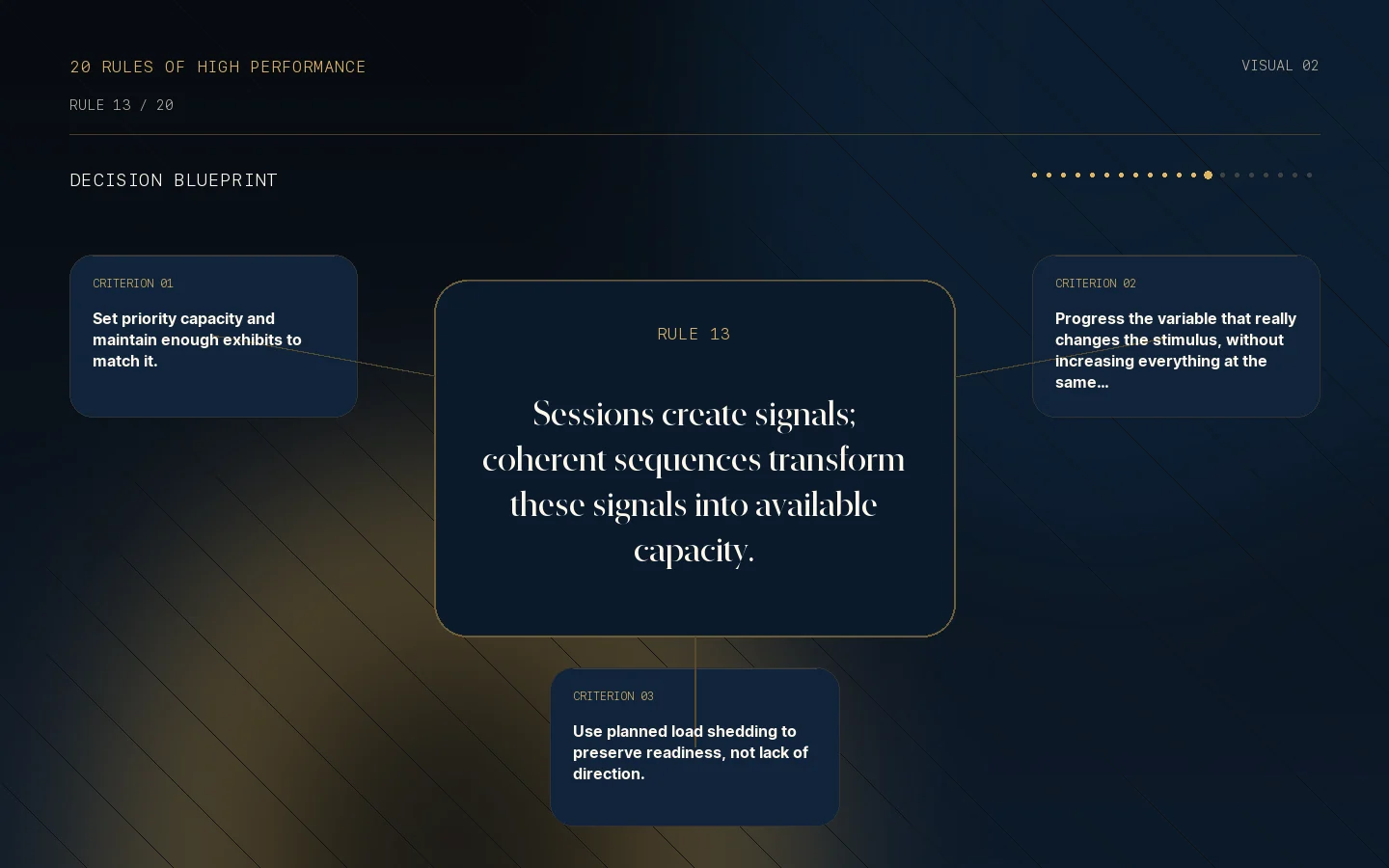
Sessions create signals; coherent sequences transform these signals into available capacity.
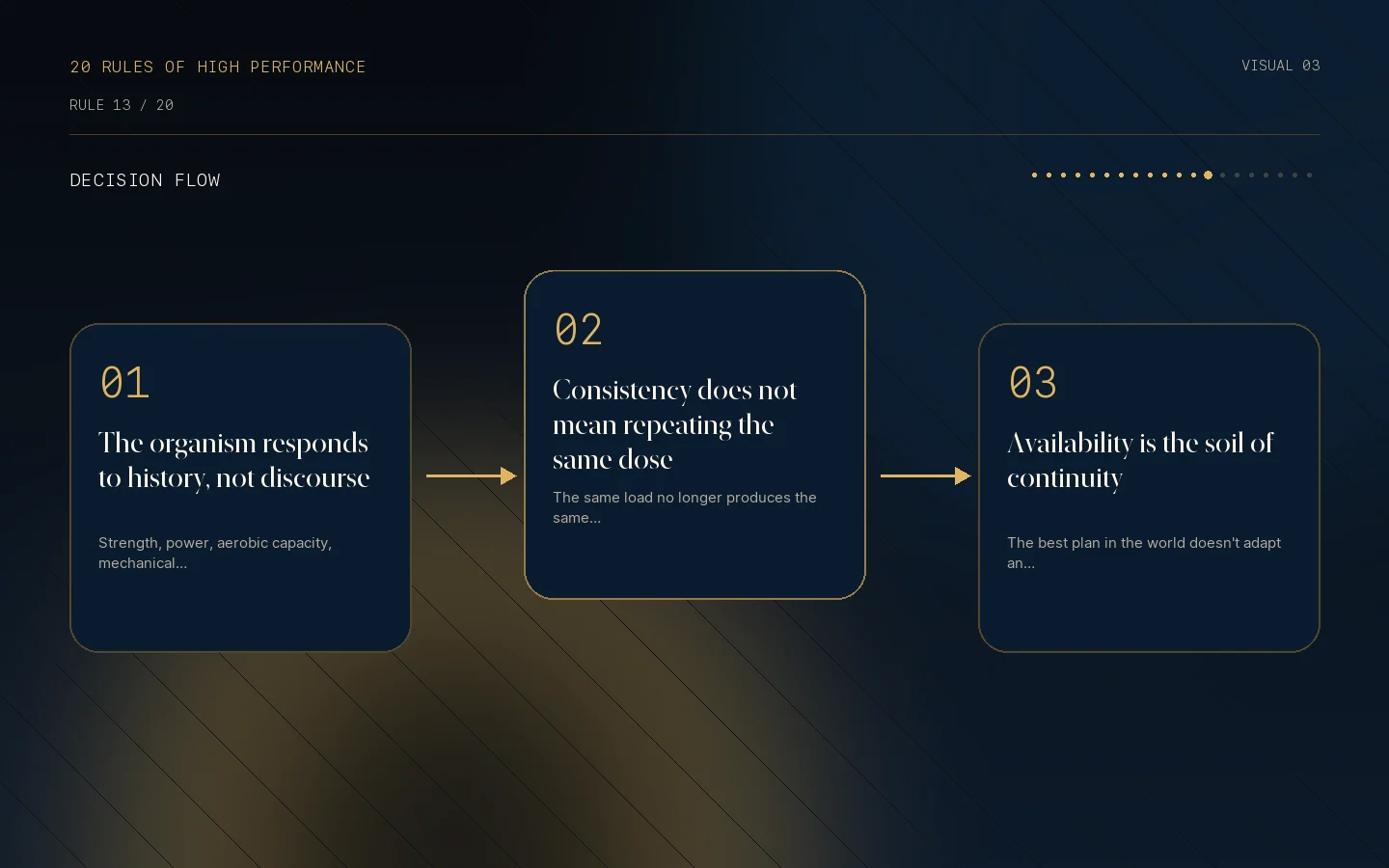
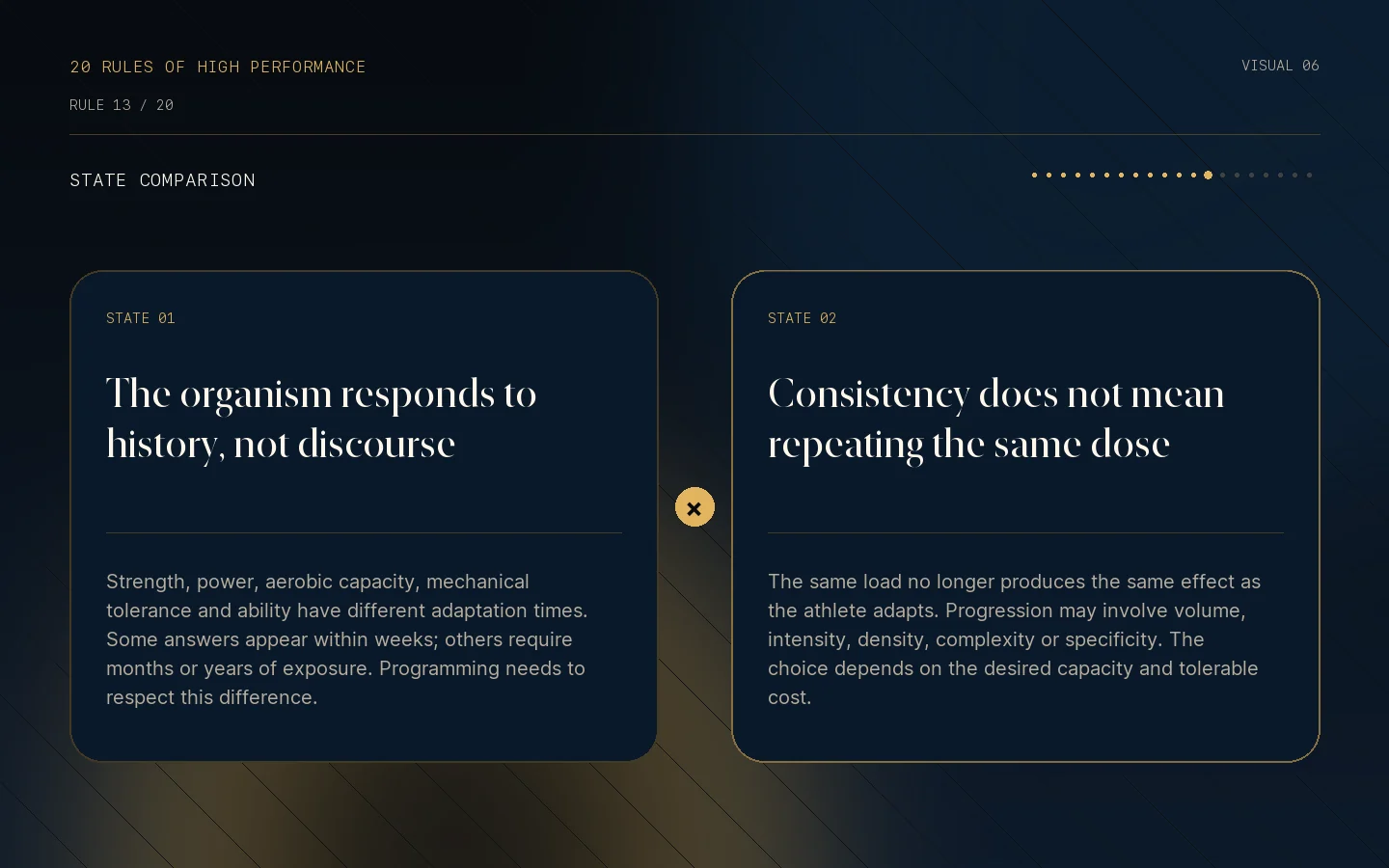
The organism responds to history, not discourse
Strength, power, aerobic capacity, mechanical tolerance and ability have different adaptation times. Some answers appear within weeks; others require months or years of exposure. Programming needs to respect this difference.
When the load changes direction every day, the athlete can accumulate effort without accumulating a dominant adaptation. Variability is necessary to represent sport, but it must exist within an architecture that maintains recognizable cues.
Continuity also allows individual response to be observed. Without comparable exposures, any improvement or worsening can be attributed to the last intervention, when in fact it belongs to the whole.
The training that impresses today may produce less than the training that can return tomorrow.
The same load no longer produces the same effect as the athlete adapts. Progression may involve volume, intensity, density, complexity or specificity. The choice depends on the desired capacity and tolerable cost.
Consistency does not mean repeating the same dose
The same load no longer produces the same effect as the athlete adapts. Progression may involve volume, intensity, density, complexity or specificity. The choice depends on the desired capacity and tolerable cost.
In competitive periods, maintaining may be the correct objective. In development, the dose needs to create new margin. Upon return from injury, progression needs to rebuild tolerance without skipping exposure steps.
Mature continuity includes deloads, adjustments, and recovery sessions. Temporarily reducing stress can preserve the process; interrupting it unnecessarily may require greater reconstruction.
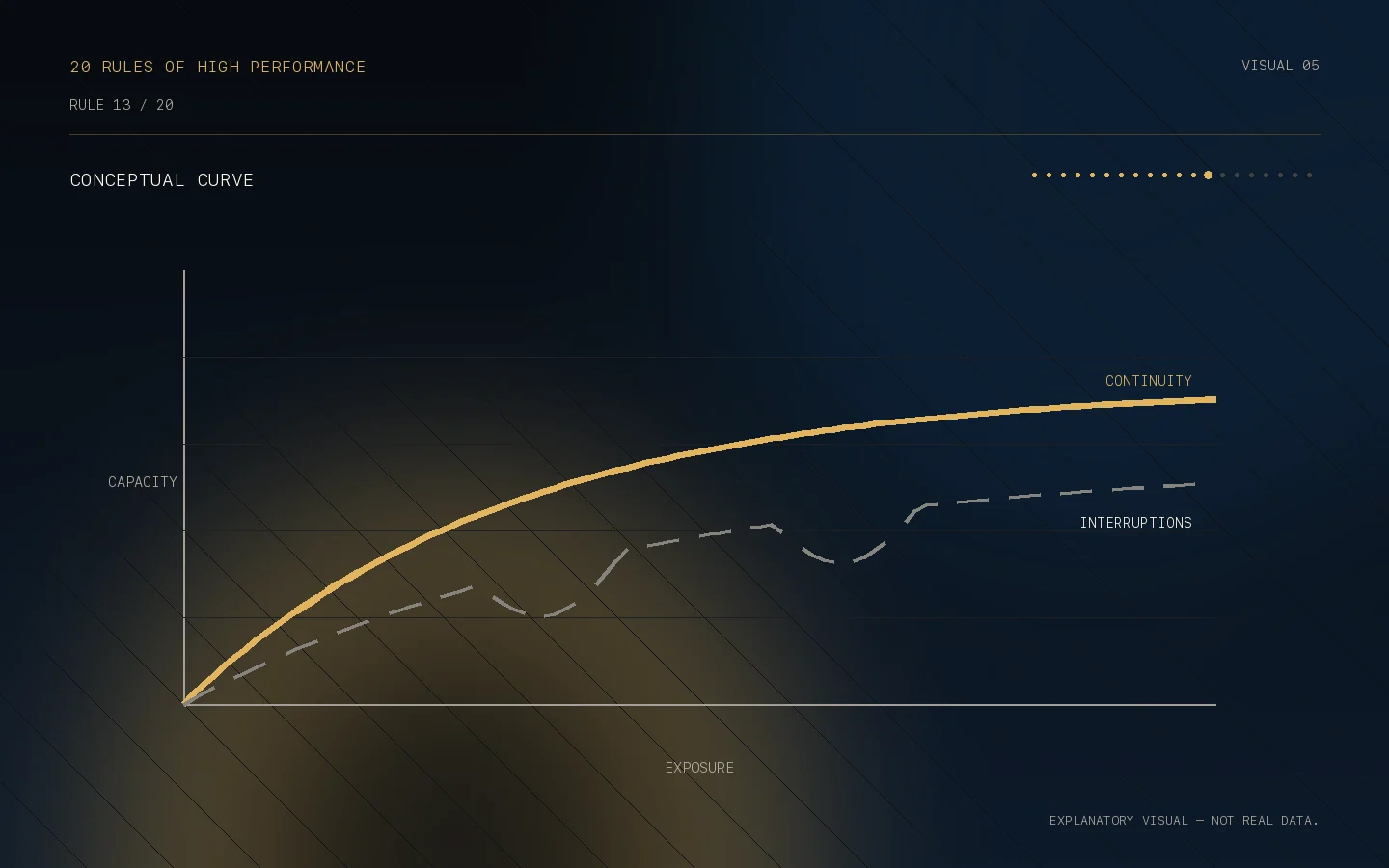
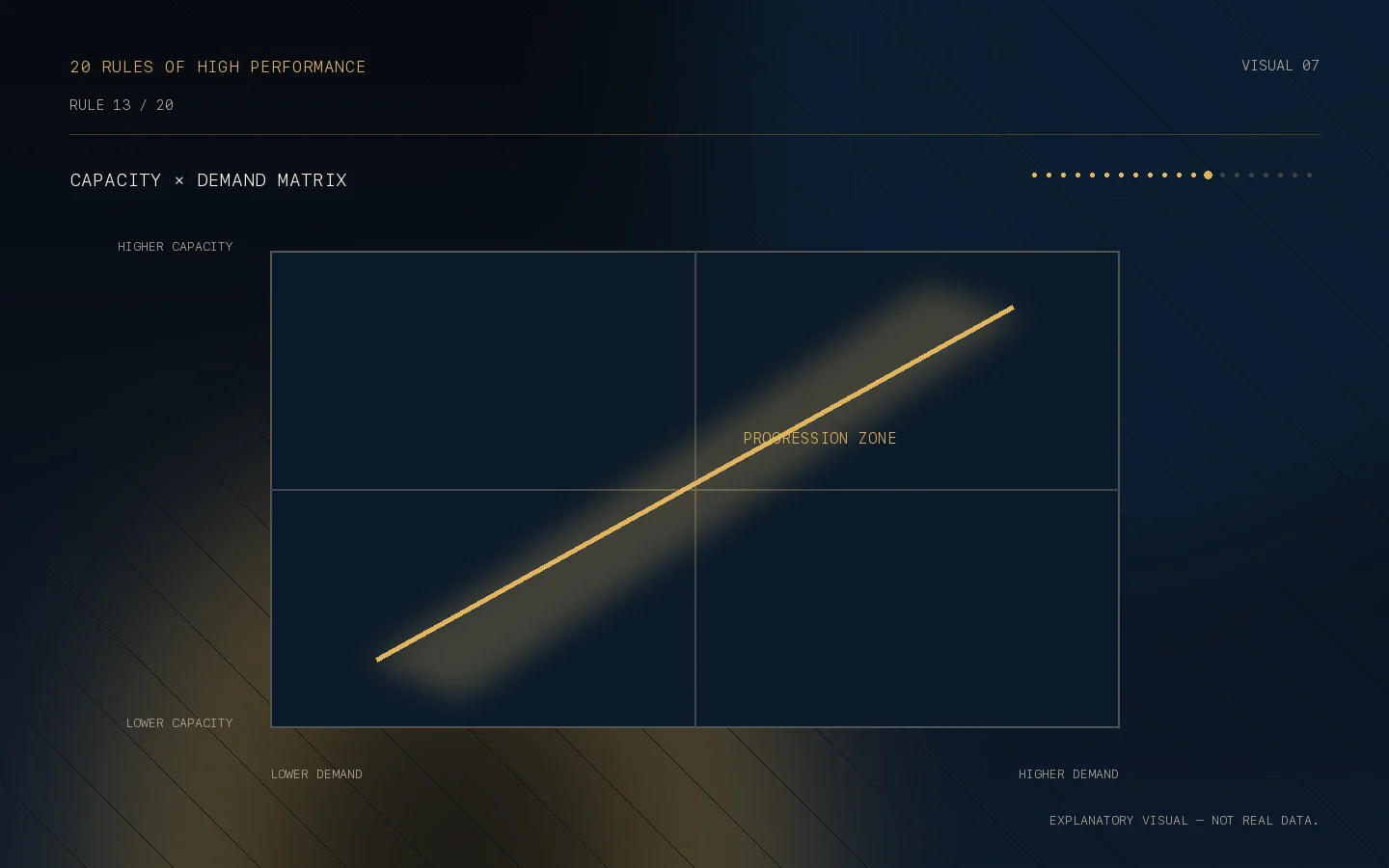
Explanatory visual — not real data.
Consistency does not mean repeating the same dose
Availability is the soil of continuity
The best plan in the world doesn't adapt an athlete who can't receive it. Pain, illness, insufficient sleep, low energy availability and calendar conflicts can reduce the useful dose even when the session is written.
Therefore, protecting availability does not mean reducing ambition. It's about ensuring enough exposures so that ambition has biological time to become capacity.
Sessions create signals; coherent sequences transform these signals into available capacity.
The session is the smallest visible unit. Adaptation belongs to the sequence of stimulus, recovery and reexposure.
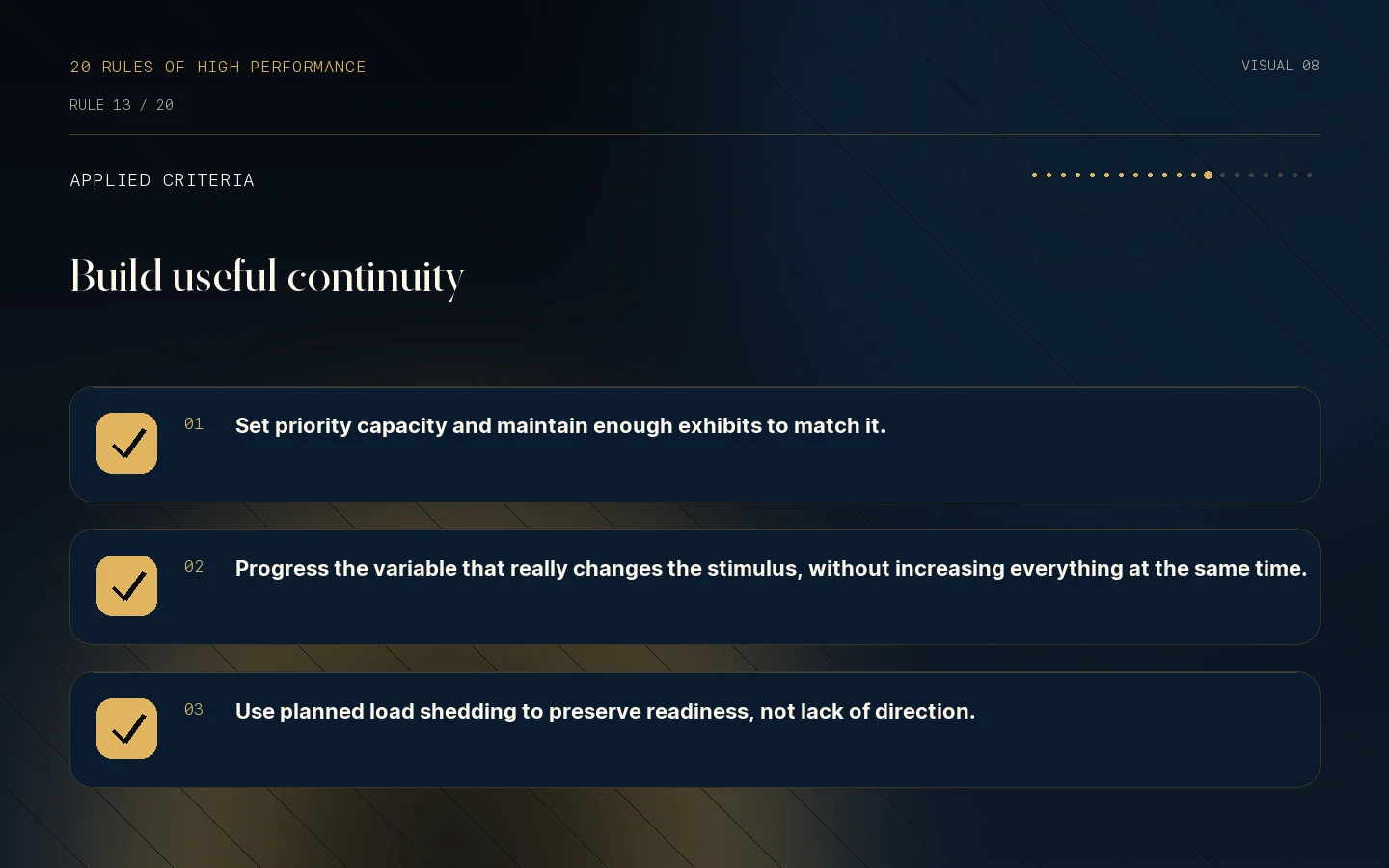
Build useful continuity
- Set priority capacity and maintain enough exhibits to match it.
- Progress the variable that really changes the stimulus, without increasing everything at the same time.
- Use planned load shedding to preserve readiness, not lack of direction.
Build useful continuity
Continuity is a silent advantage. It rarely produces an epic photograph, but it changes what the athlete can repeat when the season gets tough.
High performance is not about adding perfect days. It's maintaining a line of development through different days.
Adaptation does not reward the most dramatic session. It rewards the sequence that the body can assimilate.