

Missed days appear on the report. The story that was left unconstructed rarely appears.
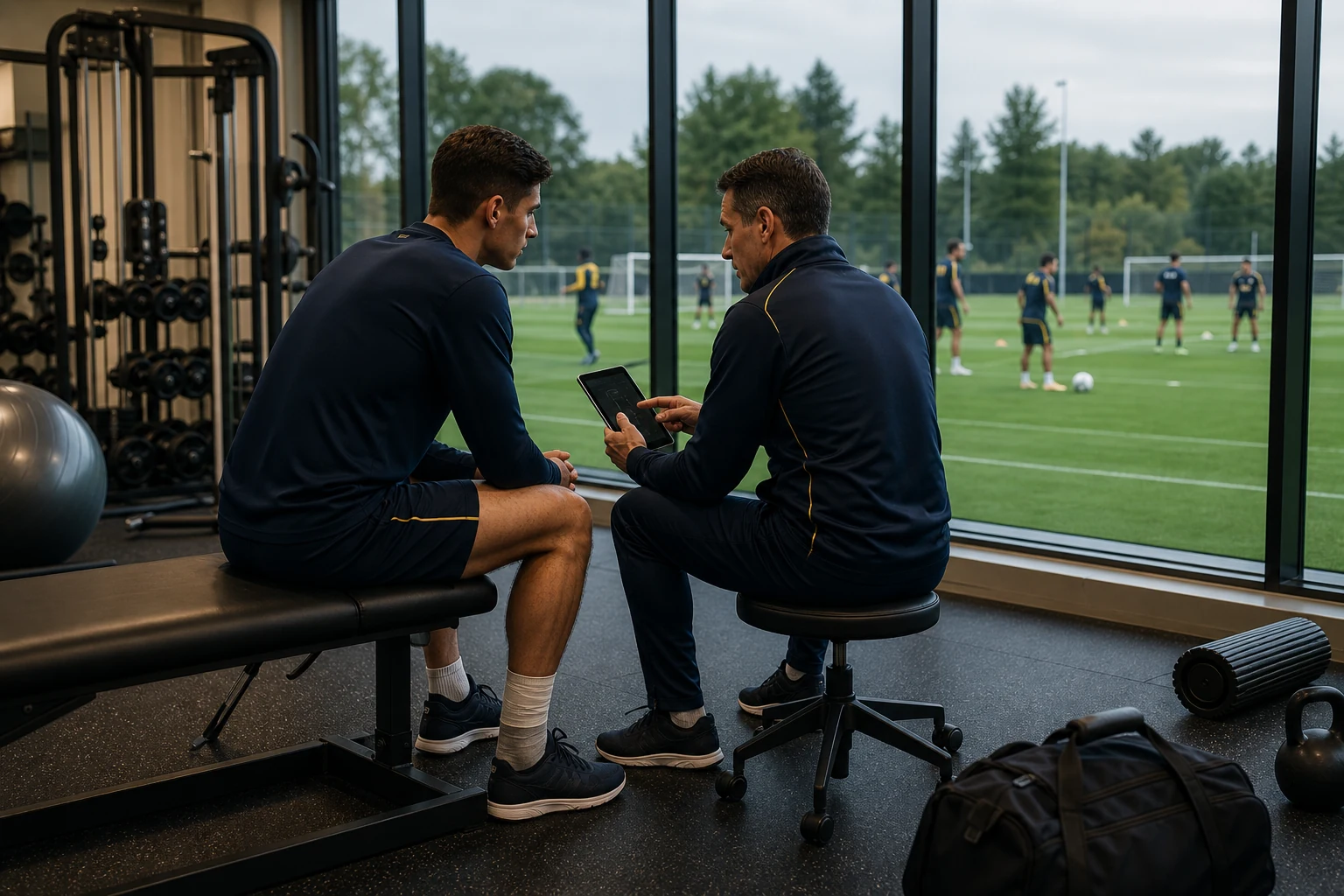
Absence interrupts physical, tactical and relational repetitions that the calendar does not show.
The pitch had moved on without him
When the athlete returned to team training, he recognised every face and found almost every timing unfamiliar. The full-back advanced slightly earlier, the midfielder received from a different angle, and the press began from a trigger that had not existed when he left.
His running capacity was close to the expected level. Even so, he arrived half a step late to plays that once felt automatic. While he rebuilt strength and tolerance, the team had continued to learn.
The lost days were recorded. The passes he had not learned to read, the adjustments he had not lived through, and the collective confidence built without him were not. The interruption had cost physical condition and shared history.
That is why returning involved more than rebuilding the body. He had to relearn reference points, update decisions, and find a place in a system that had not remained frozen while it waited for him.
From the moment to the criterionThe invisible cost of stopping lies in what is lost and in what goes unbuilt while the rest of the game continues.
An interruption due to injury, illness or unavailability removes sessions and matches from the athlete's calendar. This is the visible cost. The invisible cost includes adaptations that begin to regress, specific exposures that fail to occur, confidence that needs to be updated, and collective relationships that continue to evolve without it.
Not every break produces the same loss. Duration, capacity, level of training, activity maintained and reason for interruption change the effect. Still, returning to the calendar does not automatically return the interrupted story.
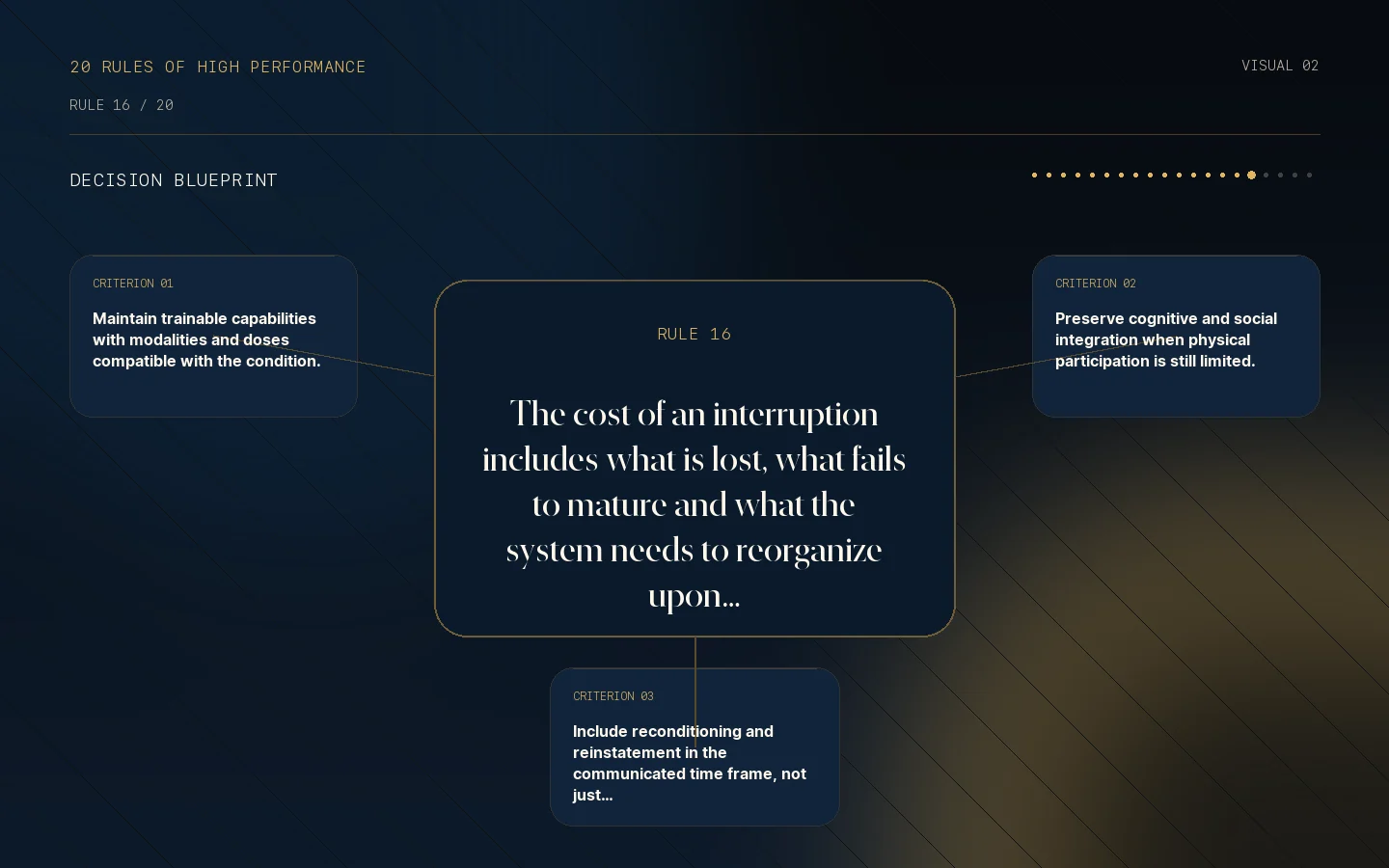
The cost of an interruption includes what is lost, what fails to mature and what the system needs to reorganize upon return.
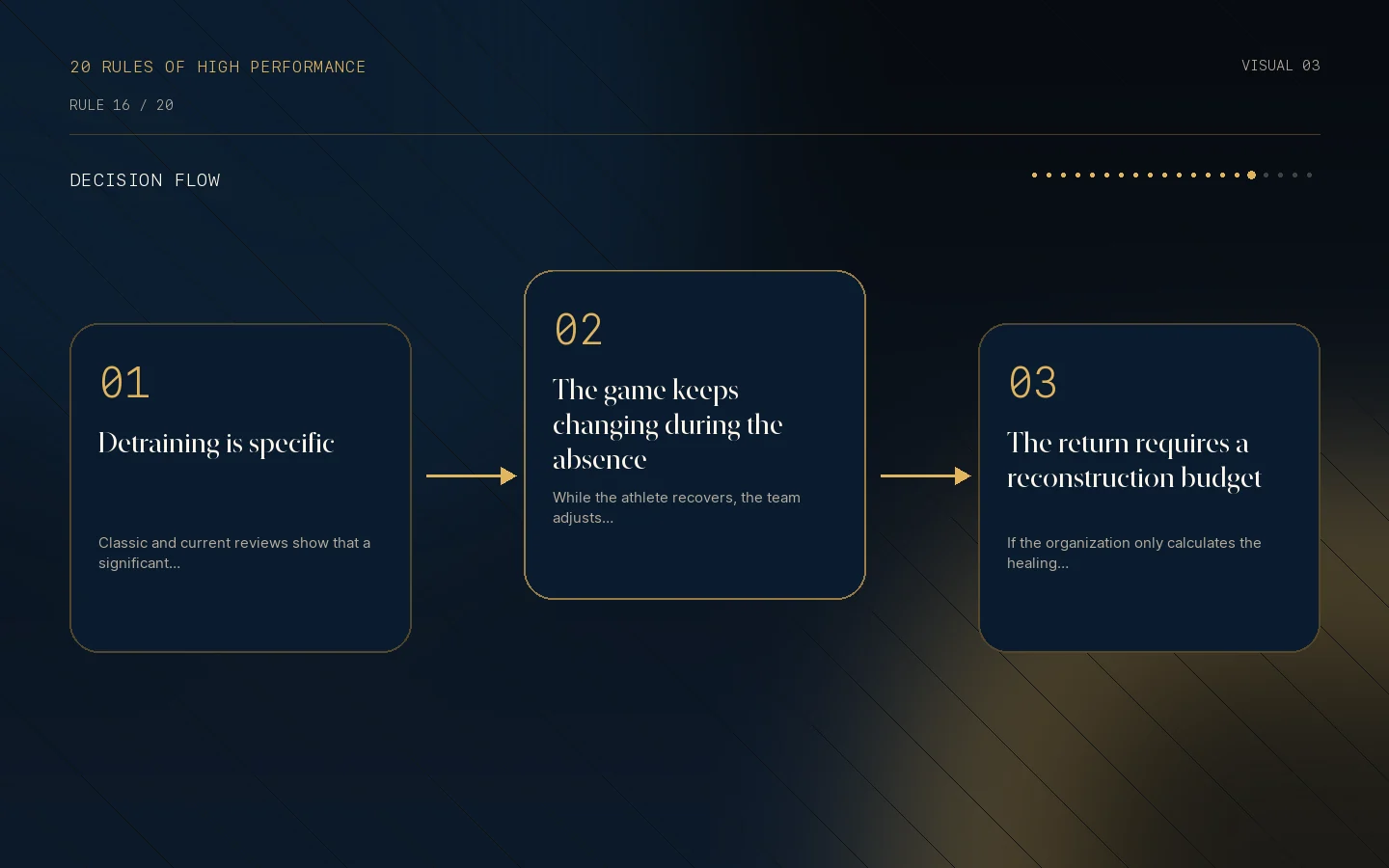
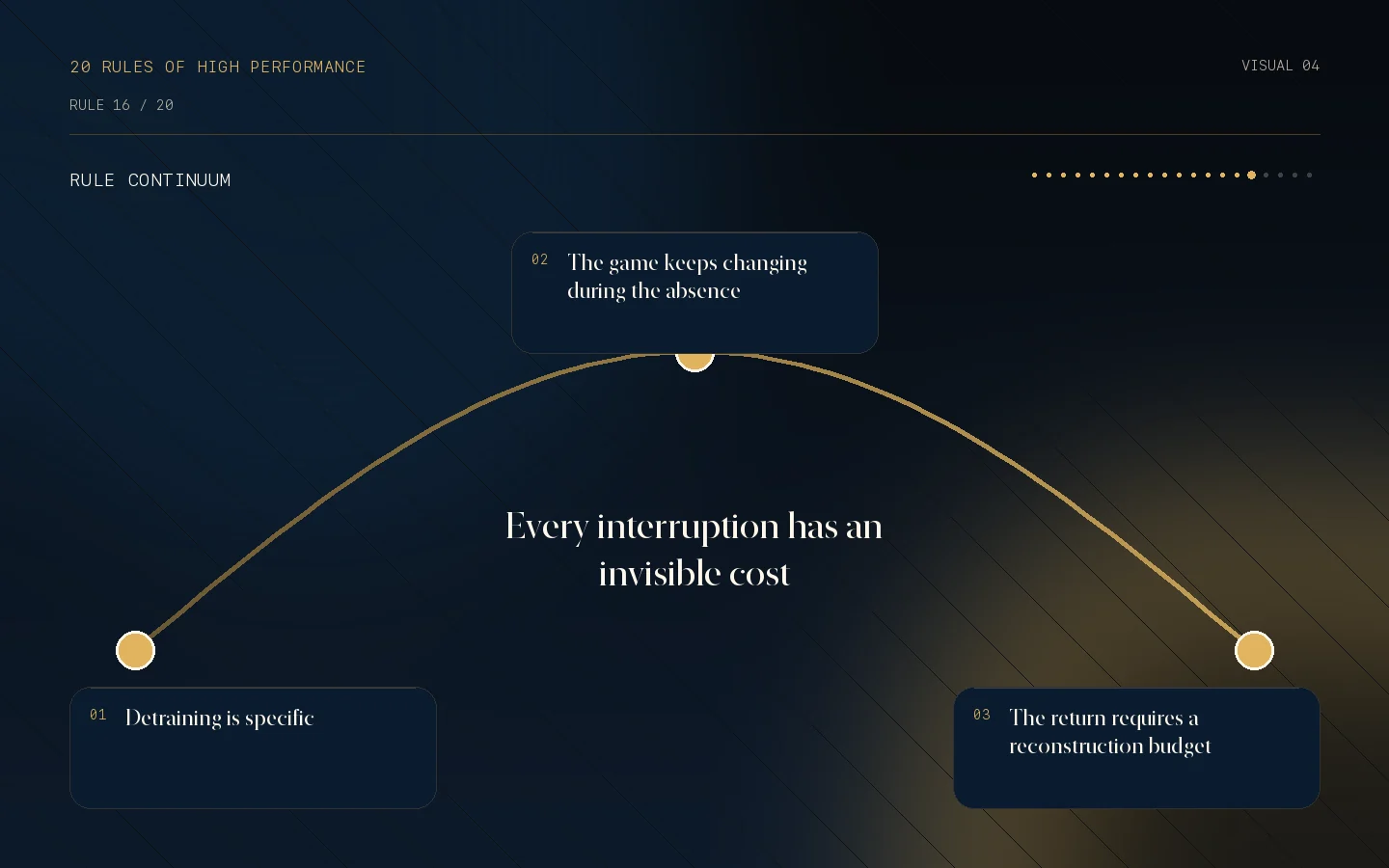
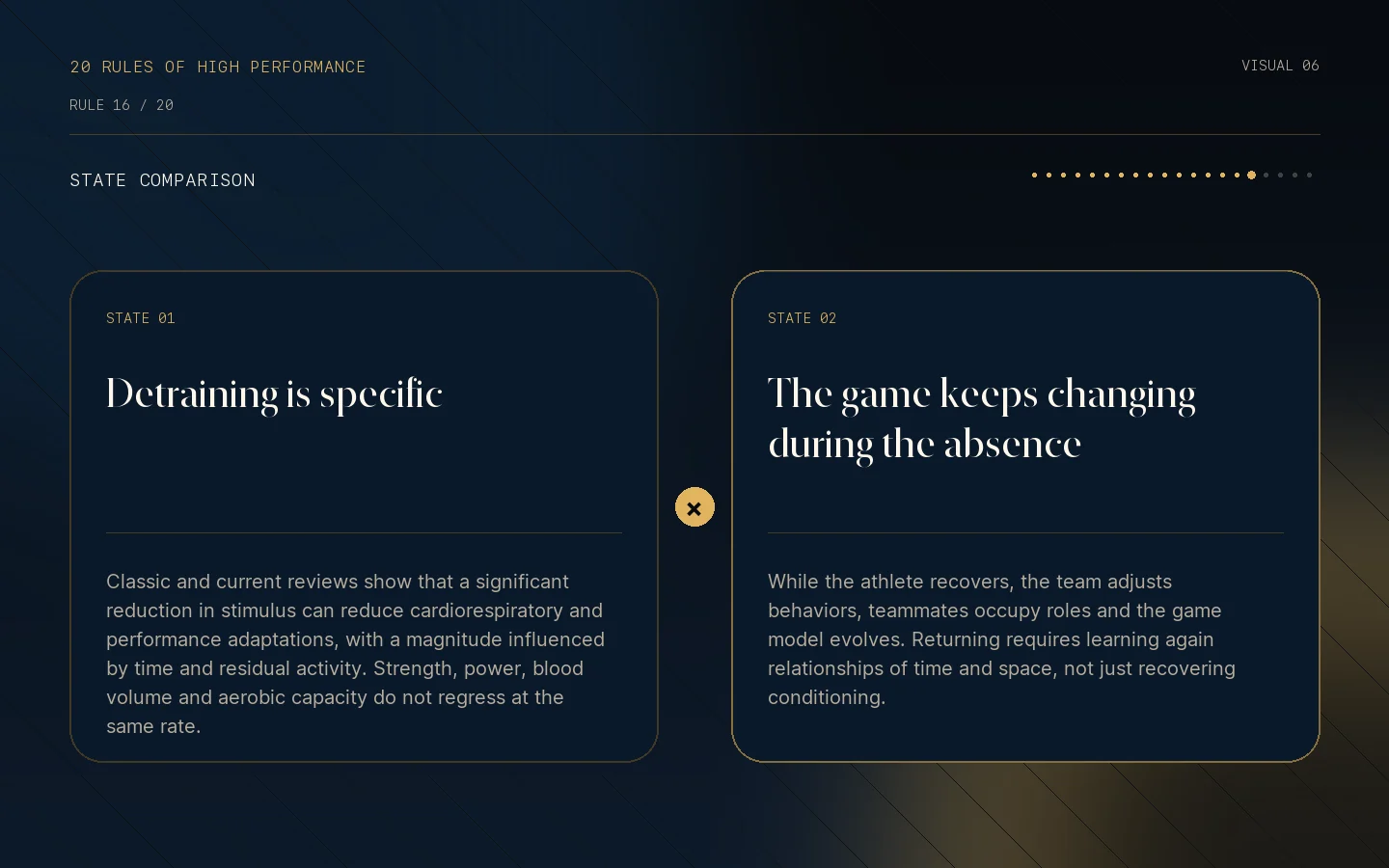
Detraining is specific
Classic and current reviews show that a significant reduction in stimulus can reduce cardiorespiratory and performance adaptations, with a magnitude influenced by time and residual activity. Strength, power, blood volume and aerobic capacity do not regress at the same rate.
A meta-analysis on football players found worsening after periods of interruption or reduction in training in the off-season in outcomes such as aerobic capacity, jumping and repetition of sprints. Studies are heterogeneous, but confirm that the absence of stimulation is not physiologically neutral.
In rehabilitation, part of these capabilities can be preserved through alternative training. The useful question is what can still be trained without compromising the tissue or clinical picture.
Missed days appear on the report. The story that was left unconstructed rarely appears.
While the athlete recovers, the team adjusts behaviors, teammates occupy roles and the game model evolves. Returning requires learning again relationships of time and space, not just recovering conditioning.
The game keeps changing during the absence
While the athlete recovers, the team adjusts behaviors, teammates occupy roles and the game model evolves. Returning requires learning again relationships of time and space, not just recovering conditioning.
This cost is more difficult to measure because it appears as decision delay, less fluid connection, or the need to simplify the function. It may exist even when physical tests have recovered reference values.
Early and safe integration into meetings, videos, technical tasks, and portions of training can reduce social and tactical distance without anticipating inadequate physical exposure.
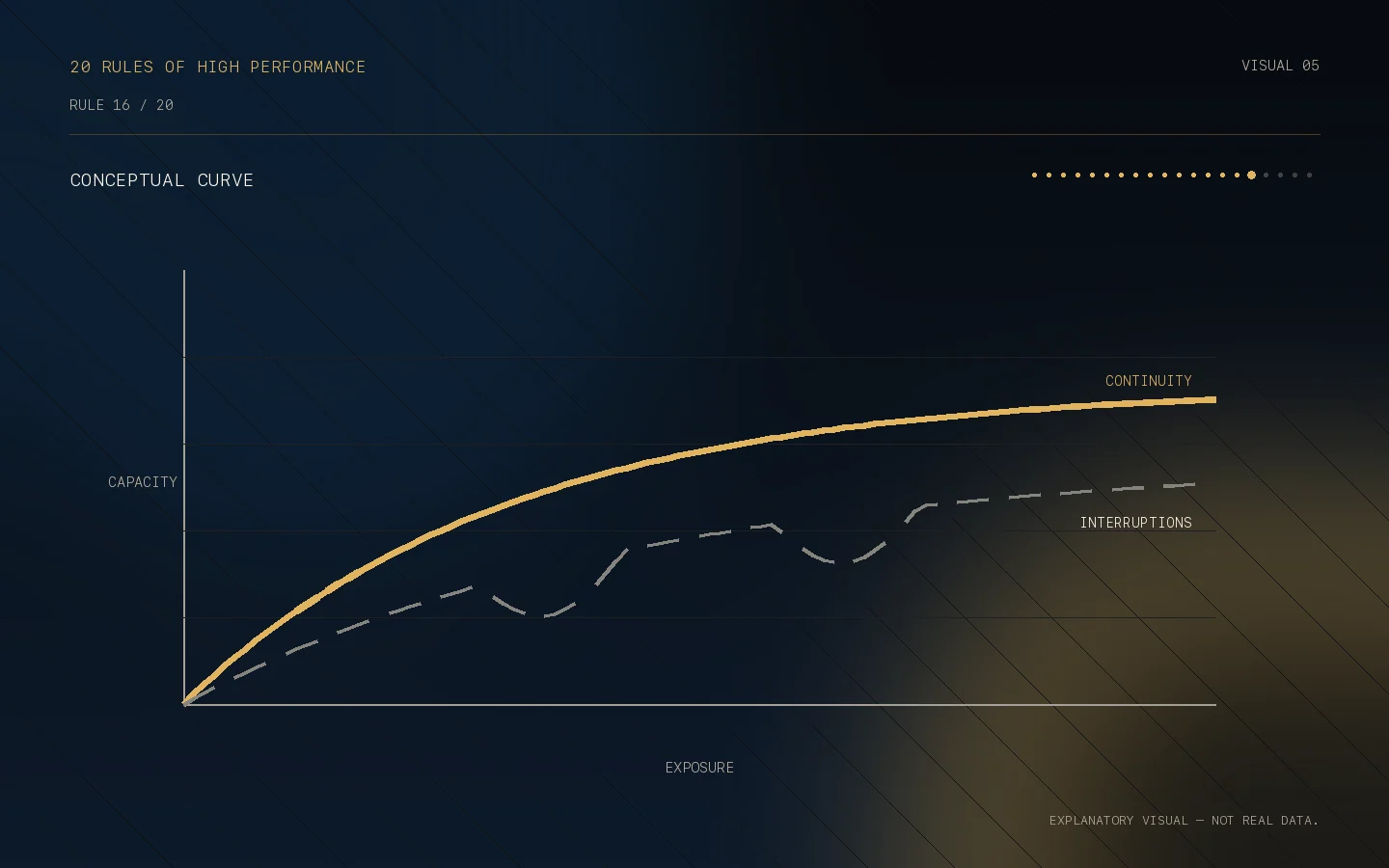
Explanatory visual — not real data.
The game keeps changing during the absence
The return requires a reconstruction budget
If the organization only calculates the healing period, it underestimates the stage necessary to recover load, skill and context. The return to the calendar competes with important games precisely when the athlete still needs gradual exposure.
Planning this margin from the beginning prevents the final rush from turning an expected delay into a surprise.
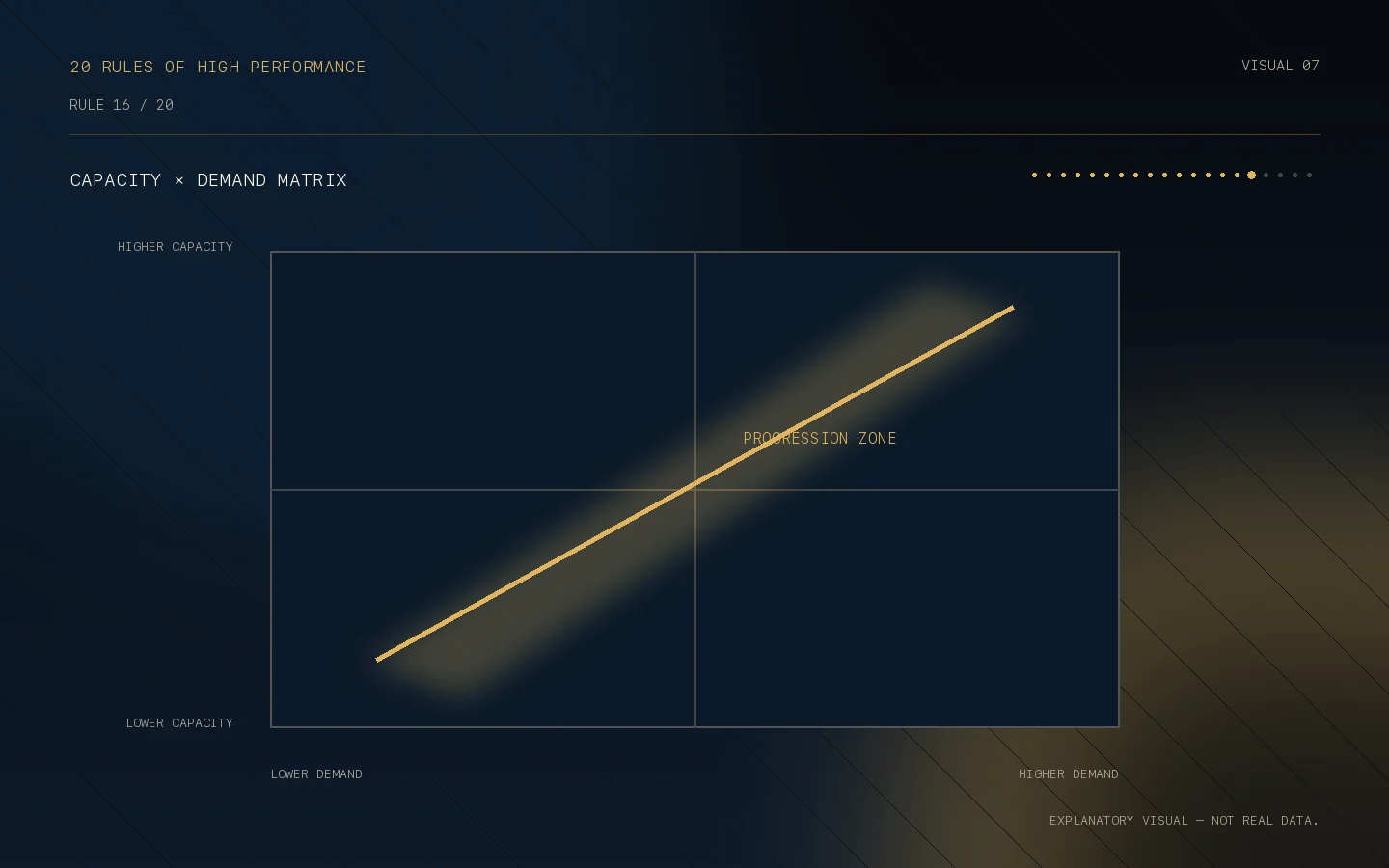
The cost of an interruption includes what is lost, what fails to mature and what the system needs to reorganize upon return.
Interruption results in loss of stimulus, lack of progression, reduction in specificity and need for reinstatement. Days off only measure part of the bill.
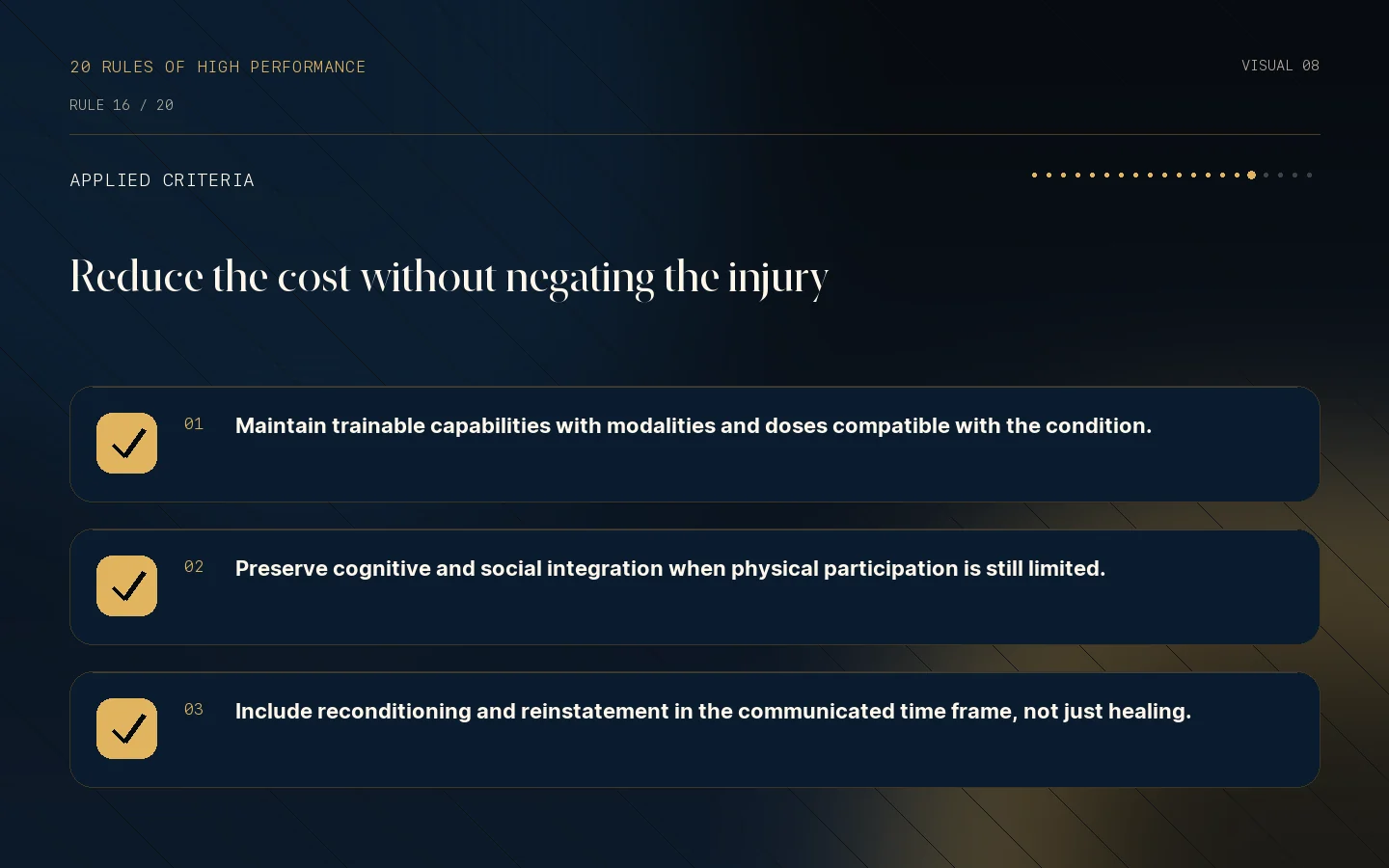
Reduce the cost without negating the injury
- Maintain trainable capabilities with modalities and doses compatible with the condition.
- Preserve cognitive and social integration when physical participation is still limited.
- Include reconditioning and reinstatement in the communicated time frame, not just healing.
Reduce the cost without negating the injury
A break can be necessary and protective. Recognizing its cost is not putting pressure on the athlete; is to guarantee resources and time for a complete turnaround.
The invisible ceases to surprise when the return is planned as reconstruction, not as instant return.
The calendar measures absence. The performance feels everything that was left unrepeated.