

When a player leaves the team, no one just takes his place. Everyone starts to respond to a slightly different game.
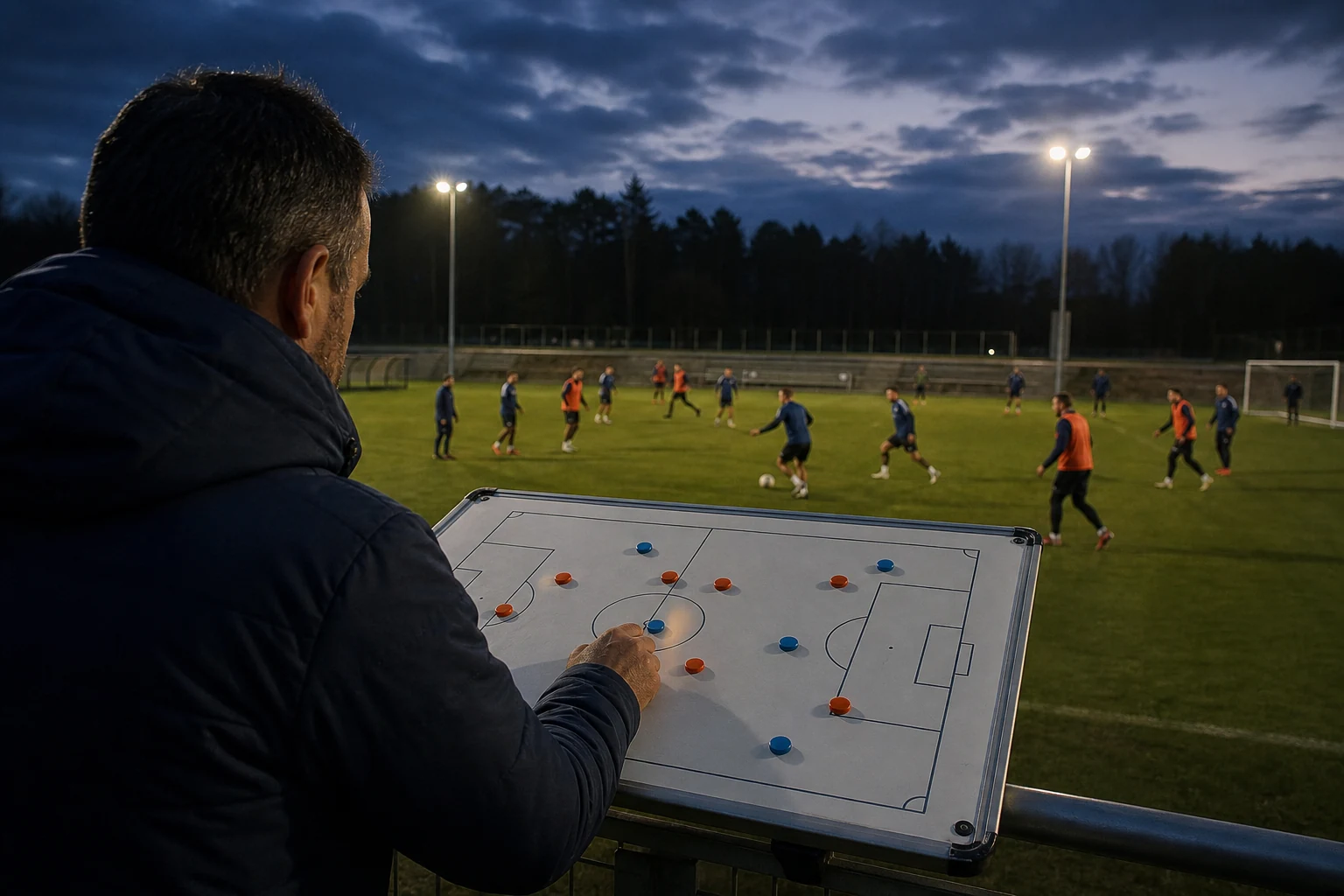
An absence redistributes load, information, function and cost throughout the system.
The absence travelled across the pitch
The winger felt his thigh in the final training session. On the tactics board, his absence seemed to occupy one space. On the pitch, it travelled through the entire team.
The full-back began advancing farther and took on additional running metres. A midfielder had to cover the open channel. The forward lost a familiar connection. The bench option meant to change the tempo in the second half moved into the starting line-up and left another gap for later.
No one simply replaced a name. Physical load, information, responsibility, and risk were redistributed. A decision made to solve one side of the pitch changed how the centre protected the ball and how the team could respond late in the match.
Once planning recognised those ripples, management stopped asking only who would play in place of the absent player. It began asking who would absorb each new cost and which relationships needed training before the whistle.
From the moment to the criterionUnavailability is individual in origin, but systemic in its consequences.
The substitute gets more minutes. Another athlete changes position. Training loses a specific relationship. The rotation shortens. The charge concentrates. The trainer adapts the model. The committee reorganizes recovery and priorities.
Unavailability starts with one person and spreads through interdependent decisions. Treating the injury as an isolated event reduces the ability to predict its secondary effects.
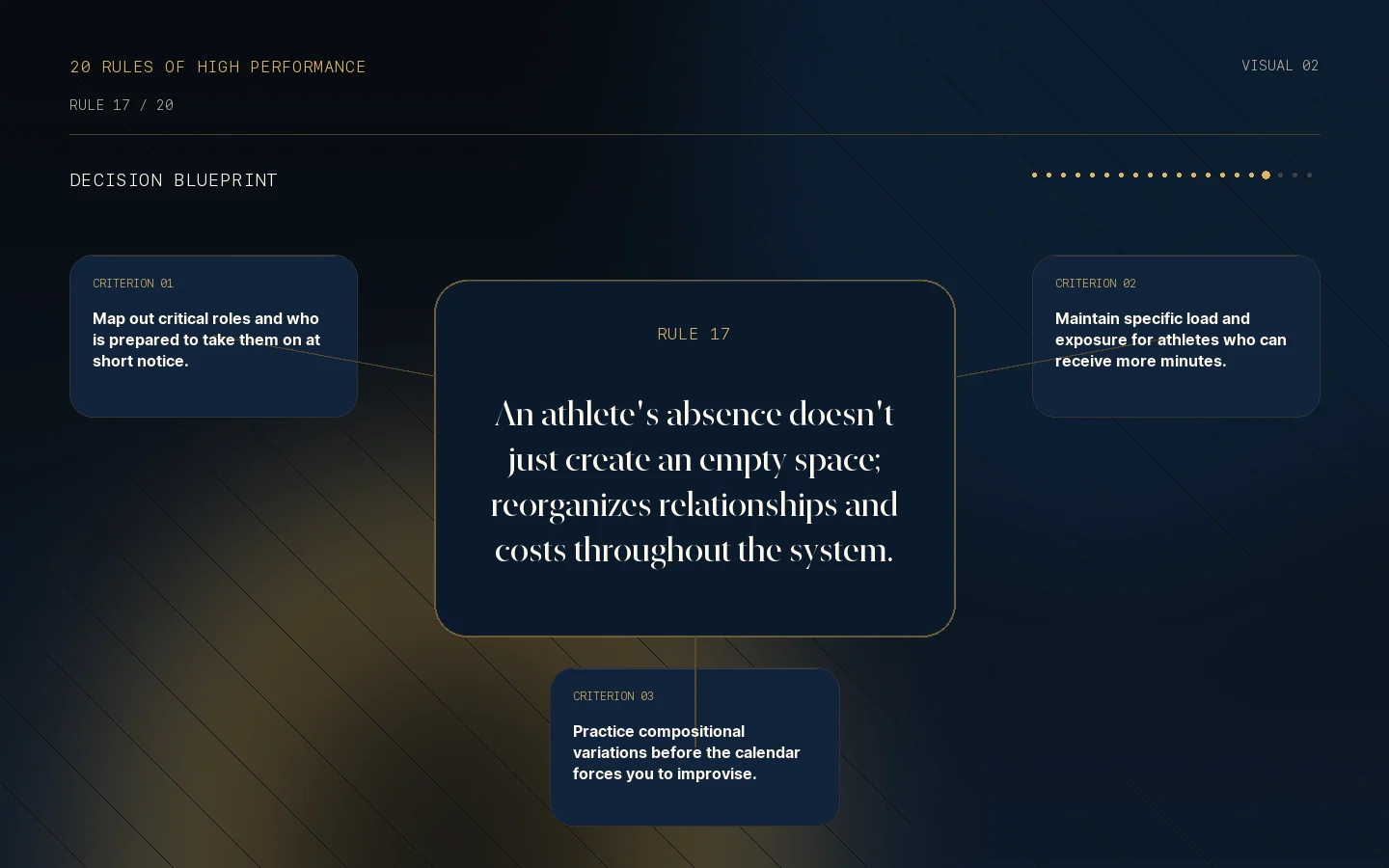
An athlete's absence doesn't just create an empty space; reorganizes relationships and costs throughout the system.
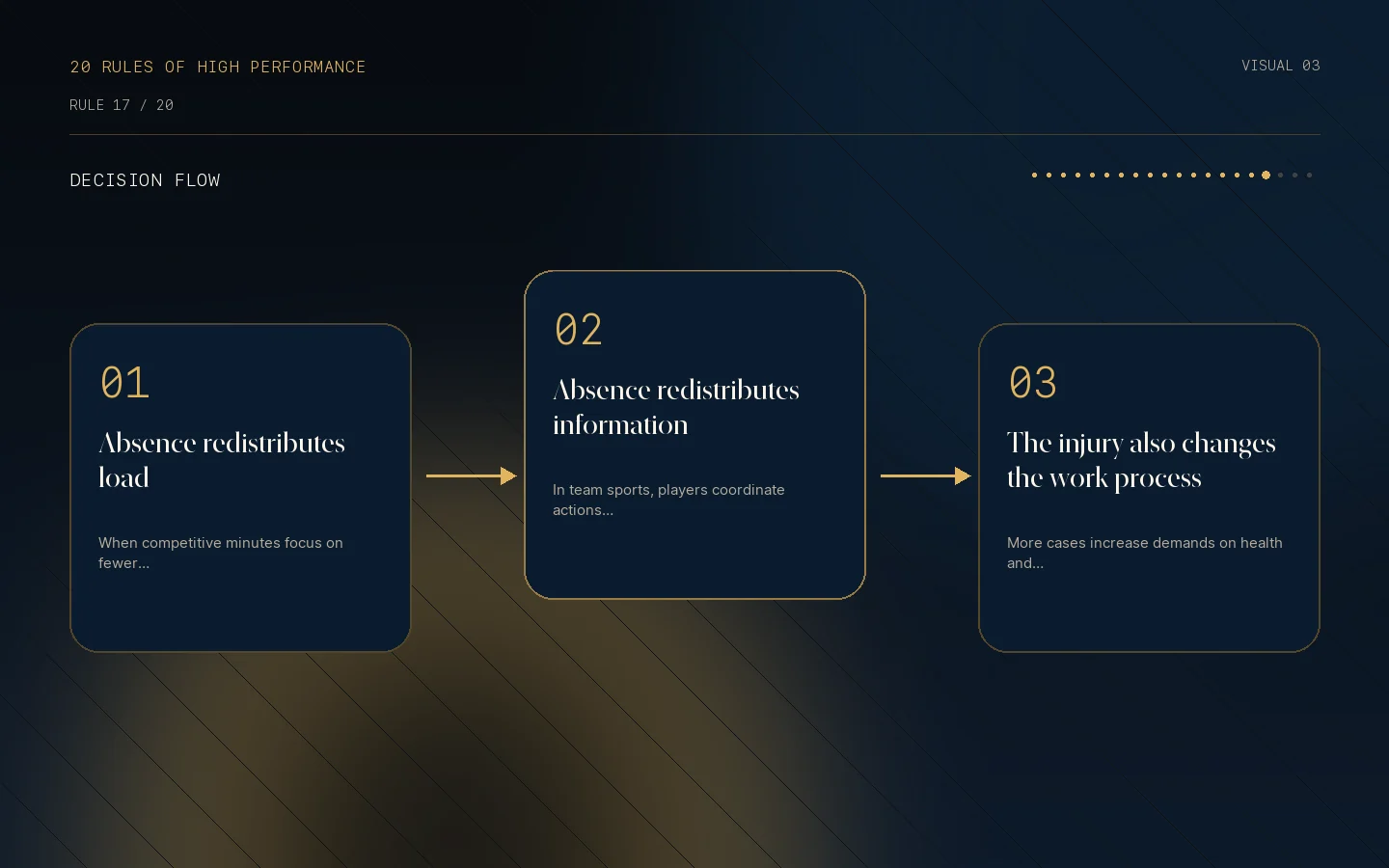
Absence redistributes load
When competitive minutes focus on fewer athletes, exposure shifts to those who remain. Reservations can go from a low load to a high sequence in a few days. Holders may miss rotation opportunities.
This redistribution is not automatically dangerous; it depends on previous preparation and the magnitude of the change. The risk increases when the team discovers the lack of coverage only after the absence and needs to improvise dose and function.
Roster planning and load complements for non-starters are therefore parts of availability management. Preparing who may be needed reduces the shock when the need arrives.
When a player leaves the team, no one just takes his place. Everyone starts to respond to a slightly different game.
In team sports, players coordinate actions through repeated relationships. A new member changes coverage, pressure, passing and movement time references. Even a technically strong replacement may require recalibration of the group.
Absence redistributes information
In team sports, players coordinate actions through repeated relationships. A new member changes coverage, pressure, passing and movement time references. Even a technically strong replacement may require recalibration of the group.
Research on coordination and shared mental models supports that collective performance depends on common information and peer relationships. The practical inference is clear: continuity favors coordination, while changes require representative training to reconstruct it.
This does not make the team hostage to a fixed formation. On the contrary: planned variability creates solutions before unavailability makes them urgent.
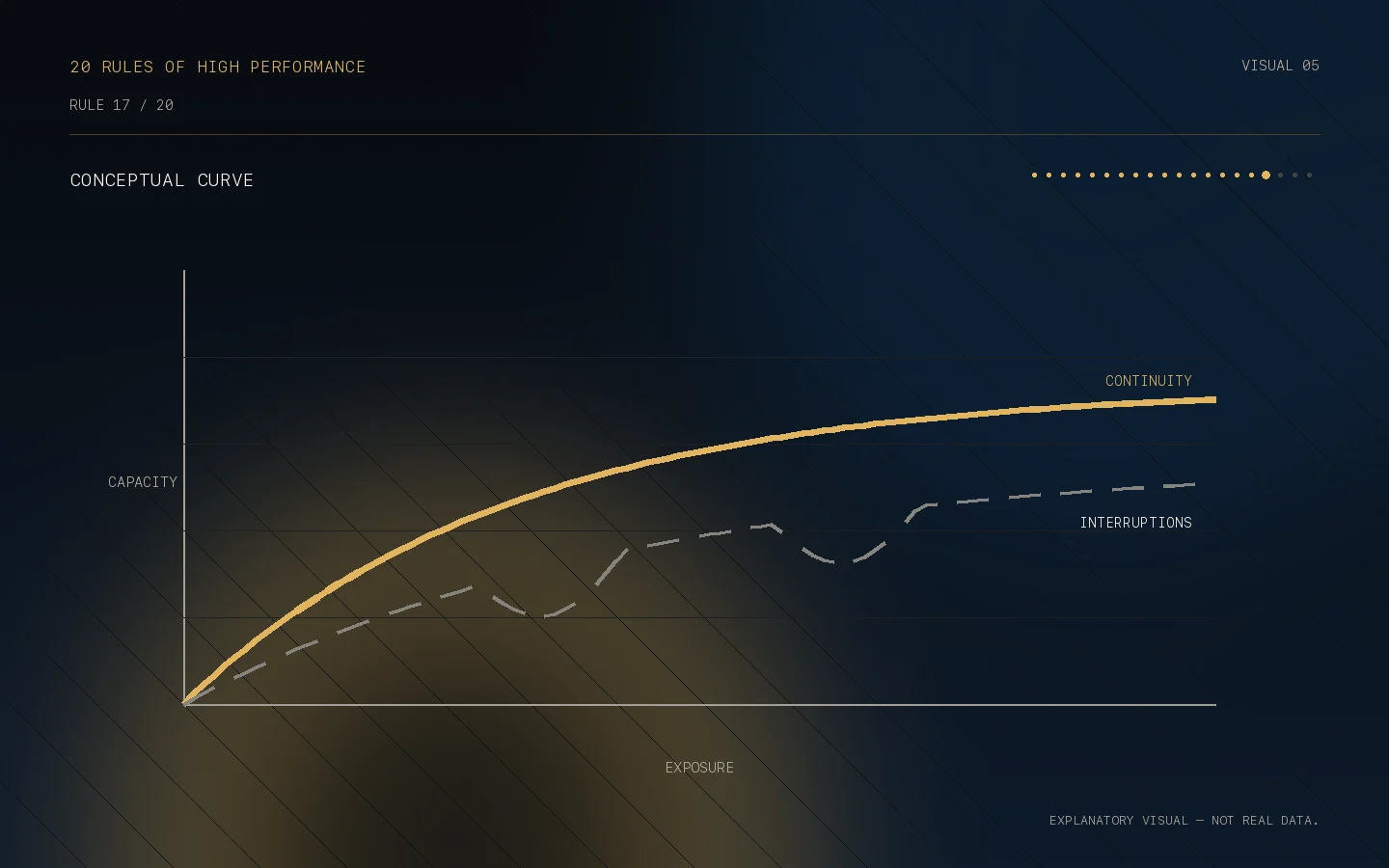
Explanatory visual — not real data.
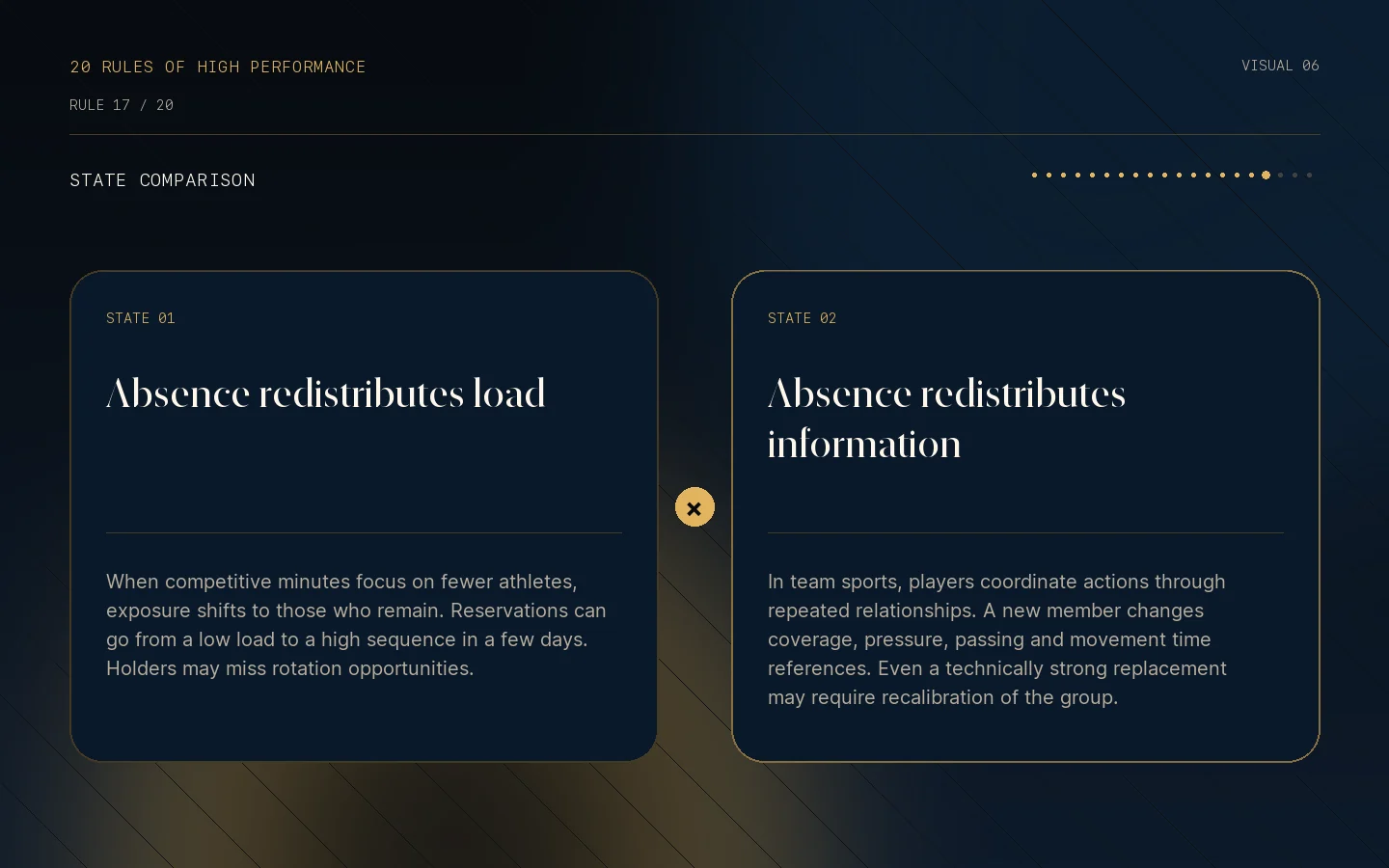
Absence redistributes information
The injury also changes the work process
More cases increase demands on health and performance, compress communication and compete for intervention time. A case study in professional football associated match congestion with disruptions in team health and performance processes and structure, with negative implications for availability.
The system needs to monitor not just athletes, but also its own ability to respond when pressure increases.
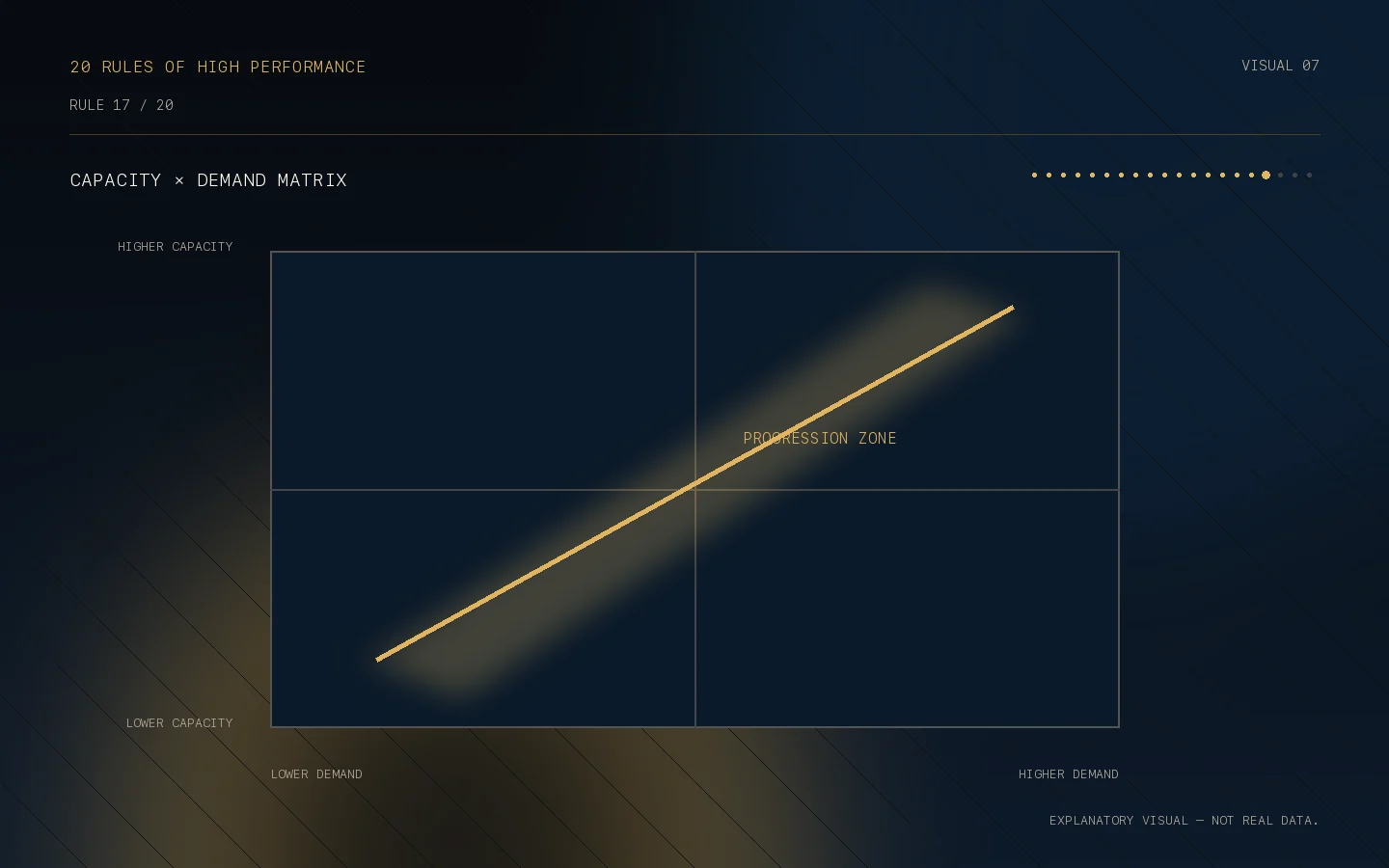
An athlete's absence doesn't just create an empty space; reorganizes relationships and costs throughout the system.
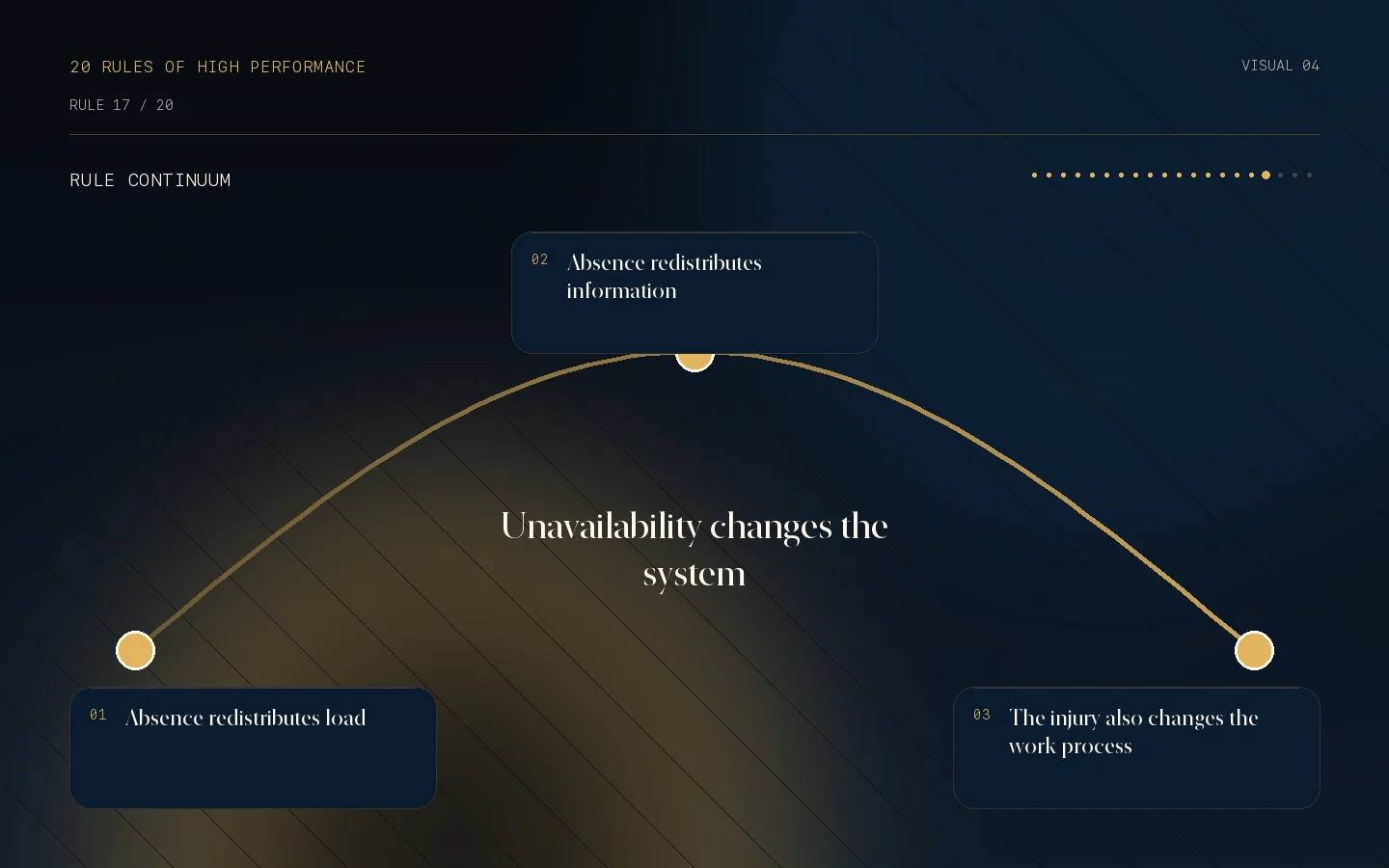
Unavailability redistributes minutes, roles, relationships and support work. The real impact depends on the preparation of the rest of the system.
Prepare the system for absences
- Map out critical roles and who is prepared to take them on at short notice.
- Maintain specific load and exposure for athletes who can receive more minutes.
- Practice compositional variations before the calendar forces you to improvise.
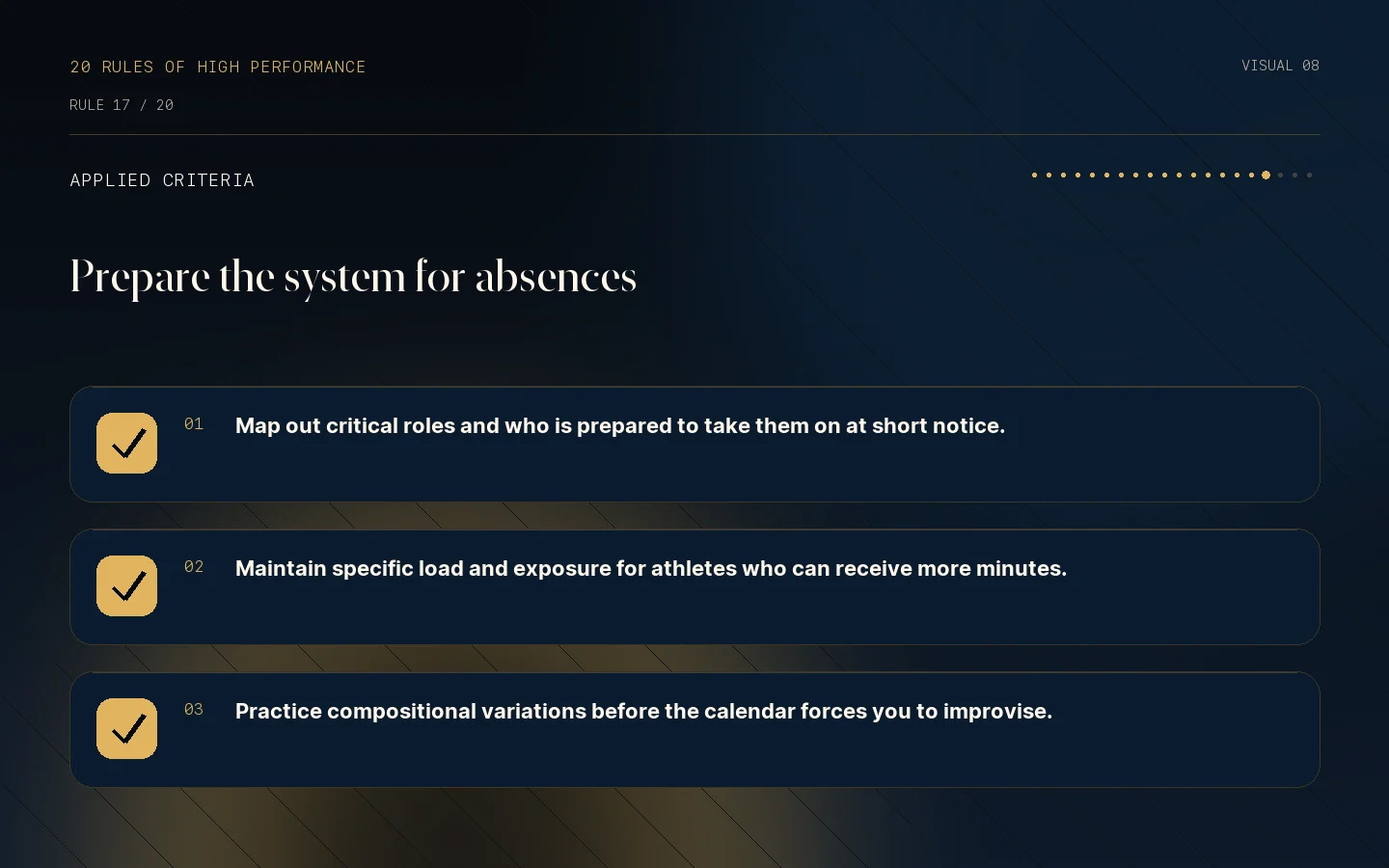
Prepare the system for absences
The collective cost of an injury should not increase individual blame. It should increase system accountability for coverage, communication and progression.
Resilient teams are not those that never change. They are those who have prepared ways to change without losing their own logic.
An absence does not just remove an athlete. It redistributes the team.