

When more important players are available, the coach has more choices. Science suggests that this margin also appears in the result.

More available athletes expand the options; they do not replace decision quality.
The bench restored choice
In the sixth round, the coach looked at the bench and found different profiles for different problems. There was speed to attack in behind, control to protect a lead, and physical presence for the end of the match. It was not just quantity. They were usable options.
In the 62nd minute, the opponent pushed its lines higher. One substitution changed the build-up; another, fifteen minutes later, sustained pressure without dismantling midfield. The plan could respond to the game because the athletes who made it possible were available and ready for their roles.
Victory did not come from that alone. There was technique, strategy, chance, decisions by the opponent, and a ball that passed centimetres from the post. Even so, availability expanded the repertoire before the outcome was known.
In weeks with fewer options, the coach still makes decisions—but inside a smaller space, transferring load to the same players and accepting less specific solutions.
From the moment to the criterionThe association with results makes sense when we can see the mechanism: availability does not deliver the score, but it preserves choices capable of influencing it.
In the study of eleven UEFA Champions League seasons, lower injury burden and greater availability for matches were associated with better league position, more points per game and better European coefficient. A subsequent systematic review found strong evidence that greater availability of athletes was related to lower risk of failure.
The finding is relevant because it moves the athlete's health from the periphery of performance. But it requires careful reading: association does not alone identify the direction of the effect nor all shared causes.
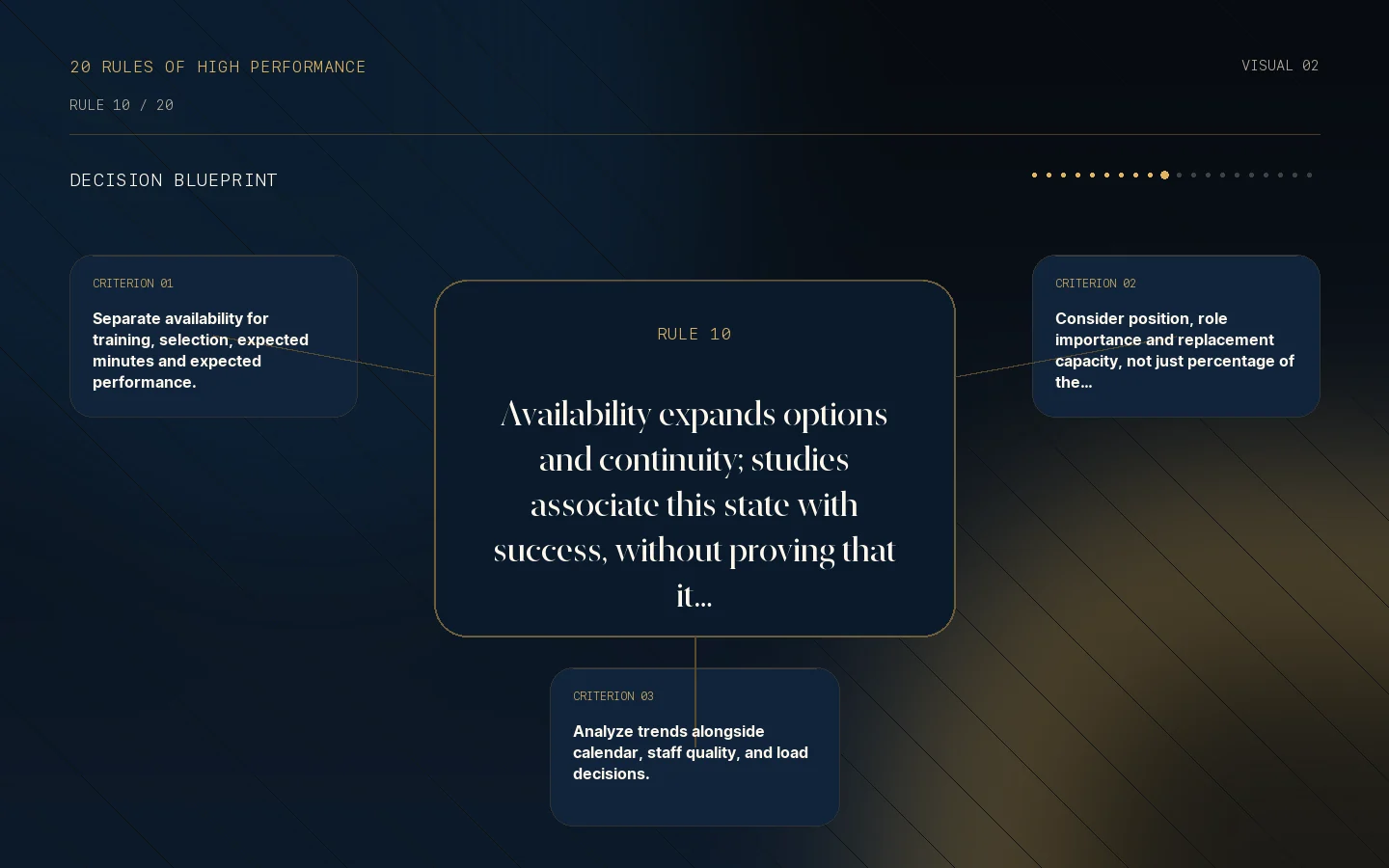
Availability expands options and continuity; studies associate this state with success, without proving that it acts alone.
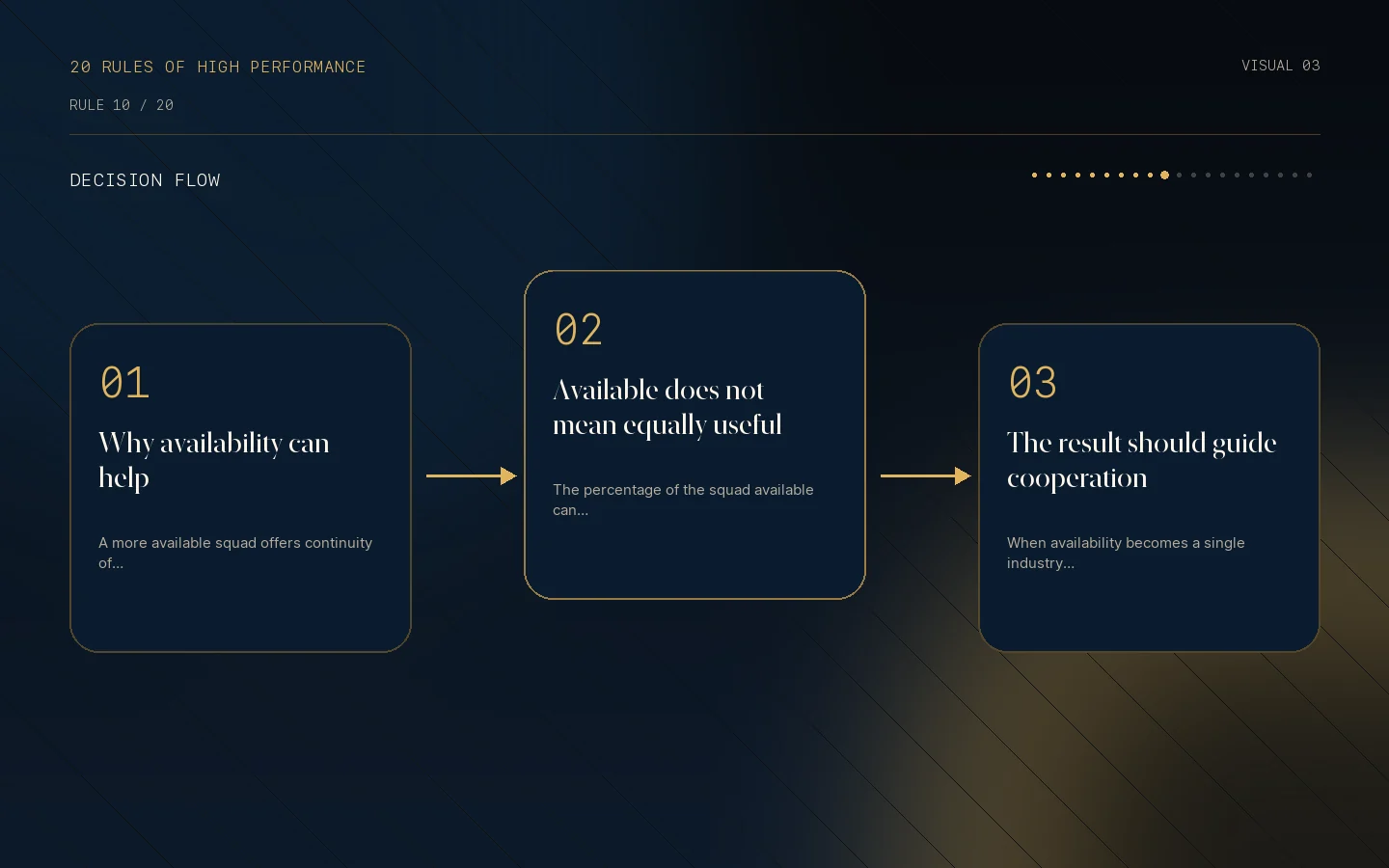
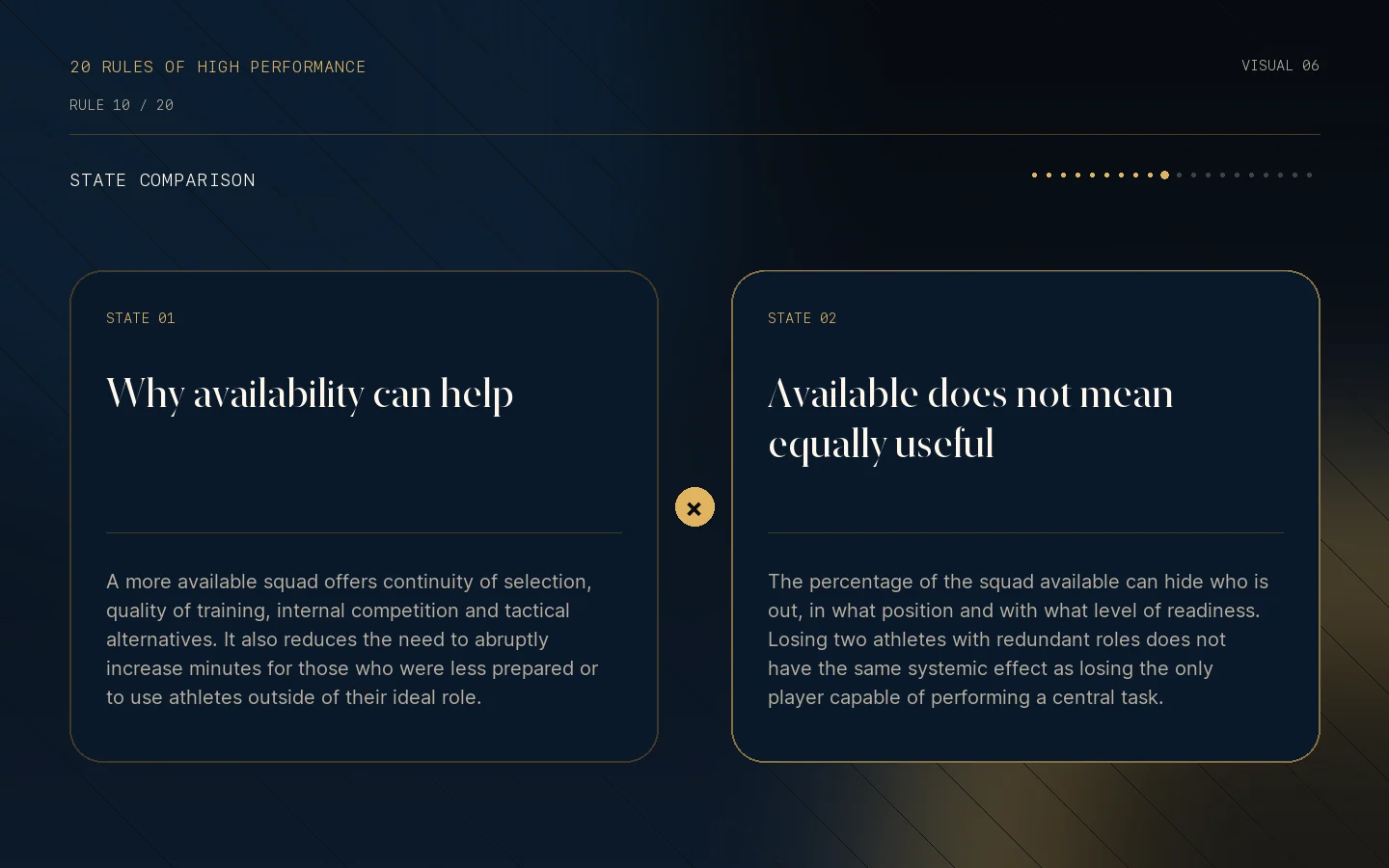
Why availability can help
A more available squad offers continuity of selection, quality of training, internal competition and tactical alternatives. It also reduces the need to abruptly increase minutes for those who were less prepared or to use athletes outside of their ideal role.
These mechanisms are plausible, but have not all been demonstrated as causal links in each study. The availability variable can represent part of a more stable organization, with better quality communication, resources, preparation and decision making.
The data becomes more useful when it stops being a trophy for the medical department and becomes a shared indicator of how the system maintains its competitive capacity.
When more important players are available, the coach has more choices. Science suggests that this margin also appears in the result.

The percentage of the squad available can hide who is out, in what position and with what level of readiness. Losing two athletes with redundant roles does not have the same systemic effect as losing the only player capable of performing a central task.
Available does not mean equally useful
The percentage of the squad available can hide who is out, in what position and with what level of readiness. Losing two athletes with redundant roles does not have the same systemic effect as losing the only player capable of performing a central task.
There is also a difference between being selectable and sustaining performance. A squad may present high nominal availability and low functional availability if many athletes operate with limited minutes, significant pain or insufficient preparation.
Therefore, the indicator needs layers: availability to train, to be selected, to fulfill the expected load and to contribute to the expected standard.
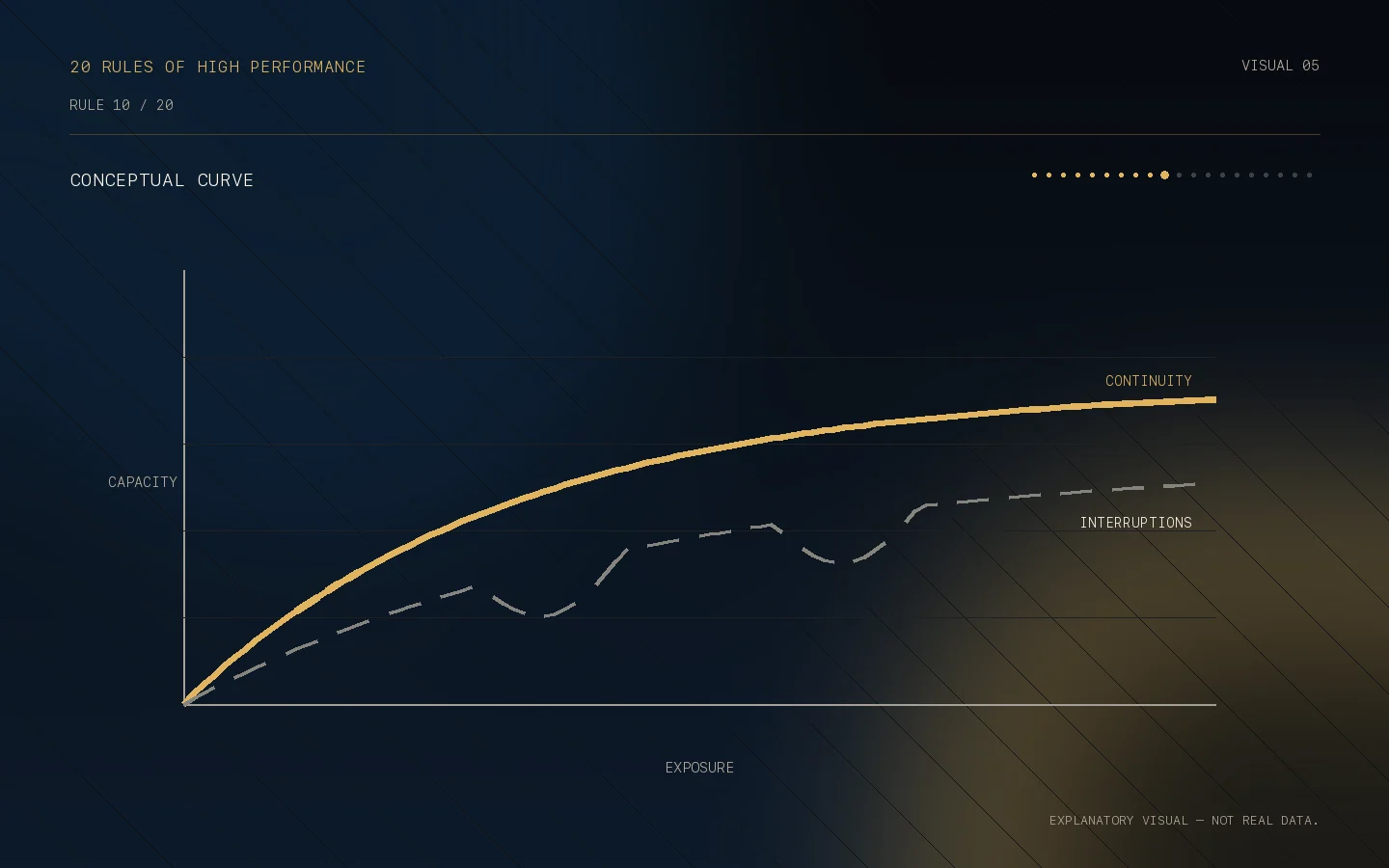
Explanatory visual — not real data.
Available does not mean equally useful
The result should guide cooperation
When availability becomes a single industry goal, bad incentives emerge: hiding severity, accelerating returns, or competing for credit. Performance improves when health, training and selection share the same definition.
The best indicator is the one that asks questions about capacity and decision-making, not the one that just makes the dashboard greener.

Availability expands options and continuity; studies associate this state with success, without proving that it acts alone.
In men's professional football, greater availability and lower injury burden were associated with better sporting results. The observational design does not allow for the assertion of isolated causality.
Measure availability intelligently
- Separate availability for training, selection, expected minutes and expected performance.
- Consider position, role importance and replacement capacity, not just percentage of the squad.
- Analyze trends alongside calendar, staff quality, and load decisions.
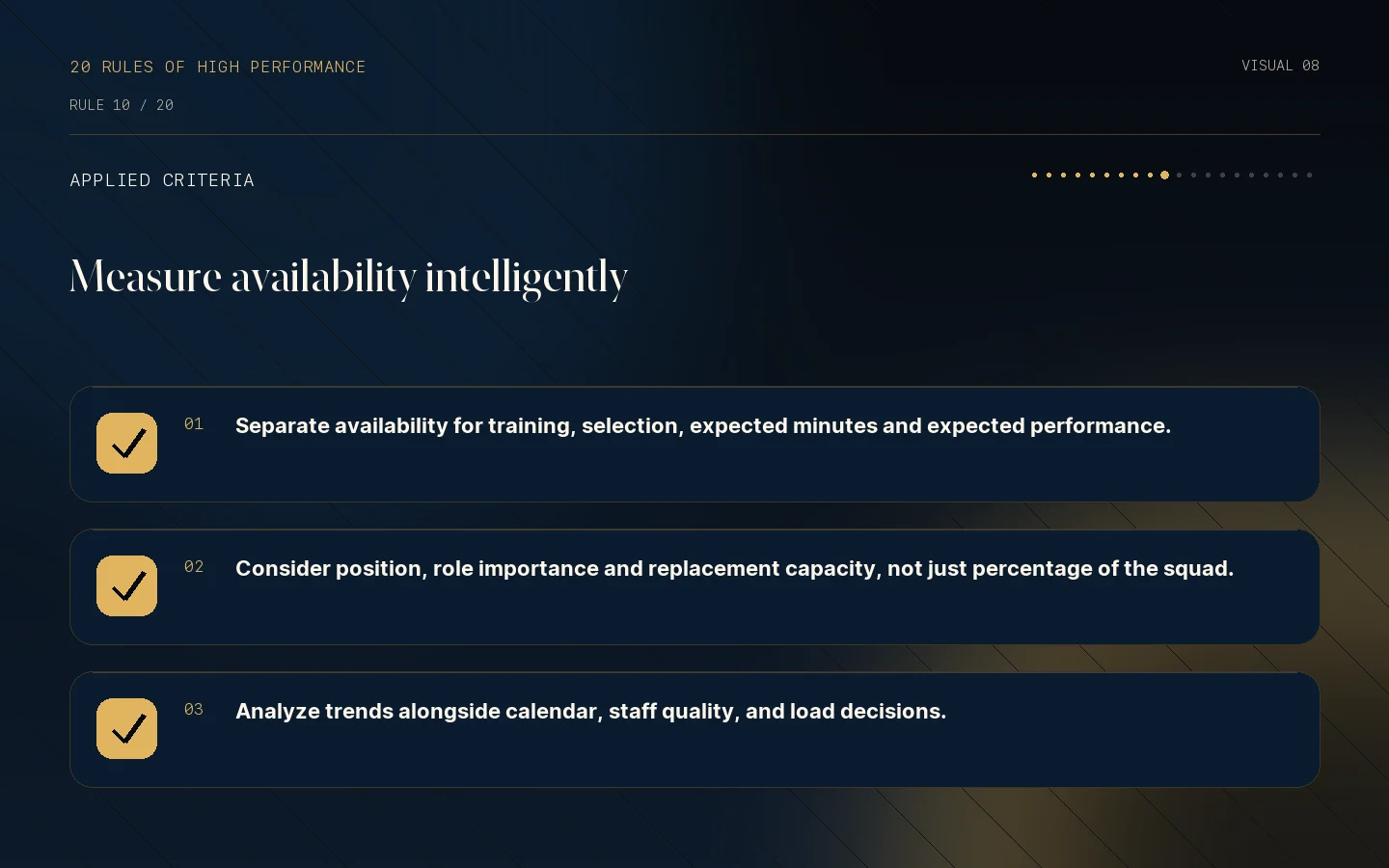
Measure availability intelligently
The result does not belong to the department that kept the athlete available nor to the coach that selected him. It emerges from the quality of transitions between everyone.
Availability is associated with results because it preserves possibilities. Turning them into an advantage continues to be a collective effort.
Availability creates options. Well-prepared options increase the decision margin.