
The athlete does not leave the injury and reach performance by crossing a single line.
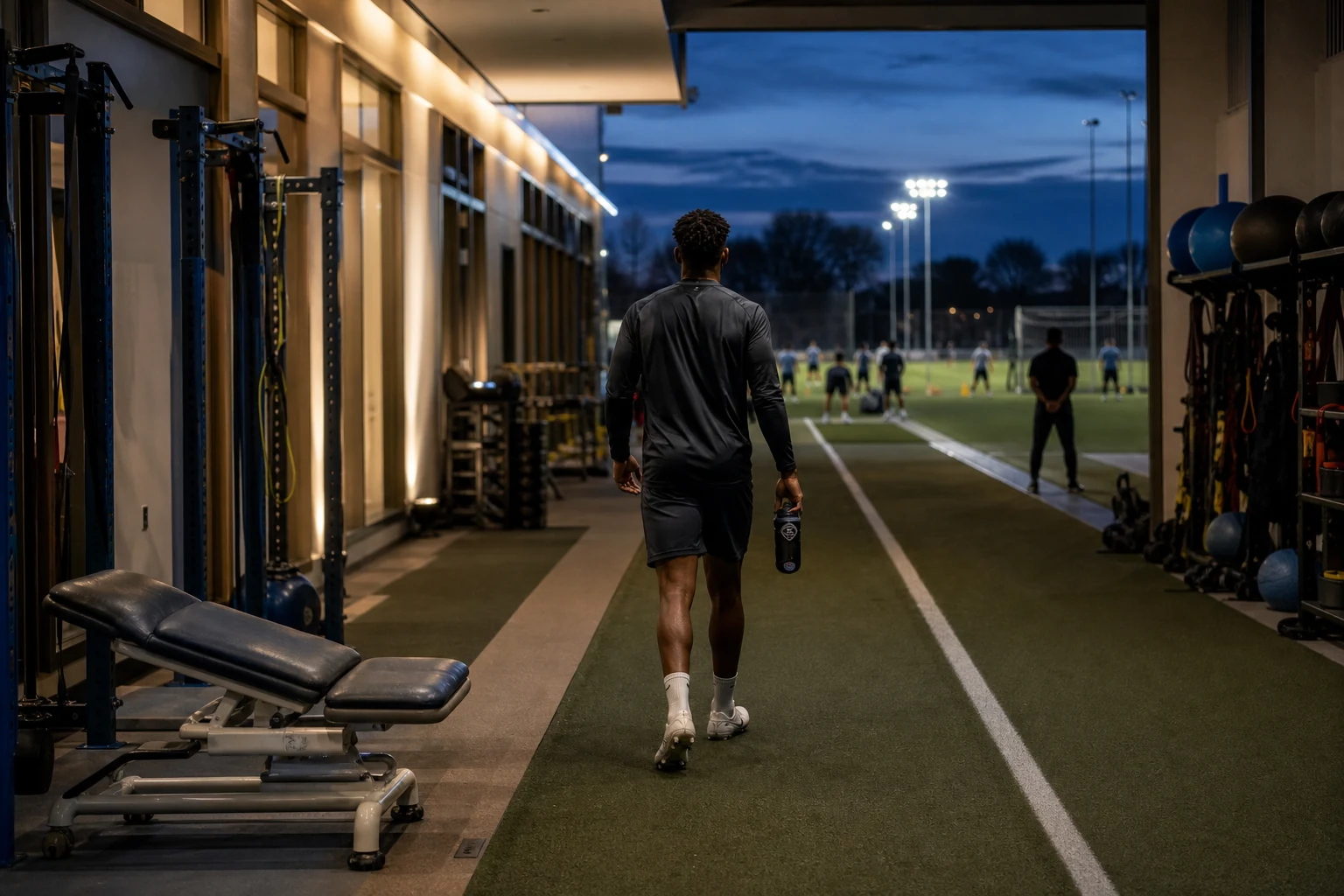
The return changes in quality as participation, sport and performance converge again.
No line marked the return
On Monday, the athlete ran alone on a side pitch. On Wednesday, he warmed up with the group and left before the small-sided game. On Friday, he took part for six minutes with restricted contact. A week later, he completed almost the entire session. At which of those moments did he return?
The dressing room offered different answers. To a teammate, he had returned when he put his boots on. To physiotherapy, when he tolerated running. To the coach, when he became an option again. To the athlete himself, perhaps he still had to face the action in which he had been injured.
There was no finish line. There was a succession of permissions, tolerances, and contributions. On some days he moved forward; on others, the morning response reduced the next exposure. The journey did not lose value because it was not straight. It gained information.
Each stage changed the question: can he enter? Can he repeat? Can he decide under pressure? Can he help the team without compromising the next session? The return became clearer when it stopped being treated as a date.
From the moment to the criterionA continuum does not dilute the decision; it shows which decision belongs to each stage.
It travels across states. In one day, participate in part of the warm-up. Then complete controlled blocks. Later, he trains fully, becomes selectable again, comes on for a few minutes and tries to regain his ability to decide the game.
Calling all this a return erases differences that matter. Without precise language, the team celebrates premature milestones, compares incompatible deadlines, and misses the opportunity to plan for each transition.
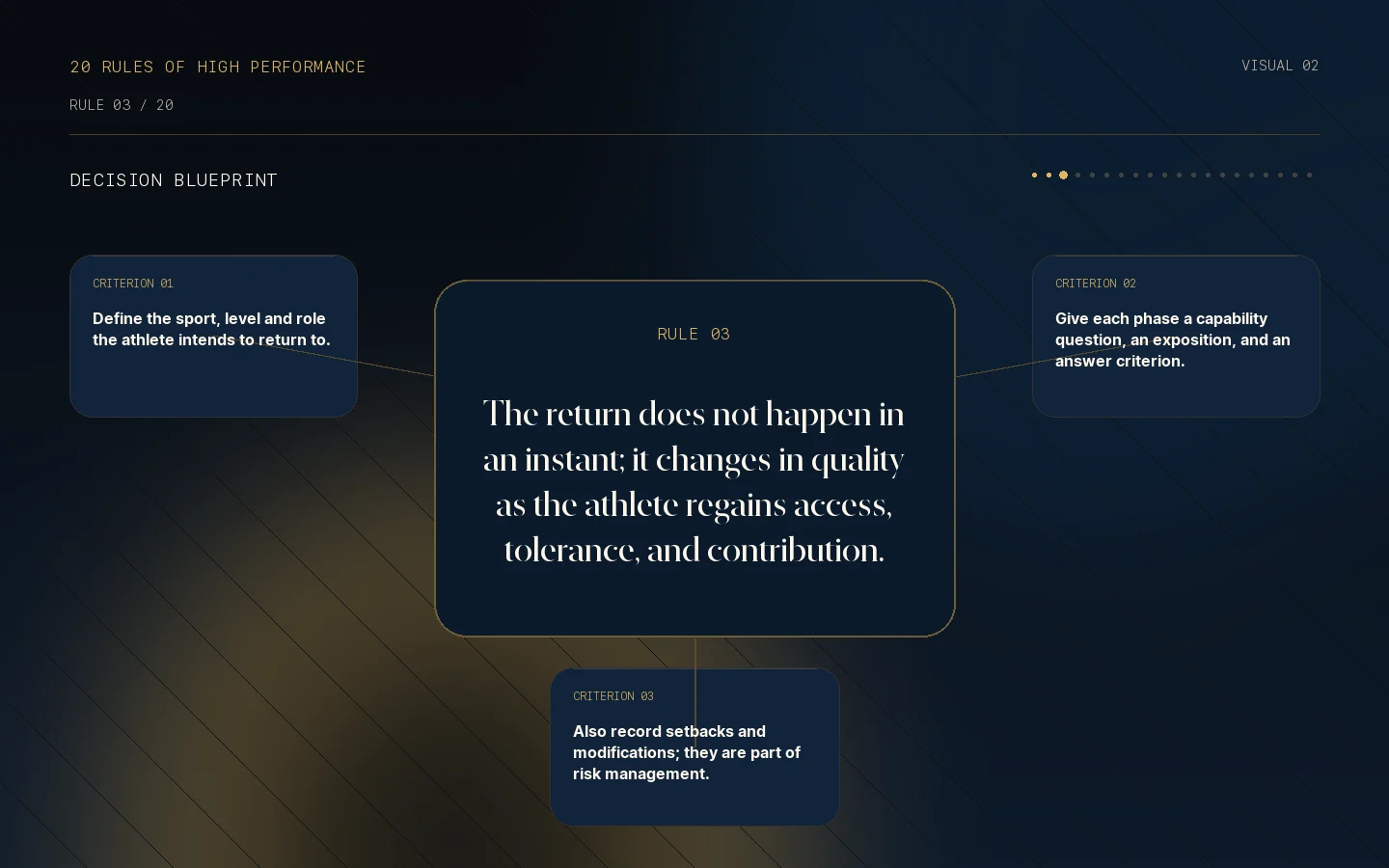
The return does not happen in an instant; it changes in quality as the athlete regains access, tolerance, and contribution.
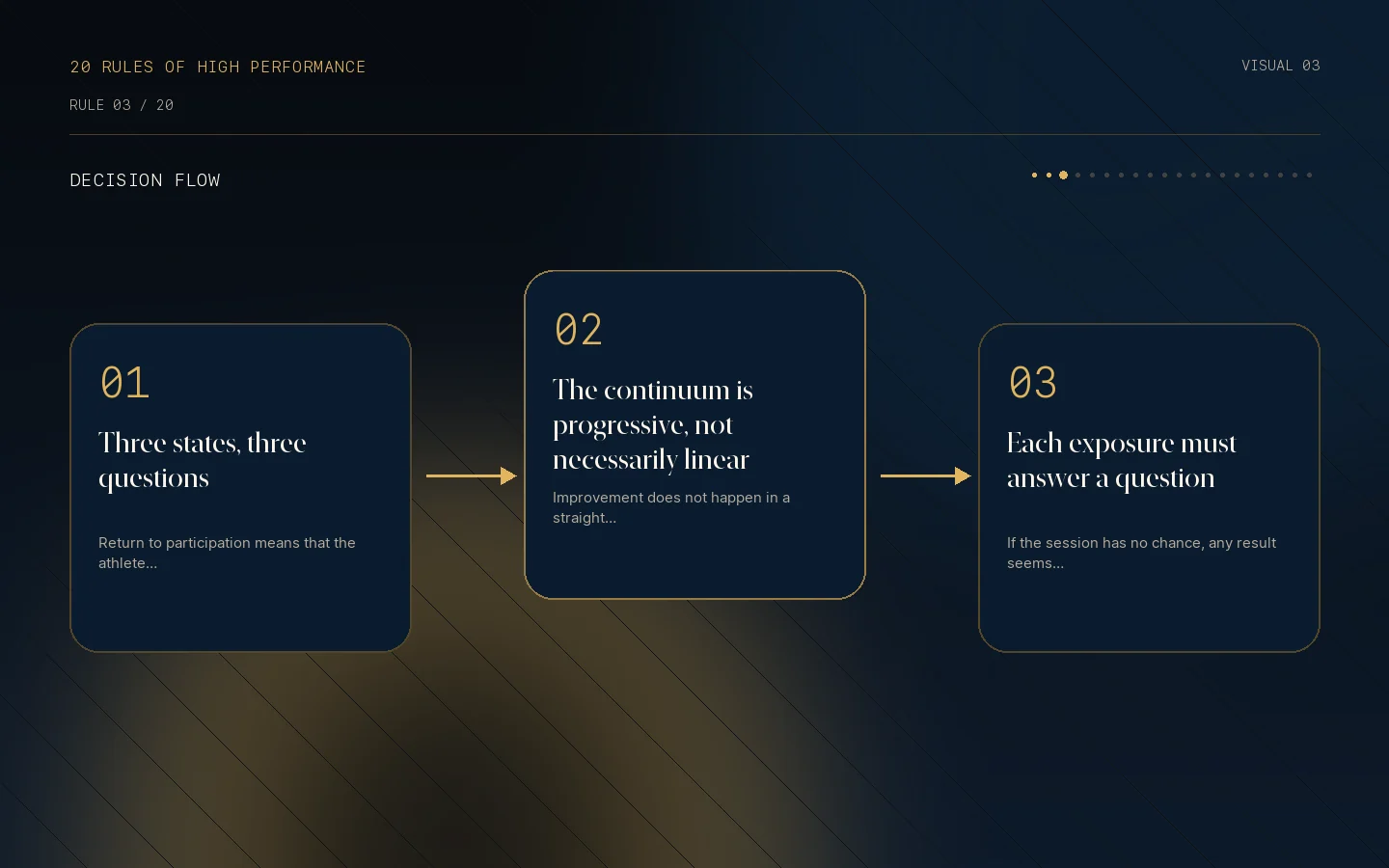
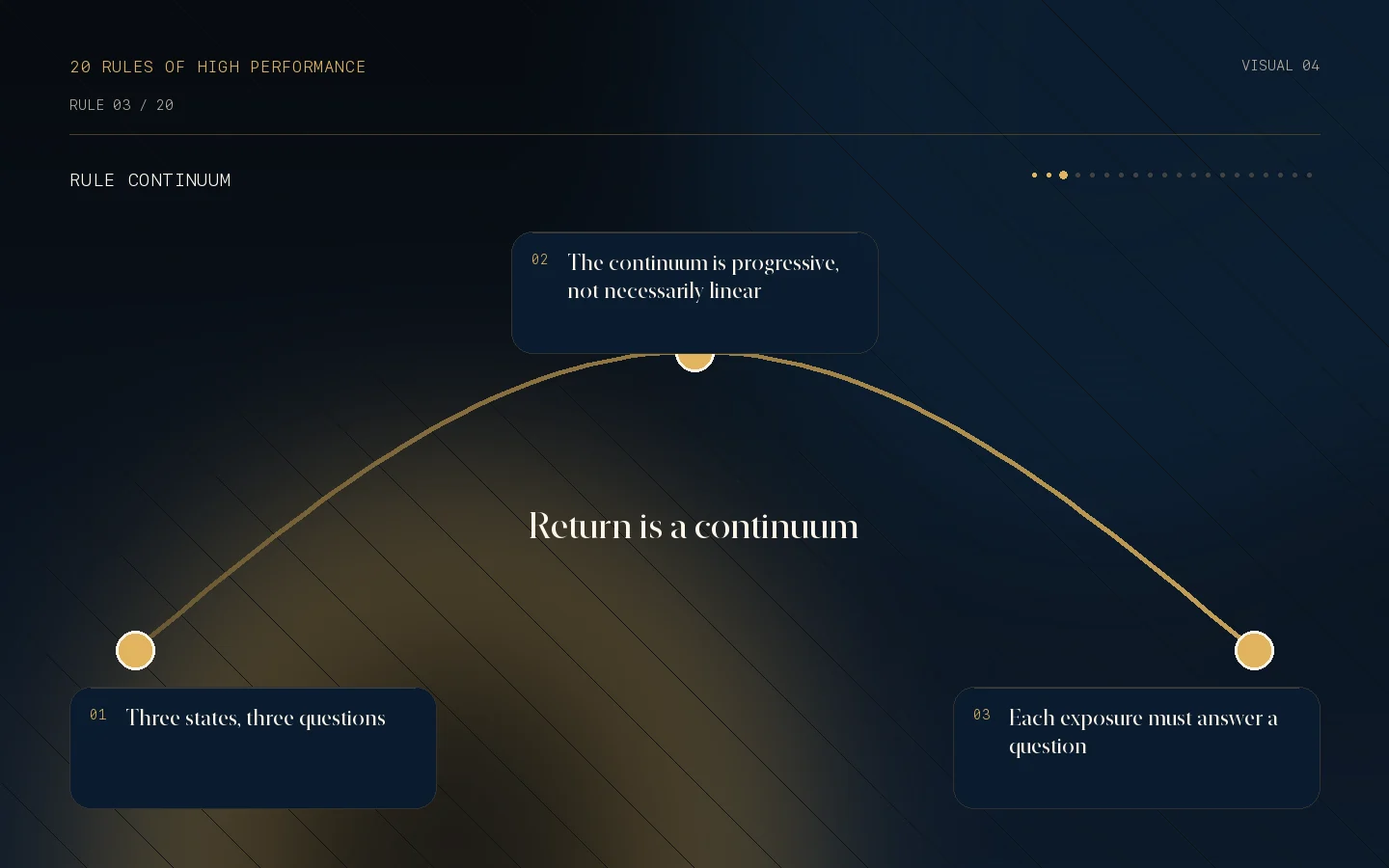
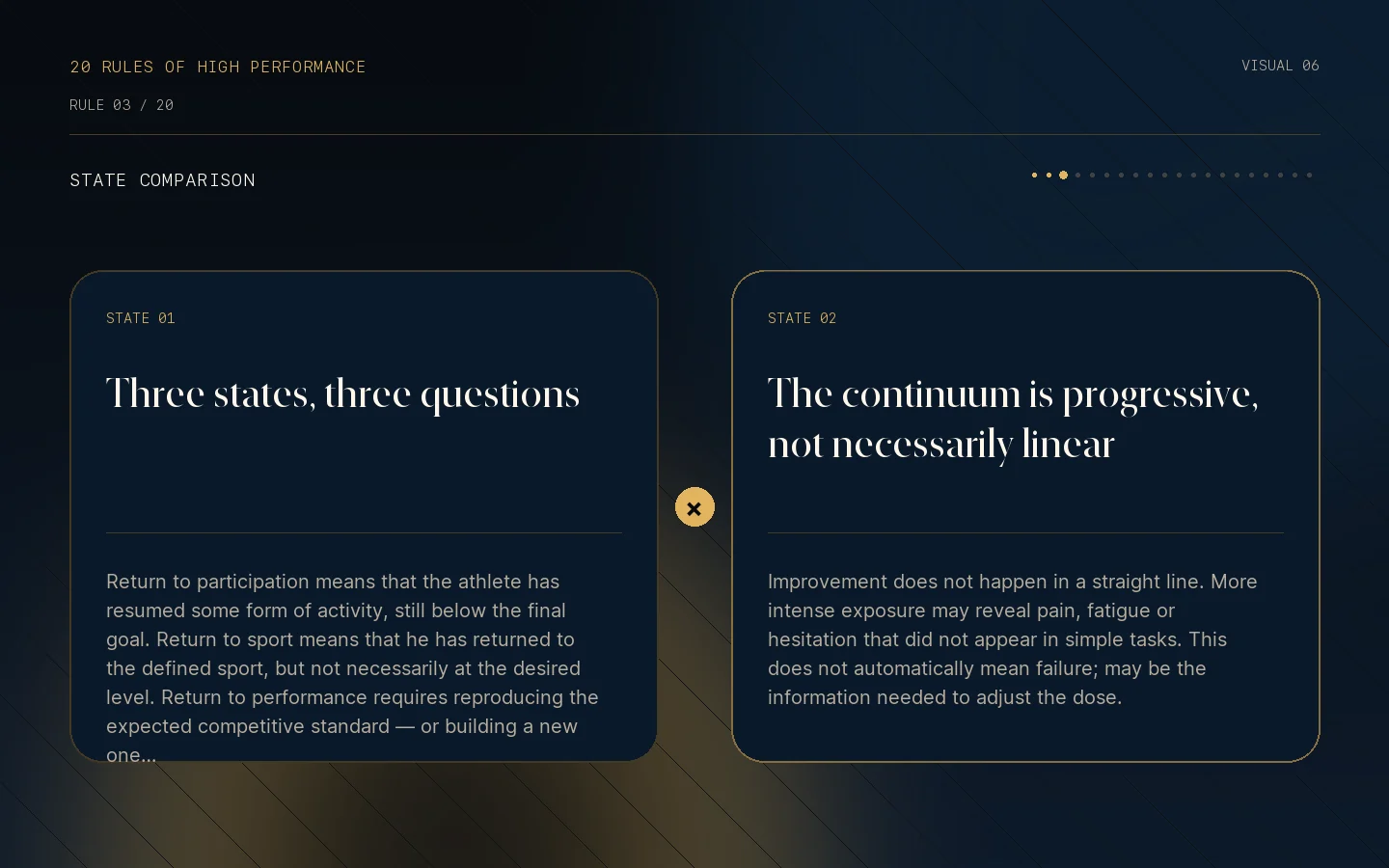
Three states, three questions
Return to participation means that the athlete has resumed some form of activity, still below the final goal. Return to sport means that he has returned to the defined sport, but not necessarily at the desired level. Return to performance requires reproducing the expected competitive standard — or building a new one when the context has changed.
The participation question is: which part of the sporting environment can already be restored? The return-to-sport question is: can the athlete tolerate practice without relevant restrictions? The performance question is: can he contribute, repeat, and sustain what his role demands?
These states are not universal boxes. A sprinter, a goalkeeper, an outfield player and a recreational athlete have different goals. The sport and level of participation need to be defined before the word return takes on meaning.
The athlete does not leave the injury and reach performance by crossing a single line.
Improvement does not happen in a straight line. More intense exposure may reveal pain, fatigue or hesitation that did not appear in simple tasks. This does not automatically mean failure; may be the information needed to adjust the dose.
The continuum is progressive, not necessarily linear
Improvement does not happen in a straight line. More intense exposure may reveal pain, fatigue or hesitation that did not appear in simple tasks. This does not automatically mean failure; may be the information needed to adjust the dose.
In some frameworks, the correct decision is to maintain modified participation. In others, it is to temporarily reduce the load or remove the athlete. The same reasoning that allows us to move forward needs to allow us to retreat without turning retreat into punishment.
A well-used continuum gives permission for gradual progressions and quick fixes. A poorly used continuum becomes just a queue of steps completed by calendar.
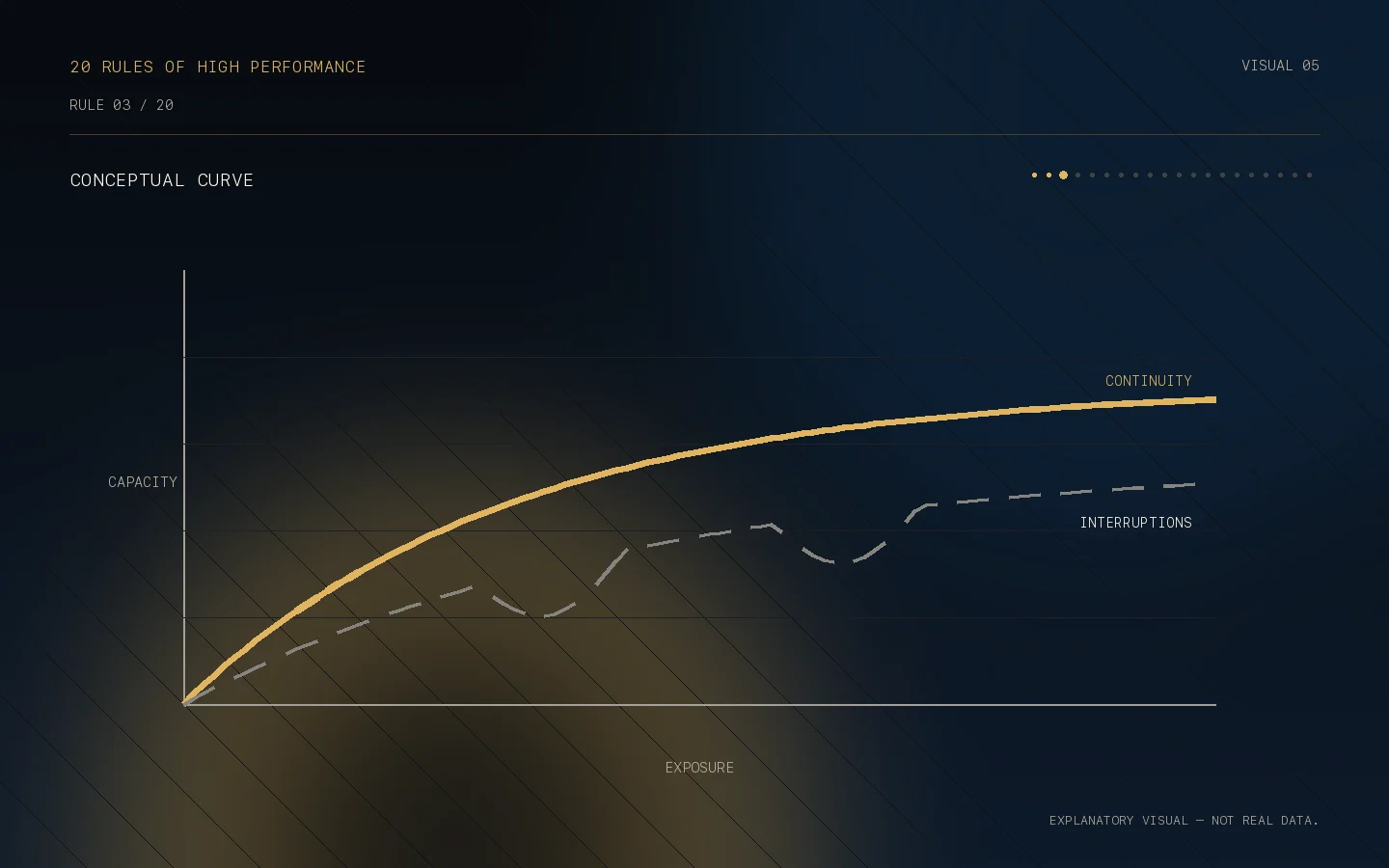
Explanatory visual — not real data.
The continuum is progressive, not necessarily linear
Each exposure must answer a question
If the session has no chance, any result seems sufficient. Progression must test something: speed tolerance, ability to change direction, confidence in contact, repetition under fatigue or integration into a tactical task.
The exit criteria needs to be known before exposure. Thus, the team avoids increasing the load just because the athlete finished and starts observing how he finished, what happened afterwards and whether the required quality remained.
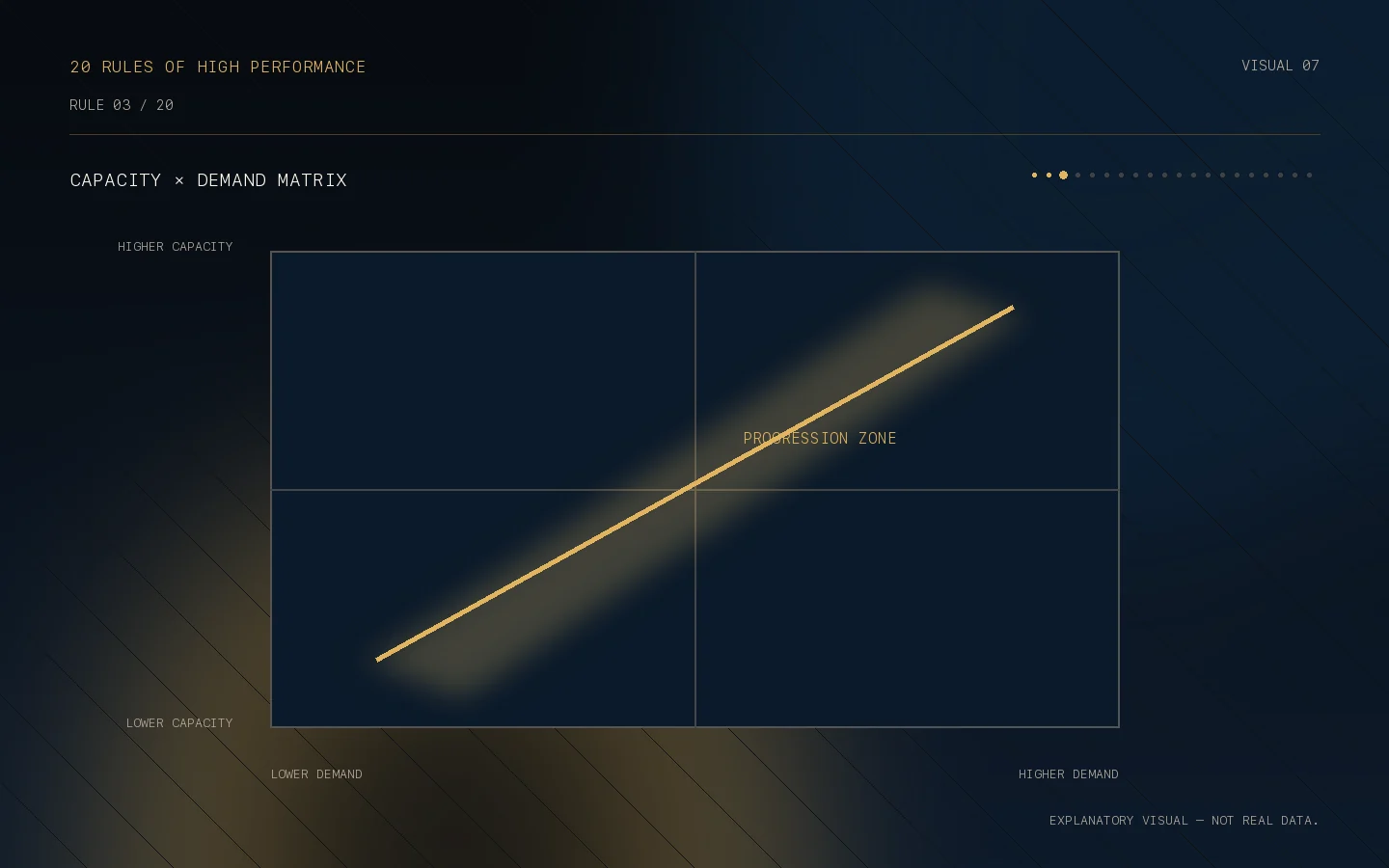
The return does not happen in an instant; it changes in quality as the athlete regains access, tolerance, and contribution.
Participating, practicing the sport and performing at the expected level are different outcomes. Measuring one of them does not authorize concluding the others.
How to make the continuum useful
- Define the sport, level and role the athlete intends to return to.
- Give each phase a capability question, an exposition, and an answer criterion.
- Also record setbacks and modifications; they are part of risk management.
How to make the continuum useful
The value of the continuum is not in drawing more steps. It's about preventing the first presence from being sold as a conclusion.
When the language matures, the team can celebrate progress without rushing what still needs to be built.
Returning is changing state with enough information to choose the next step.