

The return appears on the scoresheet before appearing in full in the game.
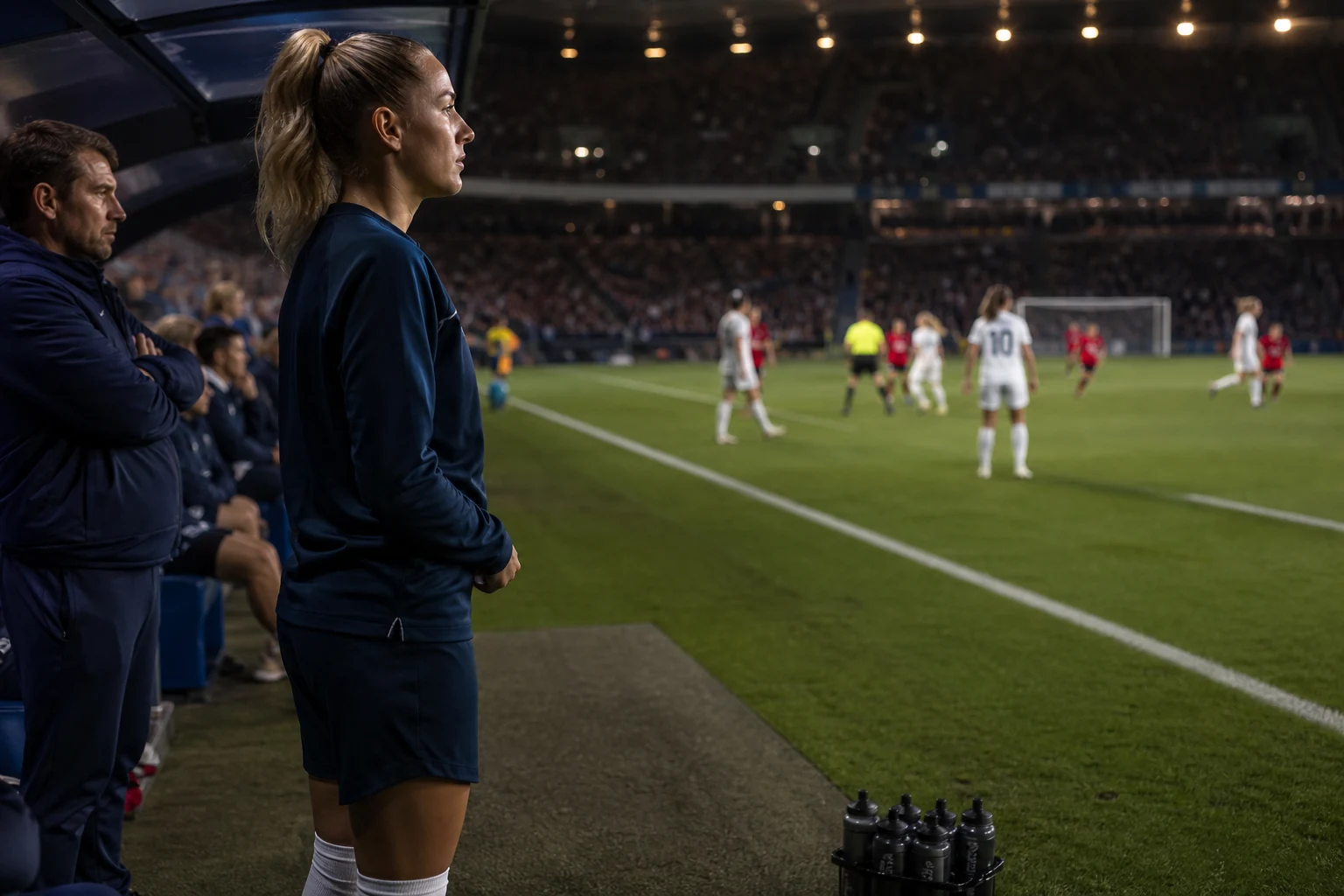
Entering the match confirms participation; contribution still needs to be rebuilt.
Twelve minutes on the scoresheet
In the 78th minute, the number appeared on the substitution board. The stadium applauded before the athlete even crossed the touchline. After weeks away, he was back in an official match. For the broadcast, the return had happened.
Over the next twelve minutes, he touched the ball only a few times. He closed spaces, offered a short passing lane, and passed up two runs he would normally attack without thinking. He made no decisive mistake. Nor did he yet produce the kind of presence that defined his role.
In the dressing room, the first feeling was legitimate: competing again mattered. The next morning, however, the analysis had to look beyond the symbol. How did he respond to peak speed? Which actions did he stop choosing? How did he feel on waking? What could he repeat after fatigue?
The scoresheet recorded participation. Performance would have to reappear in components: acceleration, game reading, the confidence to occupy space, technical execution, and the ability to recover for the next exposure.
From the moment to the criterionRe-entering the game is a milestone. Returning to what the game expects is a longer process.
Entering the field is an important milestone. It returns the athlete to the competitive environment and offers information that is impossible to produce fully during training. But presence in the match does not alone demonstrate that the previous performance has been recovered.
The athlete may play only a few minutes, avoid higher-risk actions, perform a simplified role, or depend on tactical protection. He may look good in one event yet remain unable to tolerate the sequence of matches, travel, and short recovery that defines a season.
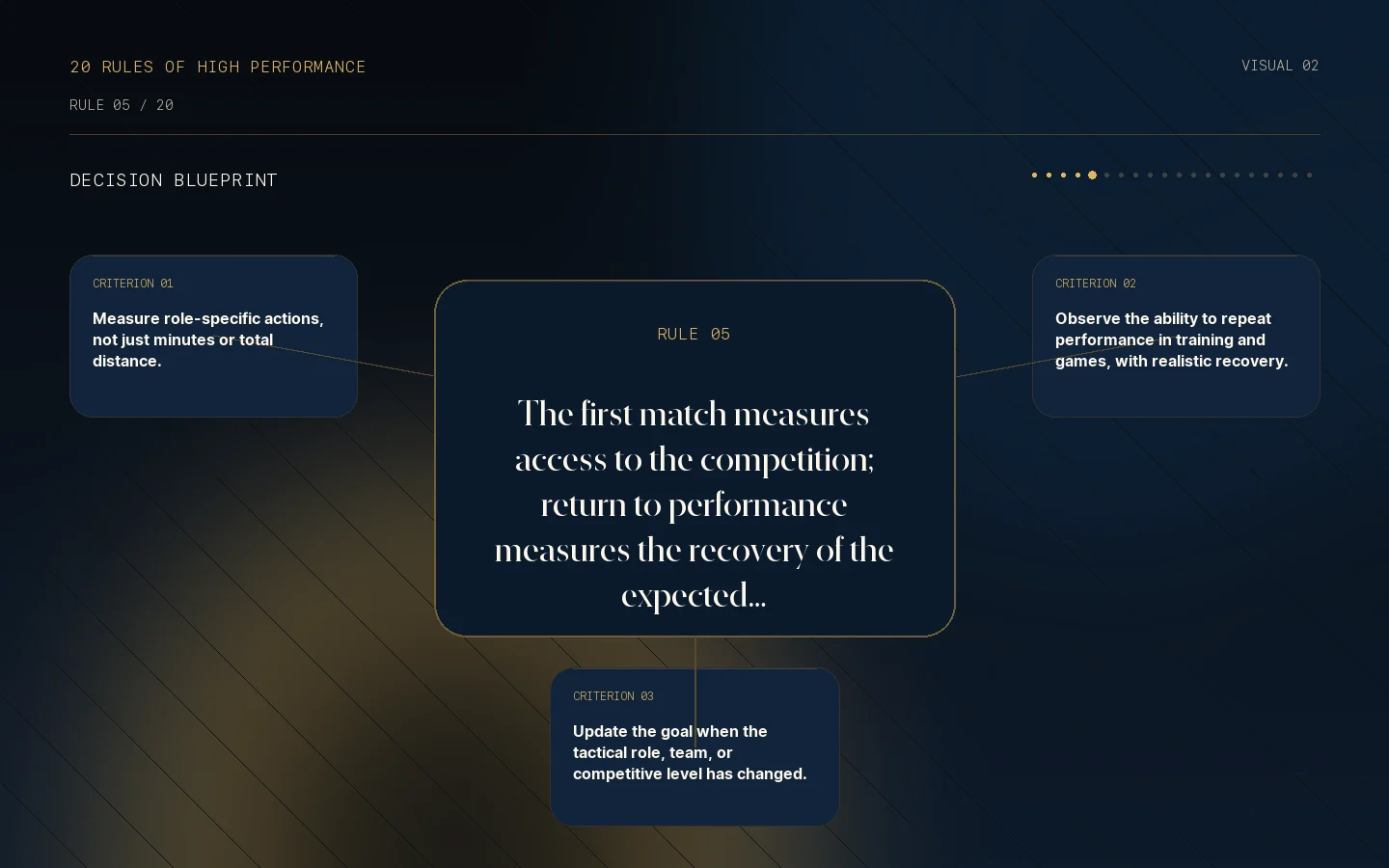
The first match measures access to the competition; return to performance measures the recovery of the expected contribution.
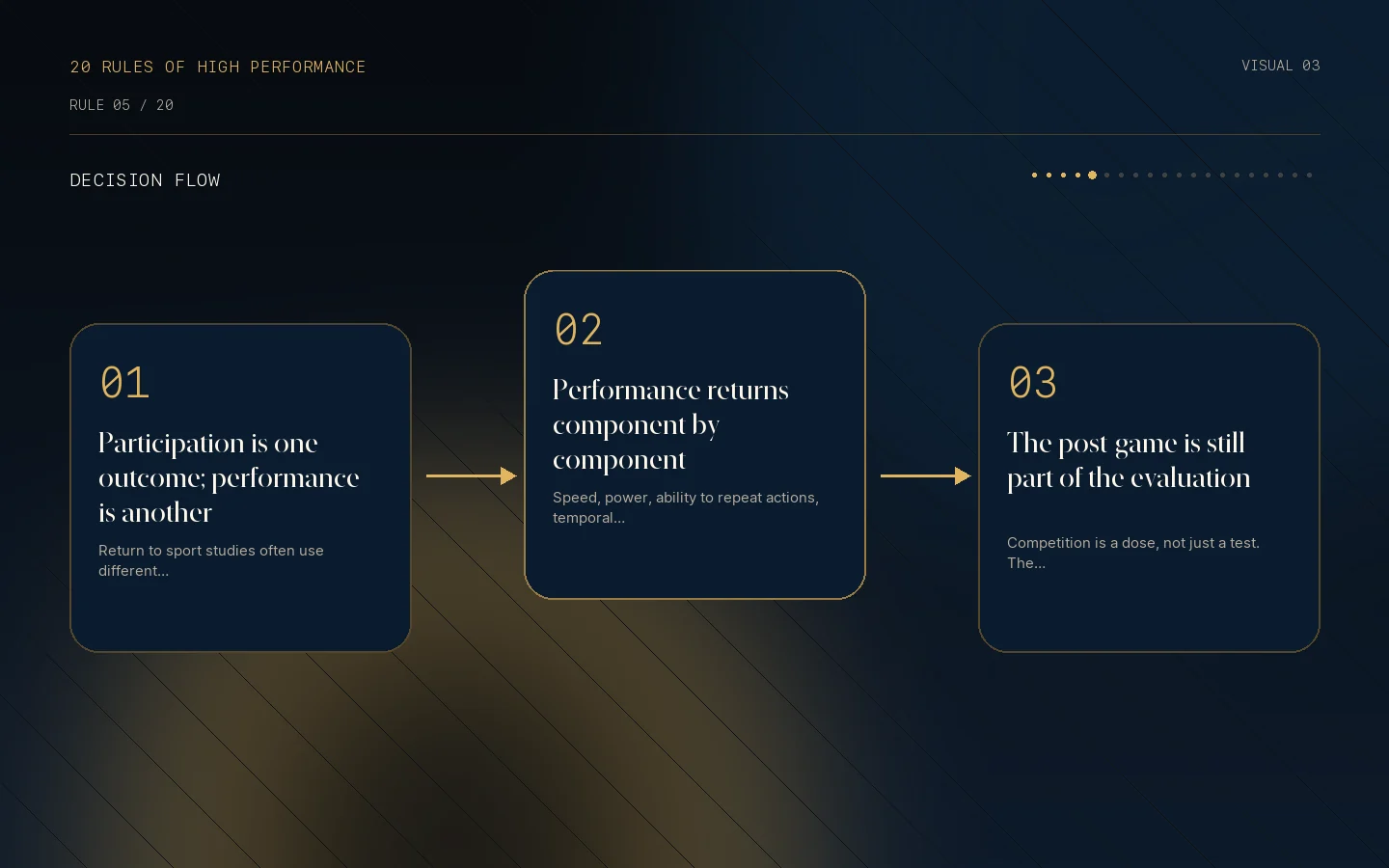
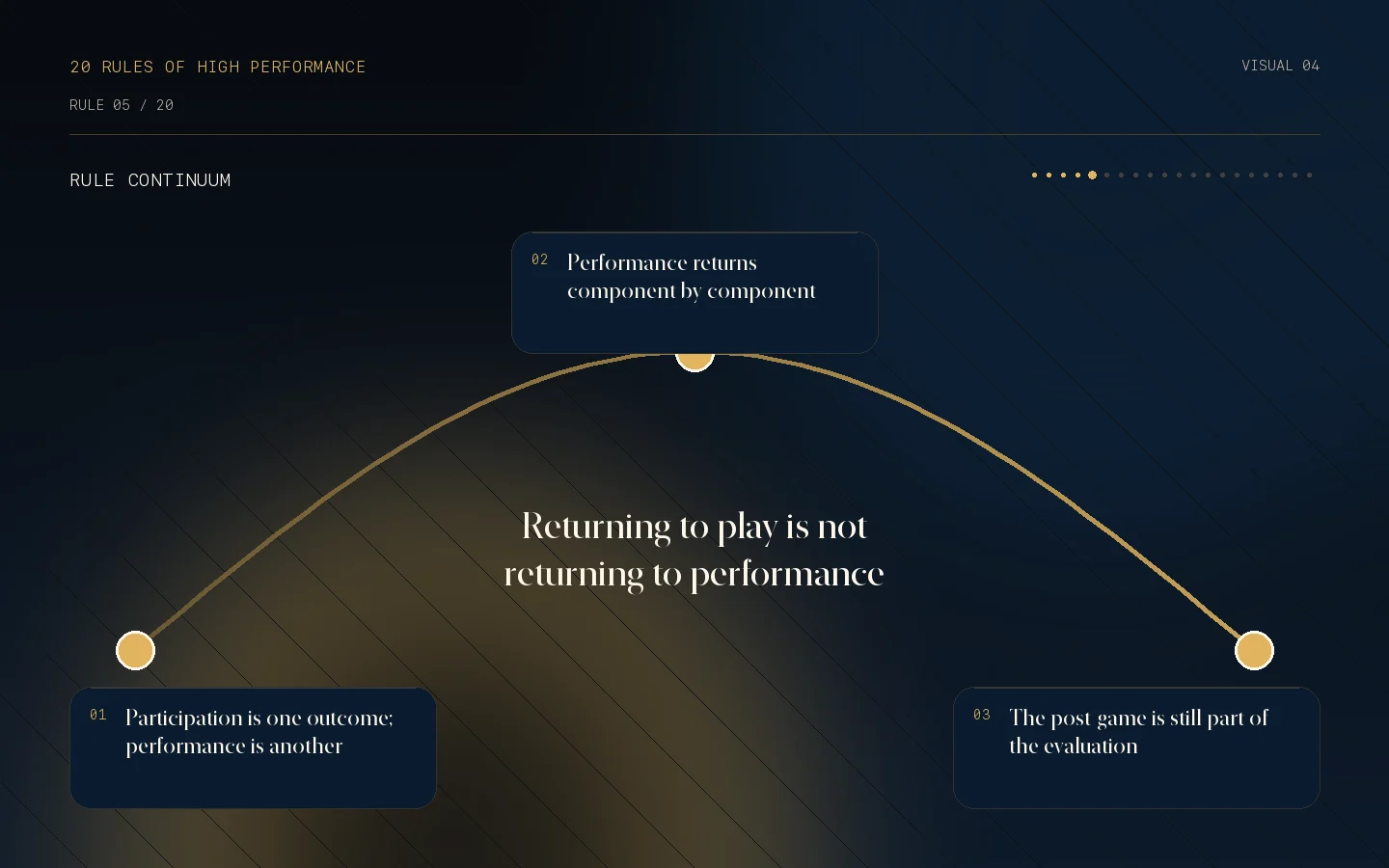
Participation is one outcome; performance is another
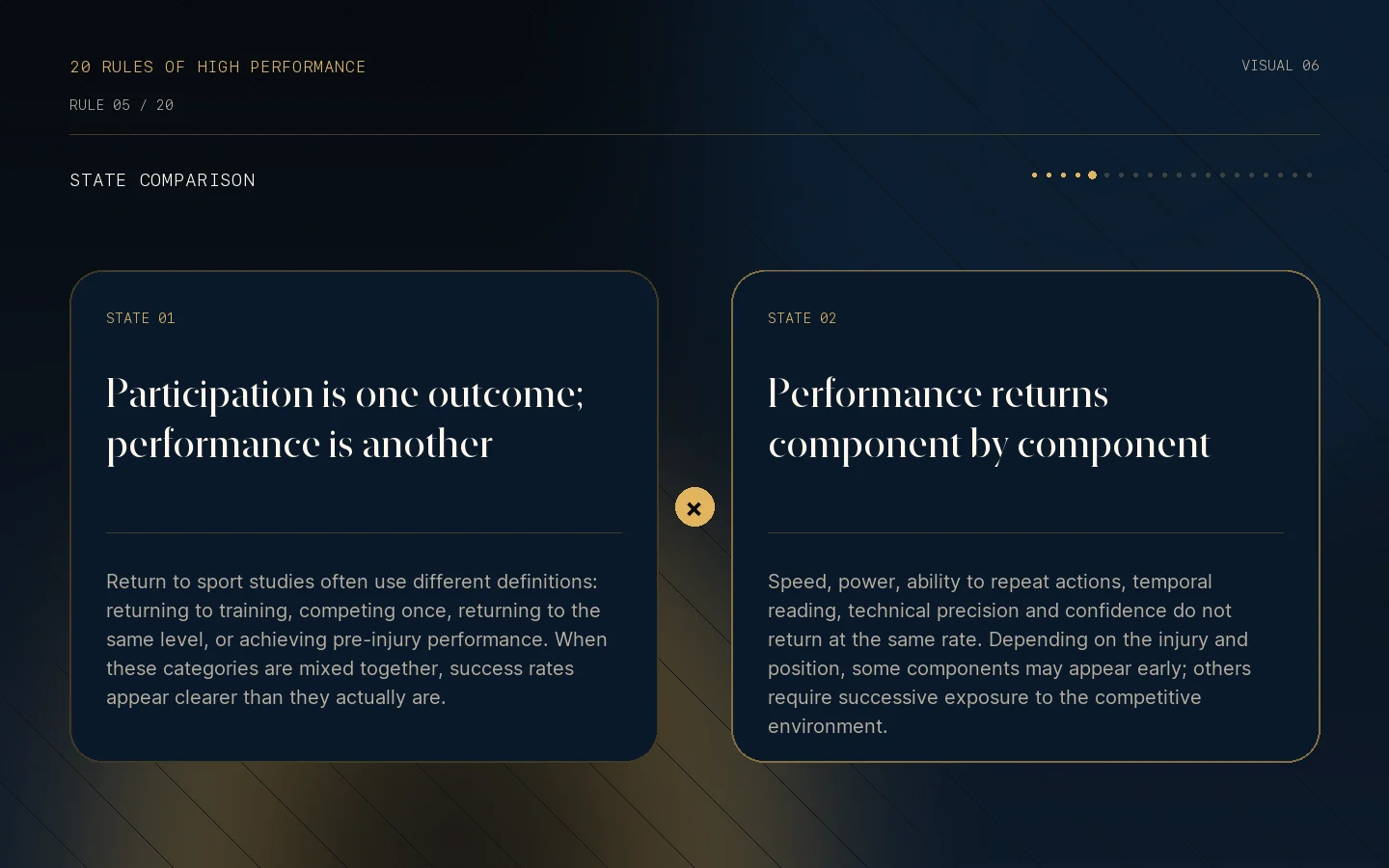
Return to sport studies often use different definitions: returning to training, competing once, returning to the same level, or achieving pre-injury performance. When these categories are mixed together, success rates appear clearer than they actually are.
For the professional athlete, the relevant question does not end with “did he play?”. It continues: how many minutes did he tolerate, which actions did he perform, at what quality, in which role, and how did he respond over the following forty-eight hours?
The answer can be positive even below the previous standard, as long as it represents the planned progression. The mistake is calling a legitimate step completion to suit the calendar narrative.
The return appears on the scoresheet before appearing in full in the game.
Speed, power, ability to repeat actions, temporal reading, technical precision and confidence do not return at the same rate. Depending on the injury and position, some components may appear early; others require successive exposure to the competitive environment.
Performance returns component by component
Speed, power, ability to repeat actions, temporal reading, technical precision and confidence do not return at the same rate. Depending on the injury and position, some components may appear early; others require successive exposure to the competitive environment.
The return requires individual and contextual metrics. Comparing the athlete only with his pre-injury average may overlook a change in role, team, or game model. Comparing him only with teammates may overlook his own profile. The strongest frame combines historical reference, current demand, and observed behavior.
It is also necessary to distinguish between peak capacity and repeated availability. Producing maximum action once is not equivalent to maintaining it under density, fatigue and pressure.
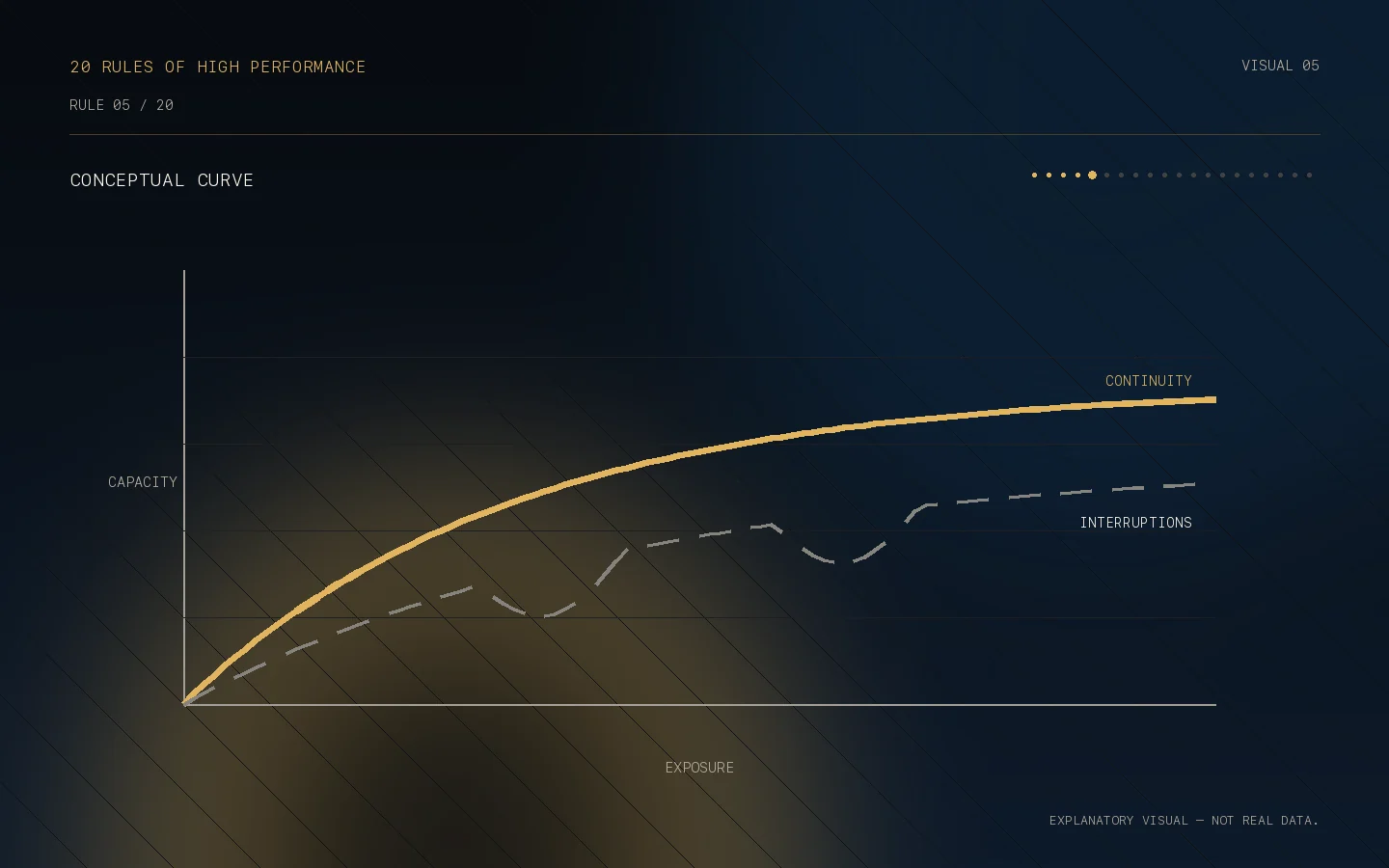
Explanatory visual — not real data.
Performance returns component by component
The post-game is still part of the evaluation
Competition is a dose, not just a test. The delayed response — pain, stiffness, fatigue, sleep, confidence and performance in the following training — tells you whether that dose was assimilated.
If the return is only evaluated during the match, the team sees the execution and loses the cost. The next step should consider both.
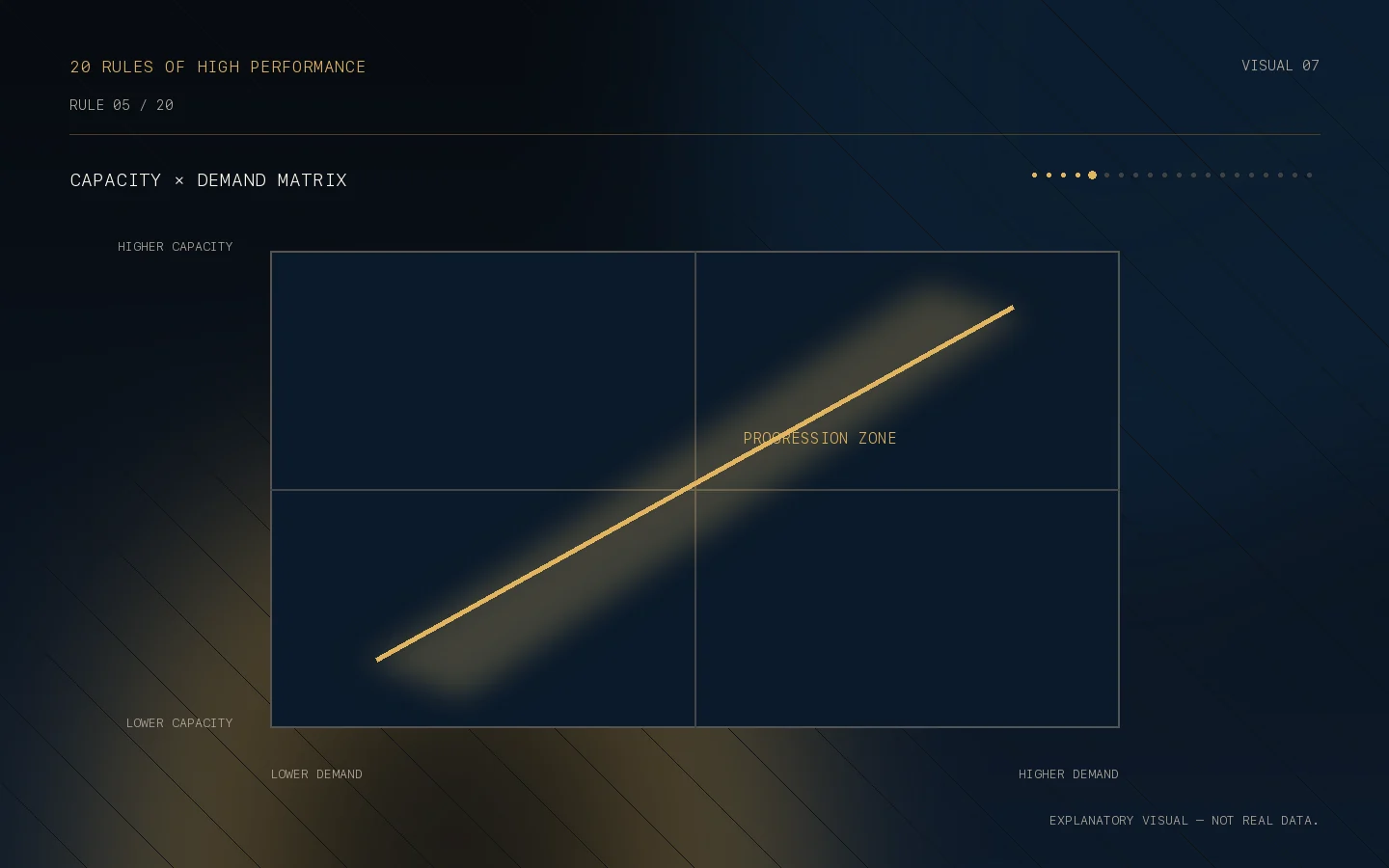
The first match measures access to the competition; return to performance measures the recovery of the expected contribution.
Minutes played document participation. Return to performance requires a prior definition of the expected contribution and observation throughout successive exposures.
After the first match
- Measure role-specific actions, not just minutes or total distance.
- Observe the ability to repeat performance in training and games, with realistic recovery.
- Update the goal when the tactical role, team, or competitive level has changed.
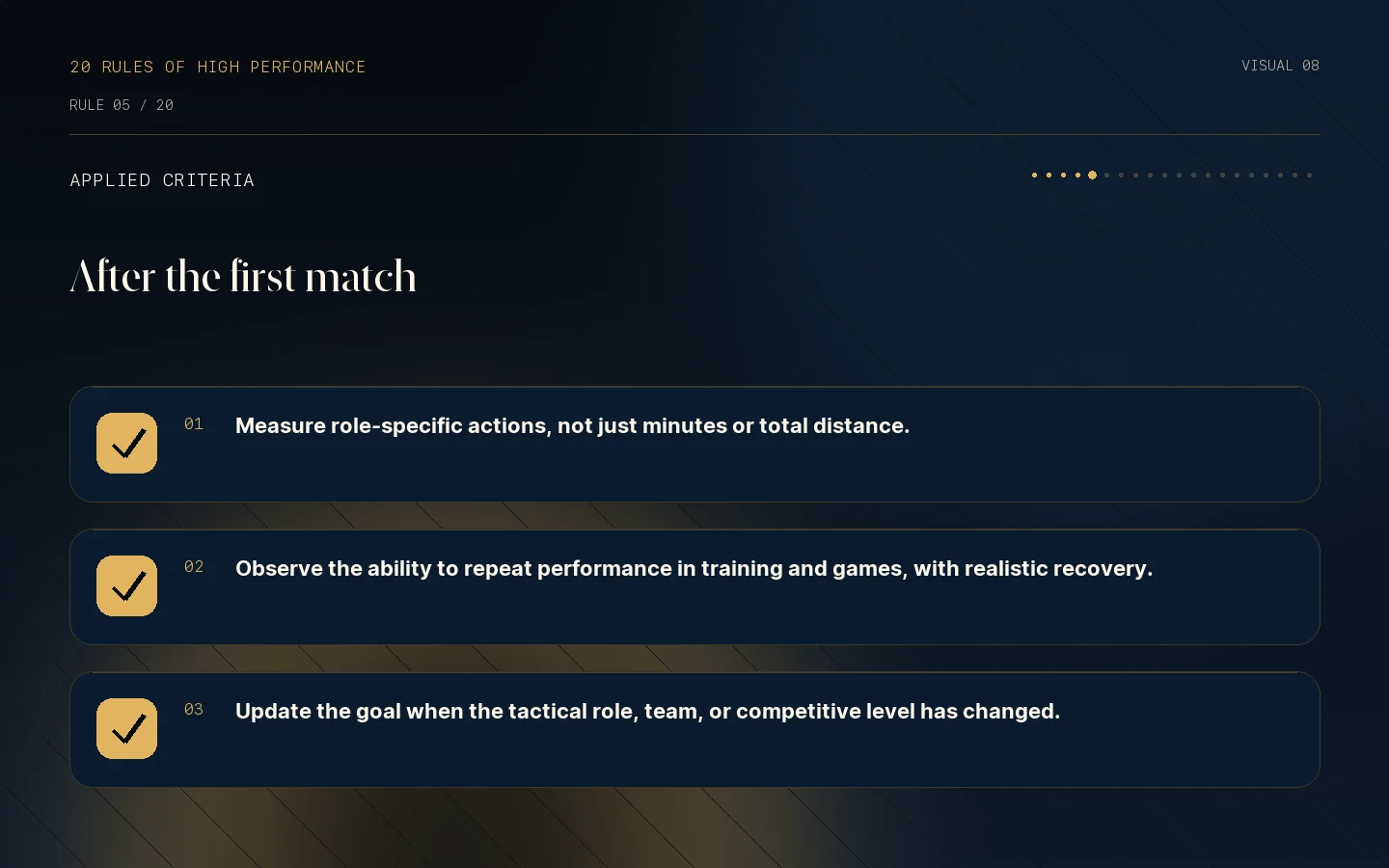
After the first match
Returning to playing deserves to be celebrated because it represents a journey. Turning it into an end point, however, abandons the athlete precisely when competitive complexity reappears.
The return to performance begins when returning to the game stops being a novelty and becomes a reliable contribution again.
The match sheet confirms that the athlete has returned. The game must still confirm what he can deliver.