

The series begins with availability and ends with a greater requirement: making presence useful.

Useful presence connects function, context and competitive consequence.
Being there was still not enough
Seven minutes remained. The coach needed someone capable of pressing outside, closing the inside pass, and attacking the space if the ball was recovered. There were available athletes on the bench. The decision depended on something more specific: who was ready to deliver exactly that role in that state of the match.
The chosen player came on and may not have touched the most important ball. His value appeared in off-ball movements that narrowed the options, in a run that forced the opponent to play backwards, and in the composure not to turn urgency into disorder.
His presence was useful because capacity, game reading, and context converged. With a different score or role, the choice might have been different. Usefulness was not a permanent label attached to the athlete; it was a relationship between what he could offer and what the system needed in that moment.
After the whistle, the contribution barely fitted into the highlights. It belonged in the game the team managed to sustain because that body was available, ready, and connected to the plan.
From the moment to the criterionHigh performance ends where presence stops being a count and becomes a concrete competitive possibility.
Being in training is not enough if the athlete cannot receive the expected stimulus. Being on the score sheet is not enough if the function needs to be protected to the point of losing meaning. Being on the field is not enough if presence transfers a disproportionate cost to the next action or the next match.
Useful presence integrates the previous rules. It requires access, readiness, progression, recovery, repetition, and context. It is not a moral state; it is a relationship between what the athlete can offer and what the system really needs.
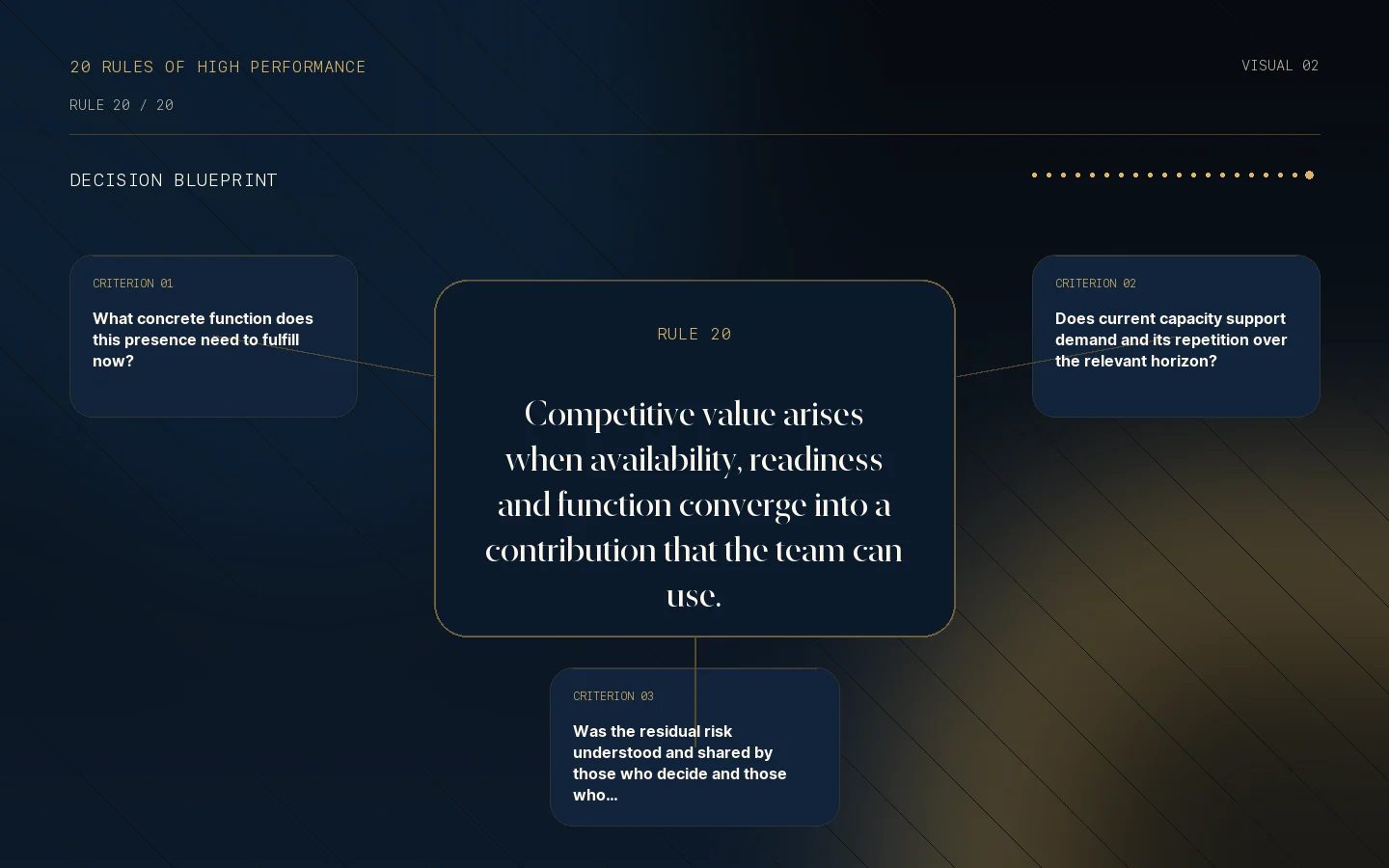
Competitive value arises when availability, readiness and function converge into a contribution that the team can use.
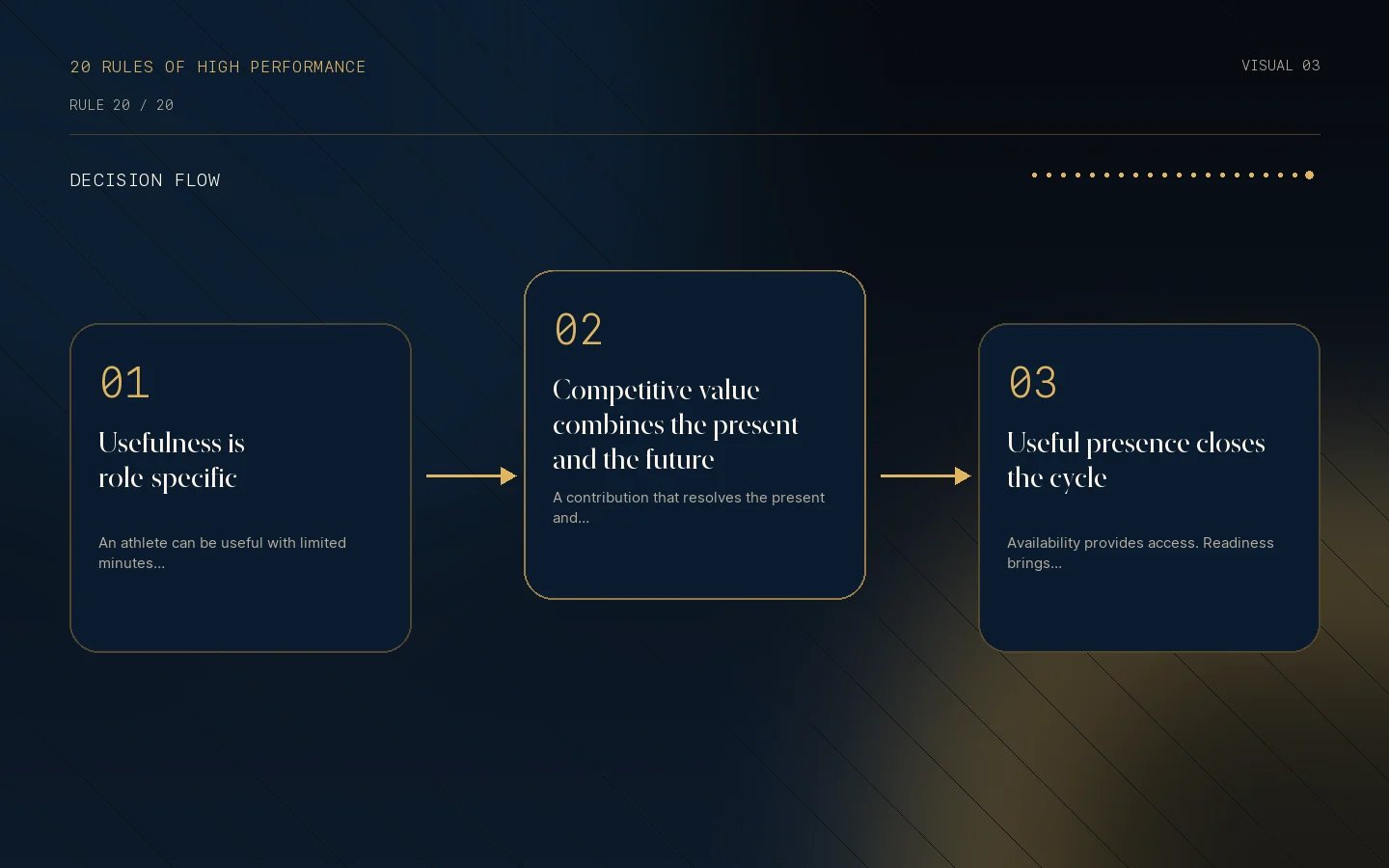
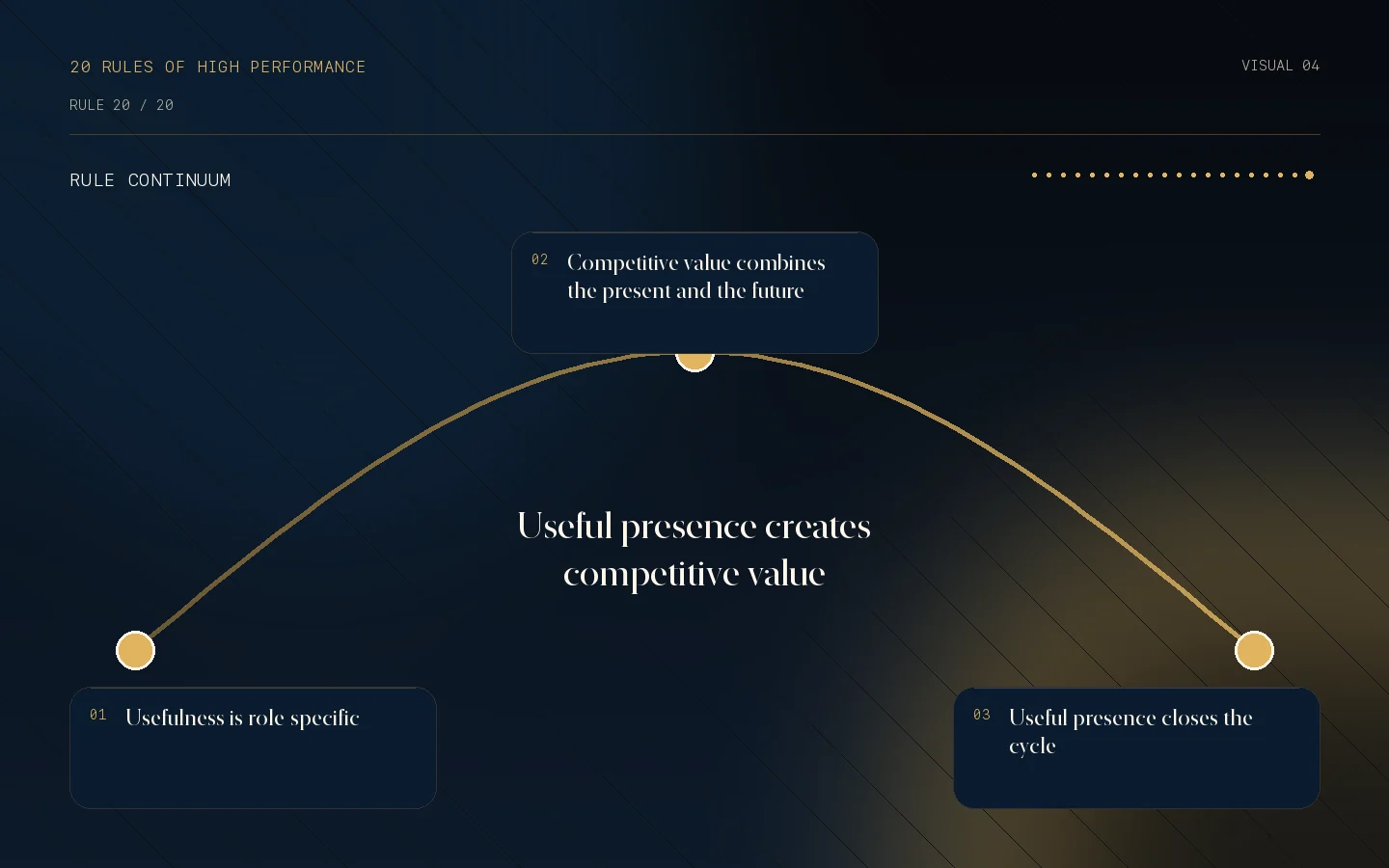
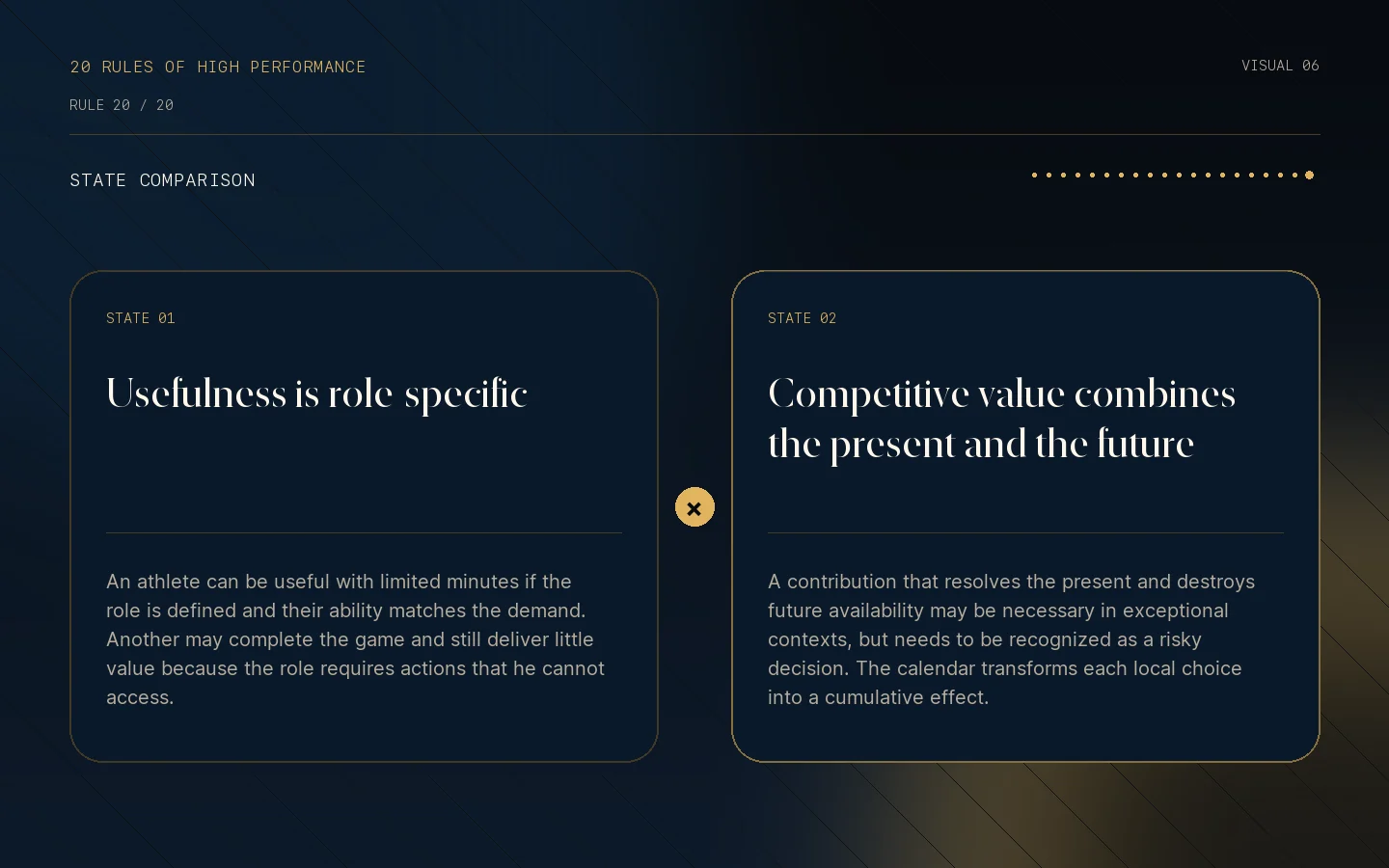
Usefulness is role-specific
An athlete can be useful with limited minutes if the role is defined and their ability matches the demand. Another may complete the game and still deliver little value because the role requires actions that he cannot access.
The usefulness changes with the game. Protecting an advantage, pressing high, accelerating transition or controlling possession require different combinations of capacity and decision. The question needs to be asked within the plan, not in abstraction.
This also applies to training. Participating in a technical block, offering qualified opposition or carrying out individual reconditioning are different forms of useful presence when they correspond to the objective of the phase.
The series begins with availability and ends with a greater requirement: making presence useful.
A contribution that resolves the present and destroys future availability may be necessary in exceptional contexts, but needs to be recognized as a risky decision. The calendar transforms each local choice into a cumulative effect.
Competitive value combines the present and the future
A contribution that resolves the present and destroys future availability may be necessary in exceptional contexts, but needs to be recognized as a risky decision. The calendar transforms each local choice into a cumulative effect.
Therefore, utility is not about getting the most out of it every day. It's about delivering the dose of performance that supports the current objective without losing sight of the sequence. At times, this means peak; in others, control, rotation or recovery.
The organization needs to declare its risk tolerance and who participates in the decision. Without transparency, the athlete receives the consequence of a choice that the system made in silence.
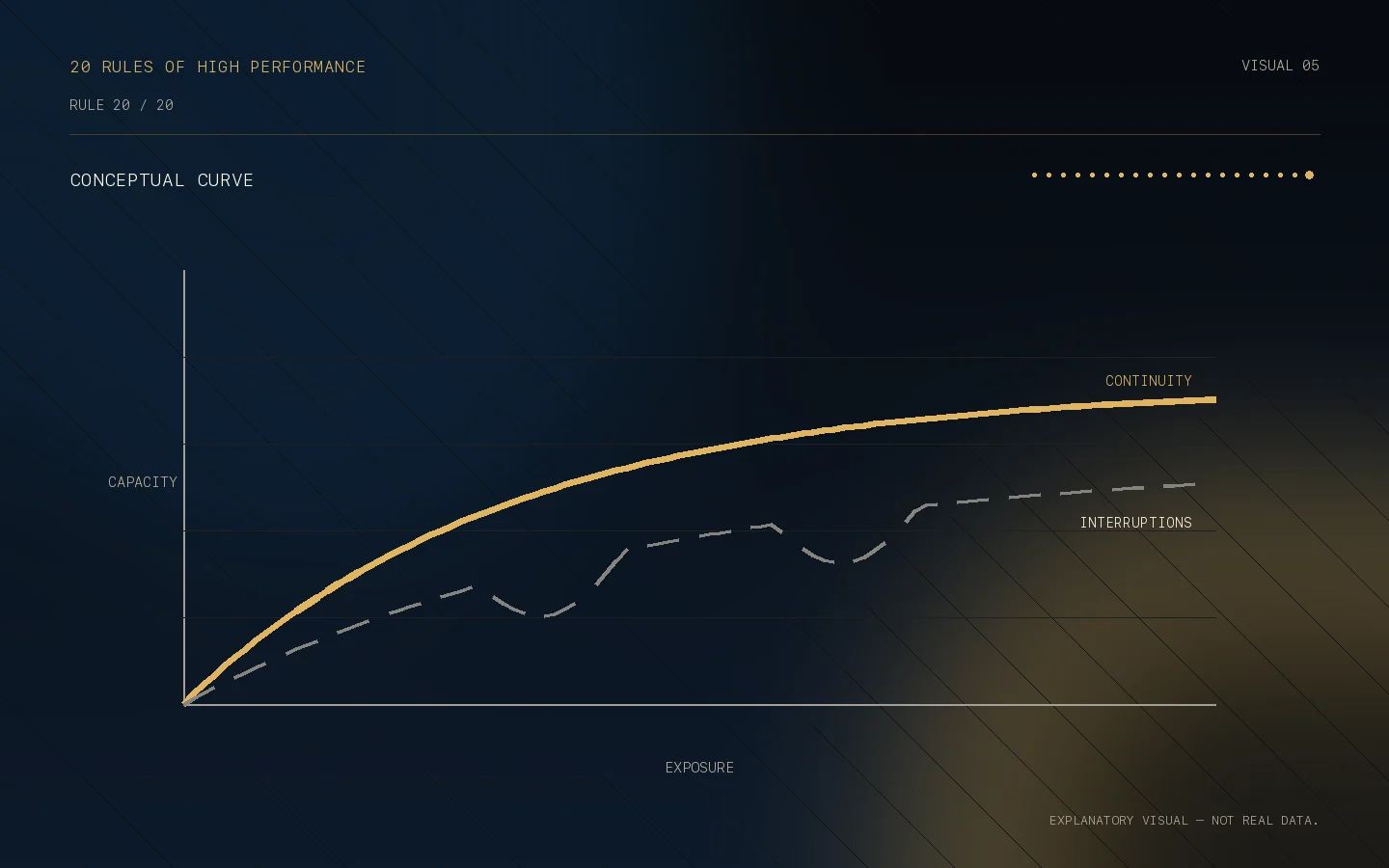
Explanatory visual — not real data.
Competitive value combines the present and the future
Useful presence closes the cycle
Availability provides access. Readiness brings together capacity and demand. Progressive return rebuilds tolerance. Recovery allows continuity. Repetition creates reliability. Competitive value appears when these steps converge in function.
No single marker captures this cycle. He needs data, observation, communication and courage to adjust the decision when reality contradicts the plan.
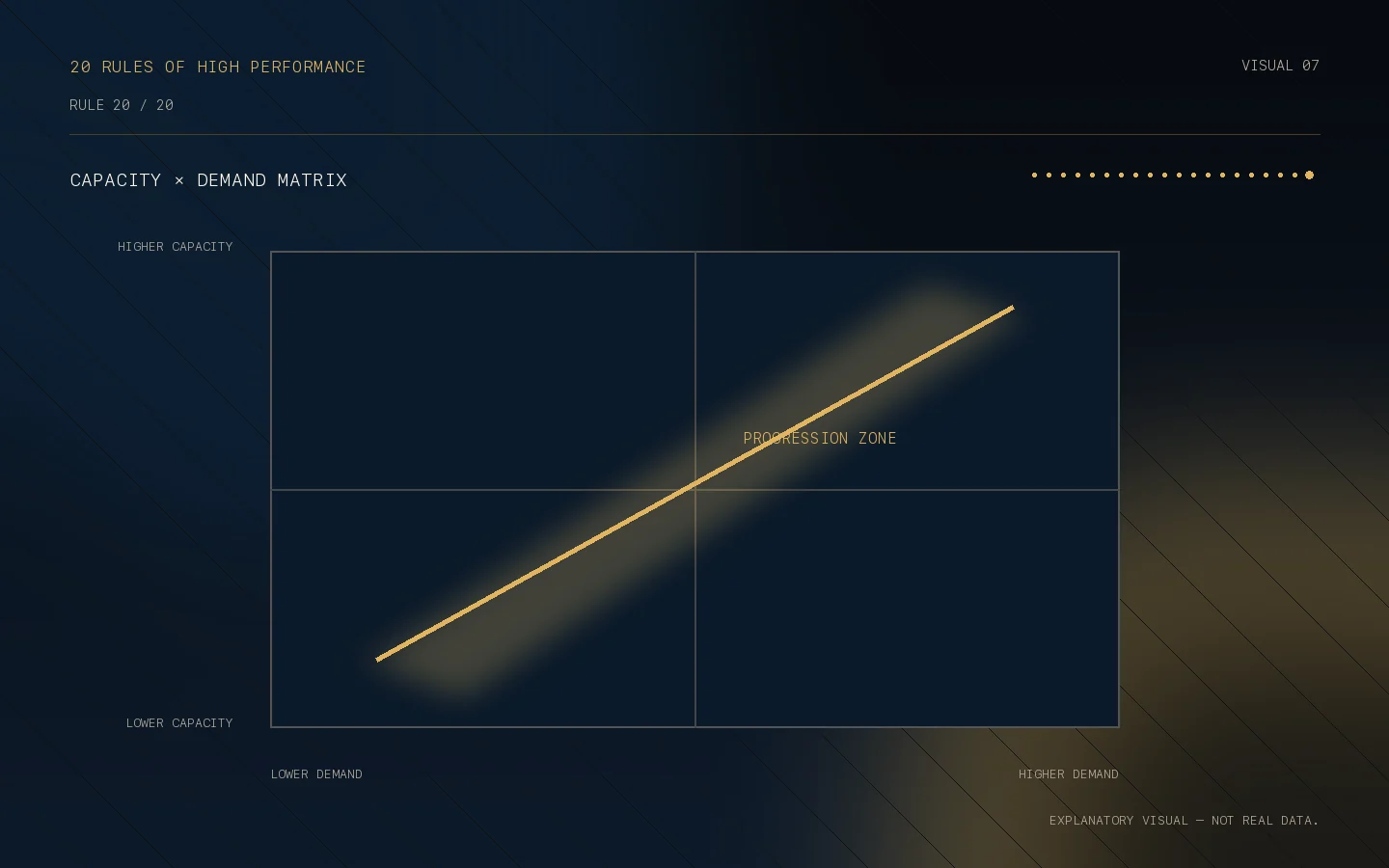
Competitive value arises when availability, readiness and function converge into a contribution that the team can use.
Useful presence is qualified availability: sufficient capacity, clear role, understood risk and sustainable contribution.
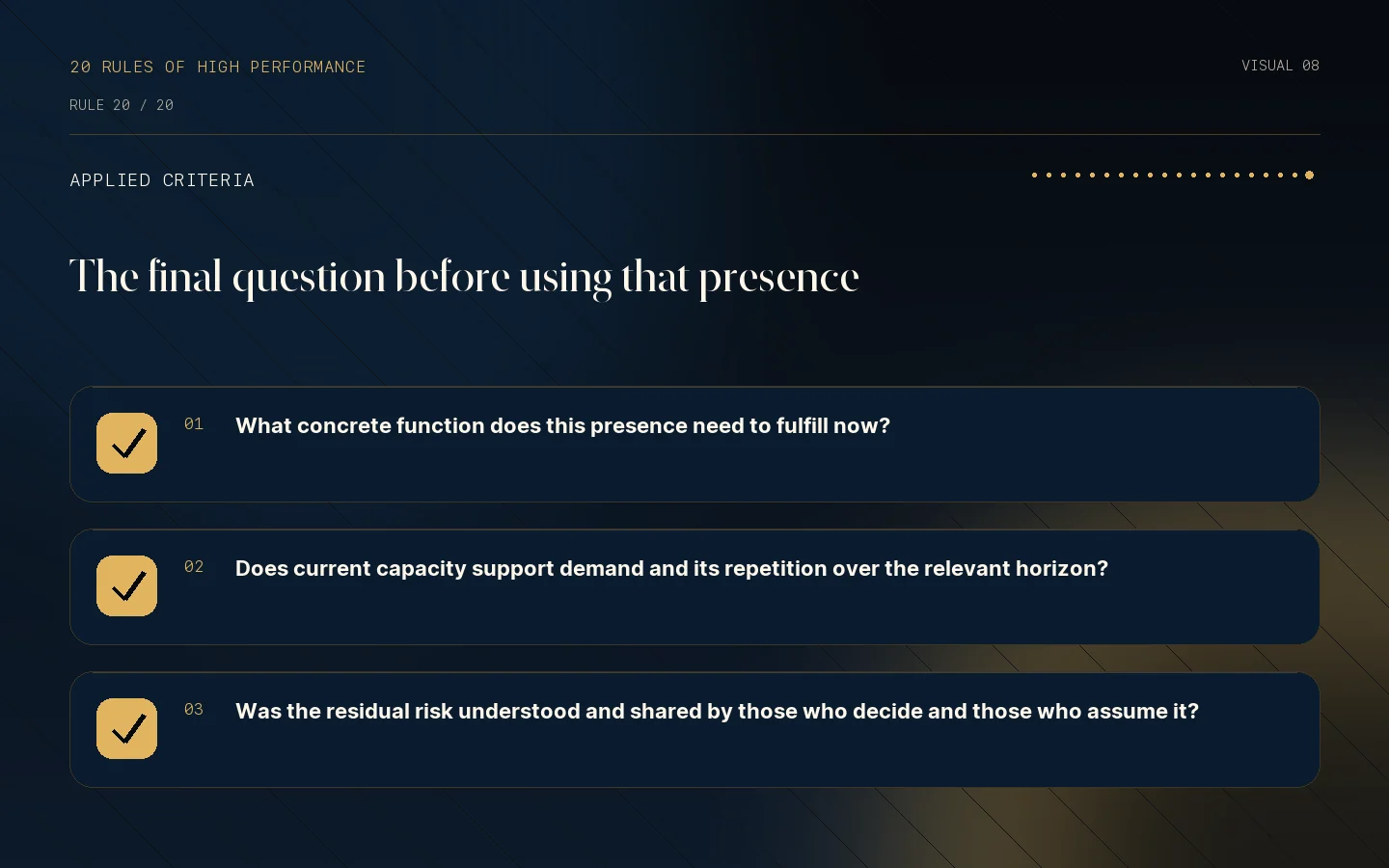
The final question before using that presence
- What concrete function does this presence need to fulfill now?
- Does current capacity support demand and its repetition over the relevant horizon?
- Was the residual risk understood and shared by those who decide and those who assume it?
The final question before using that presence
The search for availability should not produce obedient bodies at any cost. It must produce athletes capable of participating in decisions and teams capable of preserving contributions over time.
A useful presence is a competitive value because it brings together health, preparation and strategy in the same question: what can we deliver today without abandoning what we still need to be tomorrow?
High performance is not about always being there. It is about being there usefully when competition demands it.