

The body does not mature because it heard the explanation. It matures because it found the demand, responded and was able to find it again.

Repeated and progressive exposures turn novelty into tolerable capacity.
By the fourth time, the action had changed
In the first week, three hard decelerations made the athlete conscious of every plant. In the second, the same demand returned with more space between repetitions. In the third, there was opposition. By the fourth, the action no longer felt borrowed: he braked, reorganised his body, and moved into the next action.
Nothing magical happened between one Monday and the next. Tissues, the neuromuscular system, perception, and technique received repeated opportunities to respond to the same family of problems. Each exposure carried the memory of the previous one and prepared the next.
The dose was not identical. Repetition did not mean copying. Speed, volume, and complexity progressed as the response allowed, without turning progression into haste.
The most important outcome was not completing one perfect repetition. It was meeting the demand again and remaining able to execute it as the context changed.
From the moment to the criterionPhysical maturity does not grow from one heroic encounter with load, but from enough encounters for the body to learn to tolerate, organise, and repeat.
Tissues, energy systems, and skills need repetition. The first exposure reveals cost; the following can produce greater efficiency, tolerance and control. This logic goes through strength, running, contact, decision making and returning after injury.
Repeating, however, does not mean copying the same session or insisting on a bad response. The value is in the continuity of a problem that is similar enough to generate adaptation and adjusted enough to remain assimilable.
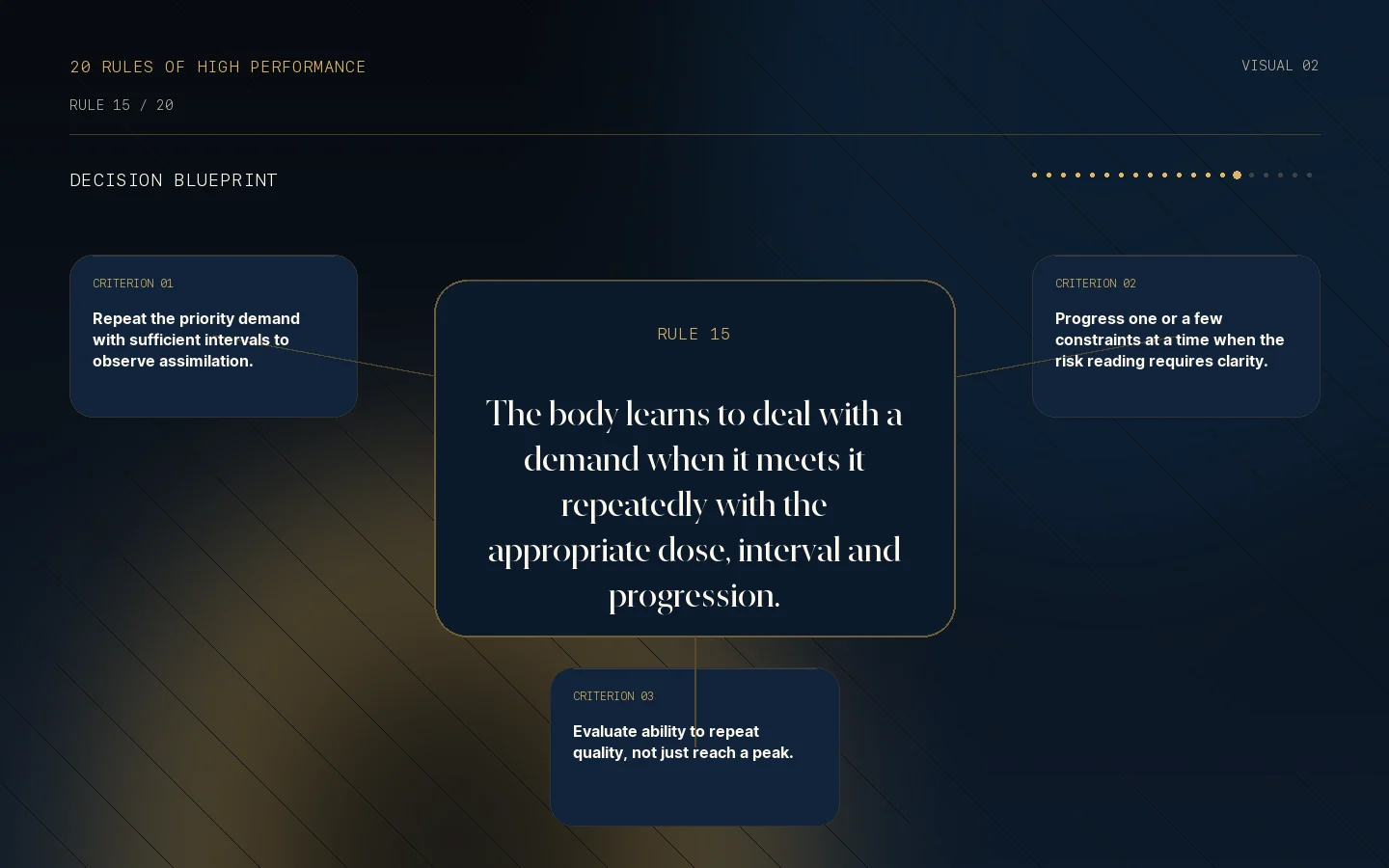
The body learns to deal with a demand when it meets it repeatedly with the appropriate dose, interval and progression.
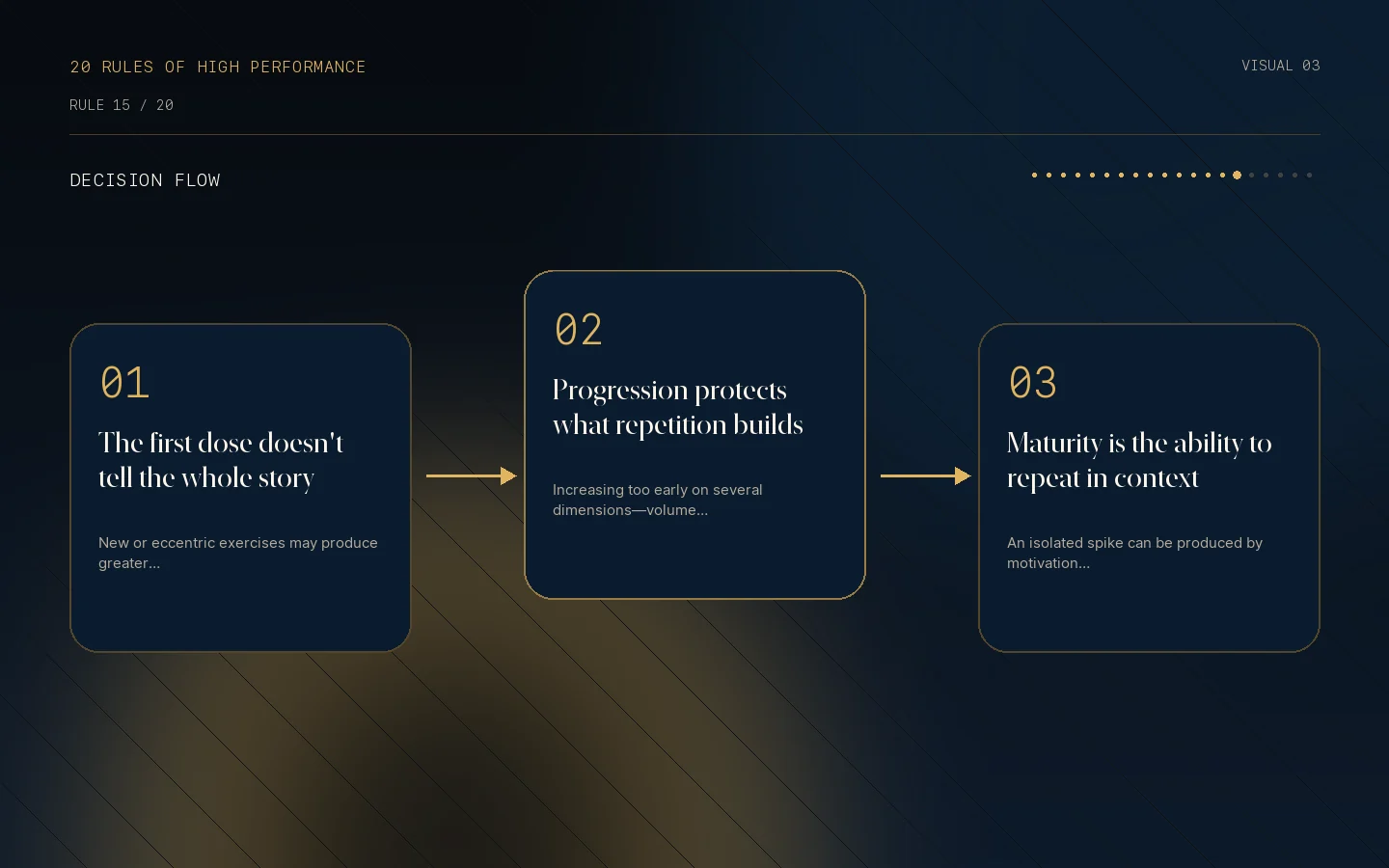
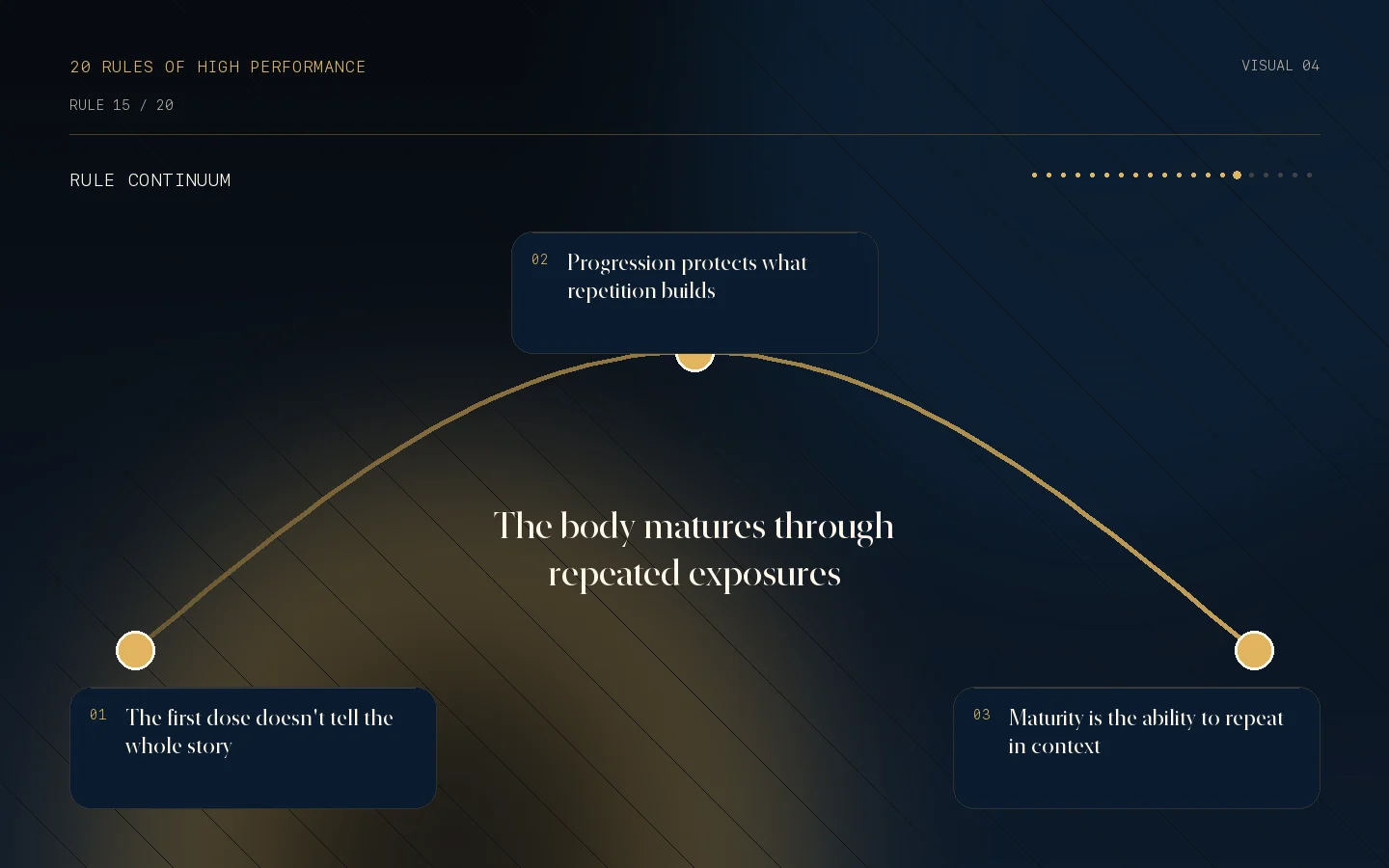
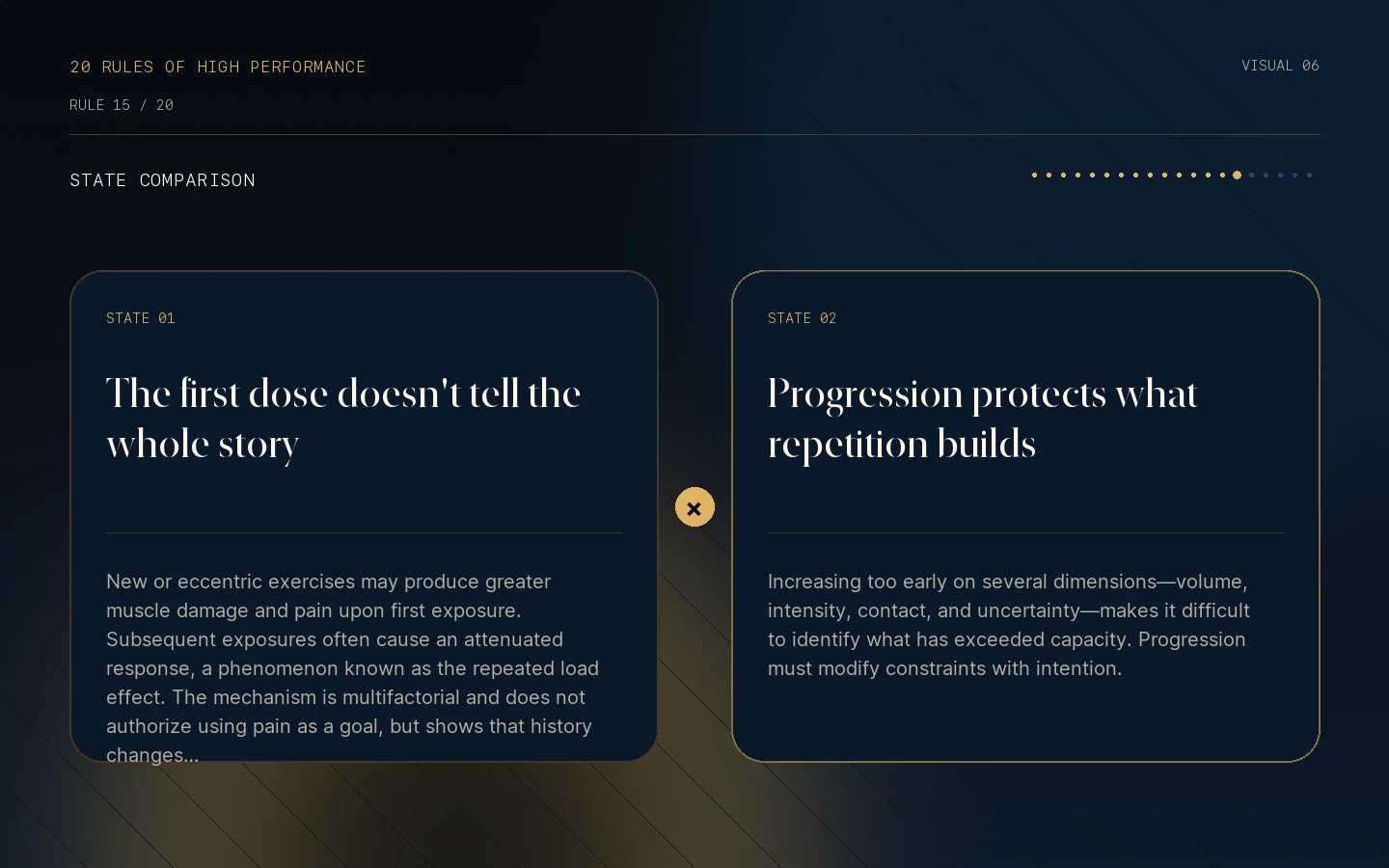
The first dose doesn't tell the whole story
New or eccentric exercises may produce greater muscle damage and pain upon first exposure. Subsequent exposures often cause an attenuated response, a phenomenon known as the repeated load effect. The mechanism is multifactorial and does not authorize using pain as a goal, but shows that history changes the response.
In the field, the principle is broader. The athlete needs to rediscover high speed, deceleration, contact and density of actions to rebuild tolerance. A single successful session demonstrates possibility; a well-tolerated sequence begins to demonstrate readiness.
Repetition also improves perception. In team sports, players learn to recognize opportunities and coordinate actions because they share representative problems throughout training.
The body does not mature because it heard the explanation. It matures because it found the demand, responded and was able to find it again.
Increasing too early on several dimensions—volume, intensity, contact, and uncertainty—makes it difficult to identify what has exceeded capacity. Progression must modify constraints with intention.
Progression protects what repetition builds
Increasing too early on several dimensions—volume, intensity, contact, and uncertainty—makes it difficult to identify what has exceeded capacity. Progression must modify constraints with intention.
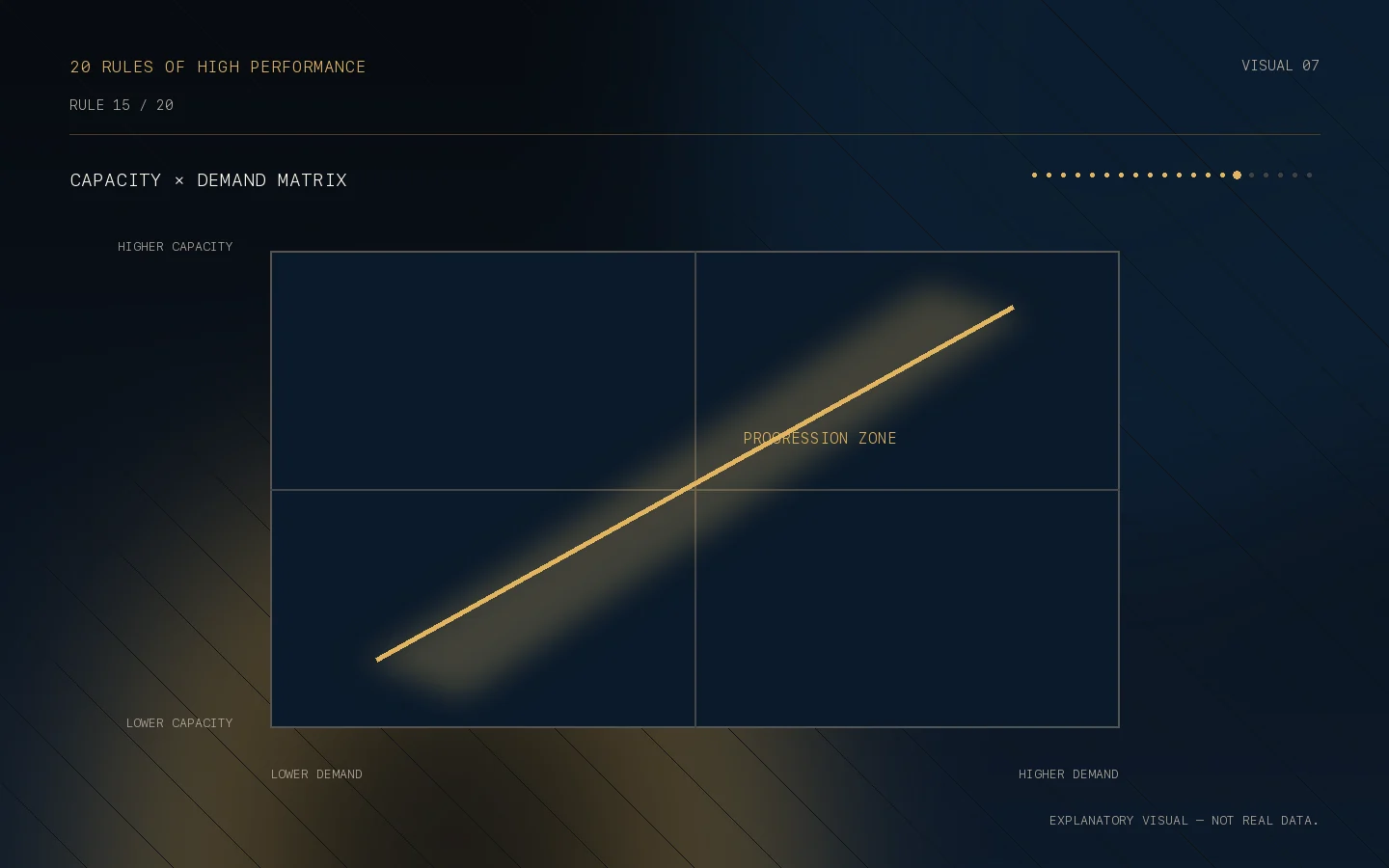
In return, a sequence can progress from linear racing to acceleration, then to planned change of direction, reaction, opposition, and competitive density. The exact design depends on the injury, position and sport.
Between exposures, the answer decides the next step. Persistent pain, loss of quality, decreased performance or increased fear may indicate a need to adjust, not prove resistance.
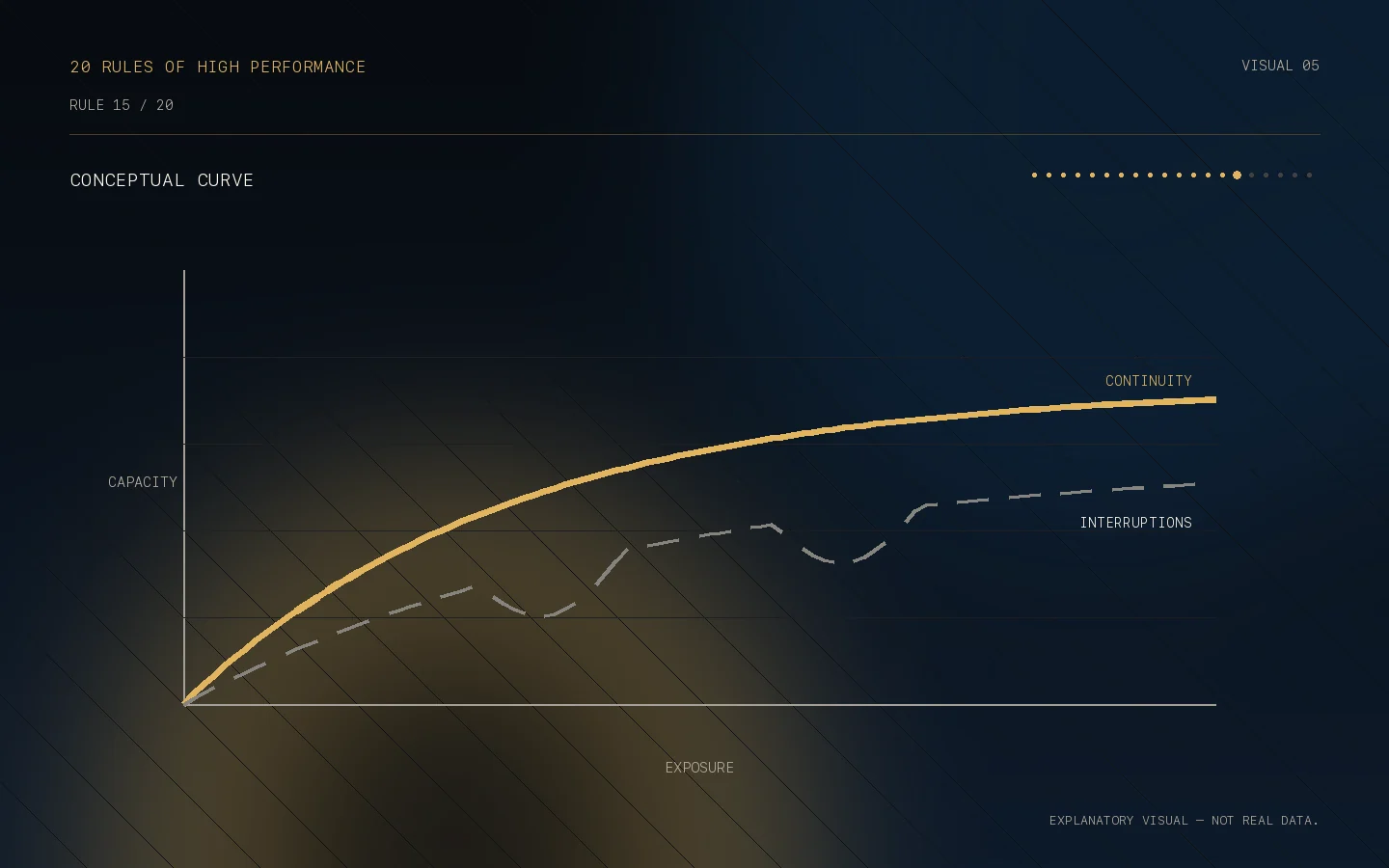
Explanatory visual — not real data.
Progression protects what repetition builds
Maturity is the ability to repeat in context
An isolated spike can be produced by motivation, freshness or chance. Sports capacity is revealed when the athlete is able to access behavior on different days and under relevant variability.
The goal is not to eliminate all oscillation. It means building a sufficiently robust base so that the oscillation does not erase the function.
The body learns to deal with a demand when it meets it repeatedly with the appropriate dose, interval and progression.
A completed task shows that it was possible that day. Repeated, well-tolerated exposure shows that capacity begins to become available.
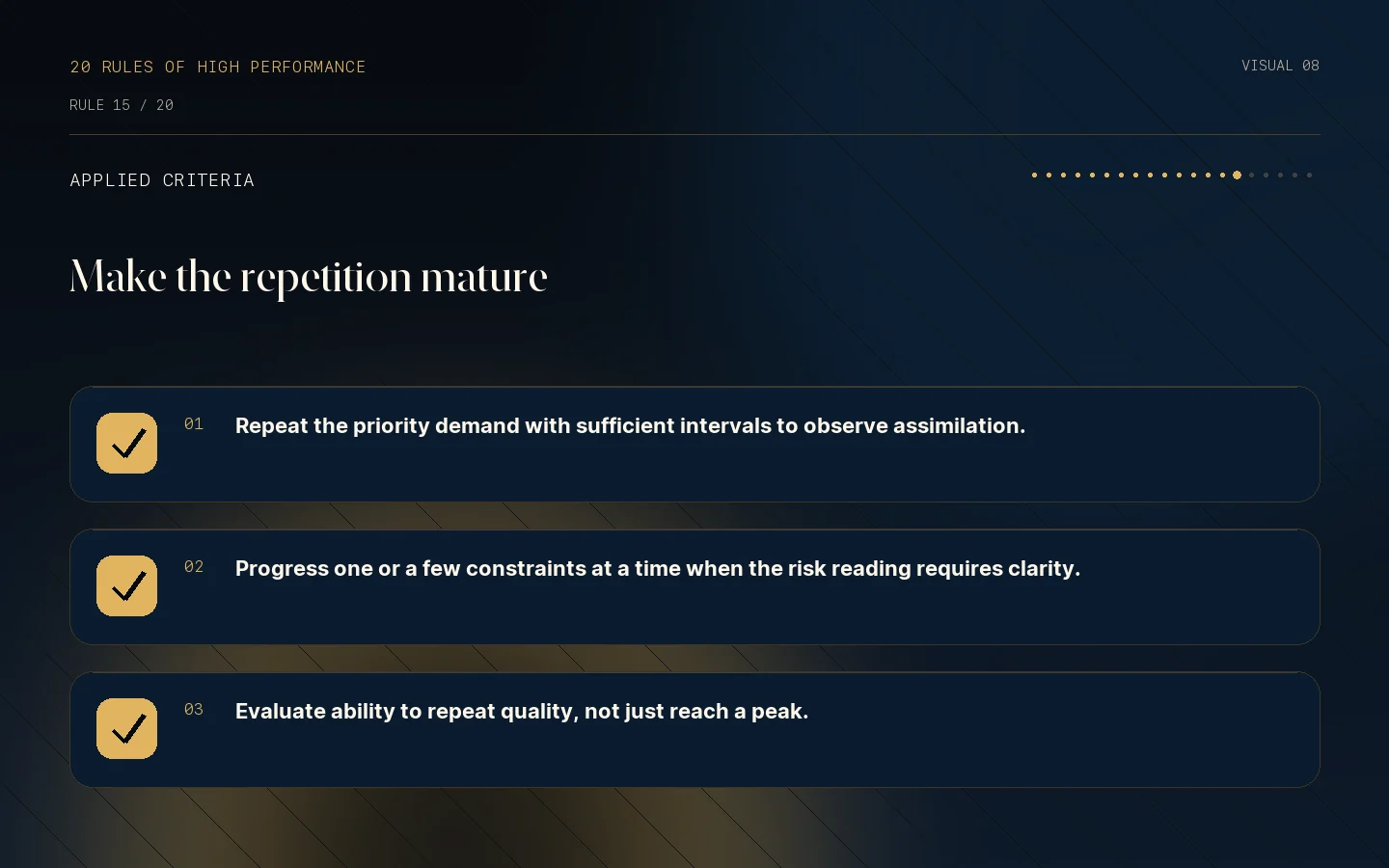
Make the repetition mature
- Repeat the priority demand with sufficient intervals to observe assimilation.
- Progress one or a few constraints at a time when the risk reading requires clarity.
- Evaluate ability to repeat quality, not just reach a peak.
Make the repetition mature
Exposure is neither punishment nor a test of courage. It is the language through which the organism learns what it needs to sustain.
High performance matures when demand stops being an extraordinary event and becomes an assimilated capacity.
The body trusts what it has already encountered, tolerated and managed to find again.