

An exceptional performance can change a game. A reliable ability changes the number of games in which the team can rely on it.

Reliability turns a possible capacity into a contribution that reappears.
The name the coach could write down
One athlete owned the season’s most memorable moments: an impossible burst, a goal from outside the box, a performance that had changed a night on its own. He also accumulated weeks in which he could not train, fluctuating availability, and returns that demanded fresh adaptation.
Another produced fewer images for the highlight reel. He trained, recovered, understood the role, and delivered a high level with little variation. When the coach began planning three matches in eight days, it was the second name he could write down first.
The choice did not deny brilliance. It simply recognised that a capacity influences the calendar only when it can reappear. The peak showed what was possible; reliability allowed a strategy to be built around that possibility.
In the third match, the reliable athlete did not decide everything alone. He did something less spectacular: he sustained the role when the team was already carrying fatigue and the plan needed to remain recognisable.
From the moment to the criterionIn high performance, value is not only the height someone reaches. It is how often the team can access that height when it truly needs it.
High performance is often remembered for its peaks: the decisive sprint, the improbable save, the record charge. But a season is won by capabilities that remain accessible under travel, congestion, different opponents and imperfect days.
Reliability is not stable mediocrity. It is the ability to deliver the required behavior with acceptable variability and sustainable cost.
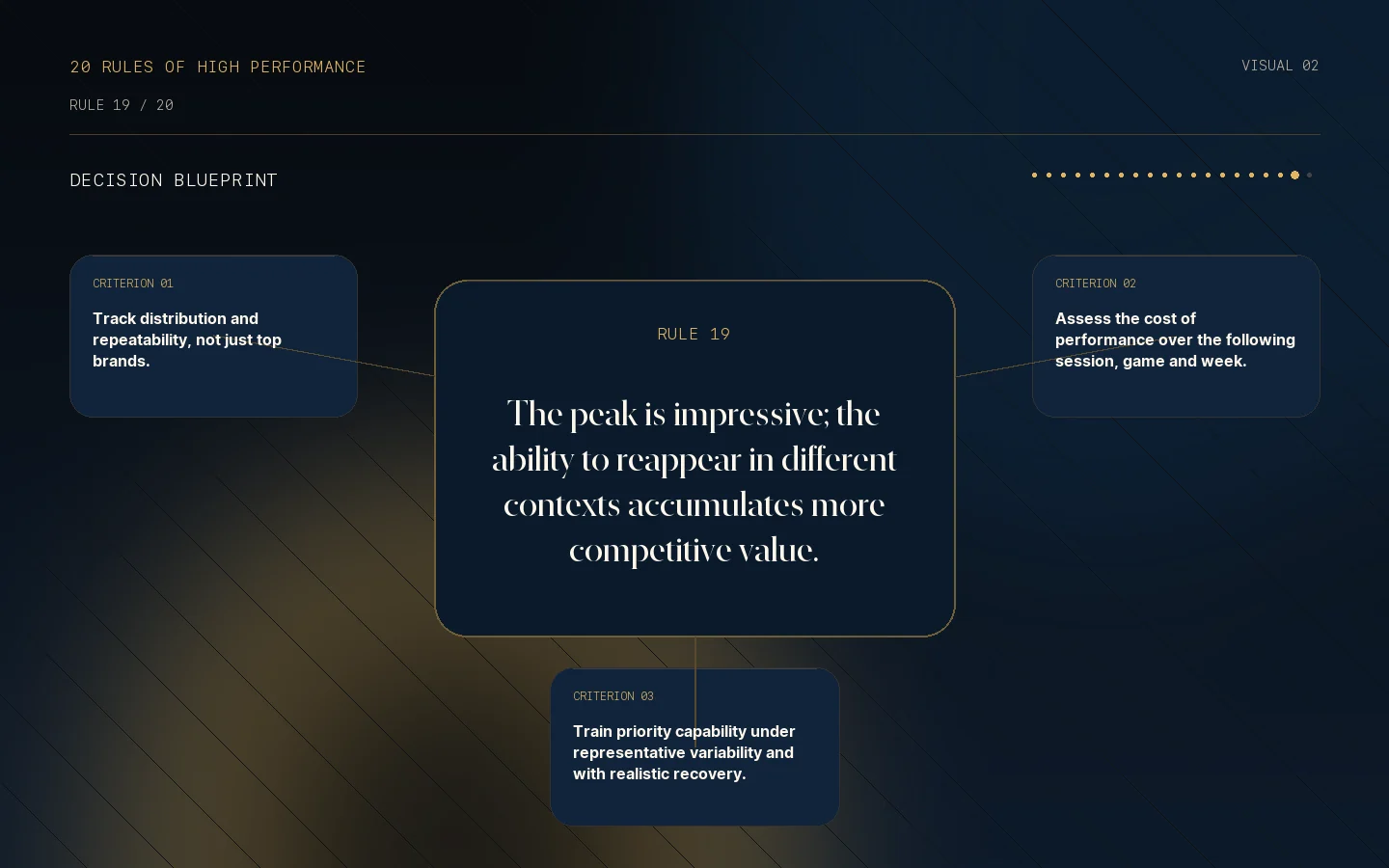
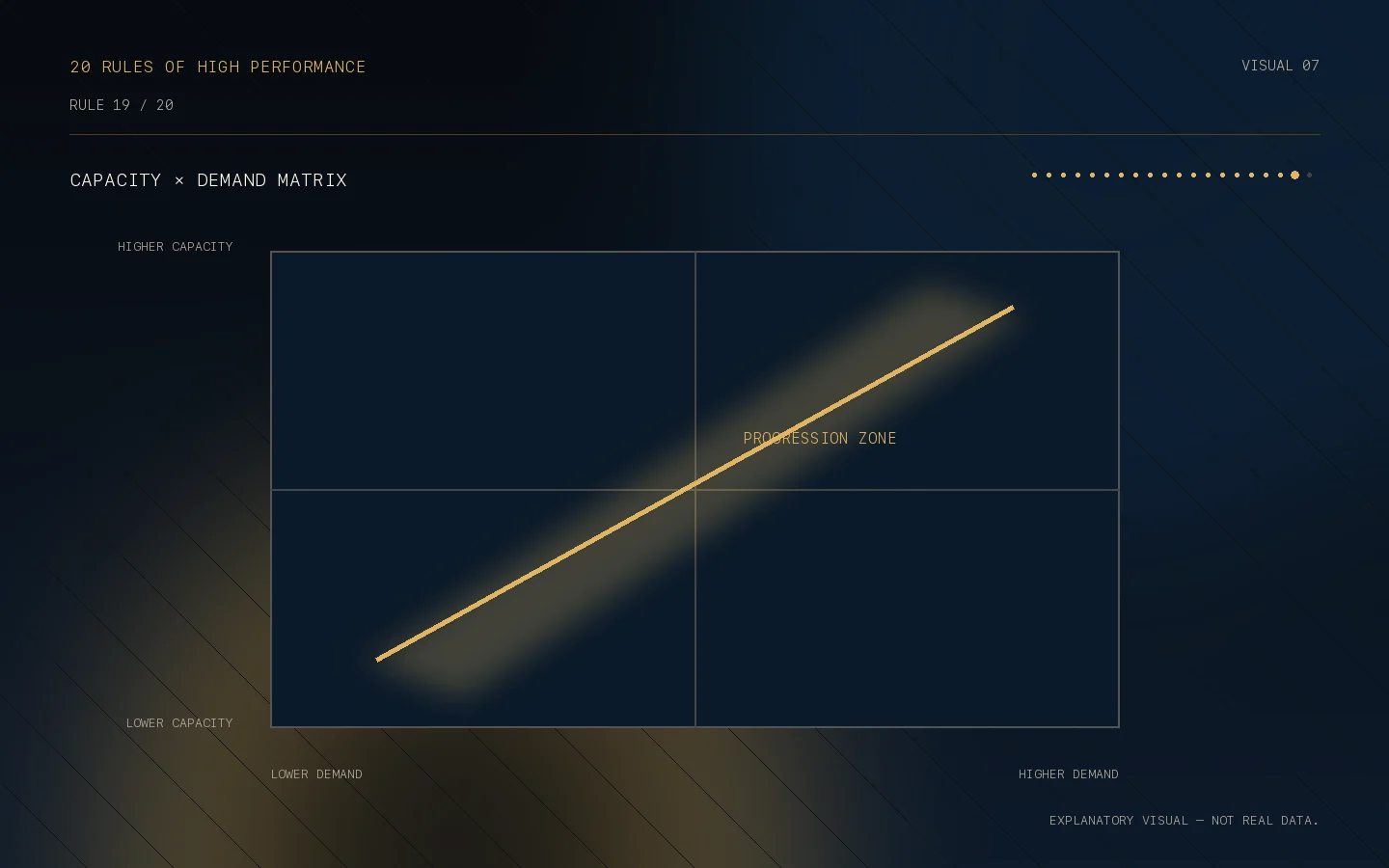
The peak is impressive; the ability to reappear in different contexts accumulates more competitive value.
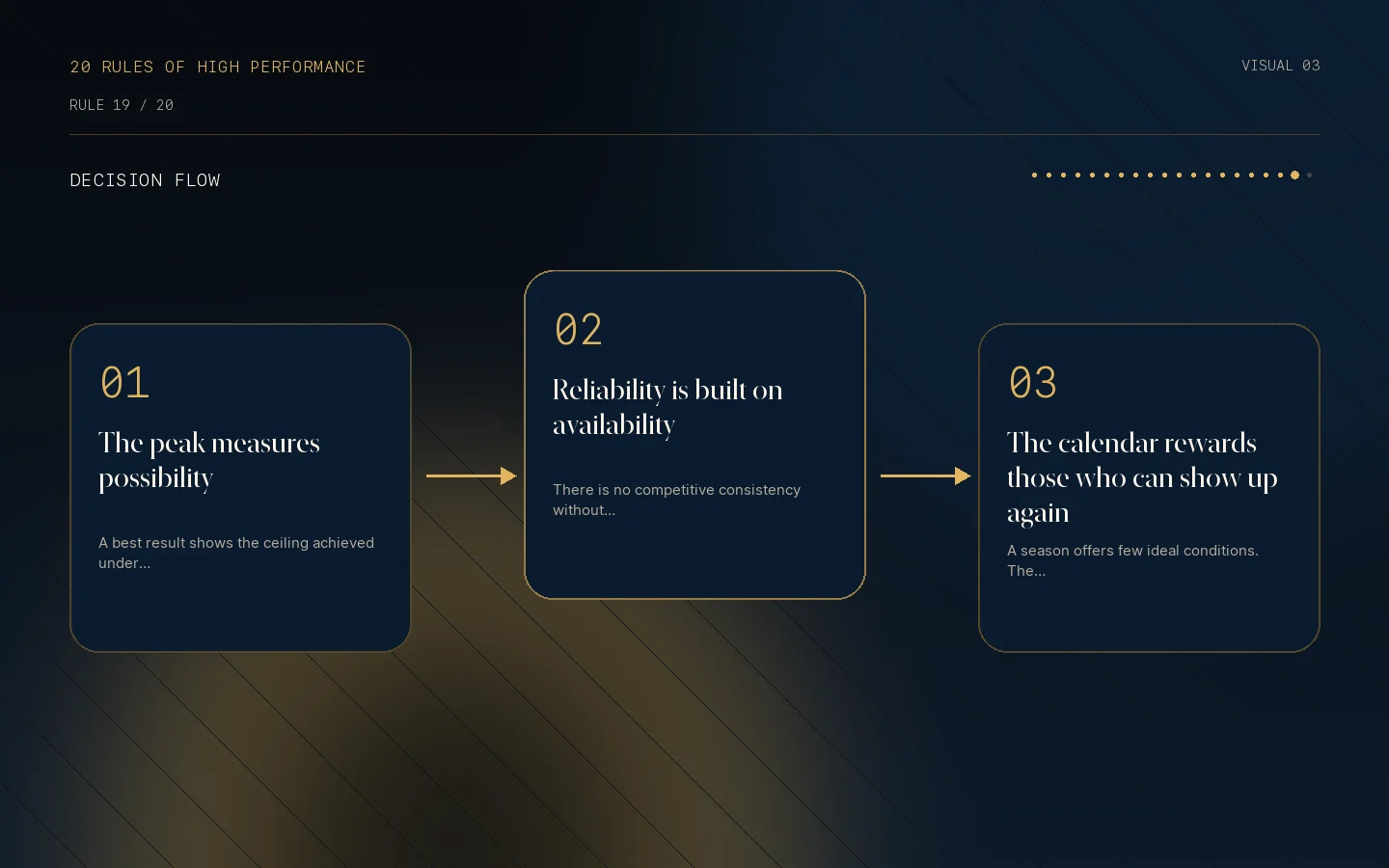
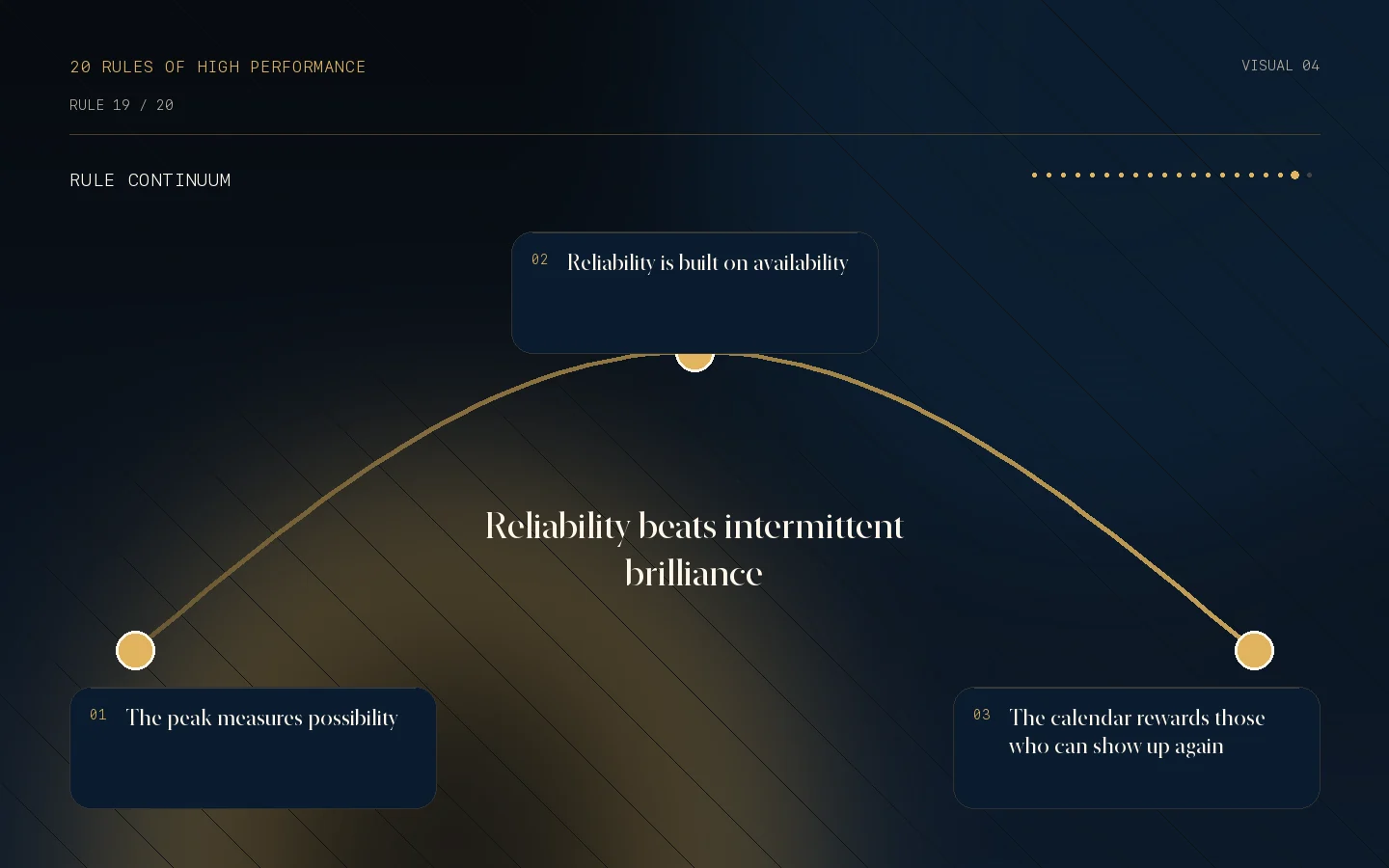
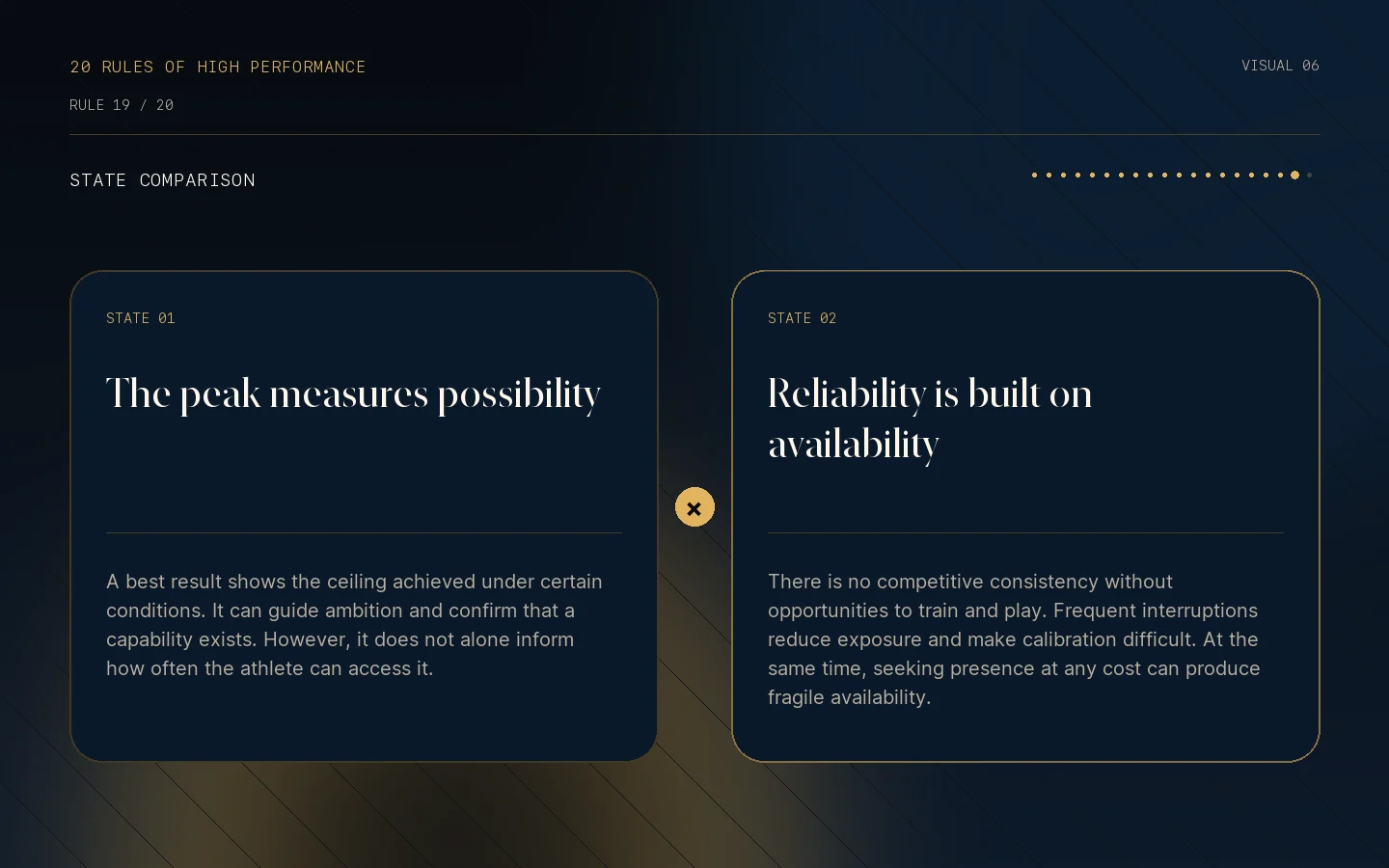
The peak measures possibility
A best result shows the ceiling achieved under certain conditions. It can guide ambition and confirm that a capability exists. However, it does not alone inform how often the athlete can access it.
If the peak demands a cost that compromises subsequent exposures, its value throughout the season decreases. If it only appears in a controlled environment, it may not transfer to the game. Performance needs a ceiling and a floor.
The floor is the minimum level that remains useful in different contexts. Developing it involves physical capacity, routine, reading the task and recovery.
An exceptional performance can change a game. A reliable ability changes the number of games in which the team can rely on it.
There is no competitive consistency without opportunities to train and play. Frequent interruptions reduce exposure and make calibration difficult. At the same time, seeking presence at any cost can produce fragile availability.
Reliability is built on availability
There is no competitive consistency without opportunities to train and play. Frequent interruptions reduce exposure and make calibration difficult. At the same time, seeking presence at any cost can produce fragile availability.
Reliability emerges from tolerable dose, specific preparation and honest decision about the athlete's condition. It does not require everyone to perform the same every day; requires that the oscillation remains within a functional range.
In teams, functional predictability also favors coordination. Companions learn each other's timing, range, and decisions through repeated interactions.
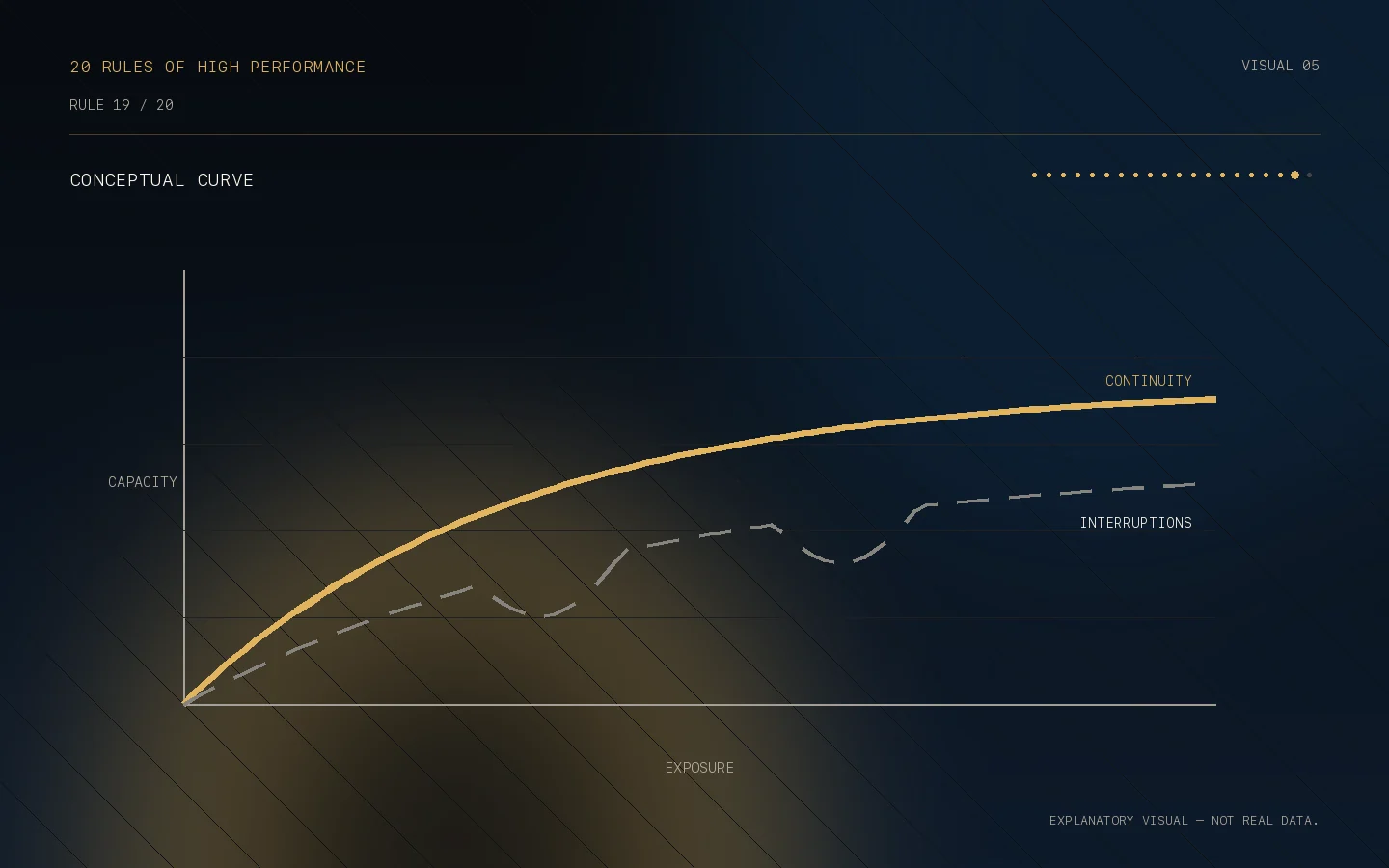
Explanatory visual — not real data.
Reliability is built on availability
The calendar rewards those who can show up again
A season offers few ideal conditions. The reliable athlete preserves his contribution when sleep has been less, the trip has been long, or the opponent has changed the issue—without ignoring signals that require adjustment.
This reliability should be measured by availability, quality of function, and recovery between exposures, not by narratives of resistance.
The peak is impressive; the ability to reappear in different contexts accumulates more competitive value.
Peak describes the maximum observed. Reliability describes how often a useful capacity remains accessible throughout the season.
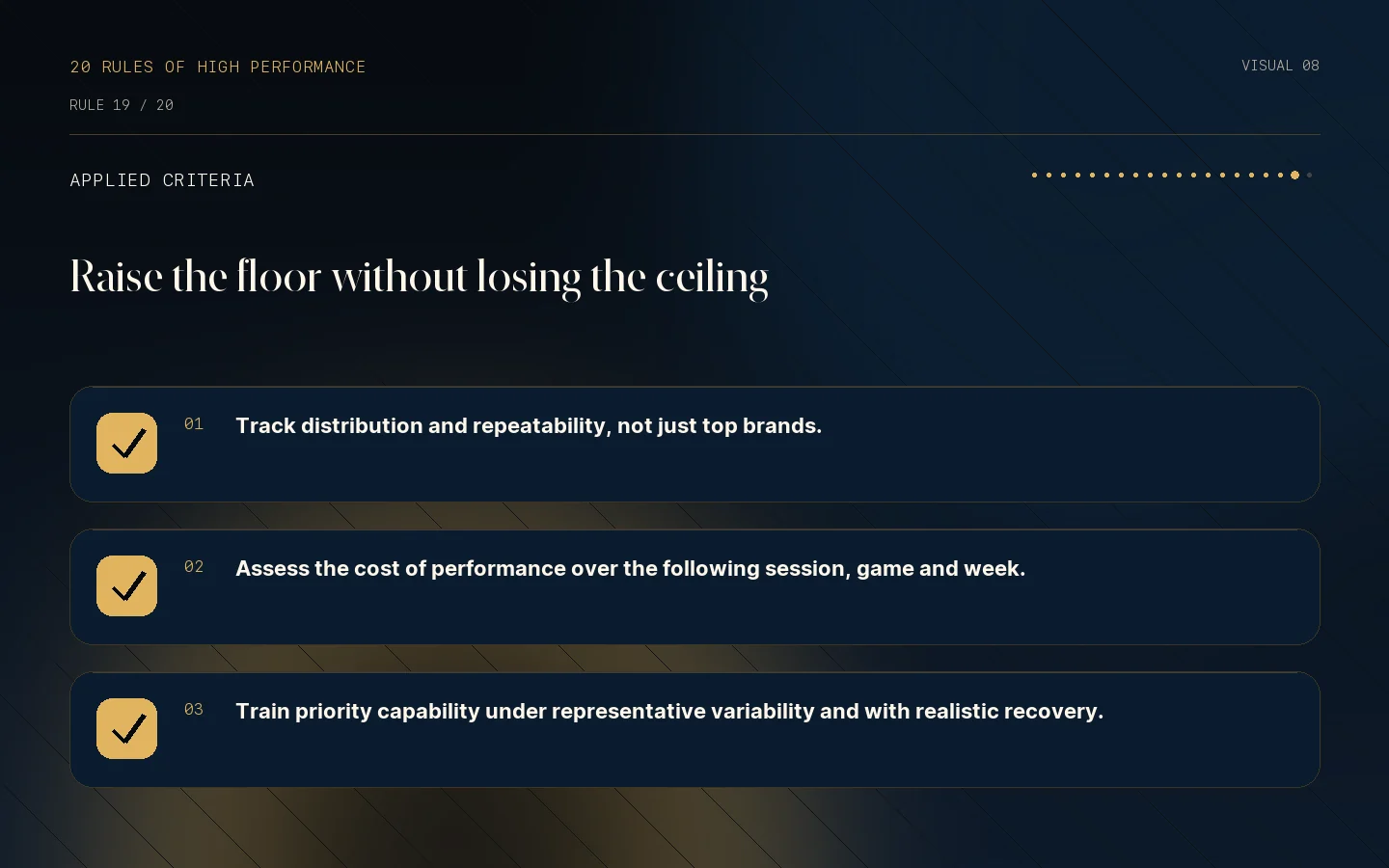
Raise the floor without losing the ceiling
- Track distribution and repeatability, not just top brands.
- Assess the cost of performance over the following session, game and week.
- Train priority capability under representative variability and with realistic recovery.
Raise the floor without losing the ceiling
High performance needs extraordinary moments. There is even more need for a system that increases the probability of them showing up without charging for the next absence.
Reliability trumps flashing because it turns capacity into an available resource, not rare memory.
Brilliance wins the memory. Reliability earns space on the calendar.