

The data shows that availability and success go hand in hand. He doesn't say, alone, who pulled who.

Association begins the investigation; mechanism and confounders support the inference.
The table seemed to explain everything
At the end of the championship, two columns stood out. Teams with greater availability appeared near the top; those most affected by injuries sat lower. The story seemed complete: keeping players healthy made teams win.
Then the analysis moved closer. The clubs at the top also had deeper squads, larger structures, greater technical quality, and financial advantages. Some controlled more possession and may have been exposed differently. Others won more and could therefore manage minutes earlier.
The association remained relevant. It had only lost its false simplicity. Perhaps availability supported results; perhaps results also helped preserve availability; both probably responded to shared processes.
Instead of discarding the data, the team turned it into questions: what mechanism would be plausible? What could be measured across the season? Which change would produce an observable response without promising causality too soon?
From the moment to the criterionA strong association deserves attention. What it does not deserve is to be promoted to a cause simply because it fits inside a convincing sentence.
Teams with a lower injury burden can win more because they keep key players available. They can also have more resources, deeper rosters, better communication and planning — factors that simultaneously favor health and results.
There is also the opposite direction: teams that control matches may face different exposures; clubs that advance in competitions play more; Bad results can increase pressure, change and risky decisions. Reality produces cycles, not simple arrows.
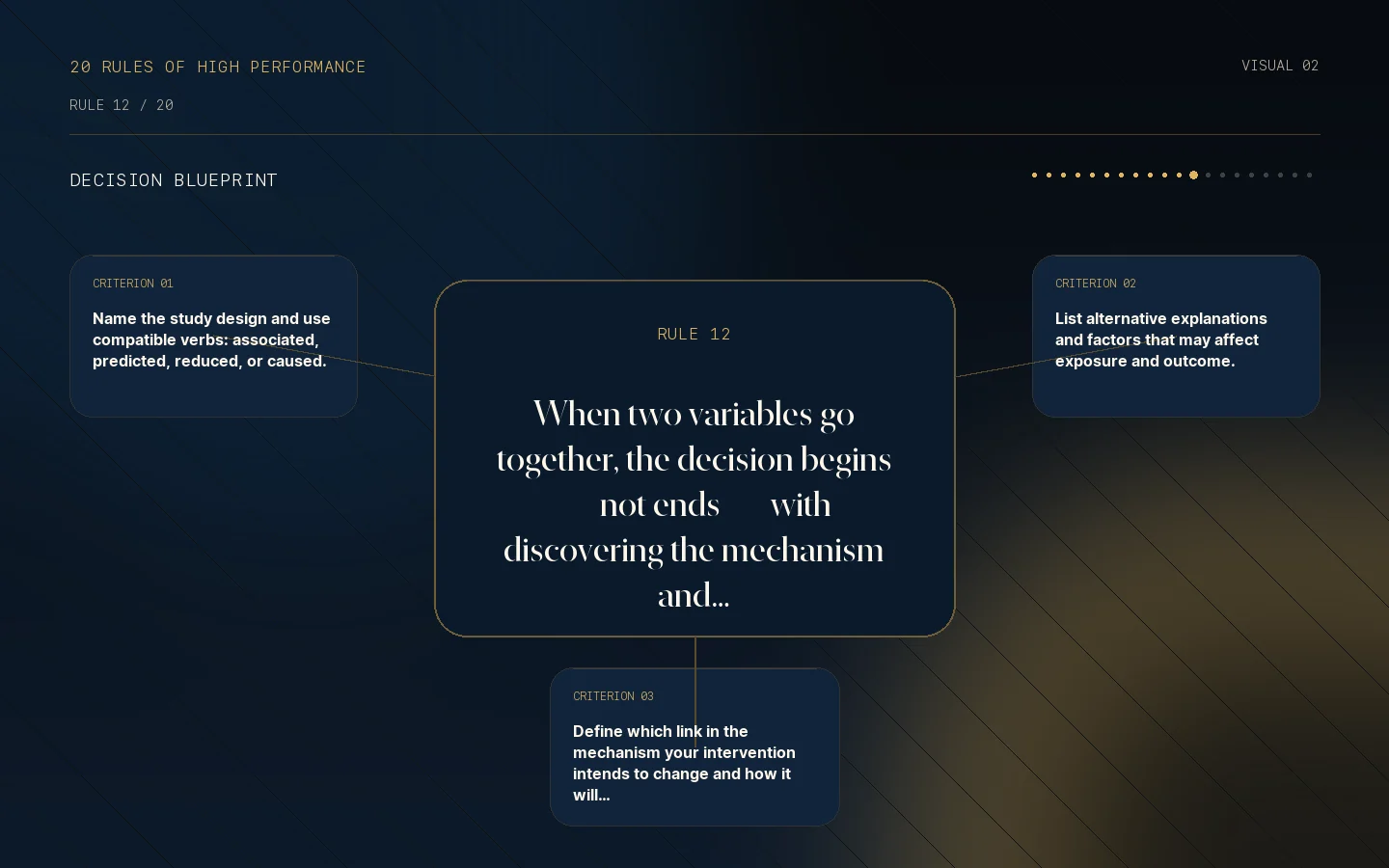
When two variables go together, the decision begins — not ends — with discovering the mechanism and confounders.
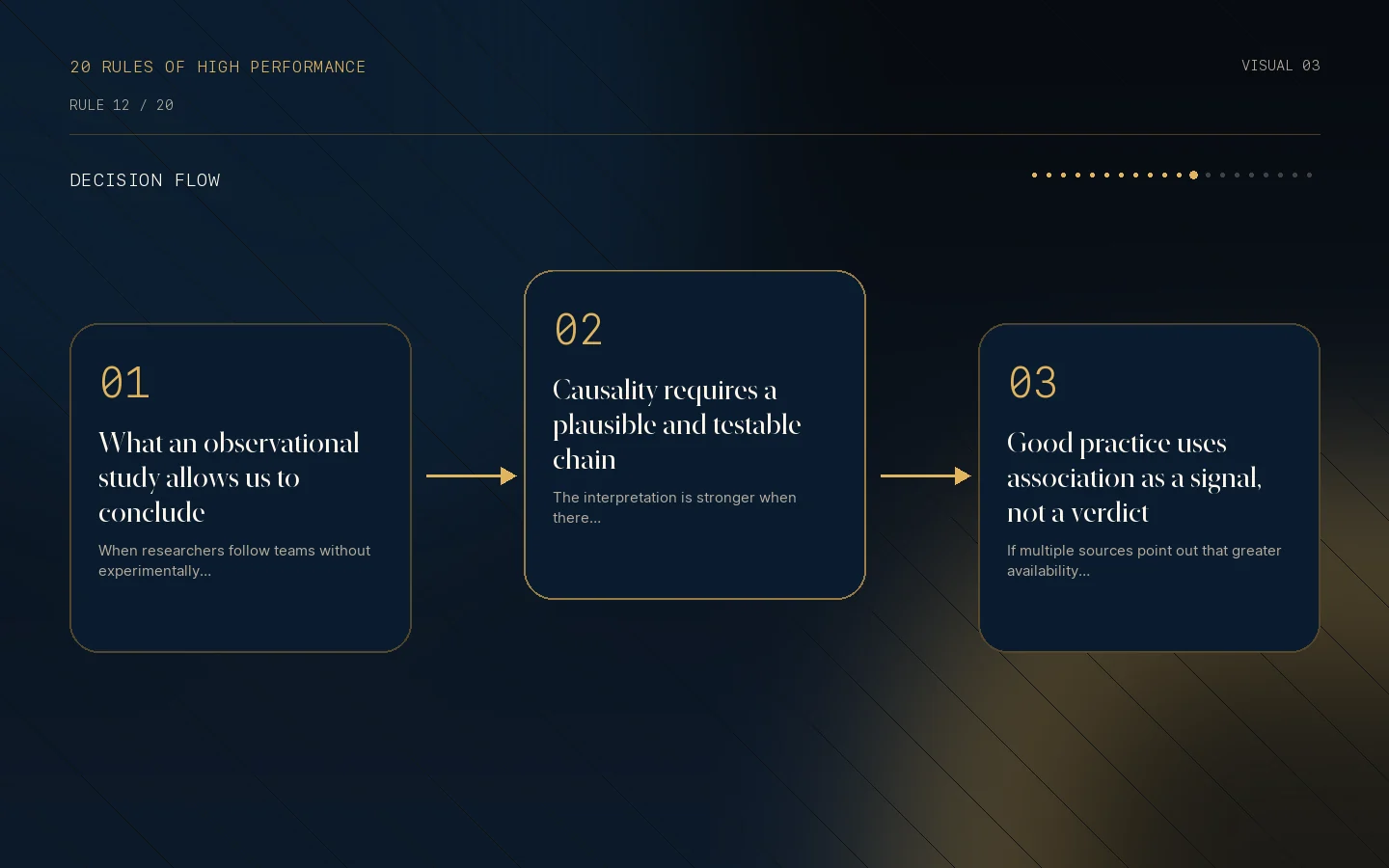
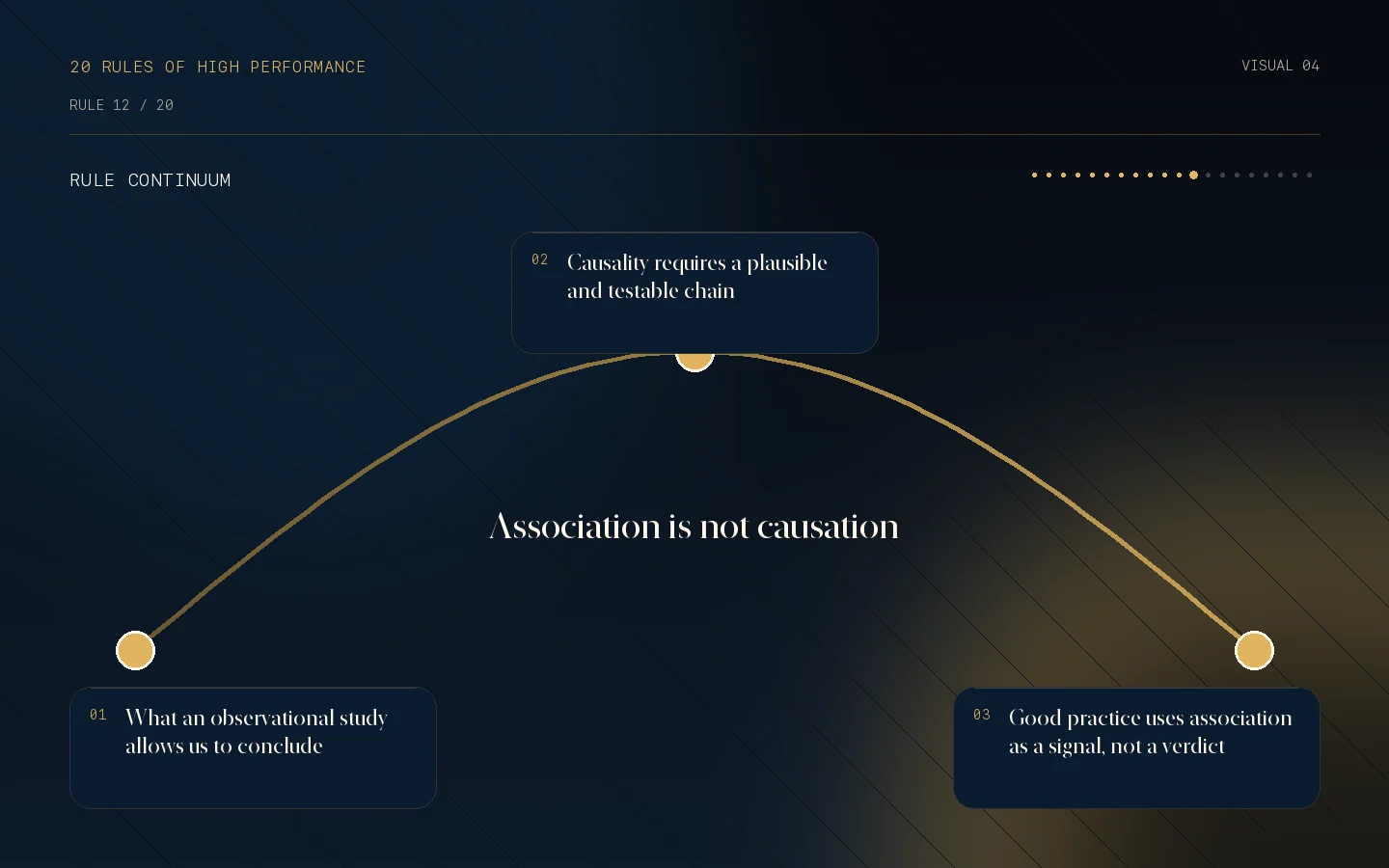
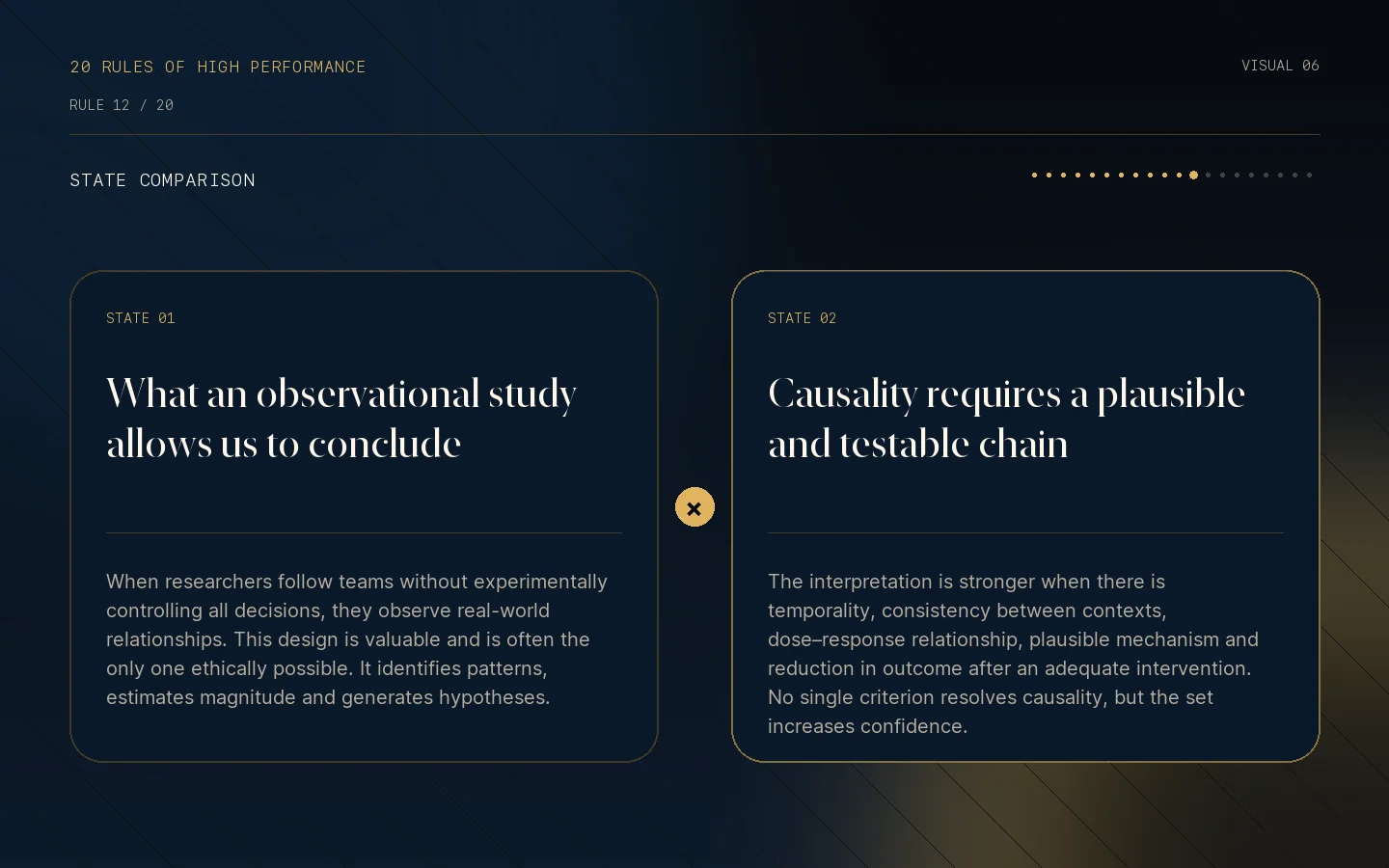
What an observational study allows us to conclude
When researchers follow teams without experimentally controlling all decisions, they observe real-world relationships. This design is valuable and is often the only one ethically possible. It identifies patterns, estimates magnitude and generates hypotheses.
But unmeasured variables may explain part of the result. Even statistical adjustments do not eliminate all confounding. Saying that a lower injury burden was associated with more points is accurate. Saying that each injury avoided will cause a certain number of victories goes beyond the drawing.
Proportional language protects the decision from two errors: ignoring a consistent signal because there is no perfect test or selling certainty that the data do not provide.
The data shows that availability and success go hand in hand. He doesn't say, alone, who pulled who.
The interpretation is stronger when there is temporality, consistency between contexts, dose–response relationship, plausible mechanism and reduction in outcome after an adequate intervention. No single criterion resolves causality, but the set increases confidence.
Causality requires a plausible and testable chain
The interpretation is stronger when there is temporality, consistency between contexts, dose–response relationship, plausible mechanism and reduction in outcome after an adequate intervention. No single criterion resolves causality, but the set increases confidence.
In the case of availability, the proposed chain may include more training continuity, more selection options and less compensatory overhead. Each link needs its own evidence. If the organization only measures the beginning and end, it does not know where to act.
This caution also applies to load and injury. Associations between load increases and events do not authorize a universal individual risk formula. Metrics can describe exposure without accurately predicting who will be injured.
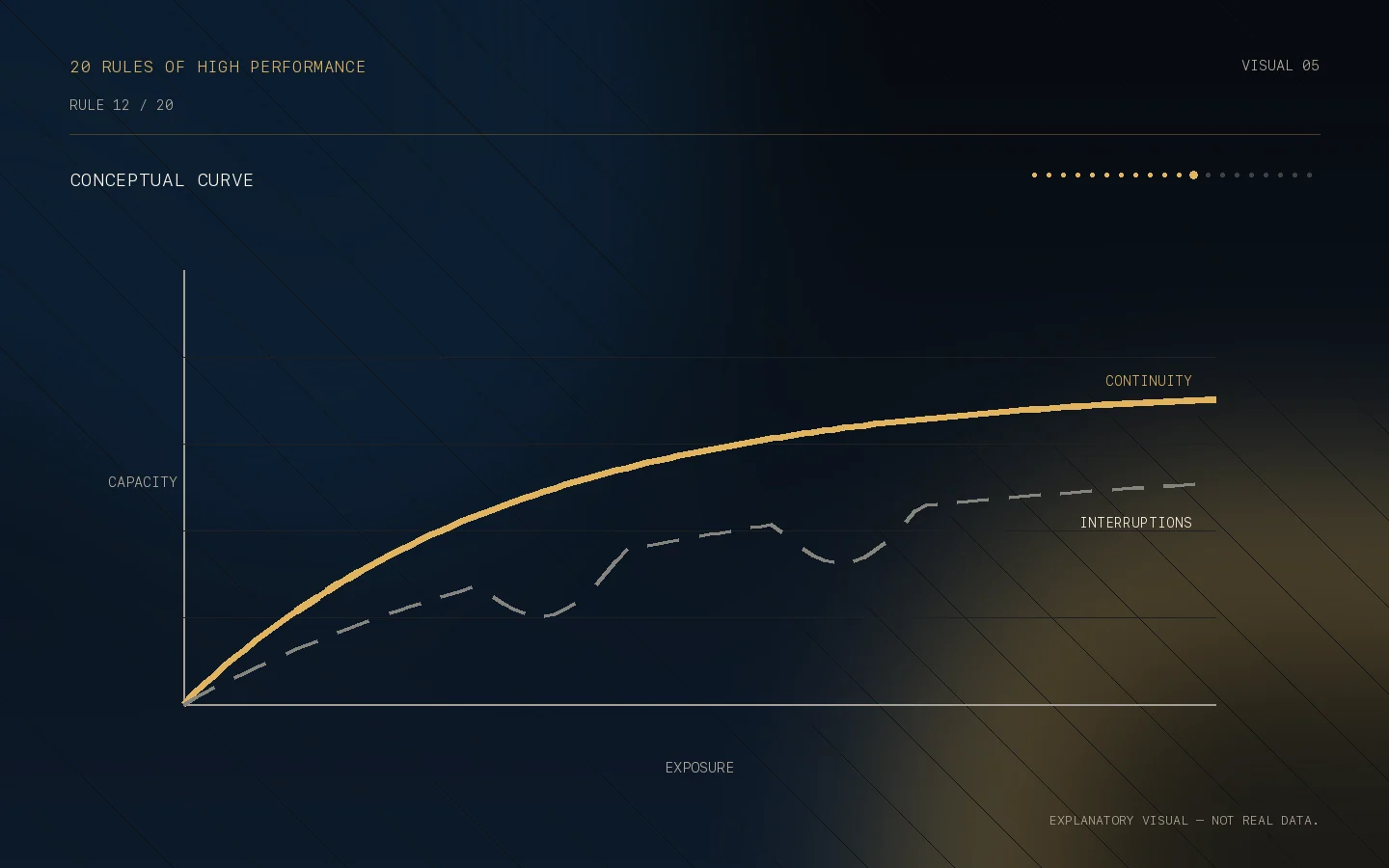
Explanatory visual — not real data.
Causality requires a plausible and testable chain
Good practice uses association as a signal, not a verdict
If multiple sources point out that greater availability accompanies better results, it makes sense to invest in prevention, rehabilitation and team processes. The investment, however, must be evaluated by the mechanisms it intends to modify.
The question is no longer “did the study prove it?” and becomes “which decision is justifiable given the expected effect, cost, risk and uncertainty?”.
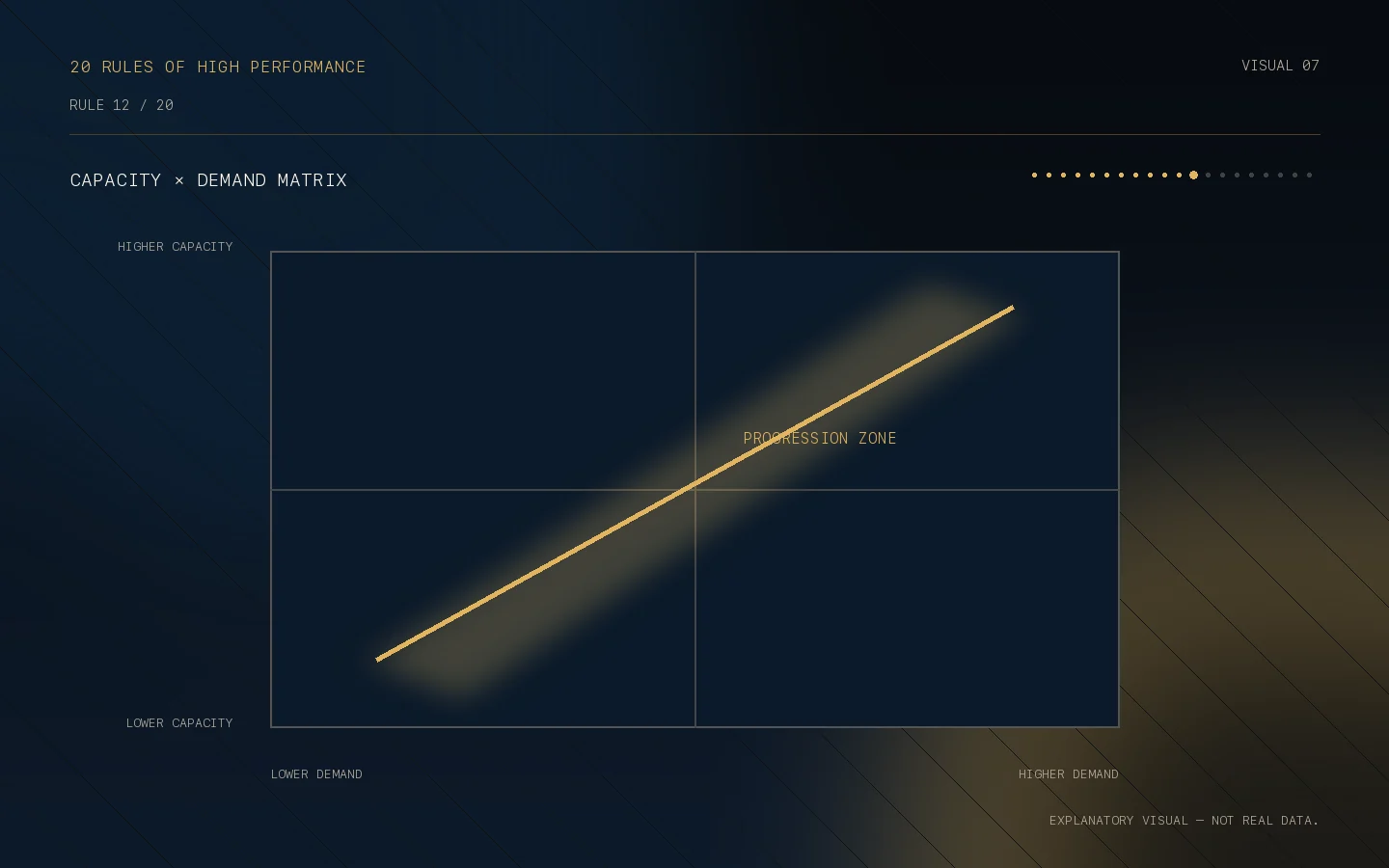
When two variables go together, the decision begins — not ends — with discovering the mechanism and confounders.
Association describes statistical co-occurrence. Causality requires evaluating direction, confounders, mechanism, temporality, and effect of interventions.
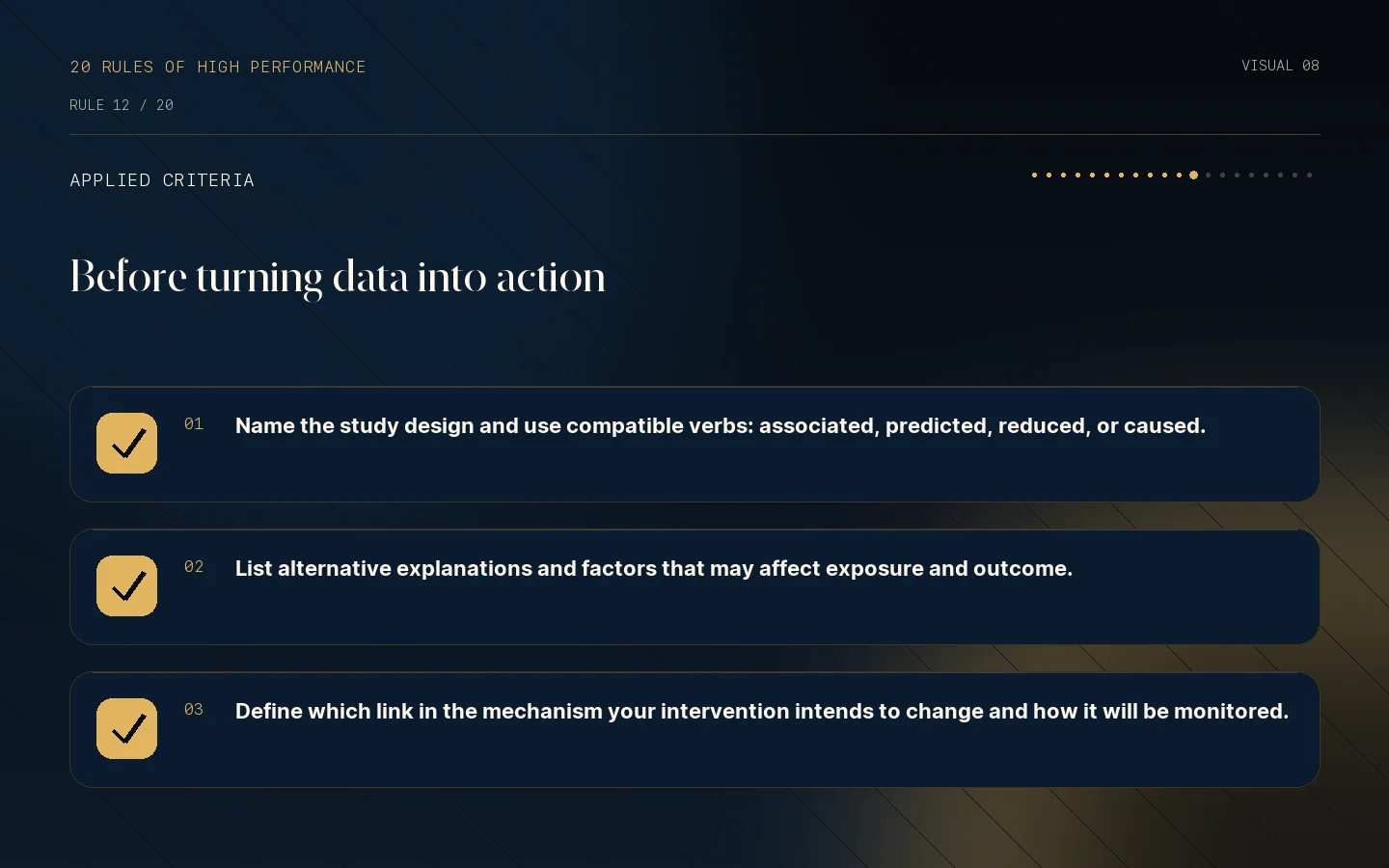
Before turning data into action
- Name the study design and use compatible verbs: associated, predicted, reduced, or caused.
- List alternative explanations and factors that may affect exposure and outcome.
- Define which link in the mechanism your intervention intends to change and how it will be monitored.
Before turning data into action
Rigor does not weaken the message. It prevents useful evidence from being destroyed by a promise greater than it can support.
In high performance, the most valuable data is not what ends the conversation. That's what improves the next question.
A strong association deserves attention. It still doesn't deserve a made-up causal story.