

The athlete ends the session tired. This proves that there was a cost — not that there will be evolution.
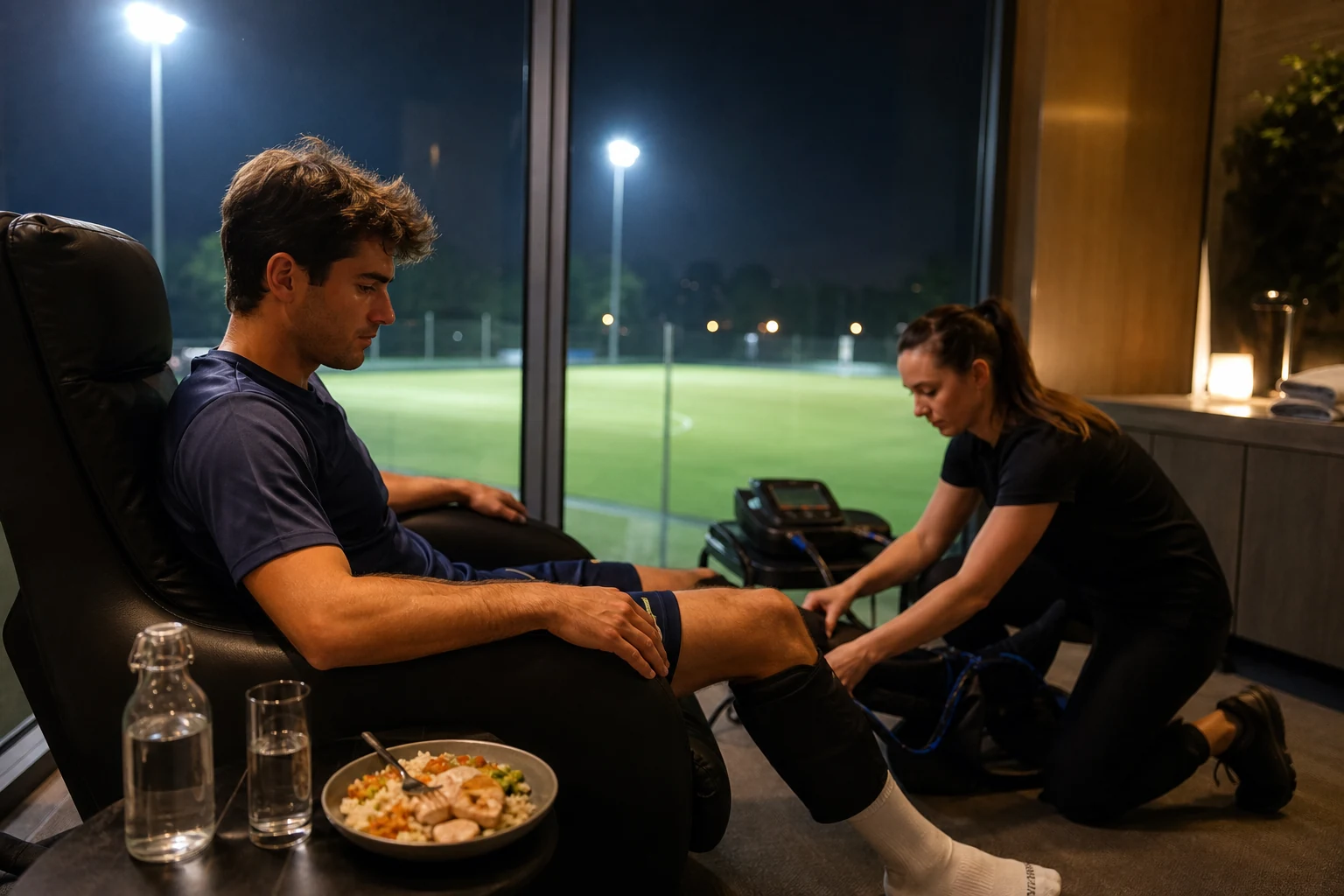
Recovery does not erase the load; it makes the response biologically usable.
The second session met the first
The night ended late after travel. The athlete slept little, woke without an appetite, and arrived at training still carrying the previous match. The schedule, however, showed a new session. The next load was ready; recovery from the last one was not.
Everything looked acceptable in the warm-up. When the task demanded repeated speed, his foot contacts grew heavier and technique began to unravel. It was not laziness. The new stimulus had met a body still paying the cost of the previous one.
Insisting on the planned dose would produce more external work. There was no guarantee it would produce more adaptation. The team reduced density, preserved several high-quality actions, and moved part of the load to a day when it could be absorbed.
The session was not lost. The decision protected the sequence. Recovery, in that context, did not mean doing nothing; it meant creating the conditions for the next exposure to make sense again.
From the moment to the criterionLoad begins the disturbance. Recovery allows the body to reorganise it into capacity.
Load describes the external work and the internal response required to accomplish it. It can initiate adaptive processes, but it can also accumulate fatigue, reduce performance and increase vulnerability when resources and time are insufficient.
Confusing effort with adaptation transforms immediate suffering into an indicator of quality. The body does not read intention. Responds to the balance between stimulus, sleep, energy, stress, interval and history.
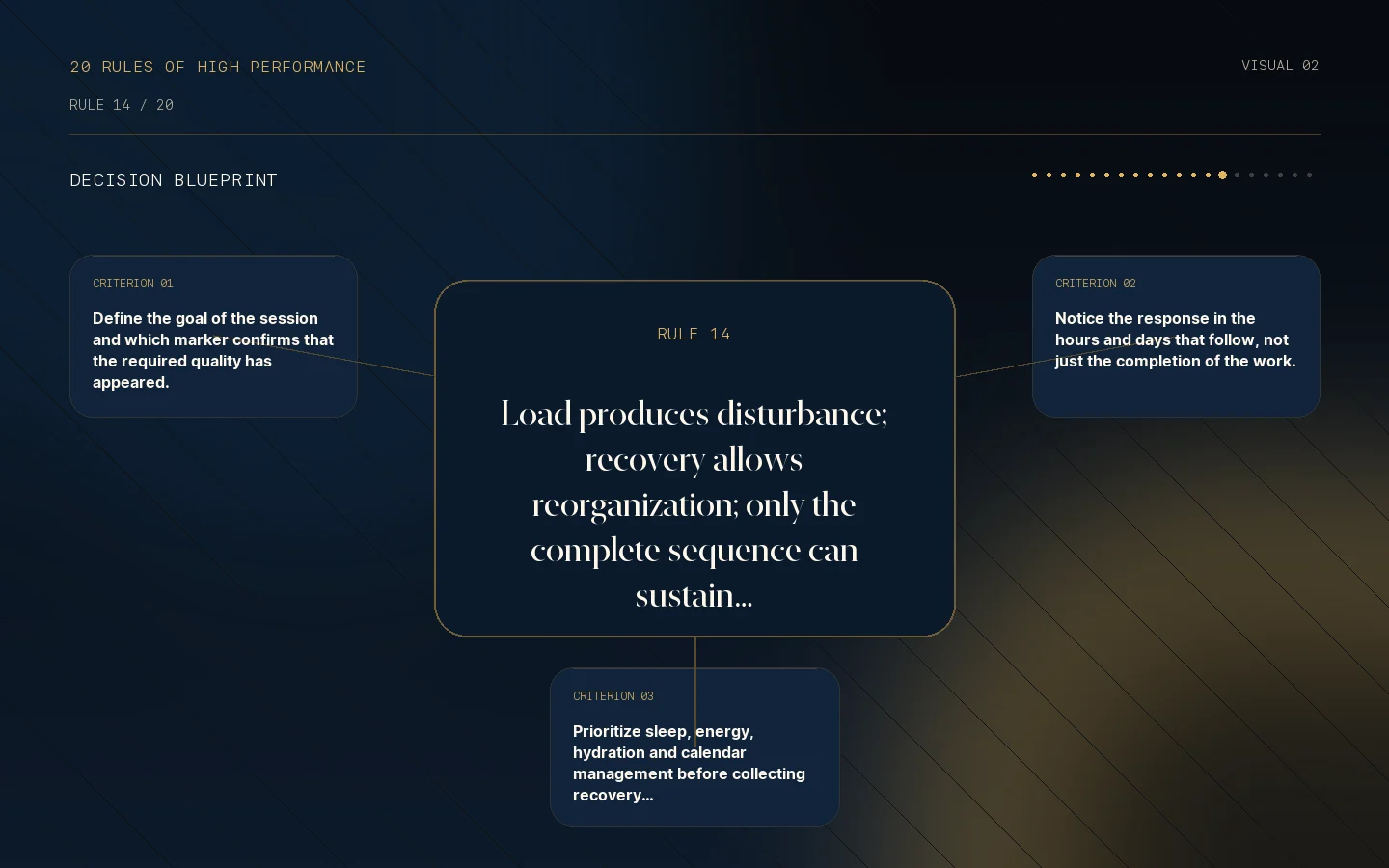
Load produces disturbance; recovery allows reorganization; only the complete sequence can sustain adaptation.
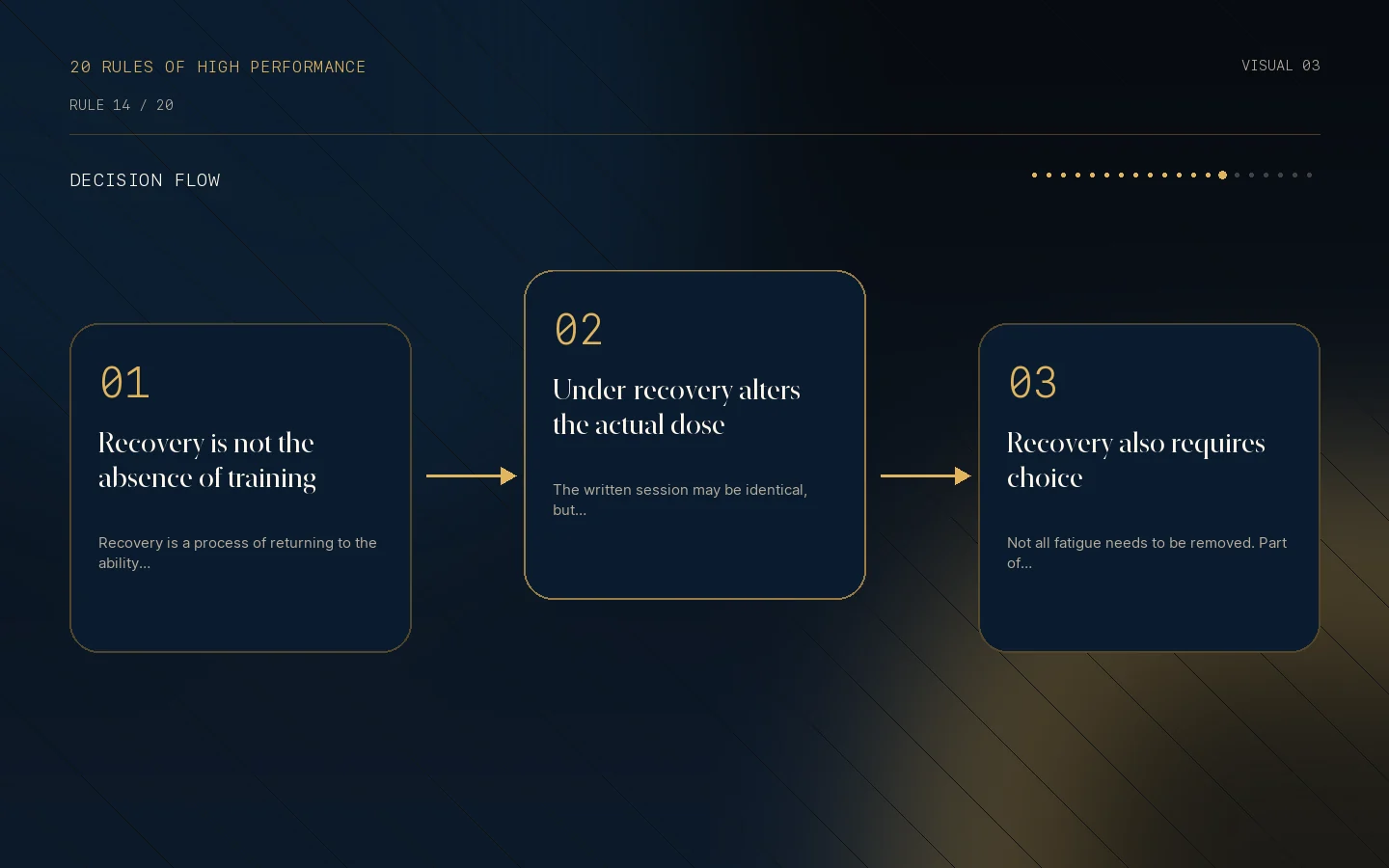
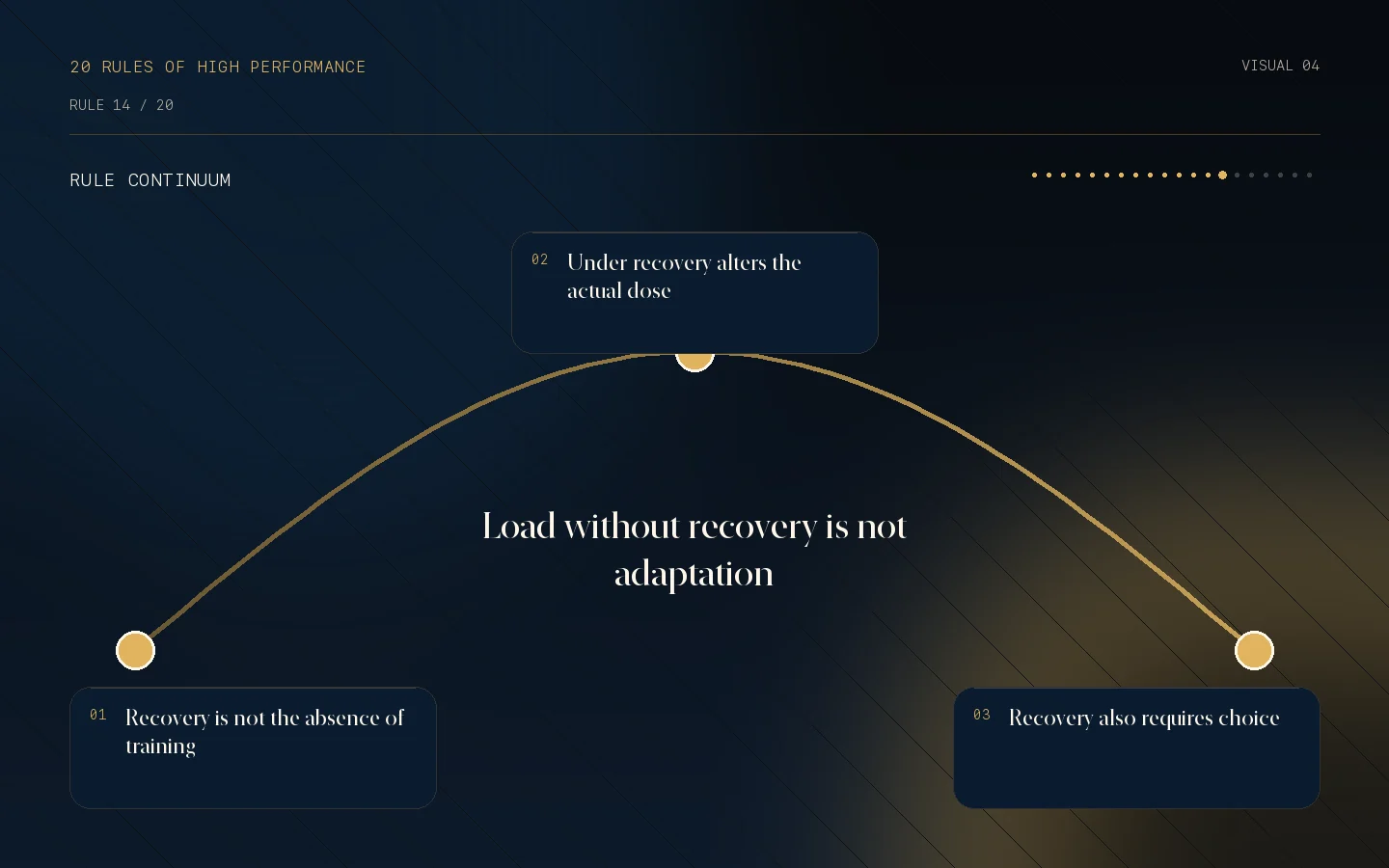
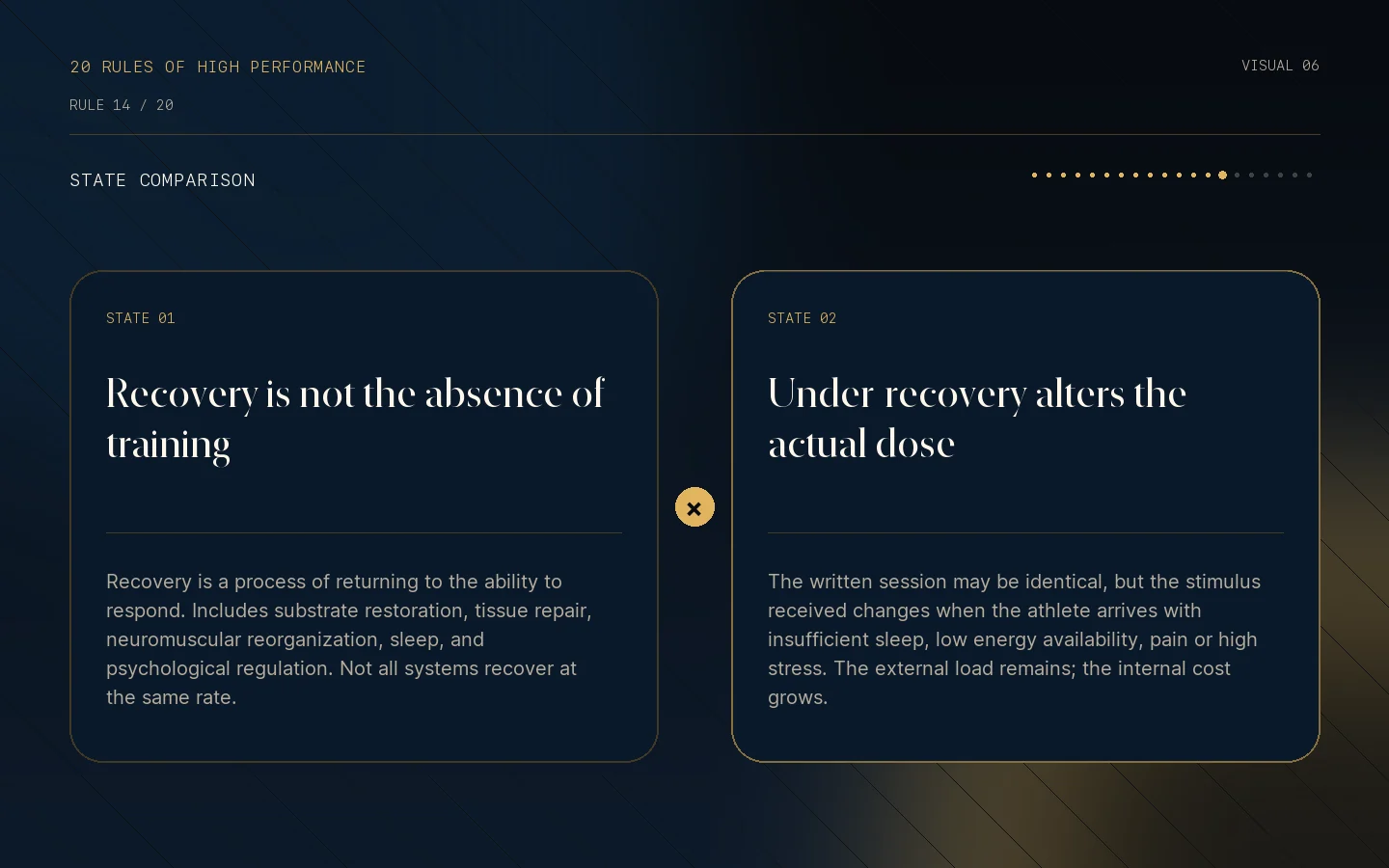
Recovery is not the absence of training
Recovery is a process of returning to the ability to respond. Includes substrate restoration, tissue repair, neuromuscular reorganization, sleep, and psychological regulation. Not all systems recover at the same rate.
A recovery strategy only makes sense in relation to the next demand. Reducing pain can be useful when the priority is to compete again; Attenuating all signs of exercise does not always favor chronic adaptation. Dose, timing and objective change the decision.
The consensus on recovery and performance highlights variability between and within athletes. The same routine can help in one context, be irrelevant in another or create additional costs when it replaces sleep and food.
The athlete ends the session tired. This proves that there was a cost — not that there will be evolution.
The written session may be identical, but the stimulus received changes when the athlete arrives with insufficient sleep, low energy availability, pain or high stress. The external load remains; the internal cost grows.
Under-recovery alters the actual dose
The written session may be identical, but the stimulus received changes when the athlete arrives with insufficient sleep, low energy availability, pain or high stress. The external load remains; the internal cost grows.
If quality drops, the athlete may no longer achieve the necessary speed, strength or precision. In this scenario, doing more is not just tiring more: it can train a worse version of the gesture and compromise the next session.
Monitoring recovery doesn't require an infinite dashboard. Consistent reporting of well-being, performance on stable markers and microcycle context already helps to identify deviations that deserve investigation.
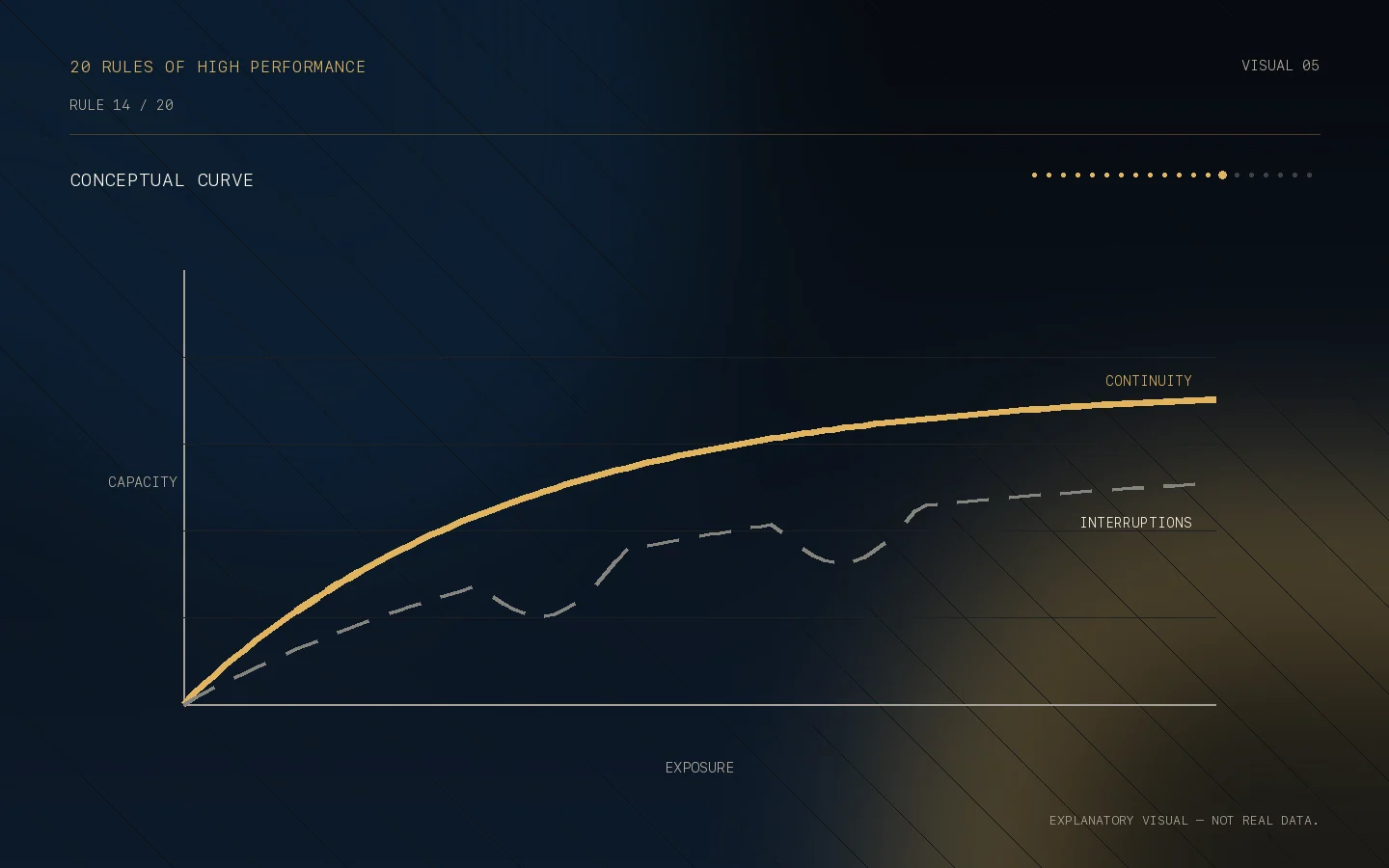
Explanatory visual — not real data.
Under-recovery alters the actual dose
Recovery also requires choice
Not all fatigue needs to be removed. Part of it follows the stimulus and can be tolerated within a planned block. The problem is losing the relationship between current cost and expected benefit.
A mature decision distinguishes functional fatigue, which is resolved and participates in the process, from a worsening trajectory that reduces readiness without signs of assimilation. Time transforms this distinction into evidence.
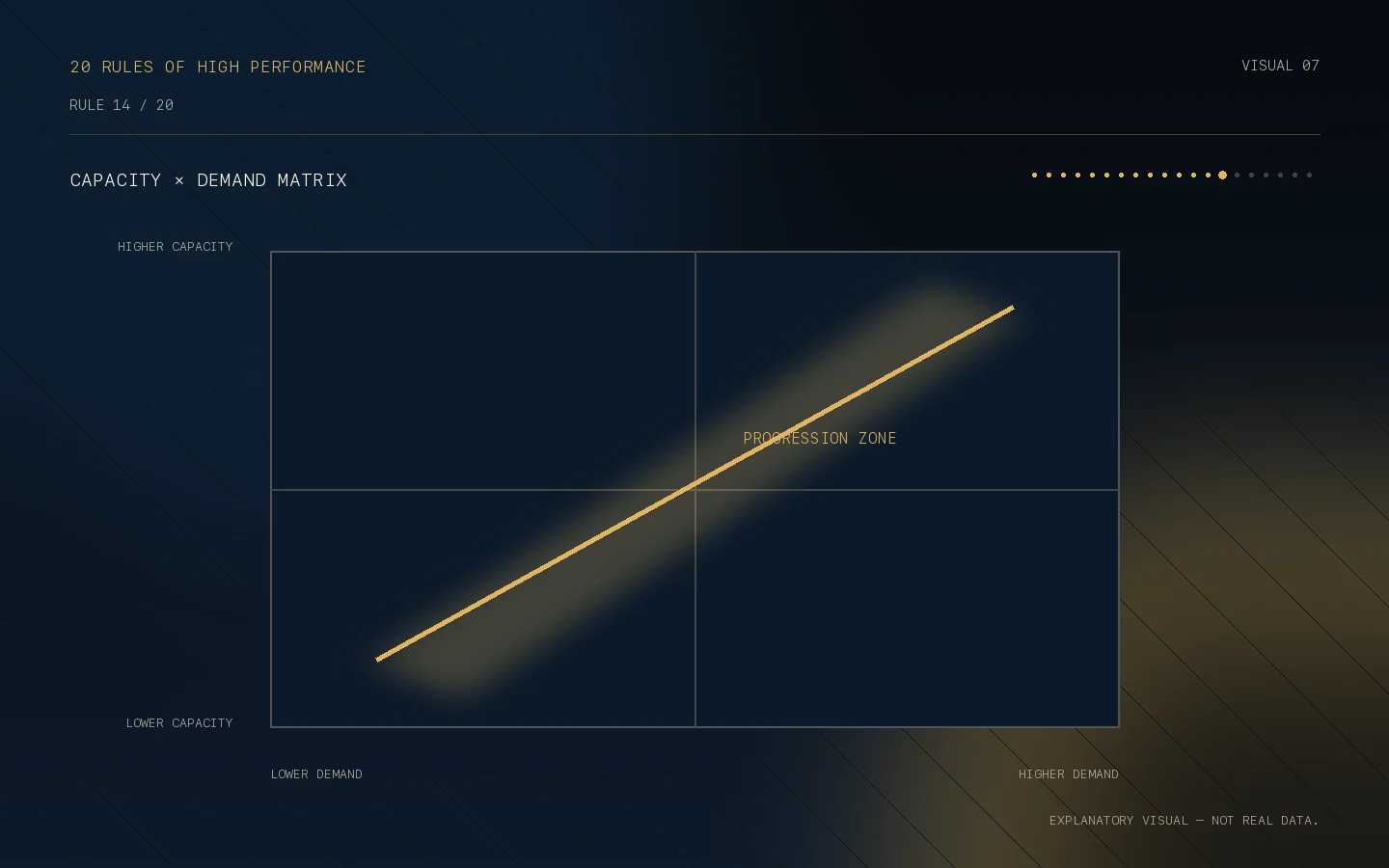
Load produces disturbance; recovery allows reorganization; only the complete sequence can sustain adaptation.
Unresourced load and recovery time measure work done, not adaptation achieved.
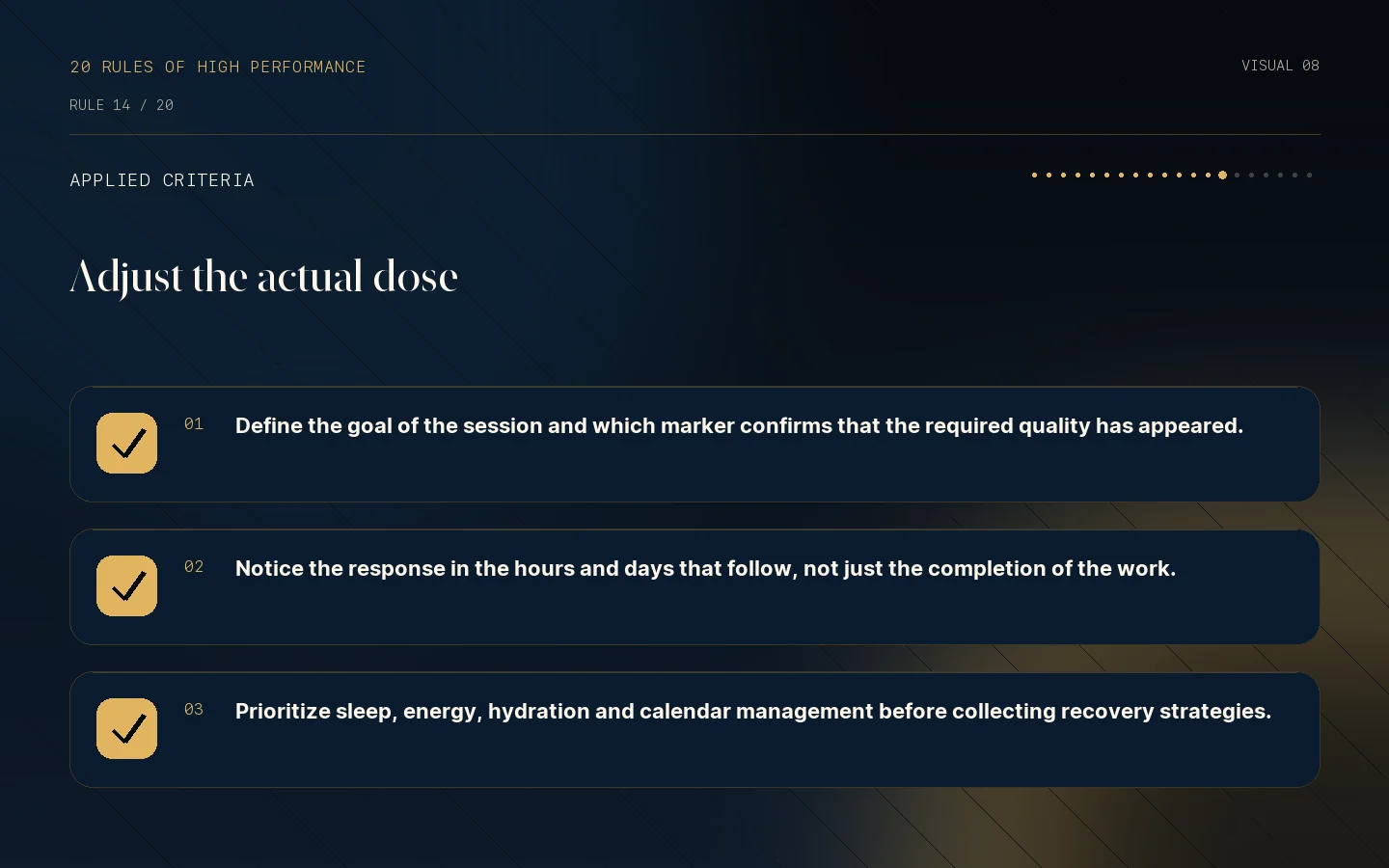
Adjust the actual dose
- Define the goal of the session and which marker confirms that the required quality has appeared.
- Notice the response in the hours and days that follow, not just the completion of the work.
- Prioritize sleep, energy, hydration and calendar management before collecting recovery strategies.
Adjust the actual dose
Training hard may be necessary. Recover well too. High performance begins when neither is treated as an isolated virtue.
The right load is not the greatest load the athlete supports today. It is what improves the ability to respond to the demands that will come.
Fatigue is a cost. Adaptation is the return that the system can produce on this investment.