

Your body is individual. The consequences of your availability rarely are.

Availability belongs to the athlete; its possibilities circulate through the team.
The discomfort reported in time
After the warm-up, the athlete noticed discomfort that would not have stopped him from training. He could hide it, complete the session, and avoid the feeling that he was letting others down. Instead, he called over a practitioner before the first high-intensity block.
The conversation did not trigger an automatic withdrawal. It produced context: how the discomfort had begun, which movements brought it on, and what had changed since the previous match. The dose was adjusted, one more aggressive exposure was removed, and the response would be observed the next morning.
The decision protected the athlete, but not only him. It kept a private uncertainty from needlessly becoming fewer options for the team, more load for a teammate, and a change of plan on the eve of the match.
The group responded too: no one treated the report as weakness or used transparency as a tool for surveillance. There was room to communicate early because responsibility was shared.
From the moment to the criterionWhen it is properly cared for, availability stops being a private matter and becomes a possibility the entire group helps protect.
When an athlete can train and compete with quality, he offers more than his own execution. His availability lets the team distribute minutes, preserve roles, maintain tactical relationships, and reduce emergency changes in teammates’ loads.
This turns availability into a collective asset. The formulation, however, needs to be used carefully: it must generate shared responsibility, not blame on those who become ill or injured.
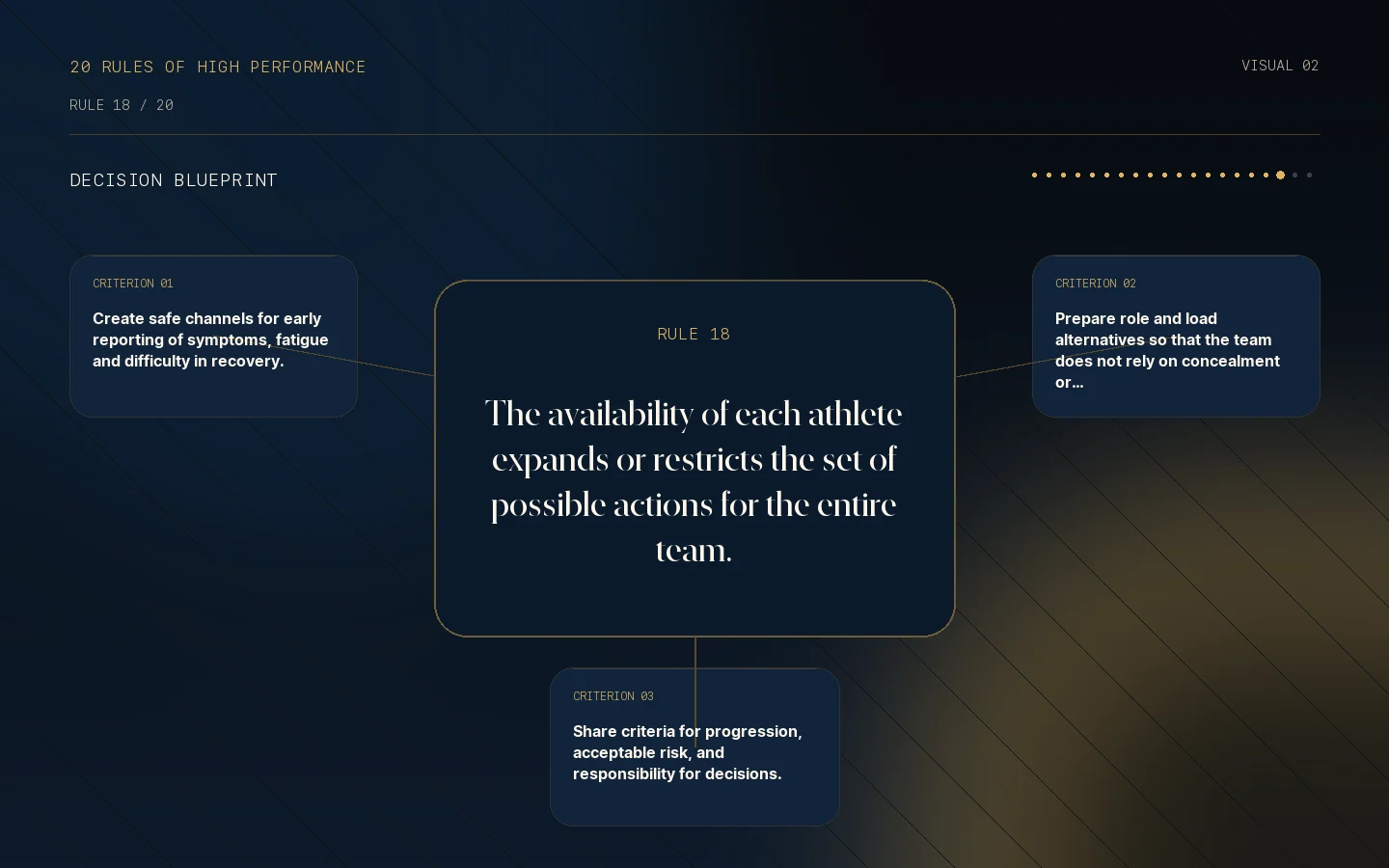
The availability of each athlete expands or restricts the set of possible actions for the entire team.
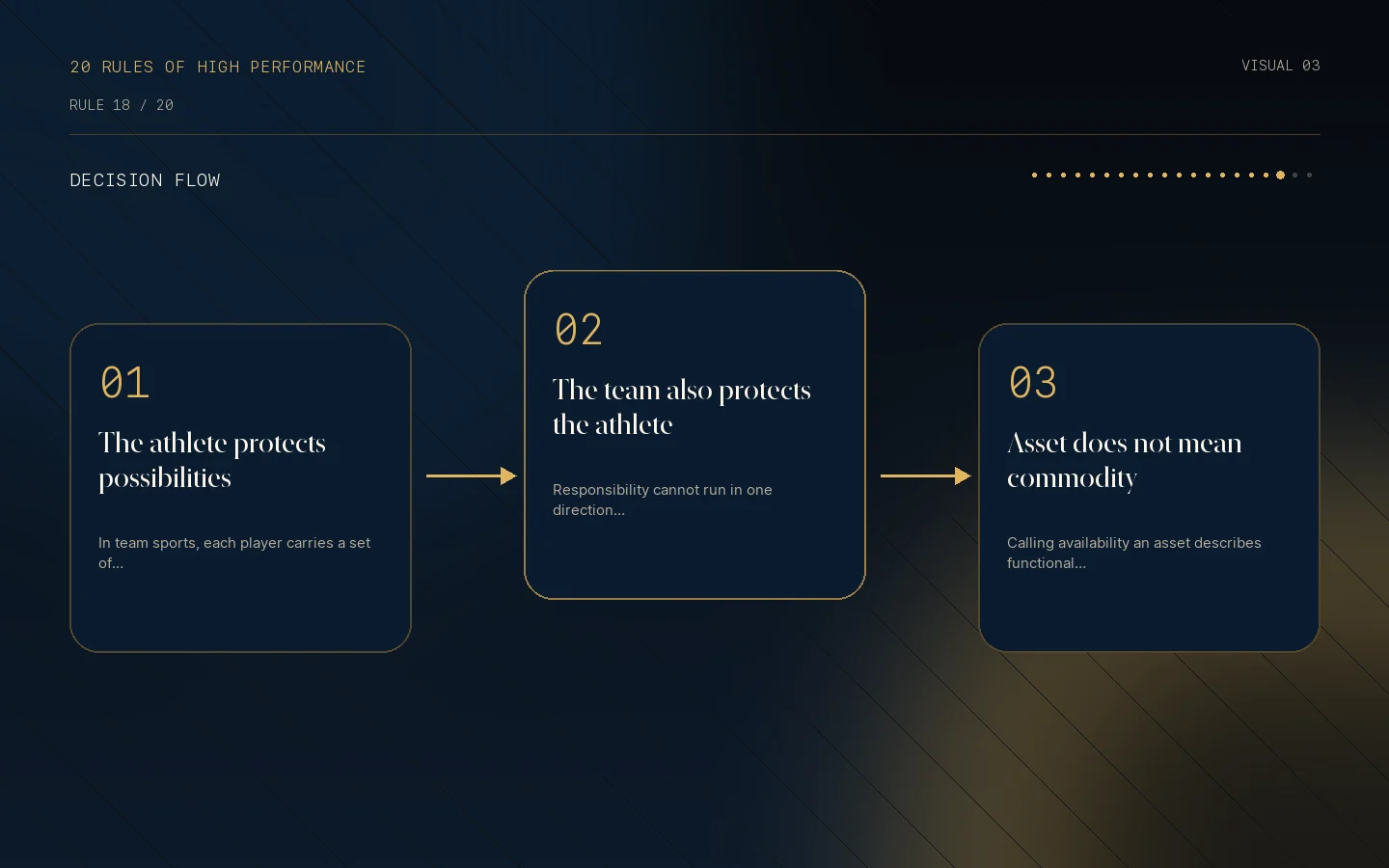
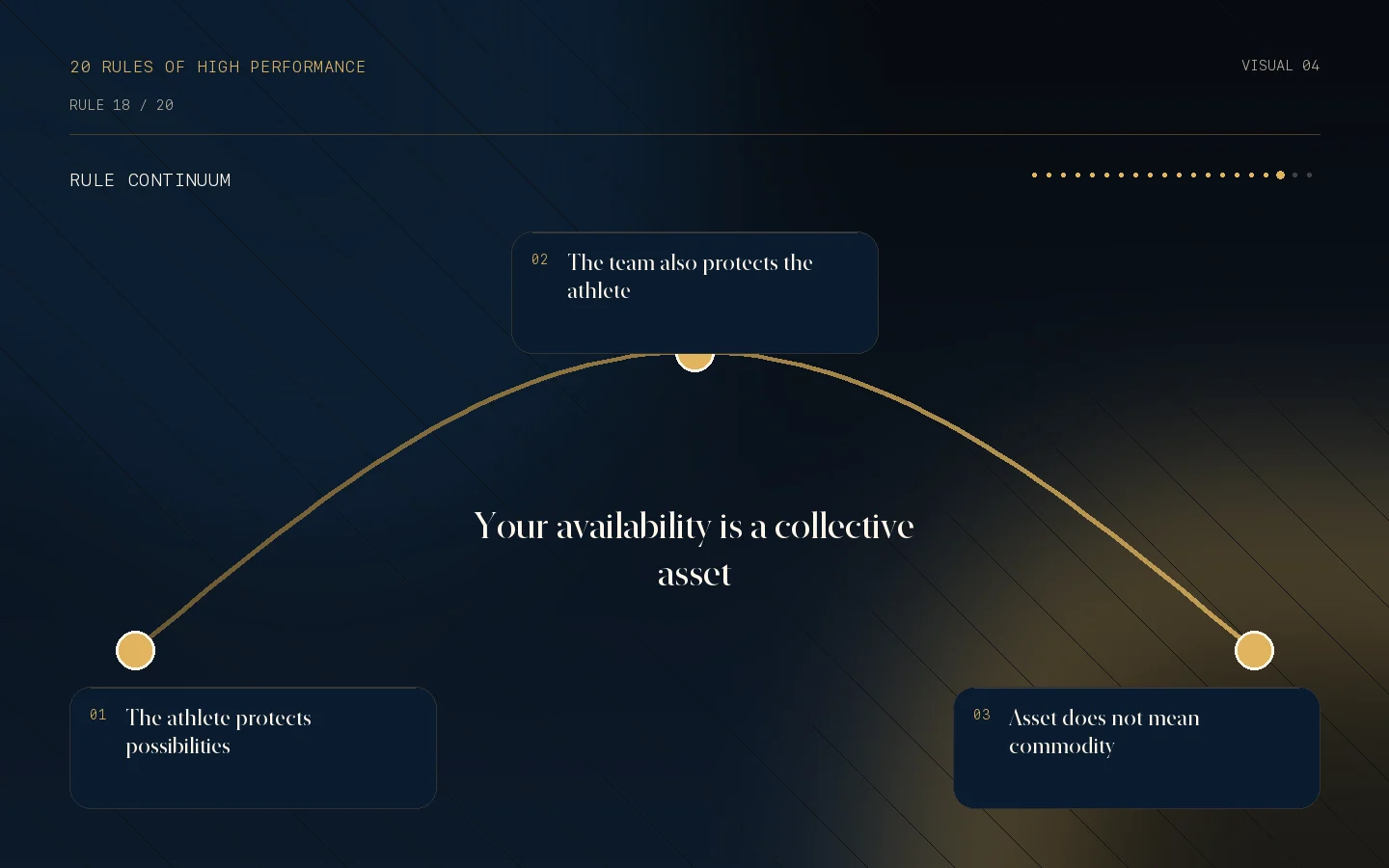
The athlete protects possibilities
In team sports, each player carries a set of capabilities and relationships. Their presence makes some strategies possible, provides coverage for other positions, and changes the way the team distributes risk.
Value does not just belong to holders. A prepared reserve allows rotation without drastic breakage. An integrated young person expands depth. A returning athlete who accurately communicates limits helps the team plan dose and avoid making a promise they can't keep.
Useful availability comes from everyday behaviors: adhering to preparation, reporting symptoms early, recovering judiciously and not confusing hiding pain with commitment.
Your body is individual. The consequences of your availability rarely are.
Responsibility cannot run in one direction. The organization needs to offer coherent charge, evidence-based care, security in reporting problems, and decisions that do not sacrifice the long term for immediate convenience.
The team also protects the athlete
Responsibility cannot run in one direction. The organization needs to offer coherent charge, evidence-based care, security in reporting problems, and decisions that do not sacrifice the long term for immediate convenience.
When the athlete fears losing space when reporting pain or fatigue, the system reduces the quality of the data itself. The apparent availability increases until the moment when the unavailability becomes greater and less manageable.
Clear processes and shared decision-making protect assets because they allow for early intervention and proportionate adjustments.
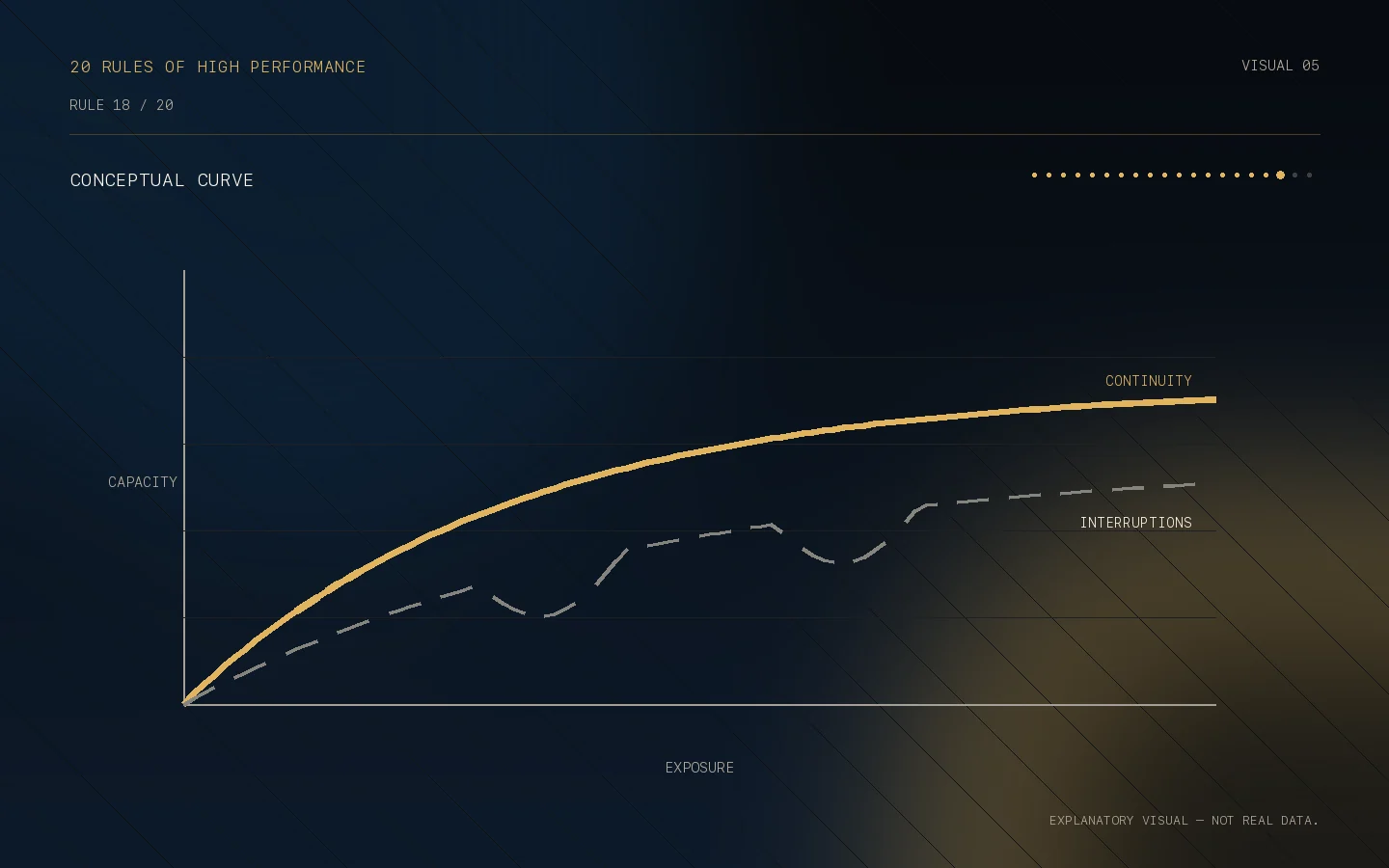
Explanatory visual — not real data.
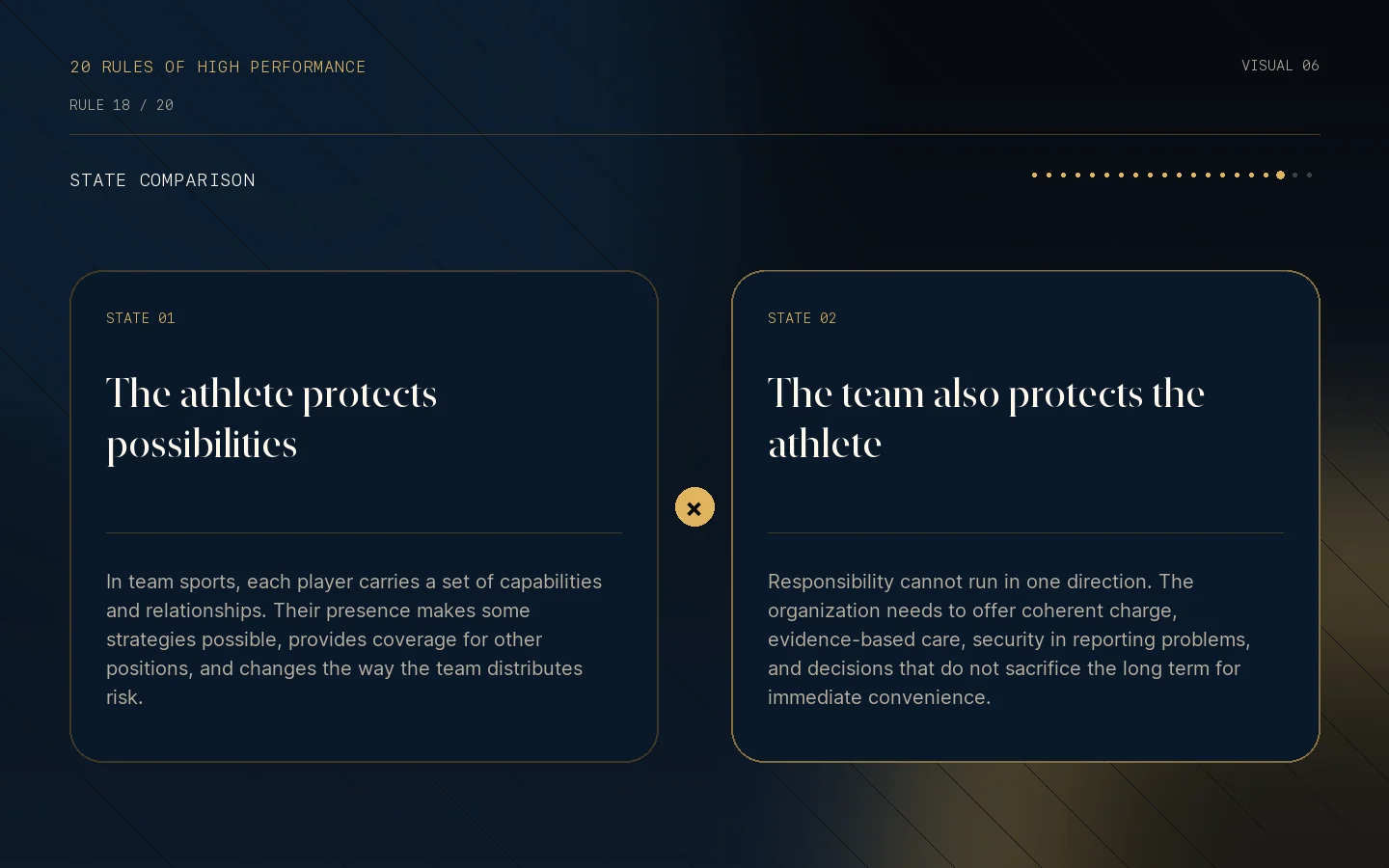
The team also protects the athlete
Asset does not mean commodity
Calling availability an asset describes functional value, not ownership over the athlete's body. Health, autonomy and consent remain central to the decision.
The correct language combines commitment and protection: the athlete takes care of what he delivers to the team; the team takes care of the conditions under which this delivery is requested.
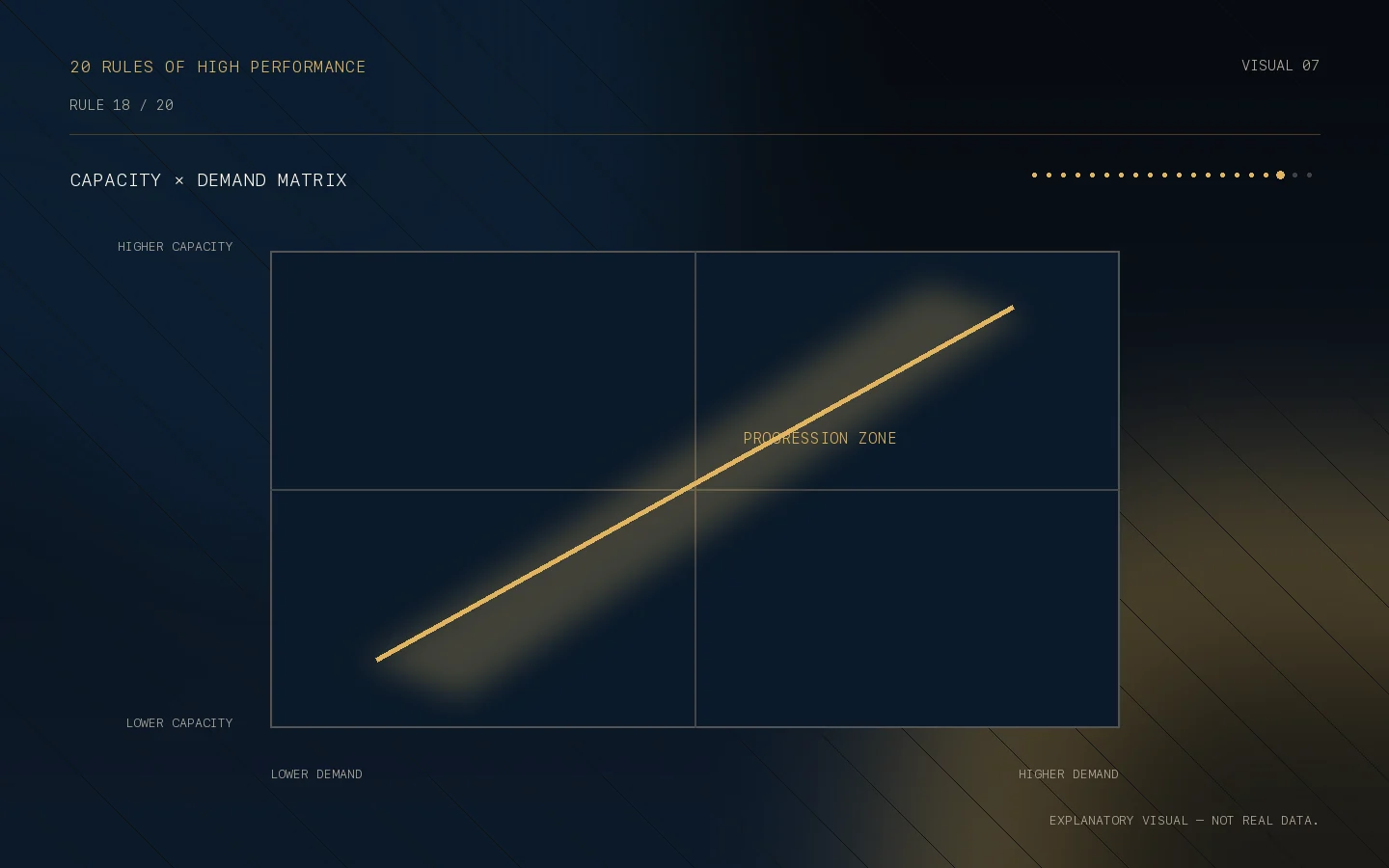
The availability of each athlete expands or restricts the set of possible actions for the entire team.
Individual availability expands selection and coordination options; Culture and collective processes determine how much this asset can be preserved.
Protect the asset from both sides
- Create safe channels for early reporting of symptoms, fatigue and difficulty in recovery.
- Prepare role and load alternatives so that the team does not rely on concealment or improvisation.
- Share criteria for progression, acceptable risk, and responsibility for decisions.
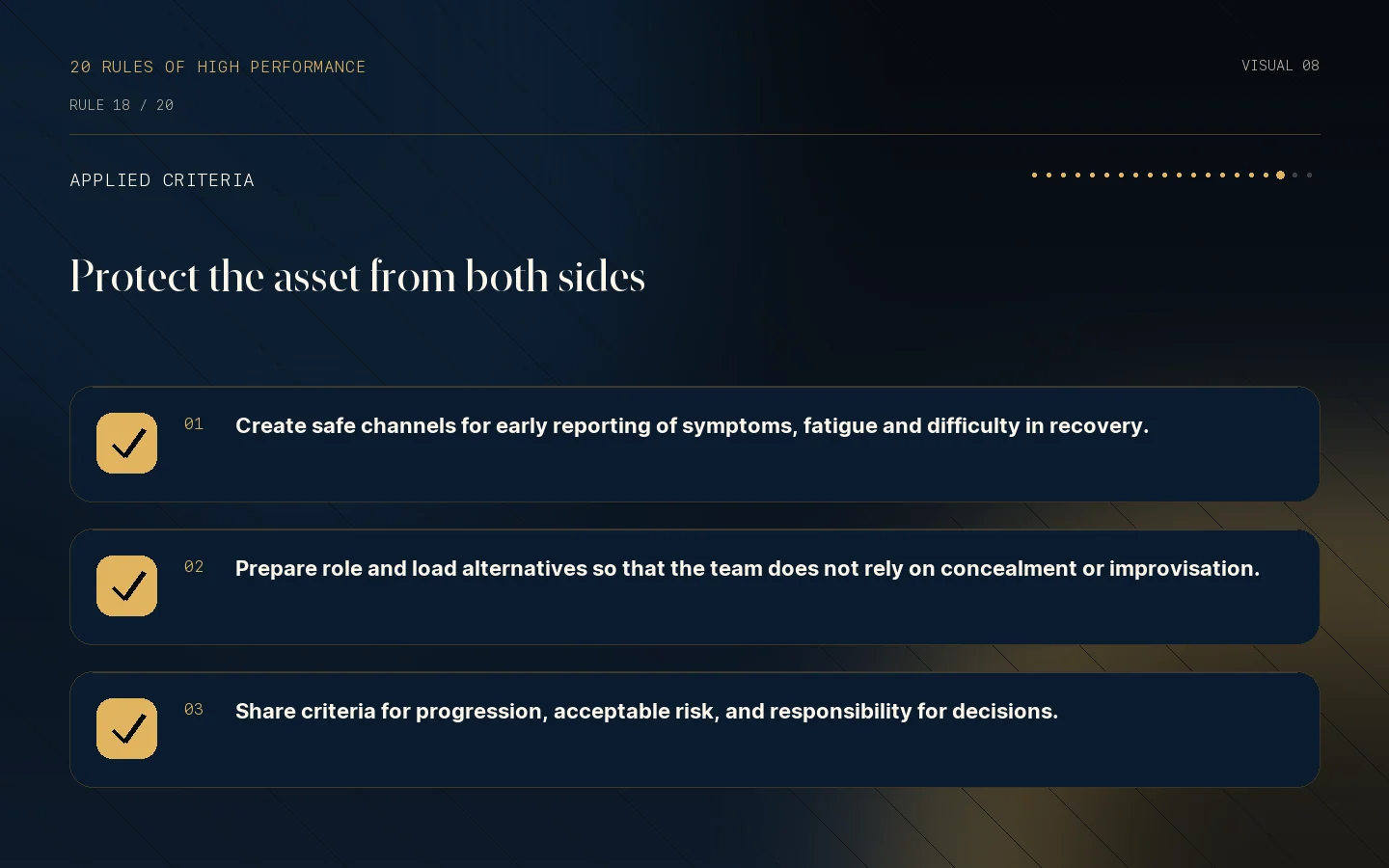
Protect the asset from both sides
Taking care of yourself at high performance is not about withdrawing from the collective. It is about preserving the ability to contribute without transferring an unnecessary cost to the future.
The most valuable asset is not the body always available at any price. It is the sustainable ability to be ready when the team needs it.
Availability belongs to the athlete, but its value circulates throughout the entire team.