

Prevention does not score goals, but decides how many solutions are still available when the game asks for an answer.
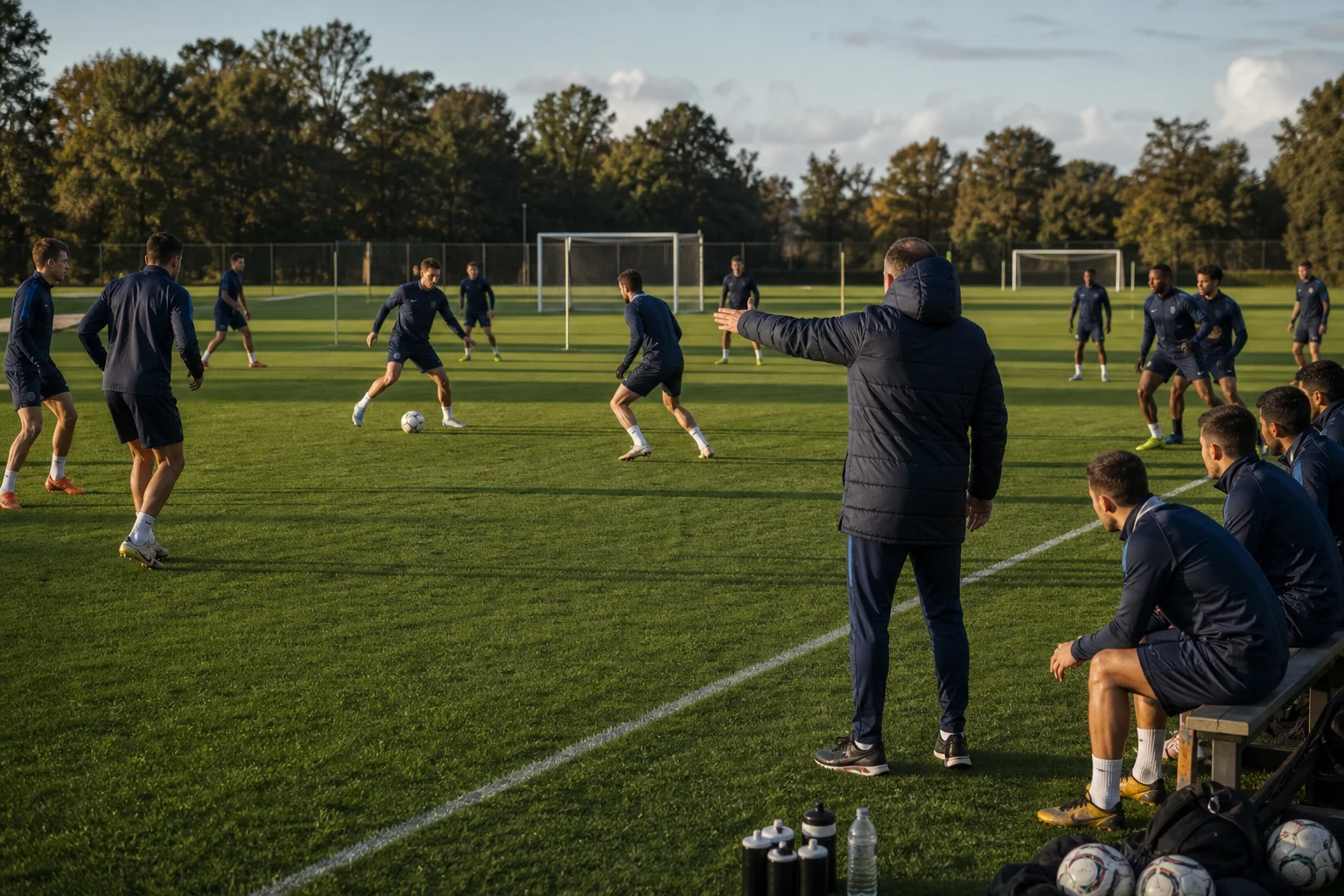
A lower injury burden preserves competitive pathways; it does not guarantee the outcome by itself.
The semi-final began before the whistle
The night before the semi-final, the plan still had alternatives. If the opponent pressed high, there was a player ready to attack the space behind. If it dropped deeper, another could offer a pass between the lines. If the match ran long, the bench held legs capable of maintaining intensity.
None of those options scored a goal in the meeting room. Their value was in remaining available the next day. Months of communication, load progression, recovery, and small decisions had preserved more resources for a match that would not allow everything to be improvised.
The match remained uncertain. A deflection could change the score; the opponent was prepared too. Reducing injuries did not buy victory. It simply kept part of the strategy from being lost before competition began.
When the second half demanded a different structure, the team could change without asking a fatigued athlete to perform a role for which he was not prepared. A lower injury burden had become more possible routes.
From the moment to the criterionWinning depends on many factors. Preserving availability increases the chance of reaching the decisive moment with more of them still within reach.
A team wins through the interaction between technical quality, tactics, preparation, decision, opponent and chance. The health of the cast does not replace any of these dimensions. It preserves the chance to combine them.
This is why studies find an association between lower injury burden and better results. Fewer lost days mean more opportunities to train, compete, and adjust the model with the people you planned.
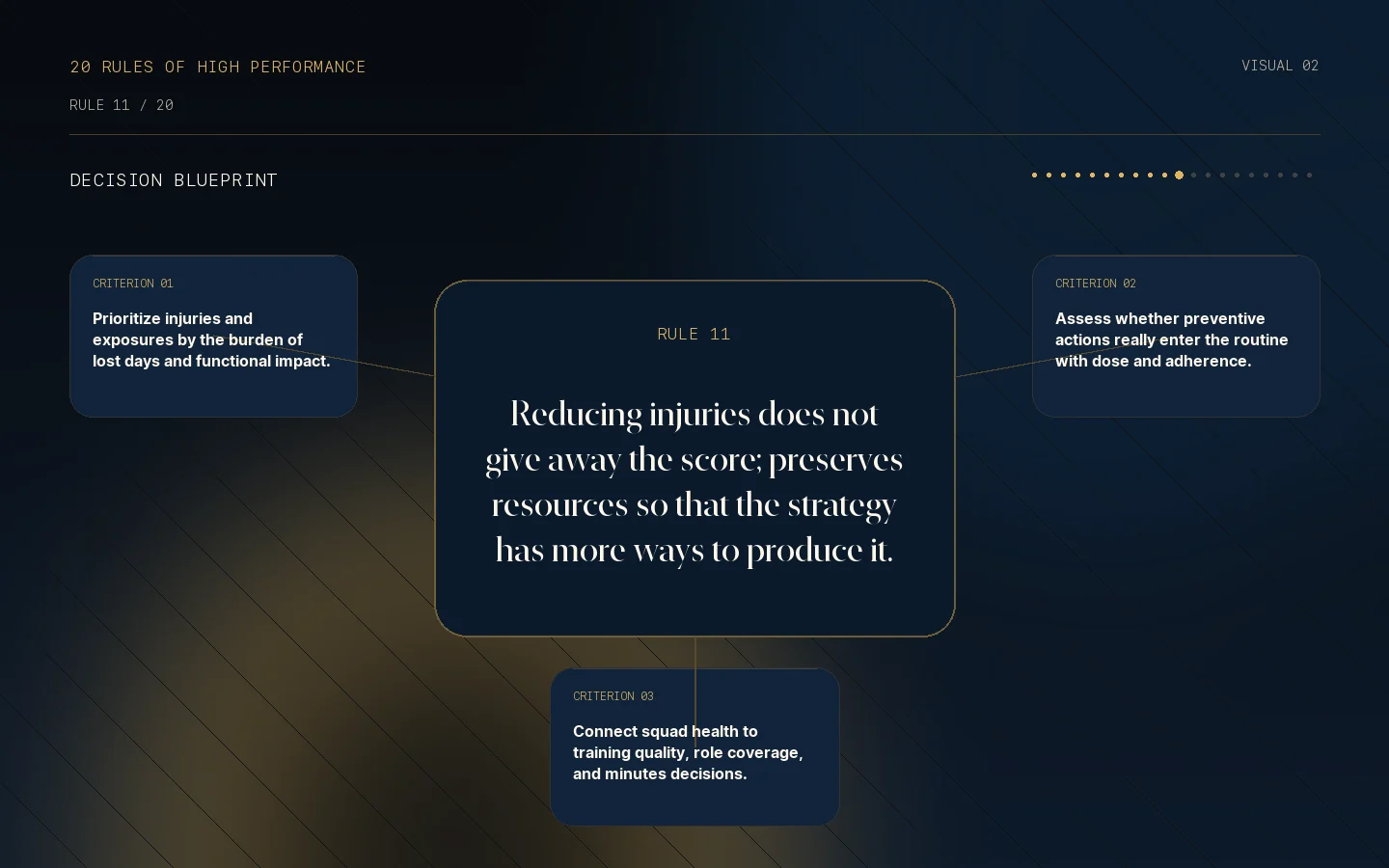
Reducing injuries does not give away the score; preserves resources so that the strategy has more ways to produce it.
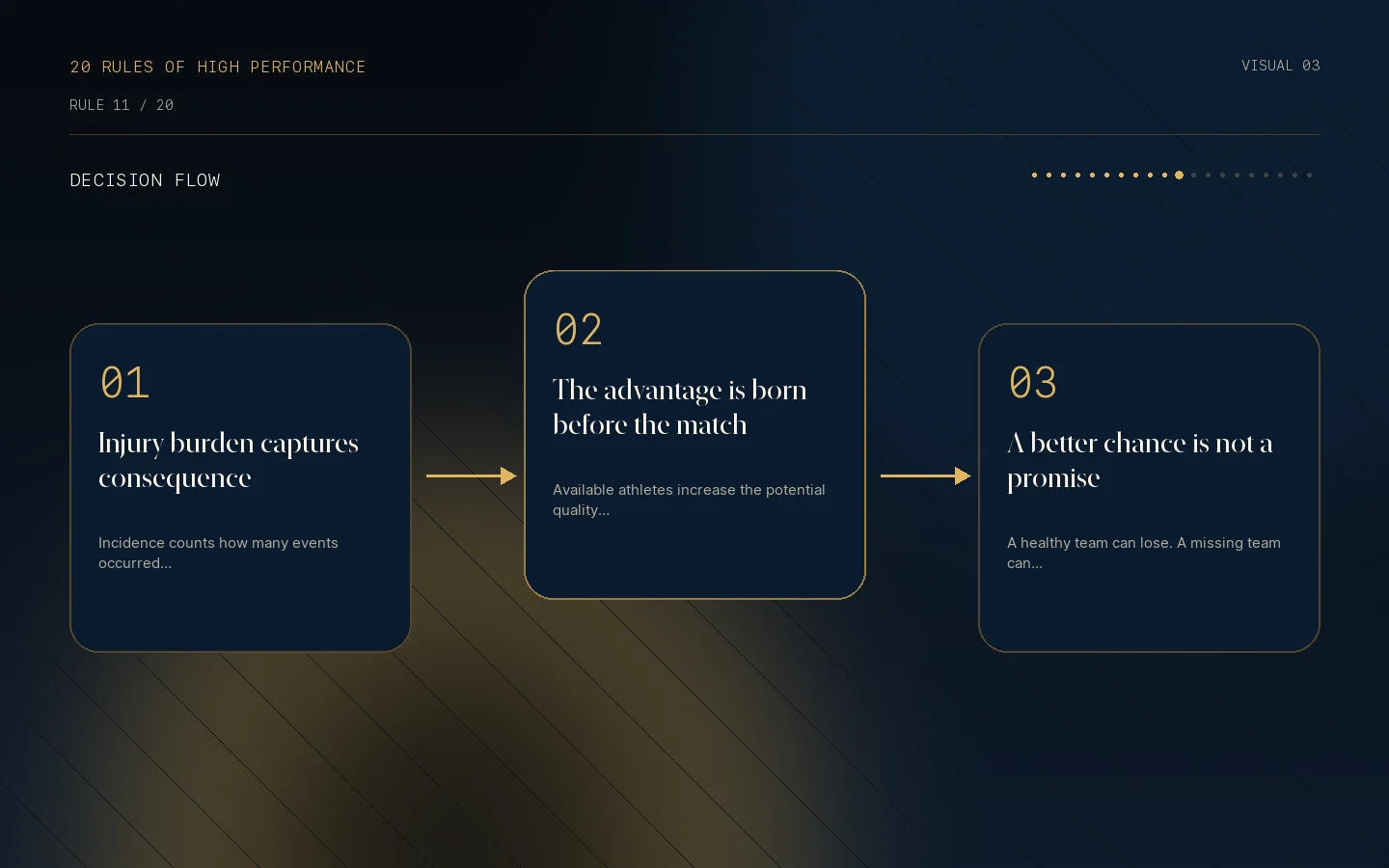
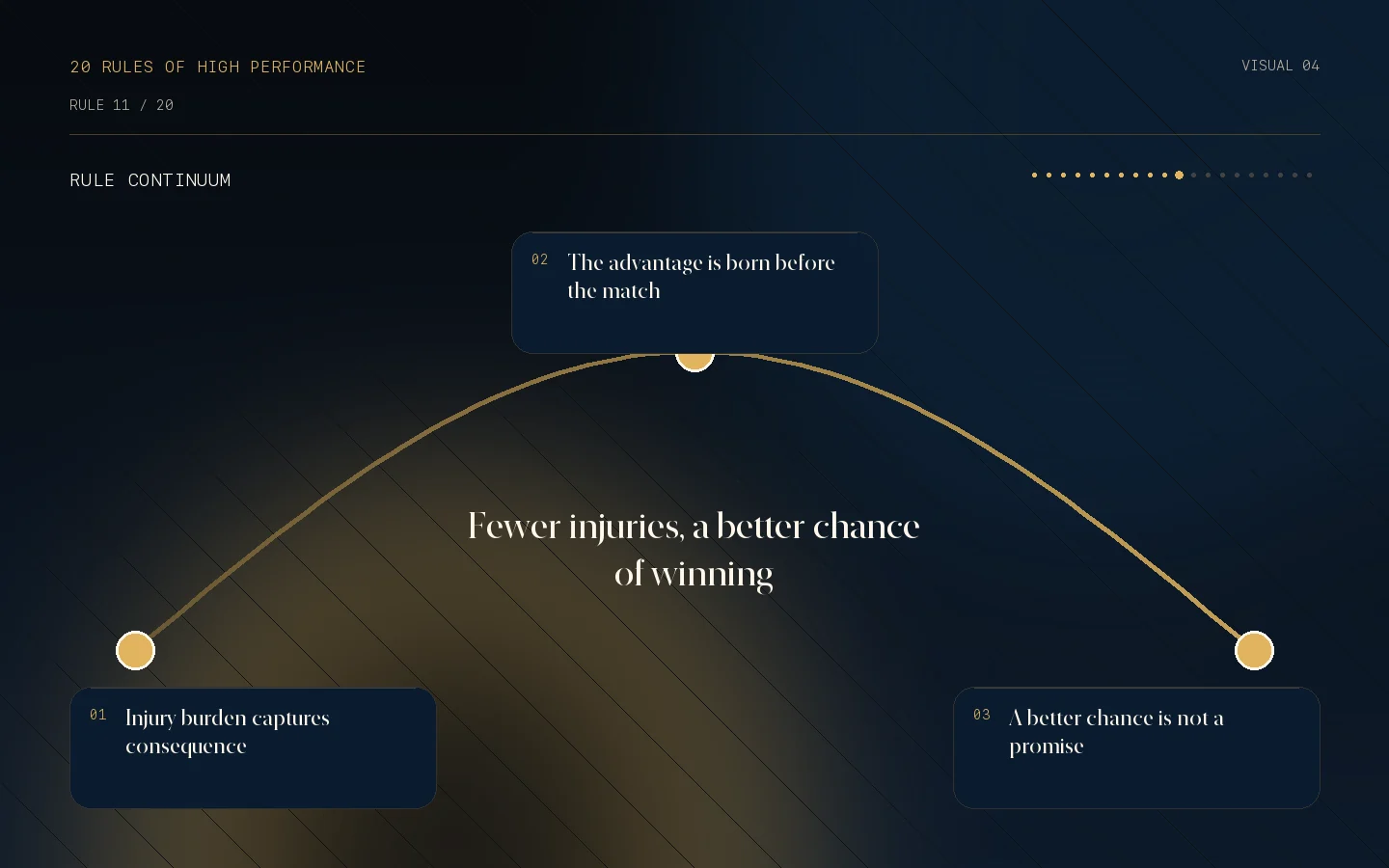
Injury burden captures consequence
Incidence counts how many events occurred. Severity describes how much time each event takes away. Injury burden combines frequency and consequence into days lost per unit of exposure. For performance, this third reading is often especially useful.
Two teams can record the same number of injuries and face different realities. One concentrates mild cases in covered positions; another loses key athletes for long periods. The load approximates the temporal cost, although it still does not fully represent the tactical cost.
In professional European football, reviews identify a large burden in joint and ligament, muscle, knee and thigh injuries. These standards help order prevention and rehabilitation by consequence, not by noise.
Prevention does not score goals, but decides how many solutions are still available when the game asks for an answer.
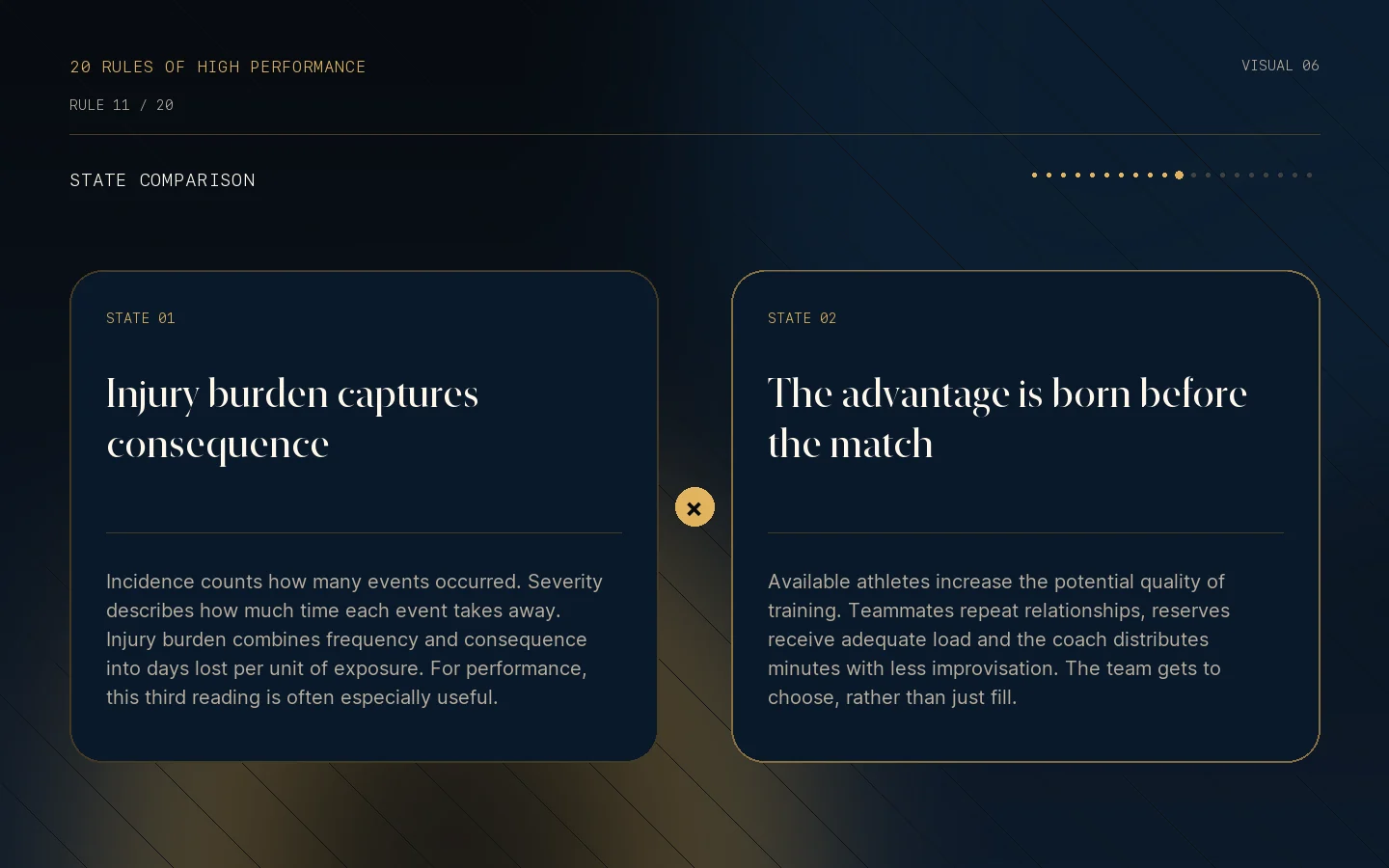
Available athletes increase the potential quality of training. Teammates repeat relationships, reserves receive adequate load and the coach distributes minutes with less improvisation. The team gets to choose, rather than just fill.
The advantage is born before the match
Available athletes increase the potential quality of training. Teammates repeat relationships, reserves receive adequate load and the coach distributes minutes with less improvisation. The team gets to choose, rather than just fill.
Fewer injuries also preserve adaptation cycles. A physical capacity or collective coordination needs successive exposures. Each relevant interruption forces the system to reconstruct part of that history.
Prevention, therefore, belongs to the performance process. This does not authorize keeping the athlete on the field at any cost; sustainable availability is worth more than presence obtained by hiding symptoms.
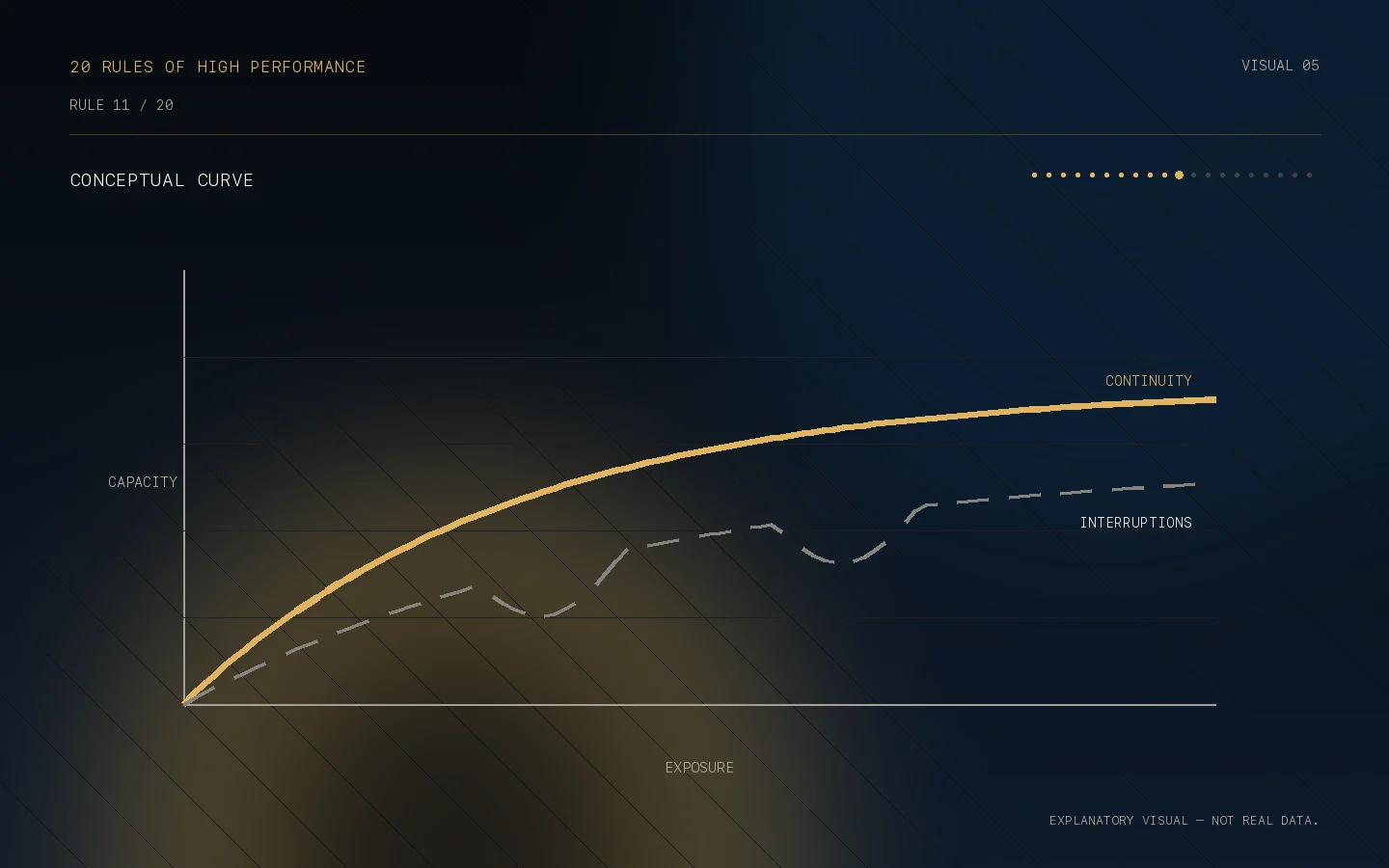
Explanatory visual — not real data.
The advantage is born before the match
A better chance is not a promise
A healthy team can lose. A missing team can win. The opponent, the quality of the squad and the variability of the game continue to play their part. The correct formulation is probabilistic: preserving availability increases the margin of choice and is associated with a greater chance of success.
This language is less seductive than a guarantee, but much more useful for investment. Prevention deserves resources because it improves the set of possibilities throughout the season.
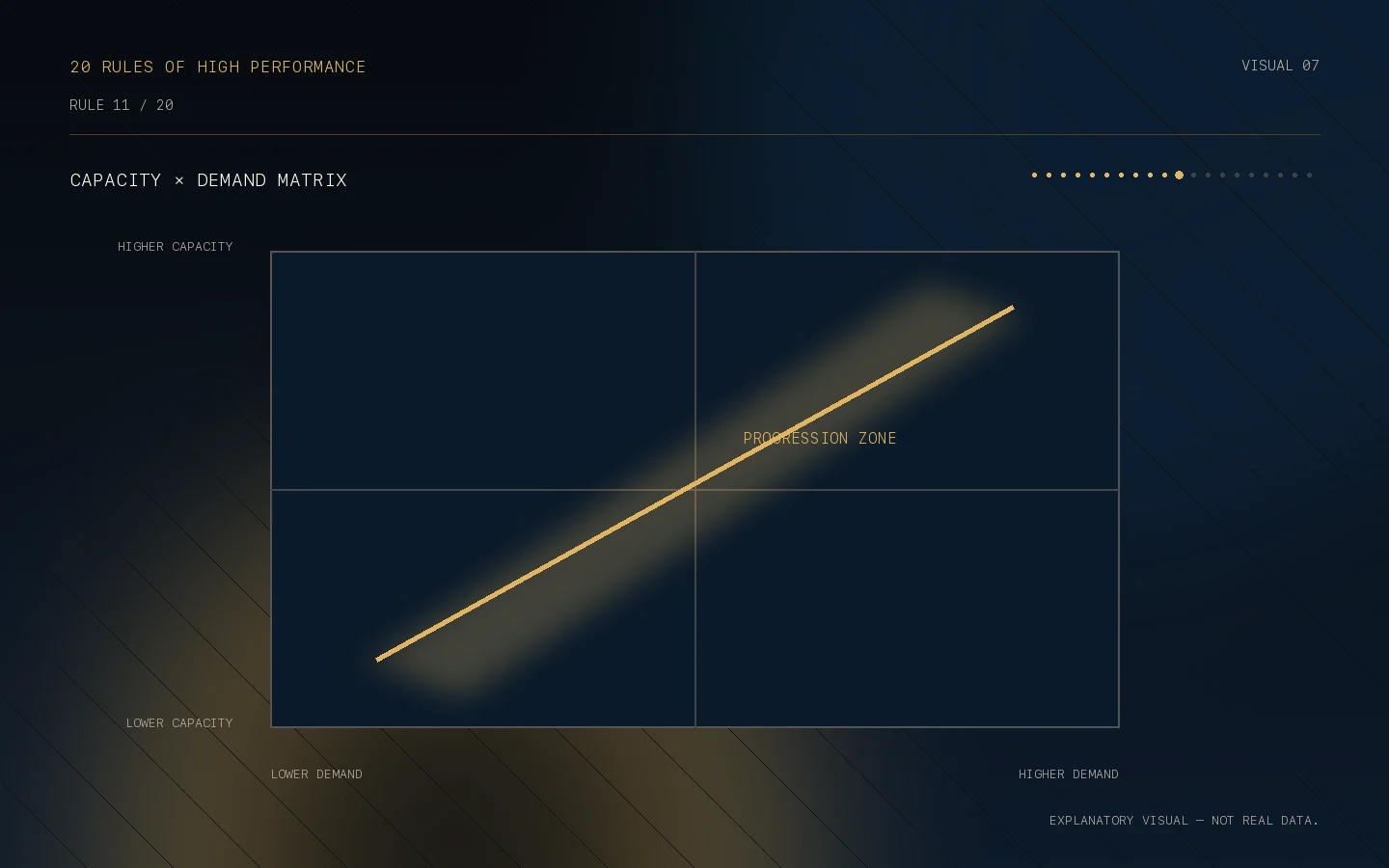
Reducing injuries does not give away the score; preserves resources so that the strategy has more ways to produce it.
Lower injury burden has been associated with better performance in team studies and a systematic review. The expected benefit is to increase probability, not control the score.
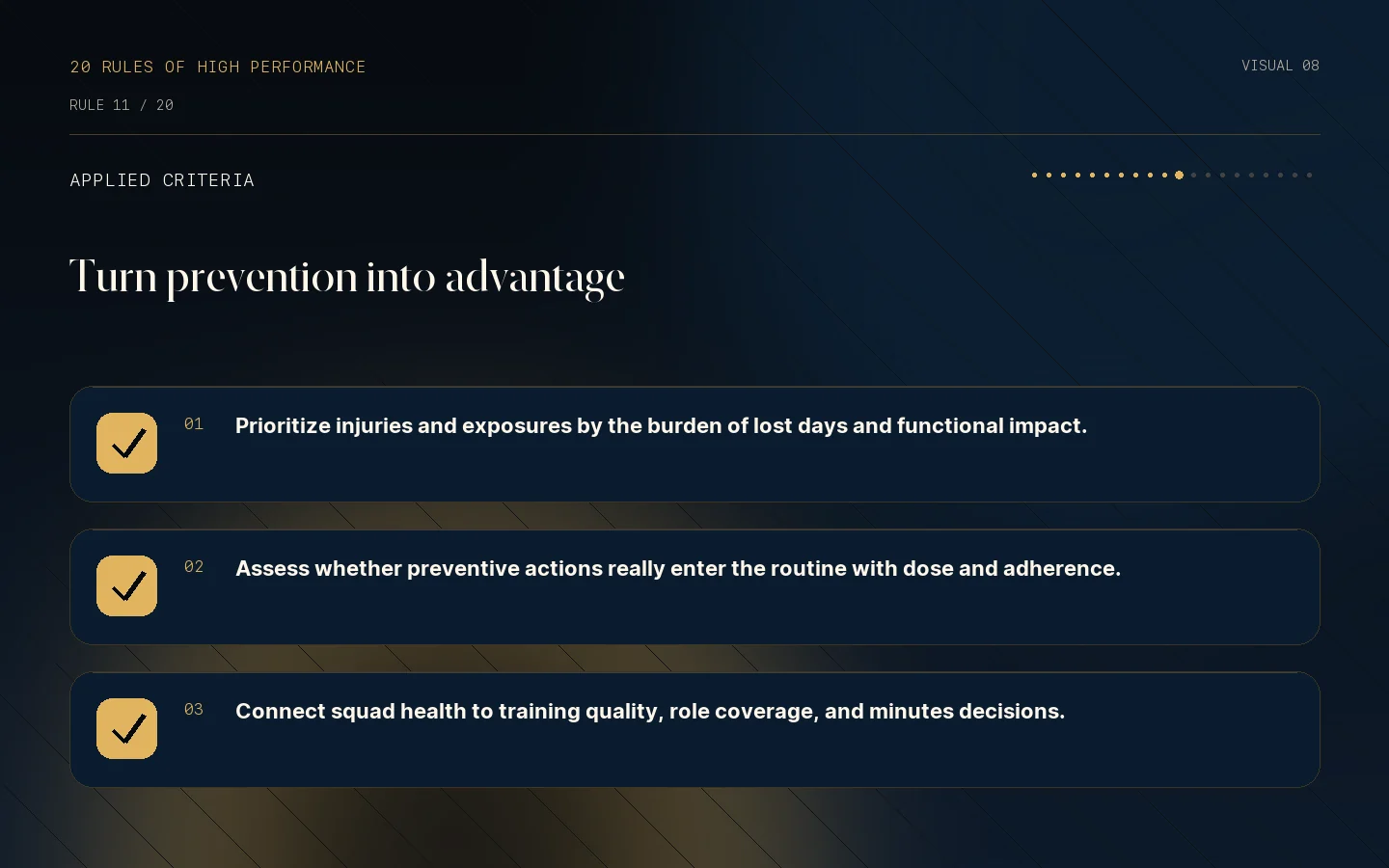
Turn prevention into advantage
- Prioritize injuries and exposures by the burden of lost days and functional impact.
- Assess whether preventive actions really enter the routine with dose and adherence.
- Connect squad health to training quality, role coverage, and minutes decisions.
Turn prevention into advantage
The most mature prevention does not seek visible credit. It seeks to remove obstacles so that technical and tactical work appears more frequently.
The score will remain uncertain. Preparation decides how much uncertainty the team can withstand without losing its best options.
Fewer injuries don't win alone. They keep more paths open to winning.