
Performance Journal · Rafa Barleze

Think better.
Decide better.

Articles for those who need to transform science into decisions.

Nutrition, health, recovery, leadership and behind the scenes environments where every choice has consequences.

Original library

Long texts, field notes and analyzes built from science and experience within high performance.

Continuous edition · 2026
A lens on a dark surface reveals alternative paths branching from a golden line.

Before changing the plan, improve the decision

Before changing your diet or training, assess the evidence, outcomes, and experience of following the plan. Criteria for keeping or adjusting your strategy.

10 min readRead analysis
Hand reaches for an already organized training bag alongside sneakers, water, keys and an elastic band, connected by a golden line.

A habit must survive a bad day

Small actions matter when the environment reduces friction, the system records feedback, and the routine remains flexible enough not to automate error.

13 min readRead analysis
Three adults walk together through an urban park at dawn, following a lit curve between areas of rest and movement.

The body prefers to conserve energy—and still needs to move

Exercise is healthy, but saving effort is also deeply human. The realistic path combines need, pleasure, bonding and progression.

14 min readRead analysis
An athlete adjusts his shoelaces on a dark track as a golden line curves toward the horizon at dawn.

Desire is not the same as enjoyment

Dopamine helps explain why the next goal calls so much. Performance improves when expectation, effort, feedback and presence come together again.

13 min readRead analysis
Coach and athlete talk in a performance center hallway, reflected in the glass beneath a discreet gold orbit.

Reading people without inventing certainty

The best people reader doesn't hunt for magical signs: they build hypotheses, look for patterns, check context and preserve the right to be wrong.
13 min readRead analysis
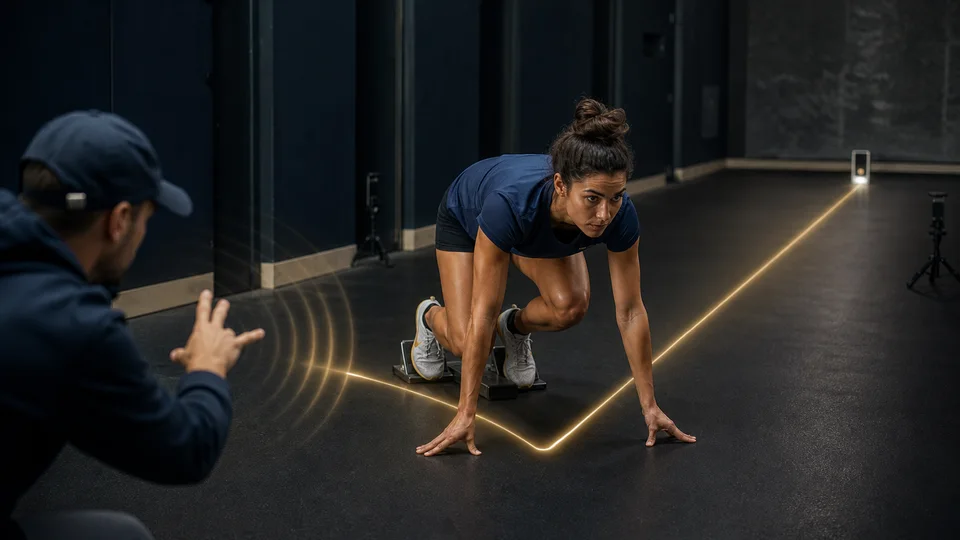
An athlete prepares for a repetition as a coach’s cue becomes a luminous line toward the target and measurement equipment.

Language can guide. It cannot replace evidence.

Language, imagery, and modeling can be useful—provided high performance separates a testable technique from its explanation and promise.
13 min readRead analysis
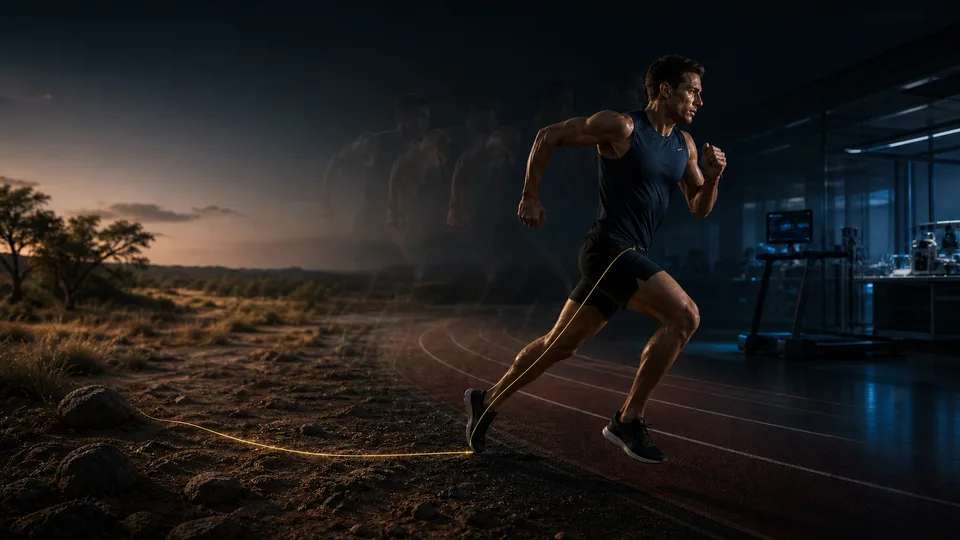
A runner crosses a continuous landscape from savanna to track and performance lab, connected by a gold line symbolizing adaptation.

High performance is not about defeating biology

Five lessons from Daniel Lieberman for thinking about load, energy, recovery, environment and cooperation in high performance.

14 min readRead analysis
Athlete seated after training while a golden stream divides the energy budget among execution, recovery, and regulation.

Training expends energy. Performance decides where it goes.

Energy is not only what an athlete expends: it is also what the body stops supporting when training takes up too much of the budget.

12 min readRead analysis
Athlete ties his cleats in a locker room before dawn, beside pre-arranged hydration, food, and a notebook, while a golden line leads to the field.

High performance starts before the decision

How to automate the predictable, preserve attention, reduce friction, and know when a routine must become a decision again.
12 min readRead analysis
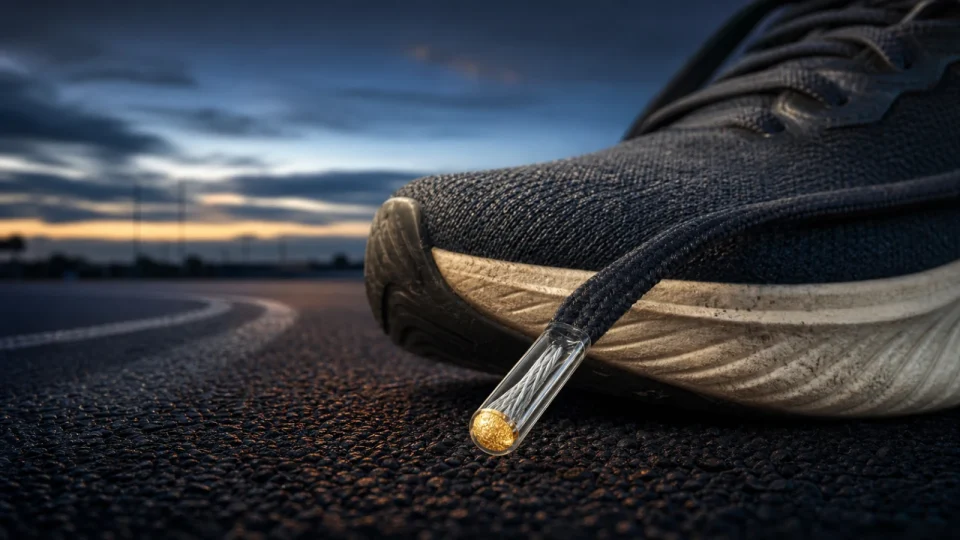
Editorial close-up of a running shoe on the track, with the protective lace tip revealing a subtle telomere metaphor.

More load does not mean more performance

The book’s main lesson is not how to lengthen telomeres, but how to apply load, recover, adapt, and repeat without confusing maximal effort with high performance.

10 min readRead analysis
An open book transforms into an athlete in motion, surrounded by layers of paper, abstract fibers, and a gold feedback line.

The average athlete does not exist—but evidence still matters

A reading on genes, environment, training, and recovery—and how to individualize high performance without abandoning scientific evidence.

12 min readRead analysis
Endurance cyclist pedals at dusk while a golden thread connects fueling strategy to effort.

Carbohydrate during exercise: is 10 g/h enough?

A 2026 review puts blood glucose back at the center of fatigue and questions high doses — without turning 10 g/h into a universal rule.

15 min readRead analysis
An athlete after a laboratory training session, crossed by an arc of particles beside antioxidant-rich foods.

Antioxidants in sport: overprotecting can also cost adaptation

What the 2026 ISSN position stand actually supports about food, supplements, recovery, and the risk of erasing useful training signals.
15 min readRead analysis
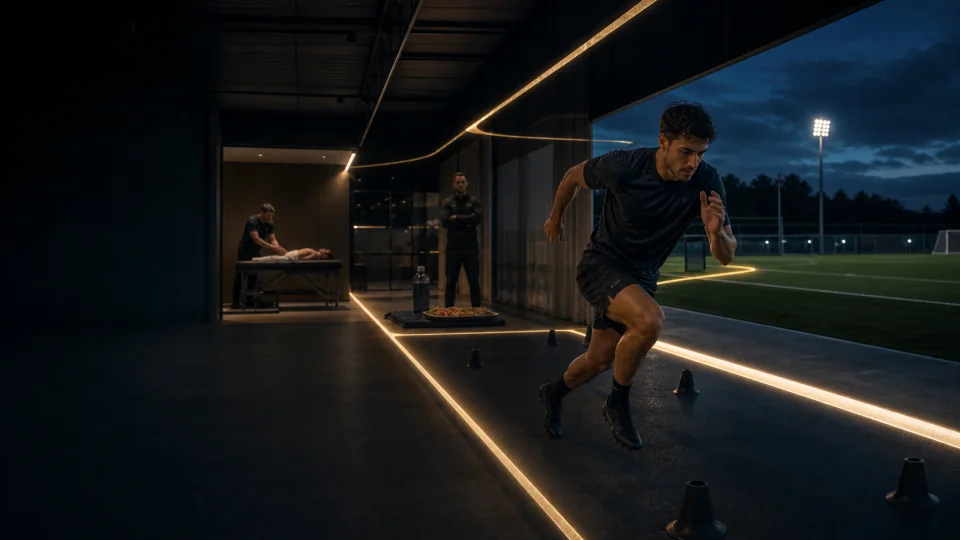
An athlete accelerates in a performance center connected to the field, nutrition, recovery, and staff by a golden filament of light.

Performance is not training, nutrition, or recovery in isolation. Performance is a system.

Training, nutrition, and recovery produce performance only when stimulus, resources, state, skill, environment, and decision-making work as a system.

16 min readRead analysis
Athlete sitting before a meal as a golden curve rises and flattens in the background.

The formula prescribes more food than the athlete eats: what Herman Pontzer helps explain

Why adding training to daily expenditure can inflate a prescription — and how to adjust energy without normalizing underfueling.
13 min readRead analysis
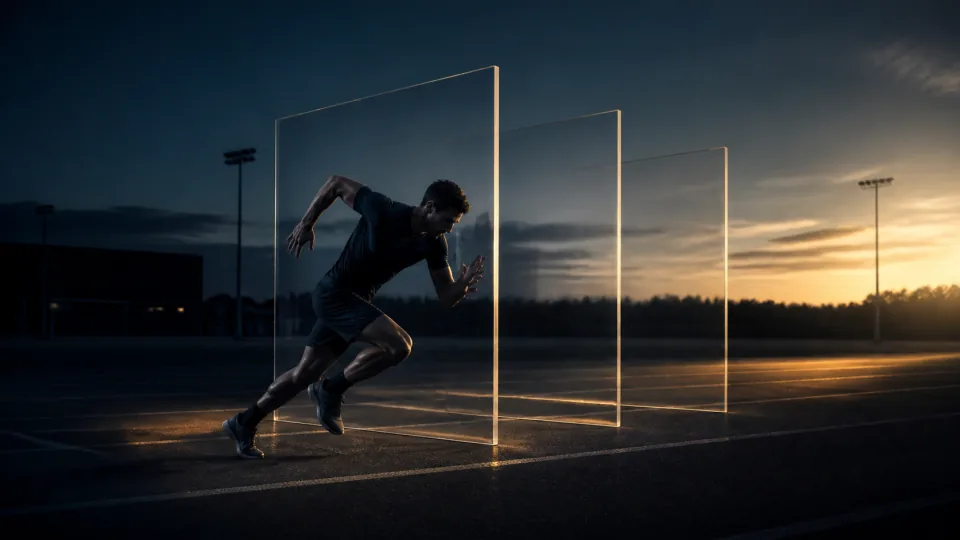
An athlete accelerates down a track while passing through three illuminated optical planes.

Triple A in high performance: showing up, following through, and learning are different things

Attendance creates opportunity, adherence protects the plan, and attitude turns repetition into learning—provided each pillar is regulated.
15 min readRead analysis
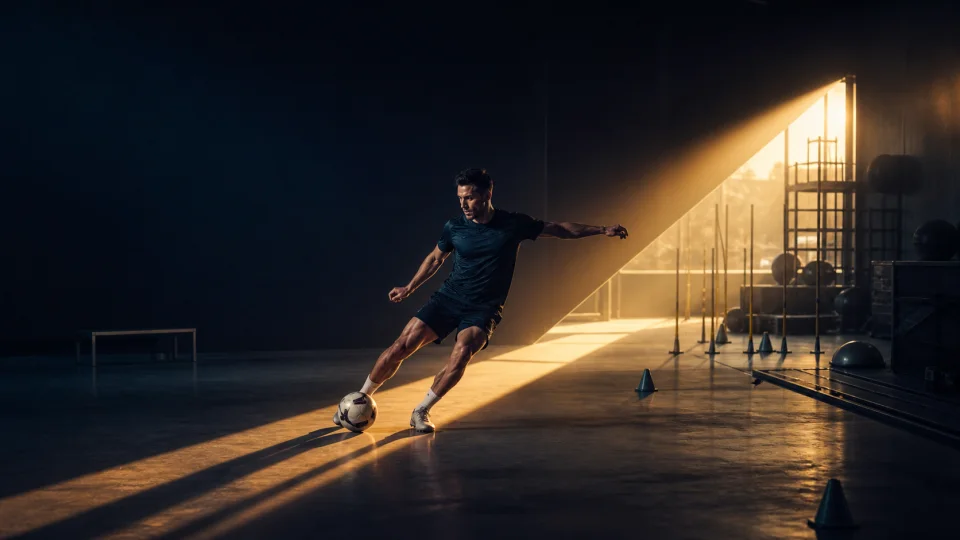
An athlete controls a ball inside a diagonal corridor of light between an empty area and another filled with training cues.

Between boredom and threat: where high performance finds flow

What the challenge × skill graph really teaches about attention, development, and performance—from training to leadership.
14 min readRead analysis
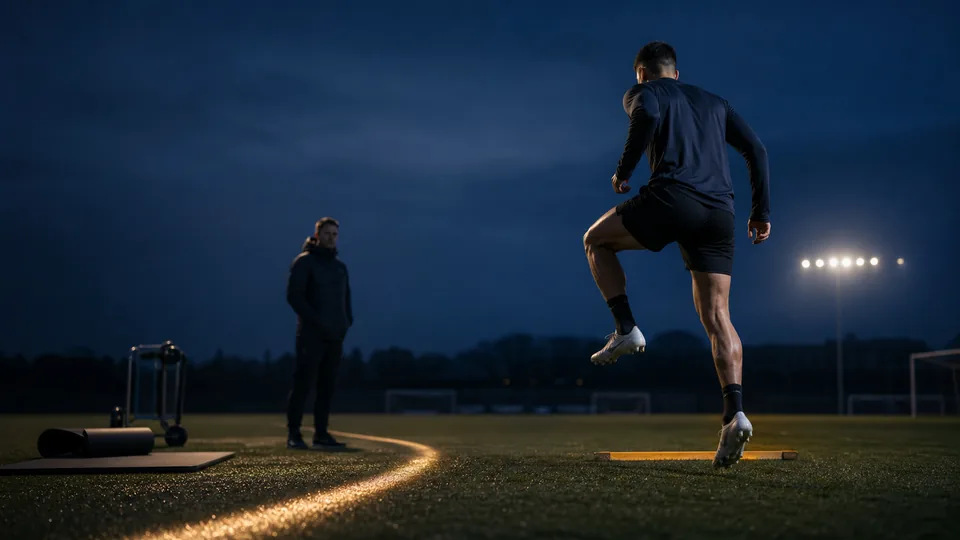
An athlete performs a single-leg jump while a practitioner observes on a training field at dusk.

The test still showed a deficit. Why did the athlete return anyway?

What 30 weeks after a rupture of the patellar tendon teach about strength, field load, function and confidence in the decision to return.
12 min readRead analysis
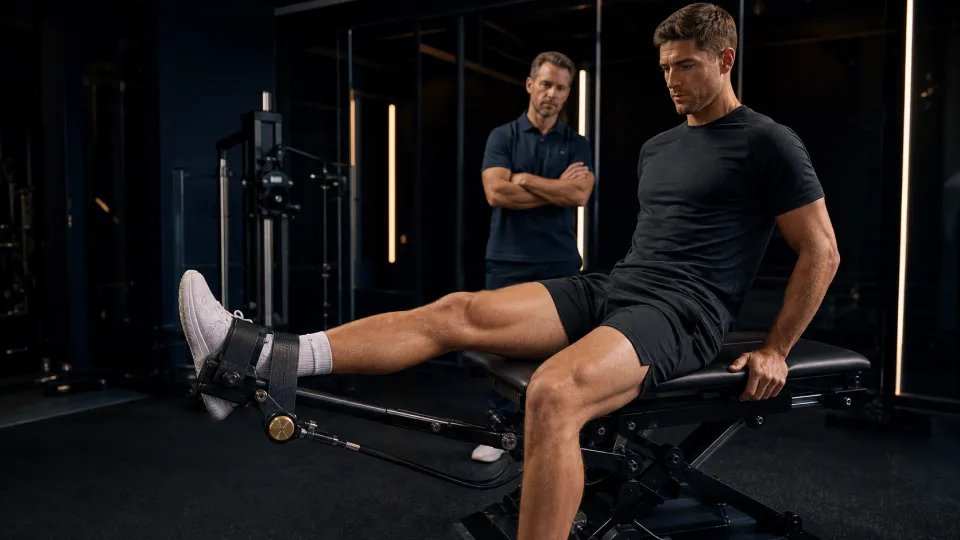
Athlete performs a knee strength assessment in a performance laboratory before deciding on ACL surgery.

ACL tear: rehabilitation before surgery can change the decision

As pre-habilitation reveals who can follow without reconstruction — and when instability, demand and associated injuries favor surgery.
14 min readRead analysis
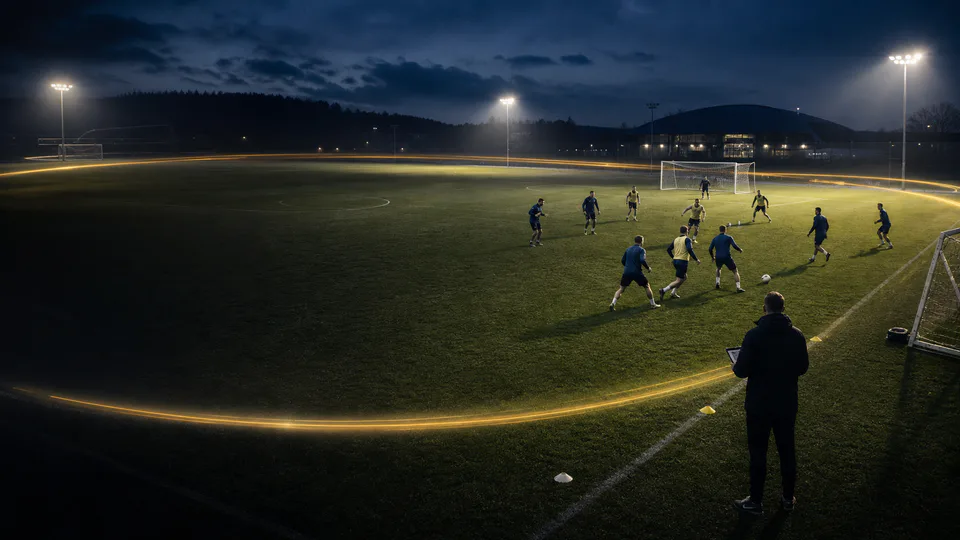
Football training at dusk observed by a coach, surrounded by a golden arc representing the cycle between matches.

Morphocycle: the week does not start on Monday

How to connect game model, load and recovery between matches without turning tactical periodization into a fixed recipe.
14 min readRead analysis
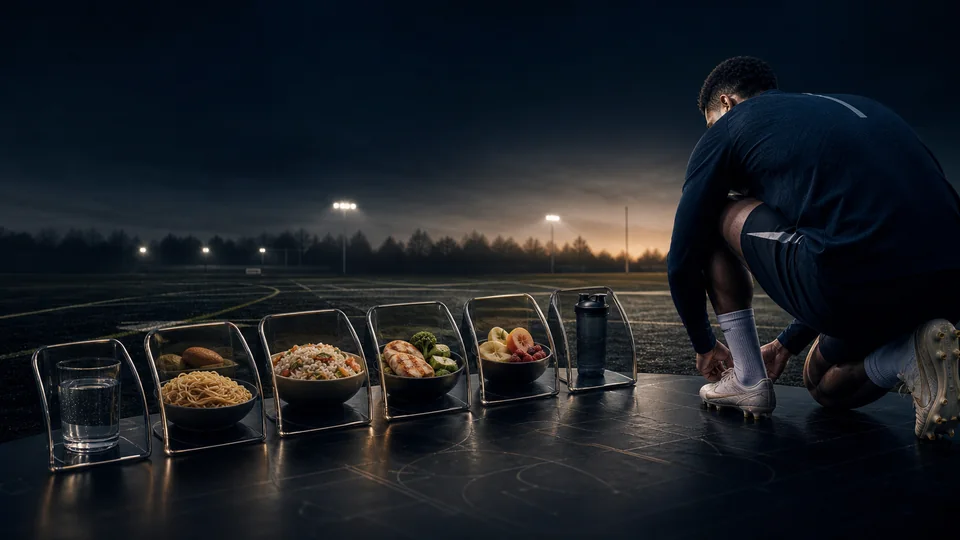
An athlete ties their boots beside a sequence of meals representing how fuel changes across training sessions.

Periodized nutrition: the best fuel changes with the session

How to adjust carbohydrate intake, recovery, gut training, and supplements to the work each session needs to produce.
13 min readRead analysis
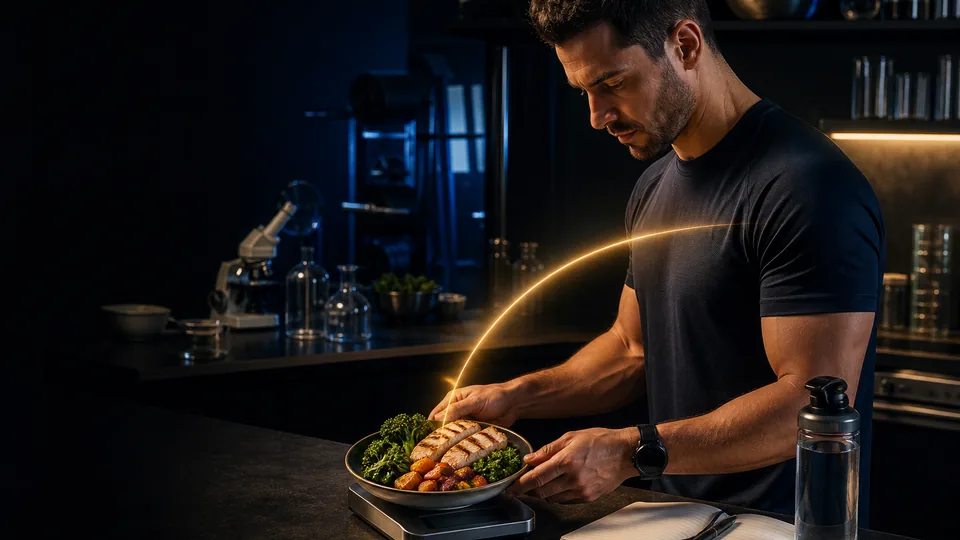
Athlete weighs a meal in an environment that integrates kitchen and laboratory, with a golden arch symbolizing the flow of energy.

Does calorie counting work? The numbers help—until they replace judgment

The difference between energy balance, counting, diet quality and individual response — and when numbers really help.

13 min readRead analysis
A player leans into an illuminated curved trajectory while accelerating across a football pitch at night.

Football does not run in a straight line: why curved sprinting is a skill of its own

Why running on a curve is neither a bent linear sprint nor a cut — and how to assess and train this specific quality.

13 min readRead analysis
Athlete performing trap bar lifts while a trainer monitors the session.

Strength training: science simplified the method without eliminating judgment

What really needs to be adjusted — and what can stop being complicated — for strength, hypertrophy, power and adherence.
11 min readRead analysis
Athlete in two sprints separated by a moment of active recovery, connected by a glowing golden ribbon.

The aerobic engine behind power

Why VO₂max helps repeat sprints, restore power, and sustain explosive actions — without replacing speed or strength.

10 min readRead analysis
Athlete seated in a performance center reviews a laboratory report beside a blood sample.

Low testosterone: when the number matters — and when it merely reflects context

A low result may signal illness or simply reflect blood-draw timing, energy availability, body weight, medications, or acute illness. Learn how to interpret it before looking for shortcuts.
11 min readRead analysis
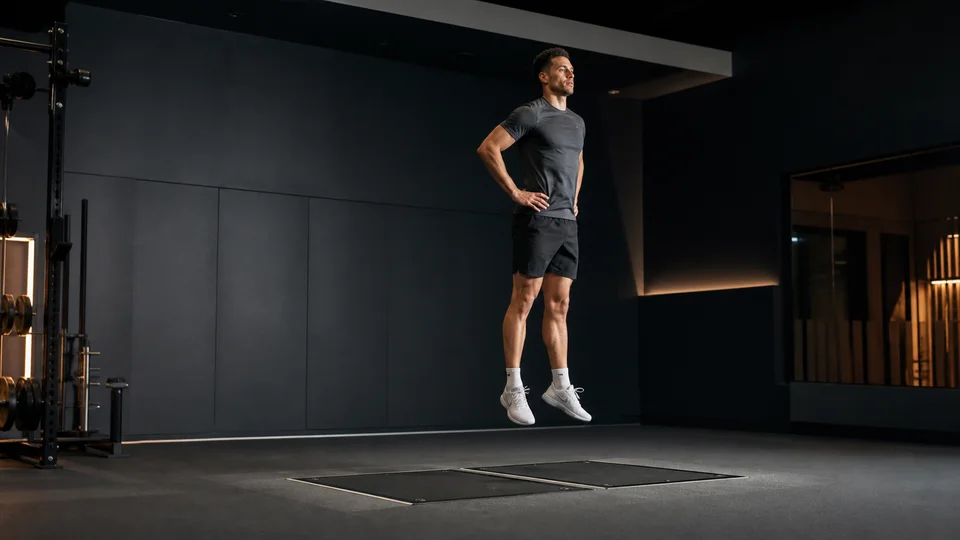
Athlete performs a countermovement jump on two force plates.

CMJ testing: when measuring more gets in the way of a decision

Force plates produce dozens of CMJ metrics. See how to select a concise, reliable panel that can genuinely guide decisions.
11 min readRead analysis
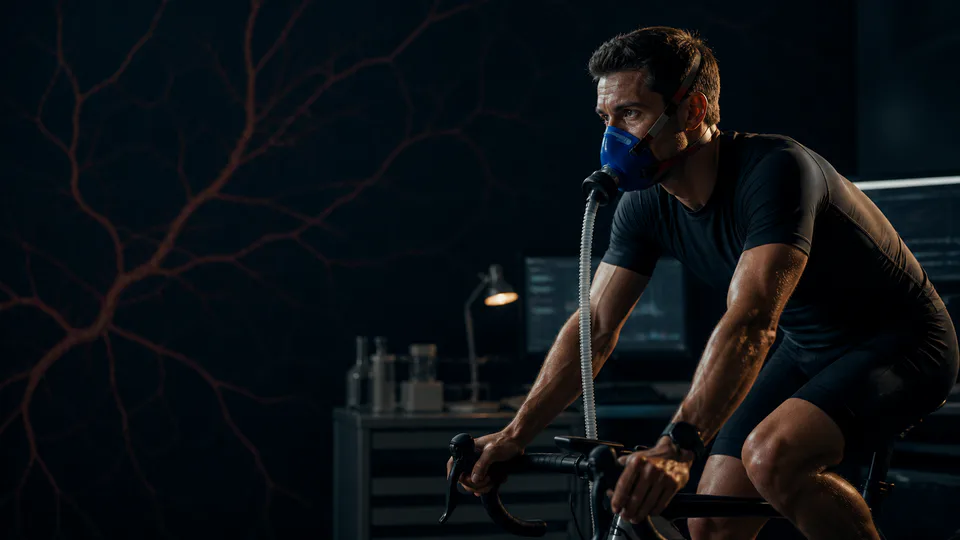
Athlete performing a cardiopulmonary exercise test on a cycle ergometer in a performance laboratory.

Nitric oxide and performance: raising the marker does not guarantee the outcome

Beetroot, citrulline, and arginine can act on the nitric oxide pathway. Their value depends on whether the mechanism reaches an outcome that matters.

11 min readRead analysis
An athlete holds a smartphone in front of the bright room of a psychology professional.

Sports psychology will fit in your pocket. Responsibility will not.

How AI can expand mental support to athletes without replacing context, connection, supervision and professional responsibility.
13 min readRead analysis
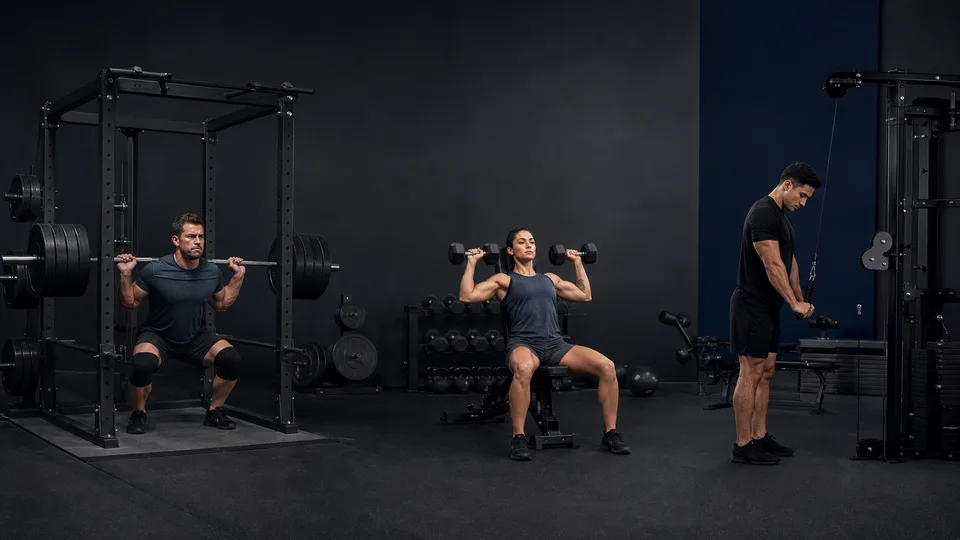
Three athletes train with a barbell, dumbbells, and a cable machine to represent different load ranges.

Hypertrophy: is 8 to 12 repetitions still the best range?

The classic rep range is efficient, but not exclusive. See how load, effort, exercise selection, and context shape the best choice.
10 min readRead analysis
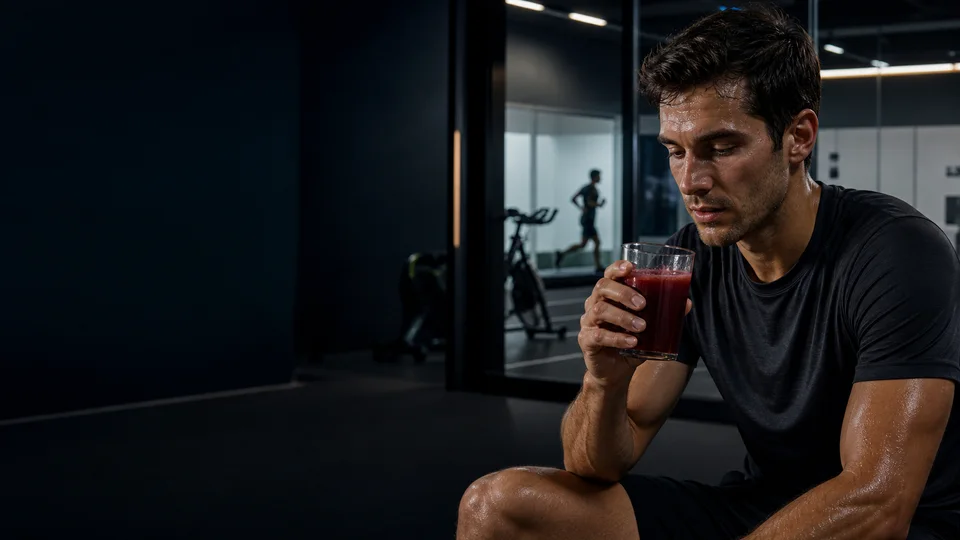
Athlete holding a glass of beetroot juice in a sports laboratory after a physical test.

Does beetroot juice improve performance? The effect exists — but it is not automatic

Nitrate may produce small gains in some types of effort. Learn who is more likely to respond, what dose to test, and why serving volume is not the same as dose.

10 min readRead analysis
Athlete in front of the illuminated entrance to a track, between the shadow and the beginning of the action.

Motivation is not willpower: what really makes someone act

A 2026 audit of dopamine, effort, autonomy, competence, and the conditions that transform intention into action.

11 min readRead analysis
Player walks from the bench towards the illuminated field at night.

Substitute yesterday, starter tomorrow: the load a microcycle can hide

How the transition from non-starter to starter changes the reading of the external load accumulated between two matches.

10 min readRead analysis
An athlete pedals an exercise bike while being monitored in a laboratory.

More exercise, more expense? The body doesn't do this math in a straight line

Why daily spending may rise less than expected — without decreasing the value of exercise for health and performance.

11 min readRead analysis
Athlete between the darkness of the night and the light of the morning, representing the circadian rhythm.

Circadian rhythm: your body does not need a perfect routine—it needs consistent signals

How light, sleep, food and training help the body recognize when to speed up, recover and sleep.

11 min readRead analysis
Athlete plans meals with different sources of protein distributed throughout the day.

Protein for athletes: the right dose depends on the job it needs to do

Daily total, serving per meal, and the contexts in which increasing protein actually makes sense.

11 min readRead analysis
Athlete sitting after training with visual emphasis on the muscles of the legs.

Mitochondria: the invisible capacity that turns training into performance

What really improves your ability to produce energy — and why training, fuel, and recovery come before supplements.

11 min readRead analysis
Recovering athlete in front of a clock, suggesting sleep and adaptation to training.

Glycine for performance: biological promise, evidence still limited

It participates in the synthesis of collagen, creatine and glutathione. Understand why this still does not prove an ergogenic effect.

9 min readRead analysis
Athlete sitting after training next to water and shake, taking his time in front of the clock.

Anabolic window: the 30-minute clock that science left behind

Post-workout protein matters, but adaptation doesn't disappear once the clock ticks past 30 minutes. Understand what really deserves priority.

9 min readRead analysis

Editorial lines

Four perspectives for organizing knowledge without separating what, in practice, needs to work together.

01 · Application

Science that reaches the routine

How to transform evidence into protocols, choices and behaviors that can be executed.

02 · Context

Nutrition beyond the menu

Strategies that consider training, calendar, travel, recovery, culture and individuality.

03 · System

Health that sustains performance

The role of sleep, availability, metabolism and longevity in building results.

04 · Decision

Leadership in demanding environments

Processes, people, communication and criteria to decide under pressure without losing consistency.

Rafa Barleze Newsletter · Performance Journal

The collection comes to you. In the right order.

You start with the oldest unread article and work your way to the most recent. No avalanche of messages: one reading every five days.

Home+5 days+10 days+15 daysContinued

Get the first reading.

Confirmation by email. Cancellation available on all readings.

The next article begins
with a good question.

Get in touch